


Agricultural Land Reclamation Equipment & Farmland Restoration Solutions
Agricultural land reclamation is the process of restoring degraded, abandoned, or underutilized land into productive farmland. It plays a key role in improving food production capacity, expanding cultivable areas, and recovering land affected by overgrowth, erosion, construction residue, or long-term abandonment.
Modern reclamation projects rely heavily on excavator-based attachment systems to efficiently clear vegetation, remove roots and debris, level uneven terrain, and prepare soil for agricultural use. These mechanized solutions significantly improve efficiency compared with traditional manual land clearing methods.
Agricultural Land Reclamation Applications
Abandoned farmland restoration and reuse
Forest-to-farmland conversion projects
Overgrown land clearing for agricultural expansion
Soil preparation for crop cultivation
Hilly terrain leveling and slope improvement
Irrigation channel restoration and land reshaping
Post-construction land recovery for farming use
Soil remediation and surface cleanup projects
Rural development and land consolidation programs
Degraded land ecological restoration for agriculture
Challenges in Agricultural Land Reclamation
Reclamation projects often involve heavily overgrown vegetation, dense root systems, uneven terrain, and mixed soil conditions. In many cases, abandoned land may also contain rocks, construction debris, or compacted soil layers that require mechanical intervention before cultivation.
Operators must balance efficient land clearing with soil protection, ensuring that the topsoil structure remains suitable for future agricultural use while removing unwanted vegetation and obstacles.
To achieve this, contractors increasingly adopt integrated excavator attachment solutions that combine vegetation removal, material handling, and surface preparation in a single workflow.
Recommended Agricultural Land Reclamation Solution
For most land restoration projects, TianGe recommends a structured workflow:Clearing → Grinding → Leveling → Soil Preparation.This approach ensures efficient land transformation while preserving soil quality for long-term agricultural productivity.
Forestry Mulcher – Crush dense vegetation, shrubs, and small trees into mulch
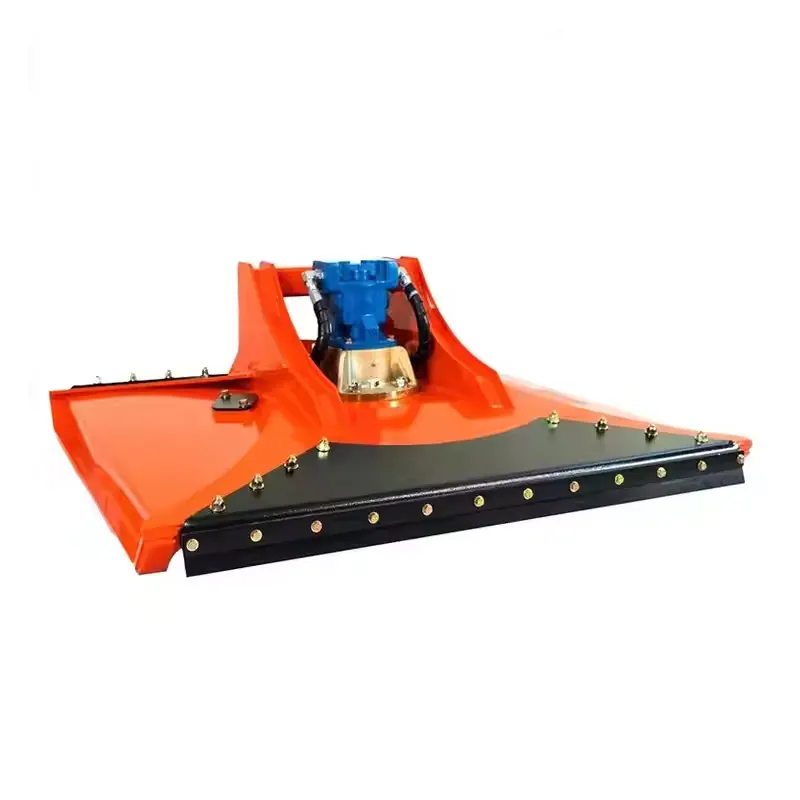
Brush Cutter – Clear surface overgrowth and improve land accessibility
Hydraulic Grapple – Remove roots, rocks, and cleared debris from site
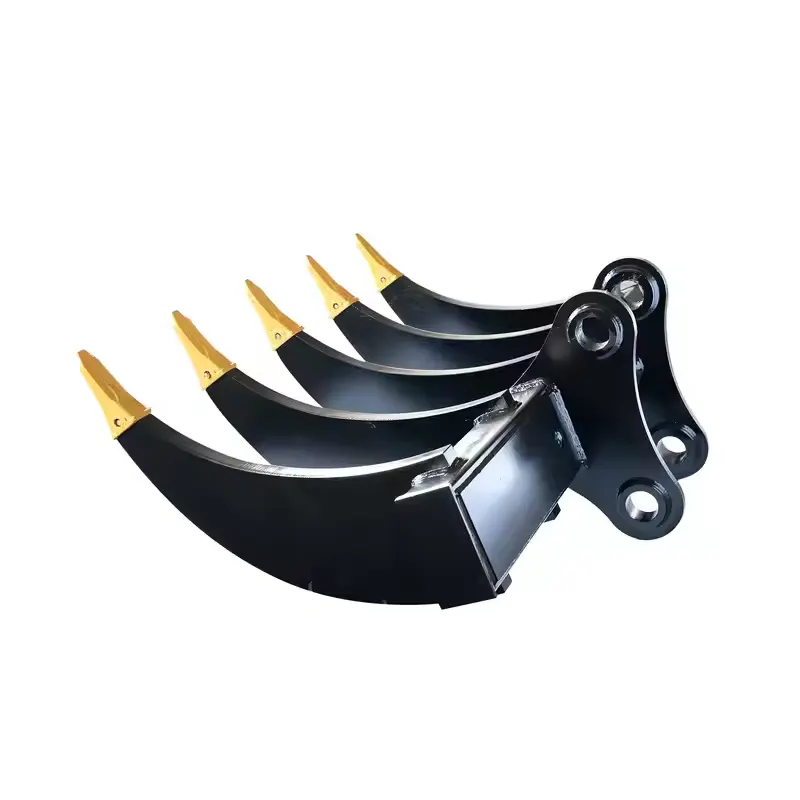
Root Rake – Prepare and smooth soil surface for cultivation readiness
By combining multiple attachments, operators can complete land reclamation more efficiently while reducing soil disturbance and improving final land usability.
Core Equipment for Agricultural Land Reclamation
Forestry Mulcher
Forestry mulchers are essential for reclaiming heavily overgrown land. They efficiently grind dense vegetation and small trees into mulch, accelerating land clearance and reducing biomass volume.
Brush Cutter
Brush cutters are used for general vegetation removal in farmland restoration projects, especially for clearing grass, shrubs, and surface-level overgrowth.
Hydraulic Grapple
Hydraulic grapples are used to collect and transport roots, stones, and debris removed during land clearing, improving site organization and efficiency.
Root Rake
Root rakes are designed to remove embedded roots, stones, and residual organic material while preparing the soil surface for agricultural use.
Agricultural Land Reclamation Workflow
A typical reclamation project begins with land assessment and boundary marking. Forestry mulchers are then used to clear dense vegetation and reduce biomass across large areas.
Brush cutters handle secondary clearing in narrower zones and transitional areas. Hydraulic grapples remove debris, roots, and stones from the field surface. Finally, root rakes refine the soil structure and prepare the land for agricultural operations.
This structured workflow ensures efficient transformation of degraded land into productive farmland while maintaining soil integrity and long-term usability.
Advantages of Excavator Attachments in Land Reclamation
Faster conversion of unused land into farmland
Improved efficiency in large-area vegetation clearing
Reduced manual labor and operational costs
Better soil preservation and surface preparation
Enhanced land productivity and usability
Effective removal of roots, rocks, and obstacles
Supports sustainable agricultural development
Equipment Selection Strategy for Land Reclamation Projects
Forestry Mulcher – Heavy vegetation removal and biomass reduction
Brush Cutter – Surface clearing and light vegetation control
Hydraulic Grapple – Debris and root handling
Root Rake – Final soil preparation and leveling
Most agricultural land reclamation projects require a combination of vegetation removal and soil preparation attachments to ensure efficient and sustainable land transformation.
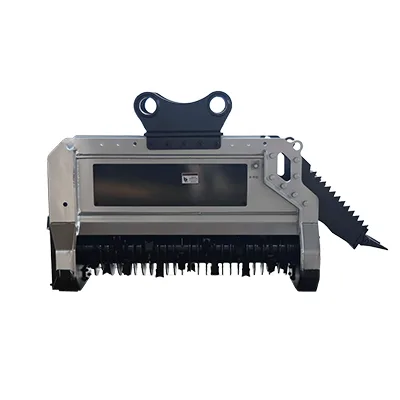
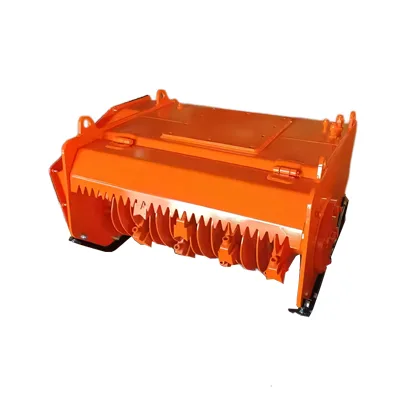
TGEC Forestry Mulcher – Dense vegetation clearing and land restoration
TGEC Brush Cutter – Surface vegetation control and farmland preparation
TGEC Hydraulic Grapple – Root and debris handling
TGEC Root Rake – Soil finishing and land preparation