


Biomass Preparation & Material Processing Solutions for Excavator Systems
Biomass preparation is a critical step in forestry management, renewable energy production, and land clearing operations. It involves converting raw organic material such as trees, branches, brush, and agricultural residue into usable or transportable biomass fuel and materials.
Modern biomass projects rely heavily on excavator-based attachment systems to handle cutting, shredding, sorting, and volume reduction directly at the source. This approach reduces transport costs, improves processing efficiency, and supports sustainable resource utilization.
Biomass Preparation Application Scenarios
Forestry residue processing and thinning operations
Land clearing for construction and development projects
Renewable energy feedstock preparation (biomass fuel supply)
Agricultural waste recycling and crop residue management
Storm damage wood recovery and cleanup operations
Riverbank and ecological restoration projects
Municipal green waste management systems
Fire prevention and forest fuel reduction programs
Industrial wood recycling and secondary material production
Plantation maintenance and plantation residue handling
Operational Logic of Biomass Preparation Systems
Biomass preparation is not a single-step task but a continuous transformation process. Raw vegetation is first collected, then cut or shredded, followed by size reduction, sorting, and finally loading for transport or on-site reuse.
Efficiency depends on minimizing handling stages and maximizing in-field processing. Excavators equipped with multifunction attachments allow operators to complete multiple steps without relocating machinery or relying on separate processing stations.
Core Excavator Attachments for Biomass Processing
Forestry Mulcher System
A primary tool for biomass reduction, designed to shred trees, branches, and brush into fine material. It is widely used in land clearing, forestry thinning, and fire risk reduction projects.
Sorting & Demolition Grapple
Used to collect, separate, and load mixed biomass materials. It handles irregular shapes such as logs, roots, and branches, improving sorting efficiency during site cleanup.
Hydraulic Shear Attachment
Provides precise cutting of standing trees and large branches. It supports controlled harvesting and reduces the need for manual chainsaw operations in high-volume biomass areas.
Material Bucket System
Used for loading processed biomass, soil, and mixed organic material. It ensures efficient transfer from site to transport vehicles or processing zones.
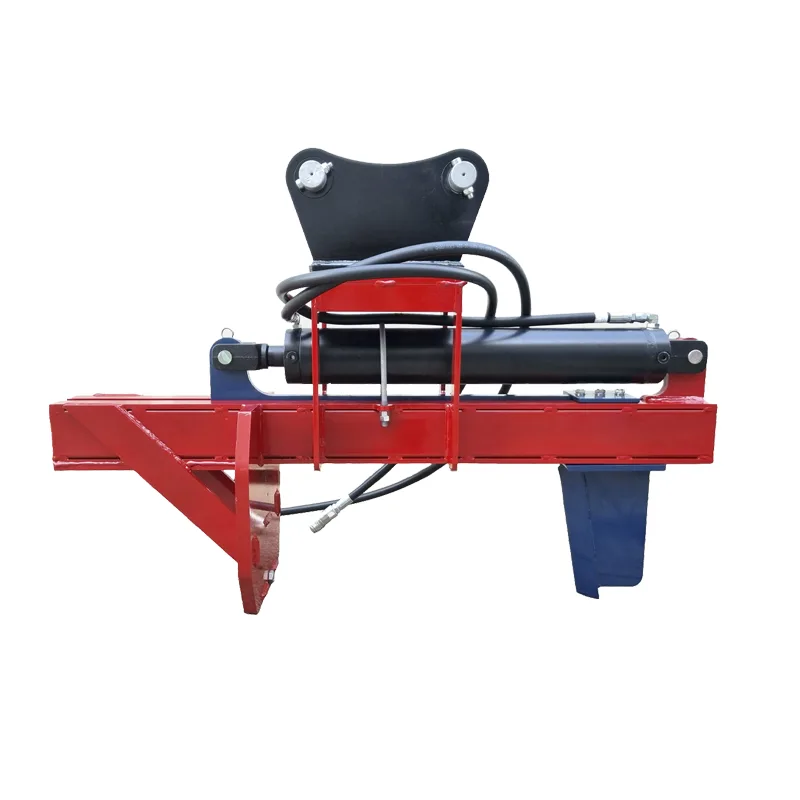
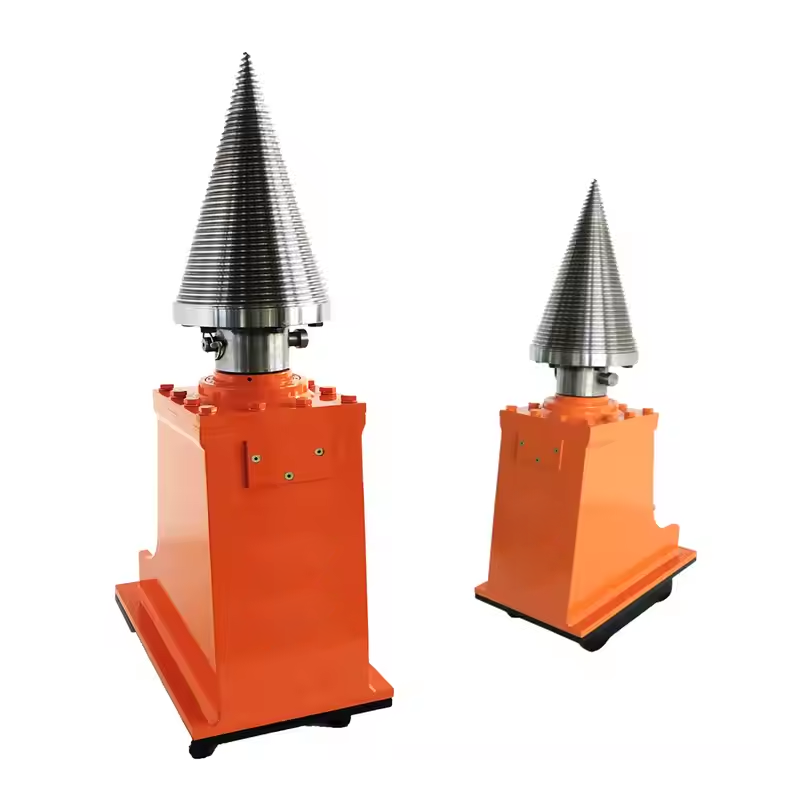
excavator Log Splitters
An important tool for breaking down large logs into smaller sections for biomass fuel production, transport efficiency, and secondary wood processing. It enhances material usability and reduces storage volume.
Integrated Biomass Preparation Workflow
A typical biomass project begins with vegetation cutting using shears or mulchers. Material is then reduced in size directly on-site, followed by collection using grapples. Larger wood segments are processed through log splitting systems, while final material is loaded for transport or distributed as biomass fuel feedstock.
This integrated workflow eliminates unnecessary transport of raw bulky material and enables direct conversion from vegetation to usable biomass resources.
Efficiency Benefits of Excavator-Based Biomass Systems
Compared to traditional forestry operations that rely on multiple machines and manual handling, excavator-based systems significantly reduce operational complexity. A single carrier machine can perform cutting, shredding, lifting, and loading tasks using interchangeable attachments.
This reduces fuel consumption, labor requirements, and site congestion while increasing processing speed and overall biomass yield efficiency.
Biomass Preparation vs Traditional Forestry Handling
Traditional forestry operations often transport raw logs and branches off-site for processing. In contrast, modern biomass preparation focuses on in-field processing, where material is converted into usable form at the source.
This shift supports renewable energy supply chains, reduces logistics costs, and improves sustainability in large-scale land management projects.
TGEC Forestry Mulcher – On-site biomass shredding and reduction
TGEC Sorting Grapple – Efficient biomass handling and separation
TGEC Hydraulic Shear – Controlled tree and branch cutting
TGEC Material Bucket – Loading and transport support
TGEC excavator Log Splitters – Log size reduction for biomass fuel processing