


Foundation Piling Equipment Solutions for Deep Foundation Engineering & Structural Stability
Foundation piling is a critical process in modern construction engineering, used to transfer structural loads deep into stable soil or rock layers. It is widely applied in high-rise buildings, bridges, ports, industrial facilities, and infrastructure projects where surface soil cannot provide sufficient load-bearing capacity.
These operations require precision, high-impact energy, and consistent vertical alignment. Excavator-based attachment systems have become a key solution for improving pile installation efficiency, reducing manual labor, and ensuring foundation integrity in complex ground conditions.
Foundation Piling Applications in Construction Engineering
High-rise building deep foundation systems
Bridge pier and abutment pile installation
Industrial plant structural foundations
Port and dock pile foundation engineering
Railway and highway infrastructure foundations
Retaining wall and slope stabilization piles
Urban underground structure support systems
Wind turbine foundation installation
Commercial complex deep foundation works
Soft soil and swamp land stabilization projects
Challenges in Foundation Piling Projects
Foundation piling projects often take place in complex geological conditions such as soft soil, mixed gravel layers, clay, sand, or fractured rock. Each condition requires different installation force, drilling depth, and pile alignment control.
Construction teams also face challenges such as vibration control, noise restrictions in urban areas, limited working space, and strict engineering accuracy requirements. Any deviation in pile positioning can directly affect structural safety and long-term stability.
To overcome these challenges, contractors increasingly rely on excavator-based piling systems that integrate drilling, driving, and ground preparation into a unified workflow.
Recommended Excavator-Based Foundation Piling Solutions
For most foundation engineering projects, a structured piling workflow is recommended:Drilling → Driving → Stabilizing → Supporting. This method ensures accurate pile placement and long-term structural reliability.
Excavator Pile Drivers – High-impact pile installation with controlled vertical force
Auger Attachments – Precision drilling for pre-pile hole formation
Hydraulic Breakers – Breaking rock layers and compact soil obstruction
Hydraulic Buckets – Site preparation and foundation pit excavation
This combination enables contractors to adapt to different soil conditions while maintaining installation speed and structural accuracy.
Core Equipment for Foundation Piling Operations
Excavator Pile Drivers
Excavator pile drivers are the core equipment in modern piling construction. They deliver controlled hydraulic impact force to drive piles into soil or rock layers with high precision. This ensures consistent vertical alignment and deep penetration required for structural stability.
Auger Attachments
Augers are used for pre-drilling pile holes in hard or mixed soil conditions. They help reduce driving resistance and improve installation accuracy for concrete, steel, or timber piles.
Hydraulic Breakers
Hydraulic breakers are essential in rocky or compacted ground conditions. They fracture underground obstacles, allowing smooth pile penetration and reducing installation delays.
Hydraulic Buckets
Hydraulic buckets support excavation of foundation pits, soil removal, and site leveling. They prepare stable working platforms for piling operations.
Hydraulic Grapples
Hydraulic grapples are used for handling pile materials, steel casing, and construction debris, improving logistics efficiency on foundation sites.
System-Based Approach to Foundation Piling Construction
Modern foundation piling is no longer a single-machine operation. Instead, it is a coordinated system where excavators move through sequential tasks across the construction site.
Each stage—drilling, driving, breaking, and preparation—works as part of a continuous workflow, reducing downtime and improving engineering consistency.
This system-based approach is especially important in large-scale infrastructure projects where hundreds or thousands of piles must be installed with identical precision.
Typical Foundation Piling Workflow
A standard workflow begins with site surveying and marking pile positions. Augers are then used to drill pilot holes when required. Excavator pile drivers install piles with controlled force, ensuring vertical alignment and depth accuracy.
In difficult ground conditions, hydraulic breakers are used to remove obstacles before or during installation. Hydraulic buckets assist in excavation and surface preparation throughout the process.
Final steps include pile alignment verification and foundation reinforcement preparation for structural construction.
Advantages of Excavator-Based Piling Systems
Higher pile installation speed and efficiency
Improved vertical alignment accuracy
Reduced manual labor requirements
Adaptability to multiple soil conditions
Lower construction downtime
Better performance in restricted job sites
Increased structural foundation reliability
Equipment Selection Strategy for Foundation Piling Projects
Excavator Pile Drivers – Primary pile installation system
Auger Attachments – Pre-drilling and soil preparation
Hydraulic Breakers – Rock and obstacle removal
Hydraulic Buckets – Excavation and site preparation
Hydraulic Grapples – Material handling and logistics support
Most foundation piling projects require a combination of multiple attachments to complete drilling, driving, preparation, and support operations efficiently.
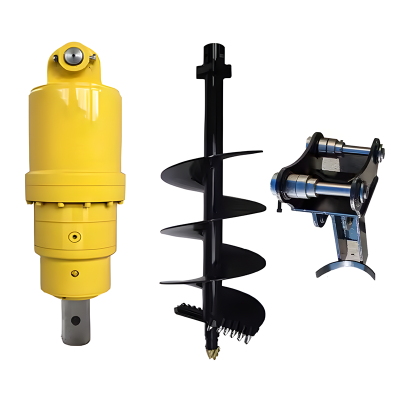
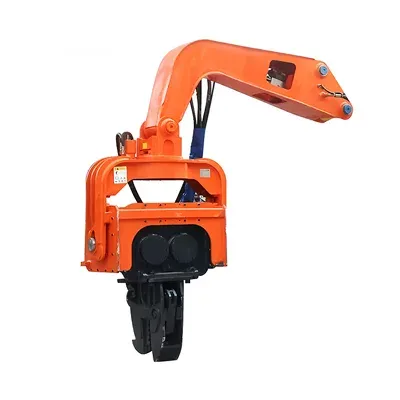
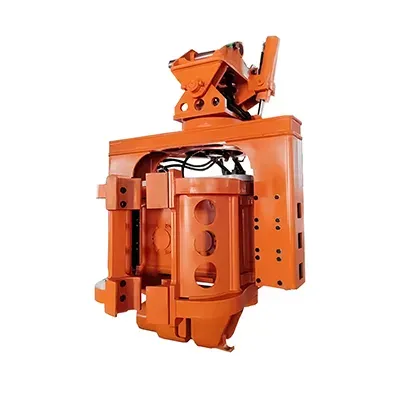
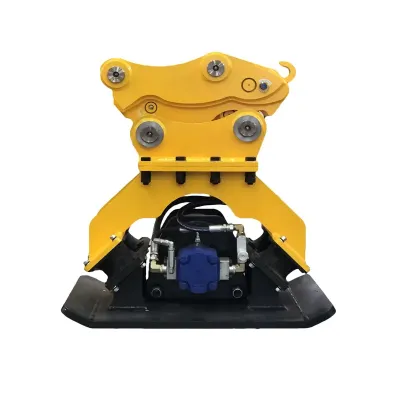
TGEC Excavator Pile Drivers – High-efficiency deep foundation piling systems
TGEC Auger Attachments – Precision drilling for pile foundations
TGEC Hydraulic Breaker – Hard ground and rock fragmentation
TGEC Hydraulic Bucket – Foundation excavation and site preparation
TGEC Hydraulic Grapple – Material handling and site logistics