


Environmental Restoration Equipment & Excavator Attachment Solutions for Land Recovery
Environmental restoration focuses on rebuilding degraded land ecosystems through reforestation, soil improvement, vegetation recovery, erosion control, and habitat reconstruction. These projects are widely applied in mining site rehabilitation, wildfire recovery zones, agricultural land restoration, and urban ecological redevelopment.
Modern restoration projects increasingly rely on excavator-based attachment systems to improve efficiency, reduce manual labor, and accelerate large-scale ecological recovery. TianGe provides a full range of excavator attachments designed to support tree planting, soil conditioning, vegetation management, and landscape rebuilding in complex terrain conditions.
Environmental Restoration Applications
Post-mining land rehabilitation and soil recovery
Reforestation and afforestation projects
Wildfire-affected land restoration
Wetland and ecological habitat reconstruction
Riverbank and erosion control stabilization
Desertification control and land improvement
Urban ecological redevelopment projects
Damaged agricultural land restoration
Coastal vegetation recovery and protection
Infrastructure corridor ecological rehabilitation
Challenges in Environmental Restoration Projects
Environmental restoration projects often deal with unstable soil conditions, uneven terrain, degraded vegetation, and large-scale land areas requiring precise and efficient replanting and soil treatment. Manual planting and soil handling methods are often slow, labor-intensive, and inconsistent in quality.
In addition, restoration contractors must meet strict environmental regulations, ensure long-term vegetation survival rates, and operate in remote or difficult-to-access areas. These challenges require specialized equipment that can handle digging, planting, soil mixing, and vegetation management efficiently.
To address these issues, excavator-mounted attachment systems provide a mechanized approach that significantly improves restoration speed, accuracy, and ecological success rates.
Recommended Environmental Restoration Solution
For most environmental restoration projects, TianGe recommends an integrated workflow:Soil Preparation → Planting → Vegetation Management → Land Stabilization.This method ensures long-term ecological recovery while improving operational efficiency and planting success rates.
Excavator Auger – Drilling holes for tree planting and soil preparation
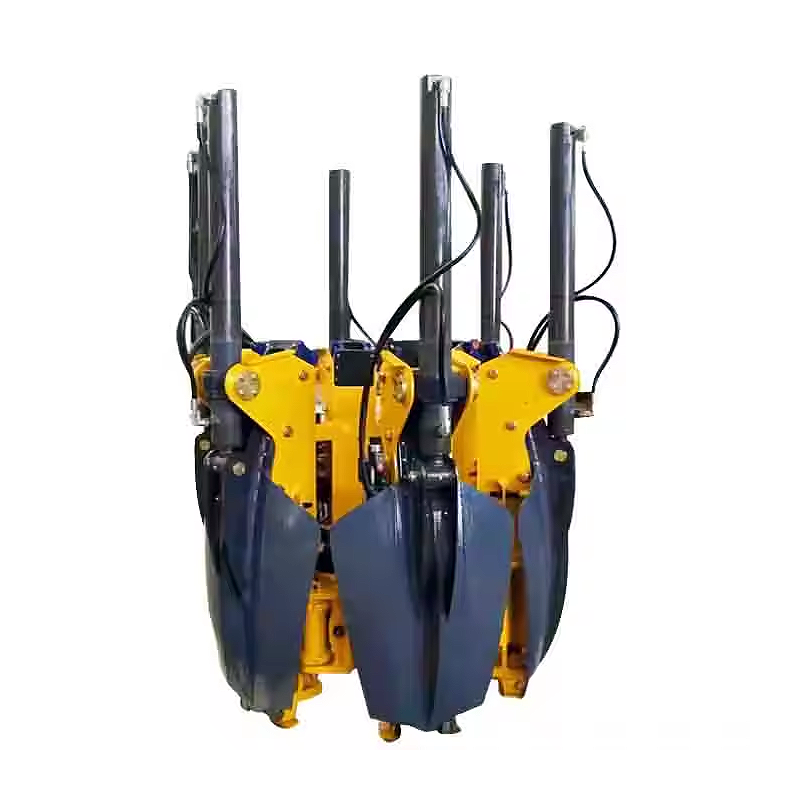
Tree Spades for Excavator – Transplanting mature trees and large saplings
Hydraulic Grapple – Handling vegetation, roots, and debris cleanup
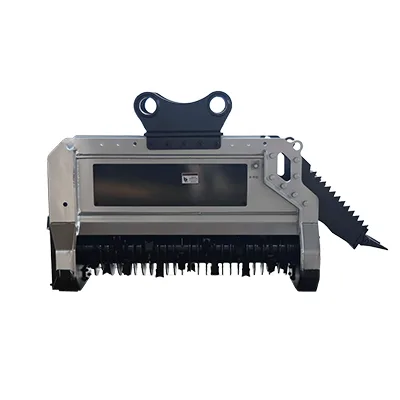
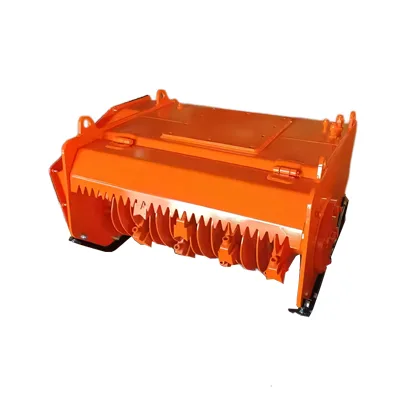
Excavator Mulcher – Clearing invasive plants and managing regrowth
Soil Compaction Attachment – Stabilizing restored ground layers
This combination allows contractors to efficiently restore degraded environments while ensuring high survival rates for planted vegetation and improved soil structure stability.
Core Equipment for Environmental Restoration
Tree Spades for Excavator
Tree spades for excavators are used for transplanting trees with intact root systems. They are essential for reforestation projects, urban greening, and landscape reconstruction where mature vegetation needs to be relocated efficiently.
Excavator Auger
Augers are used for drilling precise planting holes in various soil conditions. They improve planting efficiency and ensure consistent depth and spacing for reforestation and afforestation projects.
Excavator Mulcher
Mulchers are designed to clear brush, small trees, and invasive vegetation. They play a critical role in land preparation and ongoing vegetation management during ecological restoration.
Hydraulic Grapple
Grapples are used for handling roots, branches, and organic debris. They support land cleanup and help prepare sites for planting and soil rehabilitation activities.
Soil Compaction Attachment
Compaction tools are used to stabilize soil after planting and grading operations, ensuring better root establishment and long-term land stability.
Environmental Restoration Workflow
A typical restoration process begins with land clearing and soil assessment. excavator mulchers remove unwanted vegetation, while grapples clear debris and organic waste. Augers then prepare planting holes, followed by tree spades for large-scale transplantation. Finally, soil compaction attachments stabilize the restored ground to support long-term ecological recovery.
This systematic workflow improves restoration efficiency while ensuring consistent ecological outcomes across large and complex project sites.
Advantages of Excavator Attachments in Environmental Restoration
Faster large-scale land rehabilitation
Higher tree survival and planting accuracy
Reduced manual labor requirements
Improved soil preparation efficiency
Better erosion control and land stabilization
Enhanced ecological restoration success rates
Suitable for remote and difficult terrain operations
Equipment Selection Strategy for Restoration Projects
Excavator Auger – Soil drilling and planting preparation
Tree Spades – Mature tree transplantation
Excavator Mulcher – Vegetation clearing and land prep
Hydraulic Grapple – Debris handling and site cleanup
Compaction Tool – Soil stabilization after restoration
Most environmental restoration projects require a combination of planting, soil preparation, vegetation management, and stabilization tools to achieve sustainable ecological recovery.
TGEC Excavator Auger – Tree planting and soil drilling applications
TGEC Tree Spades for Excavator – Mature tree transplantation and reforestation
TGEC Excavator Mulcher – Vegetation control and land clearing
TGEC Hydraulic Grapple – Organic debris handling and cleanup
TGEC Soil Compaction Attachment – Ground stabilization and reinforcement