


Root Removal Equipment & Land Clearing Solutions
Root removal is a critical phase in land development, forestry management, agricultural reclamation, site preparation, and infrastructure construction. After trees are felled, large root systems and buried stumps often remain underground, creating obstacles for grading, excavation, drainage installation, road construction, and future landscaping work.
Efficient root removal requires more than simply pulling stumps from the ground. Contractors must loosen compacted soil, break root networks, separate organic debris, and prepare the site for its next stage of development. Excavators equipped with specialized attachments provide a faster, safer, and more cost-effective solution compared to manual excavation or dedicated stump grinding equipment.
Common Root Removal Applications
Land clearing and site development projects
Forestry harvesting and reforestation operations
Agricultural land reclamation
Residential and commercial construction site preparation
Road and highway expansion projects
Utility corridor clearing
Solar farm and wind farm development
Pipeline right-of-way preparation
Park and recreation area renovation
Large-scale landscaping projects
Challenges in Root Removal Projects
Tree roots often extend far beyond the visible stump, creating extensive underground networks that can be difficult to remove completely. Large hardwood species may develop deep taproots and dense lateral roots that resist conventional excavation methods.
In many projects, contractors must balance productivity with environmental considerations. Excessive excavation increases soil disturbance, while incomplete root removal can interfere with future grading, drainage systems, foundations, roads, and agricultural activities.
Root removal projects also frequently involve mixed conditions such as rocky ground, compacted soil, buried vegetation, and construction debris. Selecting the right excavation strategy becomes essential for minimizing operating costs and reducing project delays.
Recommended Root Removal Workflow
For most stump and root clearing operations, TianGe recommends a systematic workflow:Root Exposure → Root Separation → Extraction → Site Cleanup.
Root Exposure – Loosen surrounding soil to expose major root systems
Root Separation – Break and sever deep roots from the stump structure
Extraction – Lift and remove root balls and buried stump sections
Site Cleanup – Collect remaining roots, branches, and organic debris
This approach minimizes unnecessary excavation while improving productivity and preparing the site for future development activities.
Recommended Excavator Attachments for Root Removal
Excavator Rippers
excavator rippers are often the first attachment used during root removal operations. Their concentrated breakout force penetrates compacted soil, fractures root systems, and loosens buried stumps that would otherwise be difficult to extract.
Rippers are particularly effective in hard ground conditions, forestry sites, and undeveloped land where roots are deeply embedded beneath the surface.
Excavator Rakes
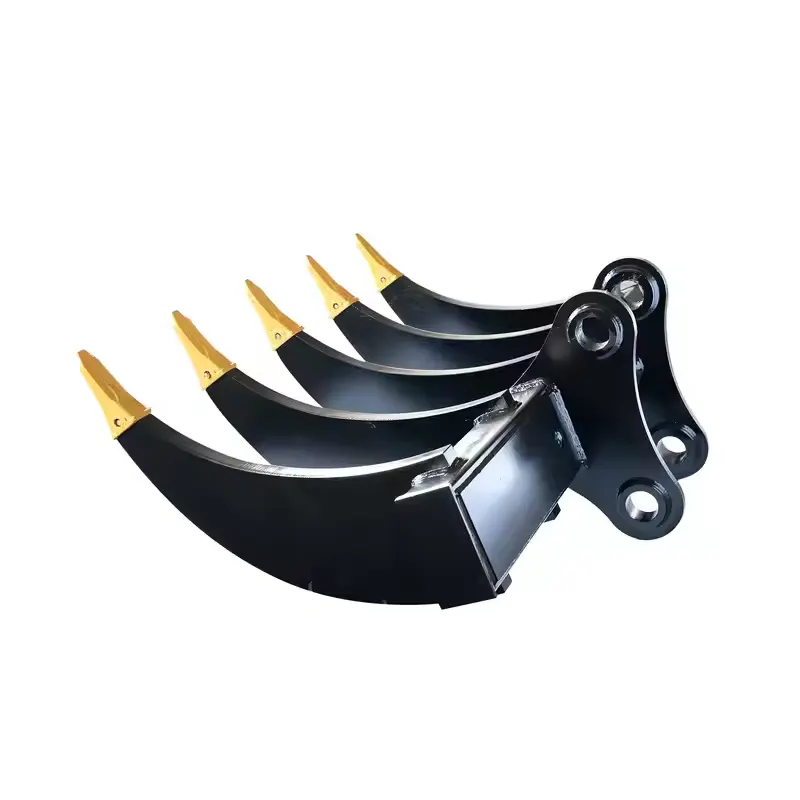
After major roots and stumps have been removed, excavator rakes help gather remaining roots, branches, vegetation, and organic debris. Their open-frame design allows soil to fall through while retaining larger materials, making site cleanup significantly faster.
Excavator rakes are widely used in land clearing, forestry maintenance, agricultural preparation, and landscaping projects where efficient debris separation is required.
Hydraulic Grapples
Hydraulic grapples simplify the handling and transportation of extracted stumps, logs, roots, and vegetation waste. They improve loading efficiency and reduce manual labor during cleanup operations.
Forestry Mulchers
When roots are accompanied by dense vegetation and brush, forestry mulchers can process organic material into mulch, reducing disposal requirements and accelerating site preparation.
Excavator Buckets
Heavy-duty excavation buckets are commonly used for exposing root systems, trenching around large stumps, and final grading after root removal is complete.
Root Removal Process for Land Development Projects
The process typically begins by exposing the root zone around the stump using excavation buckets. Excavator rippers then penetrate beneath the stump to sever major roots and loosen the root ball. Once the stump is detached from the surrounding soil, hydraulic grapples can remove and transport the material.
Following extraction, excavator rakes collect residual roots and organic debris while allowing clean soil to remain on-site. This creates a smoother, cleaner surface ready for grading, construction, farming, or landscaping activities.
Benefits of Using Excavator Attachments for Root Removal
Faster stump and root extraction
Reduced labor requirements
Lower site preparation costs
Improved land development efficiency
More complete root removal
Reduced soil disturbance compared with large-scale excavation
Better preparation for grading and construction activities
Increased productivity across forestry and agricultural projects
Root Removal Solutions for Different Industries
Different projects require different root removal approaches. Forestry operations often focus on clearing harvested land for replanting, while construction projects prioritize complete stump extraction before grading and foundation work.
Agricultural land reclamation typically requires removing roots that interfere with cultivation equipment, whereas utility and infrastructure projects focus on creating clear working corridors for installation and maintenance activities.
By combining excavator rippers, excavator rakes, grapples, and other specialized attachments, contractors can build an efficient workflow tailored to project requirements rather than relying on a single piece of equipment.
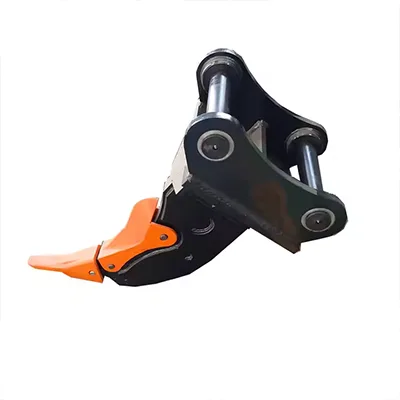
TGEC Excavator Rippers – Deep root penetration and stump loosening
TGEC Excavator Rakes – Root collection and debris separation
TGEC Hydraulic Grapples – Root and stump handling
TGEC Forestry Mulchers – Vegetation reduction and biomass processing
TGEC Heavy-Duty Buckets – Excavation and root exposure operations
TGEC excavator attachments are engineered for demanding land clearing, forestry, agricultural, and construction applications. With durable materials, optimized designs, and OEM customization options, TianGe helps contractors improve efficiency throughout every stage of root removal and site preparation.