


Soil Compaction Equipment & Compactor Attachments Solutions
Soil compaction is a fundamental process in construction and earthworks that improves ground density, stability, and load-bearing capacity. It is widely used in road construction, building foundations, pipeline backfilling, and land preparation projects.
Modern construction relies on excavator-based compactor attachments and dedicated compaction equipment to achieve faster, deeper, and more uniform soil densification across different soil conditions and project environments.
Soil Compaction Applications in Construction
- Road base compaction and highway construction
- Building foundation soil preparation
- Pipeline trench backfilling and compaction
- Railway subgrade stabilization
- Airport runway foundation compaction
- Landfill and waste site stabilization
- Industrial yard and warehouse ground preparation
- Retaining wall backfill compaction
- Embankment and slope stabilization
- Municipal infrastructure development
Compactor Attachments for Excavators
Hydraulic Plate Compactor
A widely used compactor attachment for excavators, designed to deliver strong vibration force for compacting soil, gravel, and mixed materials in trenches, foundations, and confined areas.
Vibratory Drum Roller Attachment
Used for large-scale surface compaction such as roadbeds and embankments. It provides uniform density and improved load-bearing performance over wide construction areas.
Excavator Compaction Wheel
Ideal for trench backfilling and narrow working spaces. It ensures consistent compaction along pipeline trenches and utility installations.
Hydraulic Tamper
Designed for precision compaction in corners, edges, and restricted zones where large rollers cannot operate effectively.
Compaction Plate for Mini Excavator
Suitable for small construction projects and urban works. It offers flexible operation for sidewalks, landscaping, and utility repair jobs.
How Soil Compaction Improves Construction Quality
Proper soil compaction increases ground stability, reduces settlement risk, and improves structural durability. It ensures that foundations, roads, and infrastructure systems remain stable under long-term load conditions.
Different soil types require different compaction methods. Cohesive soils need vibration and impact force, while granular soils respond better to rolling and repeated pressure application.
Using excavator-mounted compactor attachments improves efficiency by combining excavation and compaction into a single machine workflow, reducing equipment cost and project time.
Choosing the Right Compactor Attachment
- Plate Compactor – Ideal for trenches, foundations, and confined areas
- Drum Roller Attachment – Best for highways, roads, and large surfaces
- Compaction Wheel – Suitable for pipeline backfilling and narrow trenches
- Hydraulic Tamper – Used for edge and corner compaction
- Mini Compactor Plate – Flexible use in urban and small-scale projects
Selecting the right compactor attachment depends on soil type, project scale, and site accessibility. Many contractors use multiple compaction tools across different construction stages.
Construction Workflow in Soil Compaction Projects
A typical soil compaction process begins with excavation and grading, followed by layer-by-layer backfilling and compaction. Excavator-mounted compactors are used during each layer to ensure uniform density and structural stability.
This workflow is widely applied in road construction, pipeline installation, foundation engineering, and infrastructure development projects.
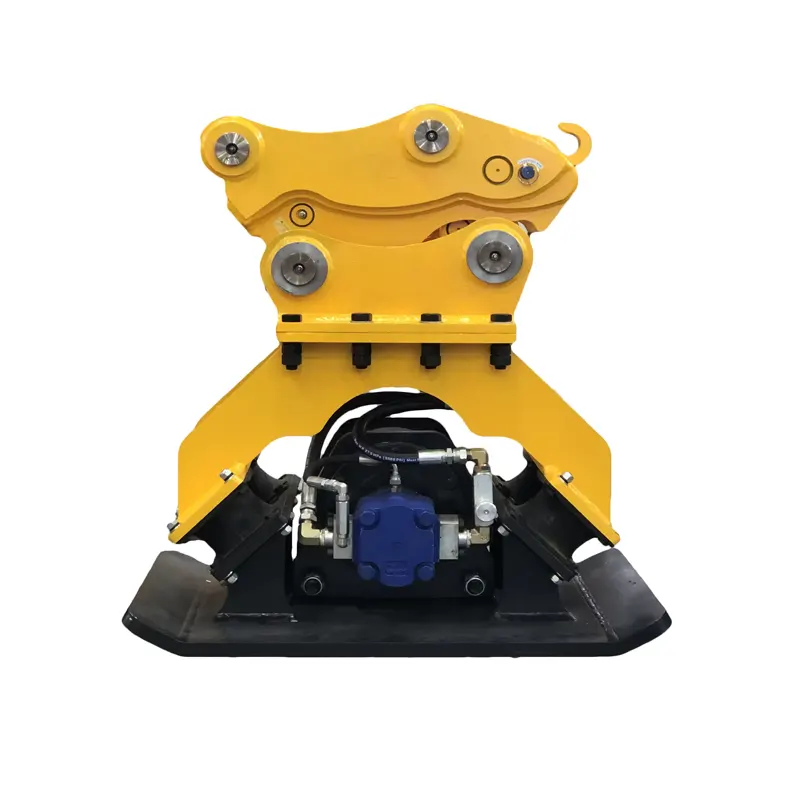
TGEC Hydraulic Plate Compactor – Trench and foundation compaction
TGEC Drum Roller Attachment – Road and large surface compaction
TGEC Compaction Wheel – Pipeline backfilling efficiency solution
TGEC Hydraulic Tamper – Edge and restricted area compaction
TGEC Mini Compactor Plate – Urban and small project applications