


Utility Infrastructure Construction Solutions for Modern Energy, Water & Communication Networks
Utility infrastructure projects form the backbone of modern society, covering essential systems such as power transmission, water supply, gas distribution, and telecommunications. These projects require precise, safe, and efficient construction methods across both urban corridors and remote environments.
Because utility work often involves long linear routes, mixed soil conditions, and restricted working spaces, excavator-based attachment systems have become essential for improving productivity and maintaining consistent installation quality.
Key Utility Infrastructure Application Scenarios
Power transmission pole installation and grid expansion
Underground water pipeline trenching and installation
Gas distribution line construction and maintenance
Telecommunication tower foundation and cable routing
Fiber optic network trenching and conduit laying
Urban utility corridor development and upgrades
Roadside utility relocation and maintenance projects
Substation and energy facility groundwork preparation
Industrial park utility network installation
Remote infrastructure expansion in rural regions
Core Challenges in Utility Construction Projects
Utility infrastructure construction requires continuous linear excavation, precise depth control, and minimal disruption to surrounding environments. Many projects are carried out along roadsides, urban streets, or existing service corridors where space is limited.
Ground conditions vary significantly along a single route—ranging from soft soil to compacted layers and buried obstacles—making it difficult to rely on a single manual method.
To meet these demands, excavator attachment systems provide flexibility, allowing one machine to handle multiple phases of infrastructure construction efficiently.
Excavator-Based Utility Infrastructure Solutions
Hydraulic Bucket for Trenching & Excavation
The hydraulic bucket is widely used for trenching operations in water, gas, and electrical pipeline installations. It ensures consistent excavation depth and efficient soil removal along long utility corridors.
Auger Attachment for Pole & Foundation Drilling
Augers are essential for drilling holes for utility poles, signposts, and communication towers. They provide precise diameter control and stable vertical alignment for structural foundations.
Excavator Post Driver for Pole Installation
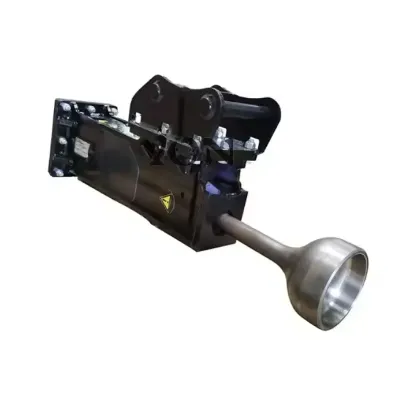
The excavator post driver is critical for power line poles, fencing structures, and utility markers. It delivers controlled hydraulic impact force, ensuring fast and accurate installation in varied soil conditions.
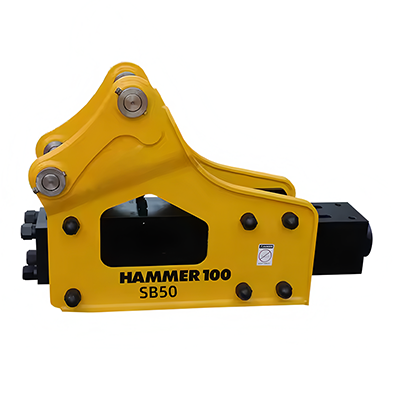
Hydraulic Breaker for Hard Ground Conditions
Used to break rock layers, asphalt, or compacted ground that obstructs trenching and installation work, ensuring continuous progress along utility routes.
Hydraulic Grapple for Material Handling
Supports transportation of pipes, cables, poles, and construction materials along long infrastructure corridors, reducing manual handling and improving site efficiency.
System Approach to Utility Infrastructure Construction
Utility projects are highly sequential and depend on continuous workflow along linear corridors. Excavators equipped with interchangeable attachments act as multi-functional construction units, moving along project routes and completing excavation, installation, and backfilling tasks.
This system-based approach reduces equipment downtime and improves coordination across different construction phases such as trenching, drilling, installation, and restoration.
It also allows contractors to adapt quickly to changing ground conditions without requiring multiple specialized machines.
Typical Construction Workflow in Utility Projects
A standard utility infrastructure project begins with route surveying and marking, followed by trench excavation or drilling depending on installation type. Pipes, cables, or poles are then installed and aligned, after which backfilling and surface restoration are completed.
In more complex environments, rock breaking or obstacle removal may be required before trenching or installation can proceed.
TGEC Hydraulic Bucket – Efficient trenching and soil excavation
TGEC Auger Attachment – Precision drilling for poles and foundations
TGEC Excavator Post Driver – Fast utility pole installation system
TGEC Hydraulic Breaker – Hard ground and asphalt removal
TGEC Hydraulic Grapple – Material handling for infrastructure logistics
As a professional attachment manufacturer, :contentReference[oaicite:0]{index=0} provides integrated excavator solutions for utility, construction, and infrastructure sectors, helping contractors improve efficiency and reliability across complex network installation projects.