


Arborist Operations Equipment & Tree Management Solutions
Arborist operations involve the inspection, maintenance, pruning, removal, and management of trees in urban environments, parks, residential developments, utility corridors, commercial properties, and forestry areas. These projects require specialized equipment capable of handling trees safely while minimizing damage to surrounding infrastructure and landscapes.
As labor costs continue to rise and safety regulations become stricter, contractors, municipalities, utility companies, and tree care professionals increasingly rely on excavator attachments to improve productivity and reduce manual tree climbing operations. Modern arborist equipment allows operators to complete tree removal, branch cutting, vegetation control, and debris handling more efficiently while maintaining high safety standards.
Arborist Operations Applications
Urban tree maintenance and management
Hazardous tree removal projects
Storm damage cleanup operations
Residential tree removal services
Commercial property tree management
Utility line vegetation control
Roadside tree maintenance
Park and recreation area tree care
Golf course tree management
Municipal forestry operations
Tree pruning and canopy management
Land clearing for development projects
Challenges in Arborist Operations
Tree care projects often involve working around buildings, roads, power lines, fences, pedestrian areas, and other sensitive infrastructure. Removing large trees safely requires precise cutting and controlled material handling to avoid property damage and operational risks.
Traditional tree removal methods frequently depend on chainsaw crews, climbing specialists, aerial lifts, and extensive manual labor. These approaches can be time-consuming, costly, and difficult to deploy in challenging environments.
Contractors also face increasing pressure to improve safety performance, reduce project timelines, and efficiently process tree debris after removal. Selecting the right equipment workflow is essential for maintaining profitability and operational efficiency.
Recommended Equipment Solution
For most arborist projects, TianGe recommends a four-stage workflow:Cutting → Handling → Processing → Site Cleanup.This systematic approach improves safety, productivity, and material management throughout the project.
Grapple Saw for Excavator – Controlled cutting and removal of tree limbs and trunks
Tree Shear – Fast cutting of standing trees and vegetation
Hydraulic Grapple – Secure handling and loading of logs, branches, and debris
Forestry Mulcher – Processing brush, limbs, and vegetation residue
Stump Grinder – Removal of remaining tree stumps after felling
Combining multiple attachments allows arborist contractors to complete tree care operations with fewer machines, lower labor requirements, and improved jobsite safety.
Core Equipment for Arborist Operations
Grapple Saw for Excavator
The grapple saw for excavator is one of the most valuable tools in professional arborist operations. It securely grips branches and tree sections before cutting, allowing operators to remove limbs and trunks in a controlled manner. This significantly improves safety when working near roads, buildings, power lines, and public spaces.
Tree Shear
Tree shears provide efficient cutting of standing trees, saplings, and dense vegetation. They are commonly used for large-scale tree removal, vegetation management, and utility corridor maintenance projects.
Hydraulic Grapple
Hydraulic grapples simplify log handling, branch loading, debris sorting, and material transport. They improve efficiency while reducing manual handling requirements.
Forestry Mulcher
Forestry mulchers process branches, brush, undergrowth, and vegetation residue into mulch. This reduces disposal costs and helps maintain clean project sites.
Stump Grinder
Stump grinders remove remaining tree stumps after felling operations, preparing sites for landscaping, construction, or redevelopment projects.
Typical Arborist Workflow
A typical arborist project begins with tree assessment and hazard identification. grapple saws or tree shears remove branches and trunks safely while hydraulic grapples transport material for processing. Forestry mulchers reduce brush and organic waste, while stump grinders complete site restoration.
This workflow improves operational safety, accelerates project completion, and minimizes disruption to surrounding properties and infrastructure.
Benefits of Excavator Attachments for Arborist Operations
Improved operator safety
Reduced dependence on tree climbing crews
Higher productivity in tree removal projects
Controlled cutting and handling of hazardous trees
Lower labor and equipment costs
Faster storm damage response
Efficient debris processing and cleanup
Reduced risk of property damage
Why Contractors Choose Excavator-Based Arborist Solutions
Modern arborist businesses are increasingly adopting excavator attachment systems because they allow multiple tasks to be completed using a single carrier machine. Rather than relying on separate cutting, lifting, and cleanup equipment, operators can quickly switch attachments and perform the entire tree management process with greater efficiency.
This approach is particularly valuable for municipal tree maintenance programs, utility vegetation management contractors, storm recovery teams, and professional tree service companies seeking to improve operational performance while reducing overall project costs.
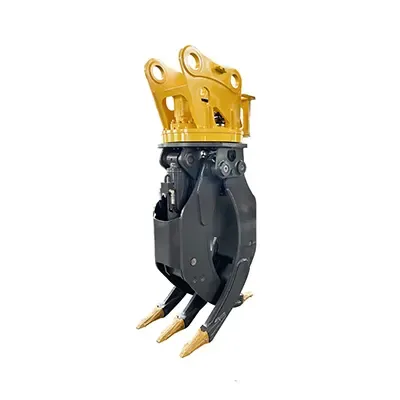
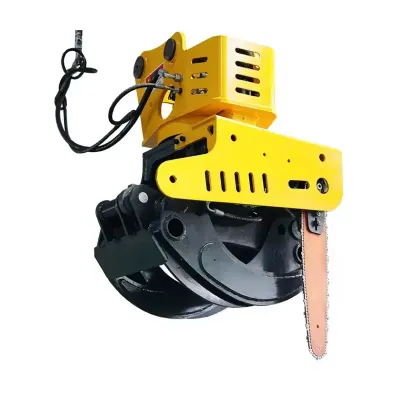
TGEC Grapple Saw for Excavator – Precision tree removal and limb cutting
TGEC Tree Shear – Fast tree harvesting and vegetation control
TGEC Hydraulic Grapple – Log and debris handling
TGEC Forestry Mulcher – Brush and vegetation processing
TGEC Stump Grinder – Complete stump removal solutions