


Retaining Wall Construction Equipment Solutions for Slope Stability & Structural Earth Retention
Retaining wall projects are essential in modern civil engineering for stabilizing slopes, preventing soil erosion, and supporting vertical or near-vertical changes in ground elevation. These structures are widely used in highways, residential developments, railways, ports, and hillside construction projects.
Because retaining walls must resist lateral soil pressure over long periods, construction quality depends heavily on precise excavation, strong foundations, and proper drainage preparation. Excavator-based attachment systems play a key role in achieving these requirements efficiently.
Key Retaining Wall Application Scenarios
Highway slope stabilization and embankment support walls
Residential hillside property retaining structures
Railway corridor slope protection systems
Bridge approach and abutment soil retention
Riverbank and flood control retaining structures
Industrial site land leveling and soil containment
Commercial complex underground parking support walls
Road widening slope reinforcement projects
Landscape architecture and terraced land design
Rockfall protection and hillside safety systems
Challenges in Retaining Wall Construction
Retaining wall construction requires careful coordination of excavation depth, foundation stability, drainage control, and backfill compaction. Soil conditions can vary significantly within a single project, ranging from soft soil to compacted clay and rock layers.
Improper preparation may lead to structural failure due to water pressure buildup or uneven soil movement behind the wall. Therefore, precision in excavation and ground preparation is critical.
Contractors also face space limitations in urban or hillside environments, where access for heavy equipment may be restricted.
Excavator-Based Retaining Wall Construction Solutions
Hydraulic Bucket for Excavation & Foundation Preparation
Hydraulic buckets are used for digging foundation trenches, shaping slope profiles, and removing excess soil during retaining wall construction. They ensure accurate excavation depth and clean working surfaces.
Hydraulic Breaker for Rock & Hard Soil Removal
Breakers are essential when encountering rock layers or compacted ground that obstruct foundation excavation. They enable smooth progress in difficult geological conditions.
Auger Attachment for Drainage & Anchor Drilling
Augers are used to drill drainage holes and anchor points behind retaining walls. Proper drainage is critical to reduce hydrostatic pressure and improve long-term stability.
Hydraulic Grapple for Material Handling
Grapples assist in moving rocks, blocks, steel reinforcement, and construction materials along narrow or sloped job sites, improving efficiency and safety.
Hydraulic Compactor for Soil Stabilization
Compactors are used to compress backfill soil behind retaining walls, ensuring density and reducing settlement risks over time.
System Approach to Retaining Wall Projects
Retaining wall construction is a multi-stage engineering process involving excavation, foundation preparation, wall assembly, drainage installation, and backfilling. Excavators equipped with interchangeable attachments function as multi-role machines across each phase.
This system-based approach improves workflow continuity, reduces equipment changes, and ensures consistent quality across the entire structure.
It also allows contractors to adapt quickly to slope variations and changing ground conditions in real time.
Typical Retaining Wall Construction Workflow
A standard workflow begins with site surveying and slope marking, followed by excavation of foundation trenches using buckets. Hard ground sections are broken using hydraulic breakers before foundation leveling is completed.
Drainage systems and anchor points are then installed using augers. Wall structures are constructed, followed by controlled backfilling and compaction to ensure stability and pressure balance.
Final steps include surface shaping and erosion protection measures for long-term durability.
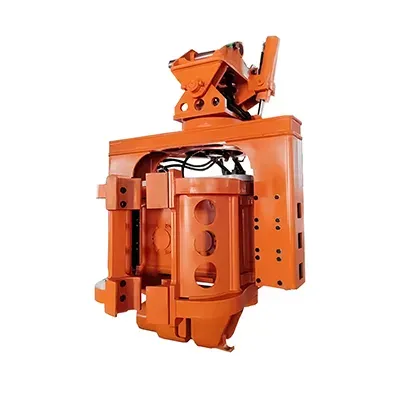
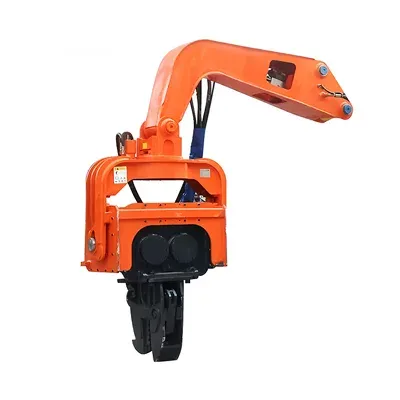
TGEC Hydraulic Bucket – Foundation excavation and slope shaping
TGEC Hydraulic Breaker – Rock and hard soil fragmentation
TGEC Auger Attachment – Drainage and anchor hole drilling
TGEC Hydraulic Grapple – Material handling in confined slopes
TGEC Hydraulic Compactor – Backfill soil compaction and stabilization
As a professional attachment manufacturer, :contentReference[oaicite:0]{index=0} provides integrated excavator solutions for civil engineering, infrastructure, and slope stabilization projects, helping contractors build safer and more durable retaining wall systems.