


Utility Corridor Clearing & Vegetation Management Excavator Attachments
Utility corridor clearing refers to the maintenance and management of vegetation along power lines, pipelines, communication networks, and transportation corridors. These areas require regular removal of trees, brush, and tree stumps to ensure safe access, prevent service interruptions, and reduce fire risk.
Modern utility maintenance operations rely on excavator-mounted attachments to efficiently remove vegetation and tree stumps while minimizing manual labor. TianGe provides professional-grade solutions designed for stump extraction, grinding, cutting, and land clearing in demanding corridor environments.
Utility Corridor Clearing Applications
Power line right-of-way vegetation management
Pipeline corridor maintenance and clearing
Telecommunication line access clearing
Railway corridor vegetation control
Roadside utility infrastructure maintenance
Wildfire prevention vegetation removal
Emergency storm damage cleanup
Tree and stump removal in restricted access areas
Challenges in Utility Corridor Maintenance
Utility corridors often extend across remote, uneven, or restricted terrain where traditional machinery access is limited. Vegetation grows rapidly, and tree stumps can obstruct maintenance vehicles and equipment.
Operators face challenges such as dense root systems, mixed soil conditions, underground utilities, and strict safety regulations near live infrastructure. Efficient clearing requires equipment that combines cutting force, precision, and minimal ground disturbance.
Without specialized attachments, stump removal and vegetation control become time-consuming, costly, and inconsistent across large corridor networks.
Recommended Utility Clearing Solution Strategy
TianGe recommends a structured workflow for utility corridor clearing operations:Cutting → Stump Removal → Grinding → Site Cleanup.This approach ensures complete vegetation elimination while improving operational efficiency and safety compliance.
Forestry Mulcher – Clears brush, small trees, and dense vegetation
Stump Shear – Cuts and separates tree stumps at ground level
Stump Puller for Excavator – Extracts deep-rooted stumps with minimal soil disruption
Stump Grinder for Excavator – Grinds remaining stump material into mulch
Hydraulic Grapple – Handles debris loading and site cleanup
This integrated system significantly improves corridor clearance speed while ensuring long-term vegetation control and reduced regrowth.
Core Equipment for Utility Corridor Clearing
Forestry Mulcher
Forestry mulchers are designed to shred trees, brush, and dense vegetation along utility corridors. They provide fast land clearing and reduce biomass volume for easier site management.
Stump Shear
Stump shears are used to cut tree stumps close to ground level, making them easier to remove or process in subsequent operations.
Stump Puller for Excavator
Stump pullers extract deep-rooted stumps directly from the ground, making them ideal for large-scale corridor clearing where complete root removal is required.
Stump Grinder for Excavator
Stump grinders reduce remaining stump material into fine chips, improving site leveling and preventing regrowth in cleared corridors.
Hydraulic Grapple
Hydraulic grapples assist in handling, collecting, and loading cleared vegetation and stump debris for transport or disposal.
Utility Corridor Clearing Workflow
A standard utility corridor clearing operation begins with vegetation reduction using a forestry mulcher. Stump shears and pullers are then used to remove remaining tree bases and root systems. Stump grinders process leftover material, ensuring a clean and level surface. Finally, grapples handle debris removal and site cleanup.
This structured workflow reduces maintenance cycles, improves safety along utility networks, and ensures long-term corridor accessibility.
Advantages of Excavator Attachments in Utility Clearing
Faster vegetation and stump removal efficiency
Reduced manual labor and operational risk
Improved safety near utility infrastructure
Lower long-term maintenance costs
Effective wildfire risk reduction
Minimal soil disturbance during stump extraction
Consistent corridor accessibility and compliance
Equipment Selection Strategy for Utility Projects
Forestry Mulcher – Dense vegetation and brush clearing
Stump Shear – Surface stump cutting operations
Stump Puller – Deep-rooted stump extraction
Stump Grinder – Final stump residue processing
Hydraulic Grapple – Material handling and cleanup
Most utility corridor projects benefit from combining cutting, extraction, grinding, and cleanup attachments to achieve full-cycle vegetation control.
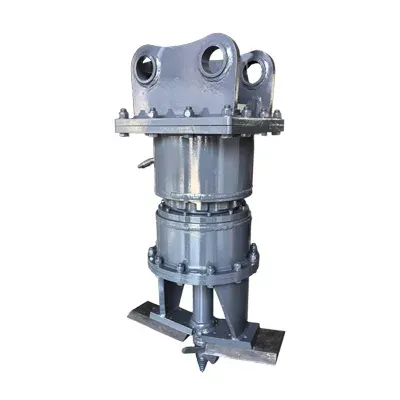
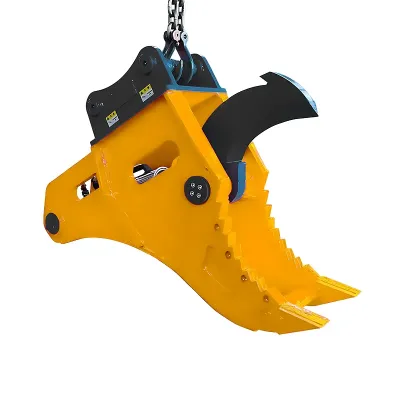
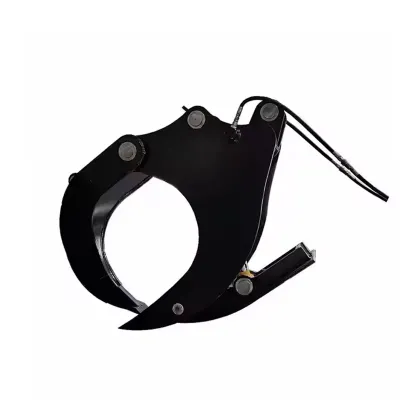
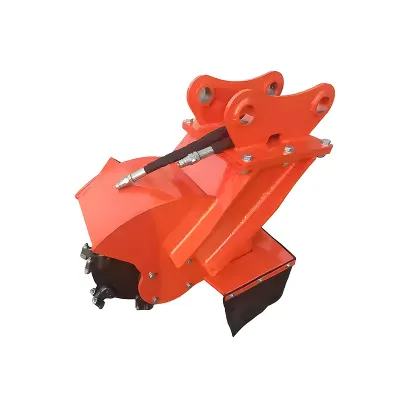
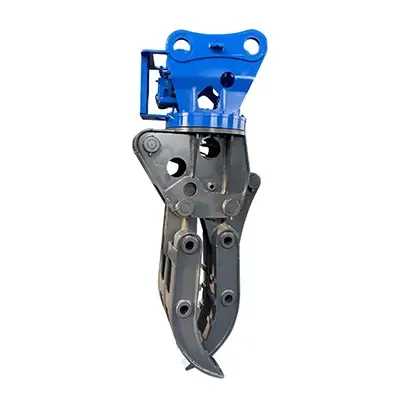
TGEC Forestry Mulcher – Vegetation and brush clearing applications
TGEC Stump Shear – Efficient stump cutting and reduction
TGEC Stump Puller for Excavator – Deep root extraction solutions
TGEC Stump Grinder – On-site stump grinding and residue control
TGEC Hydraulic Grapple – Utility corridor debris handling