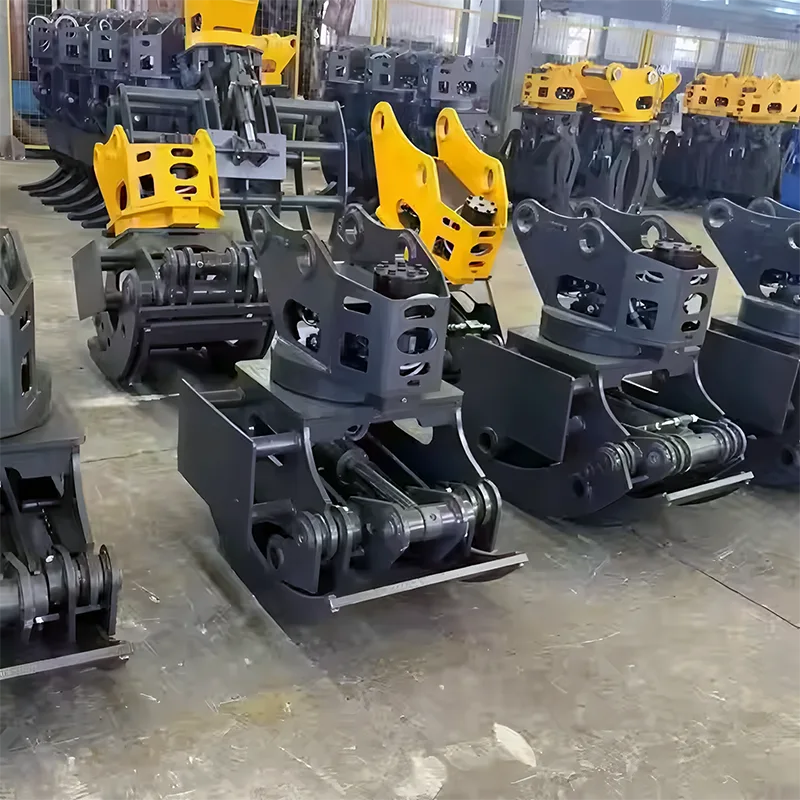
Product Overview
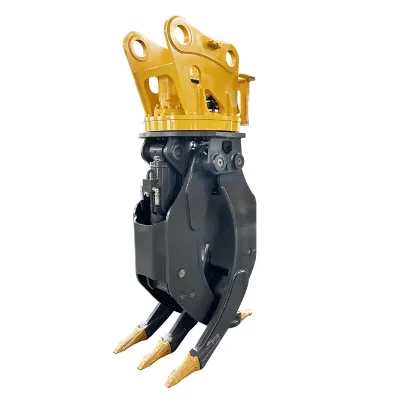
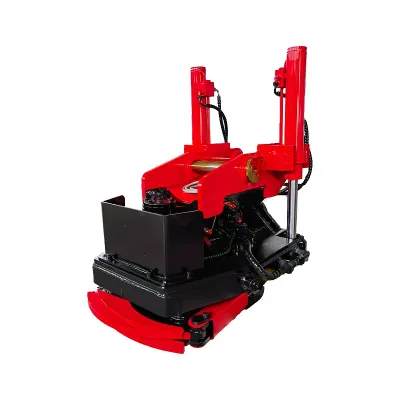
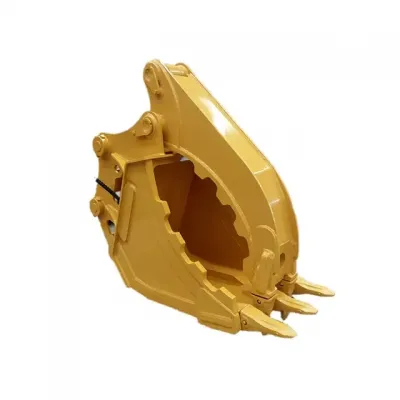
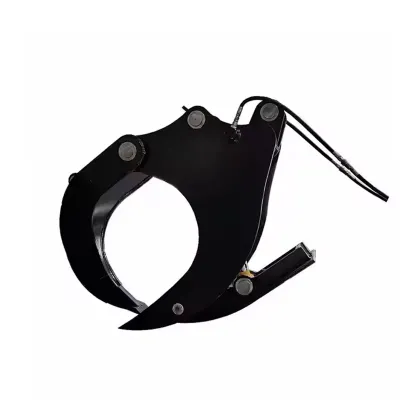
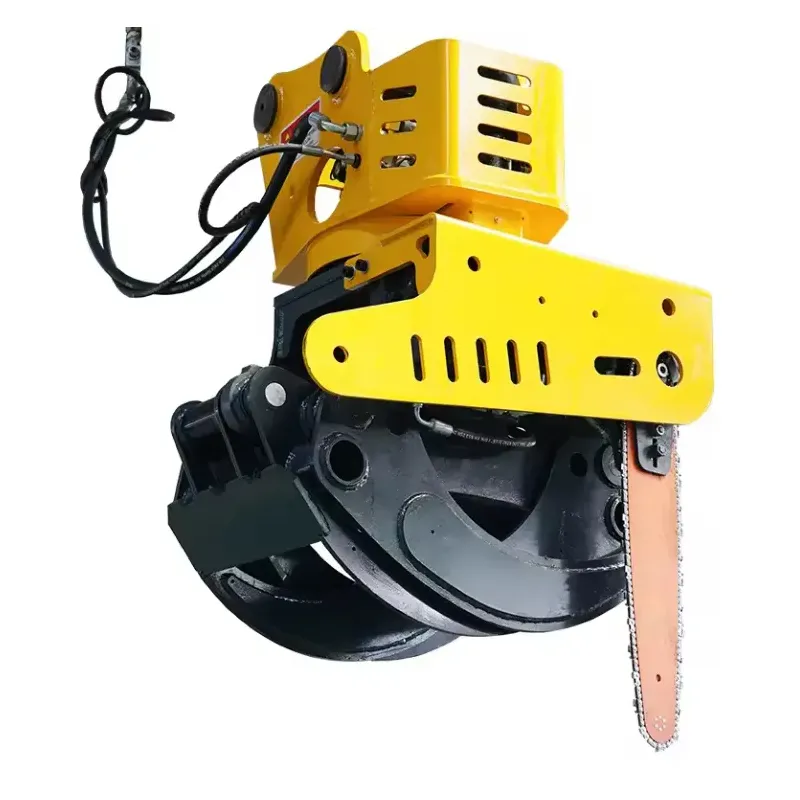
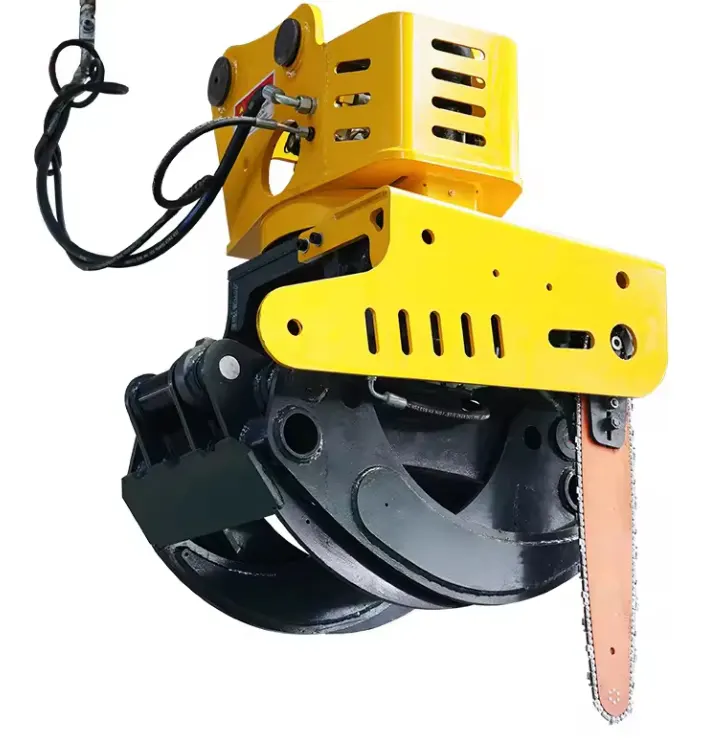
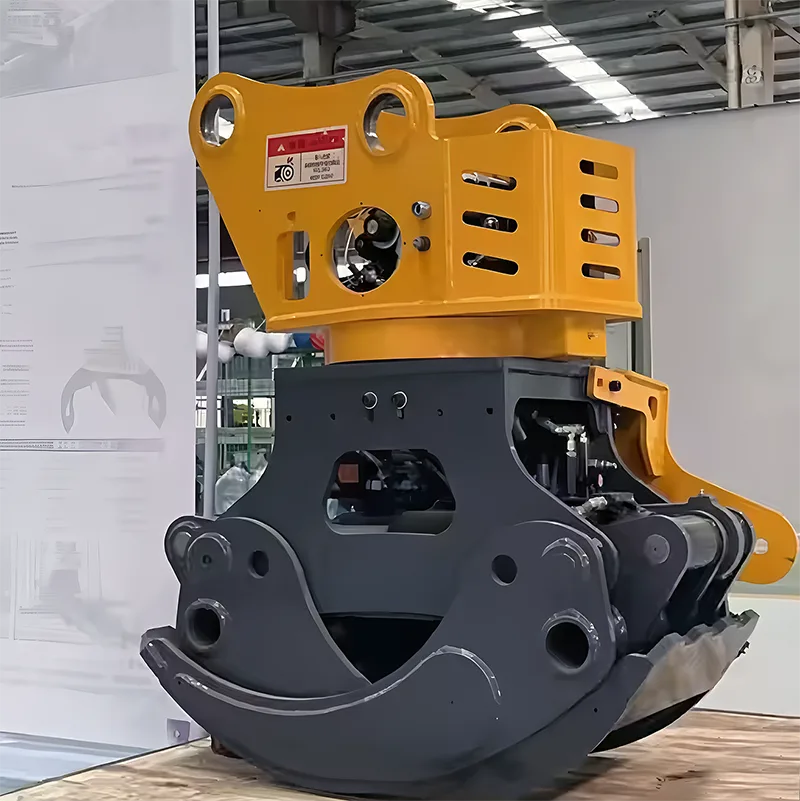
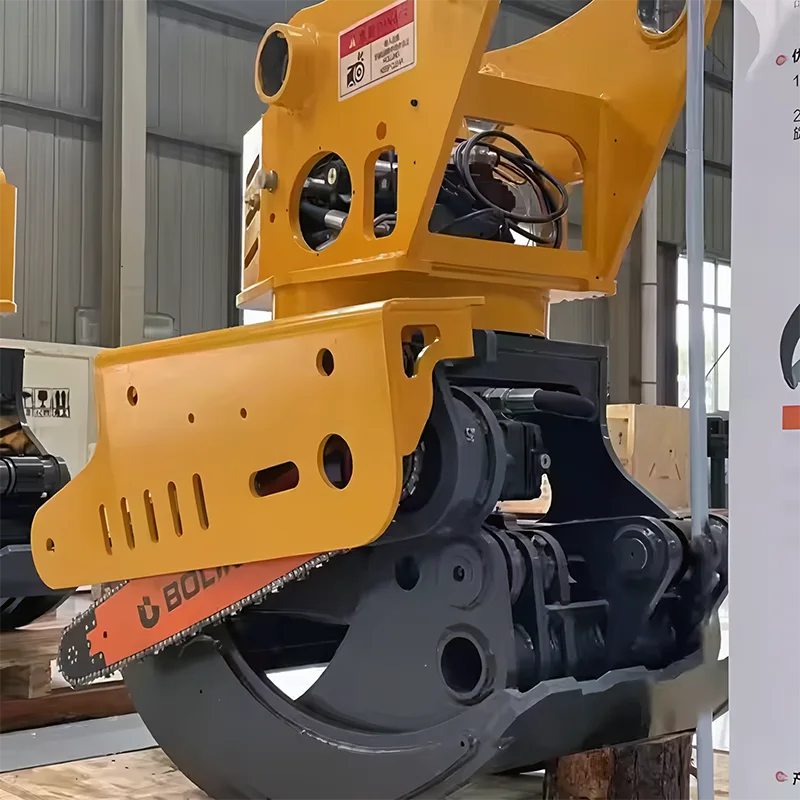
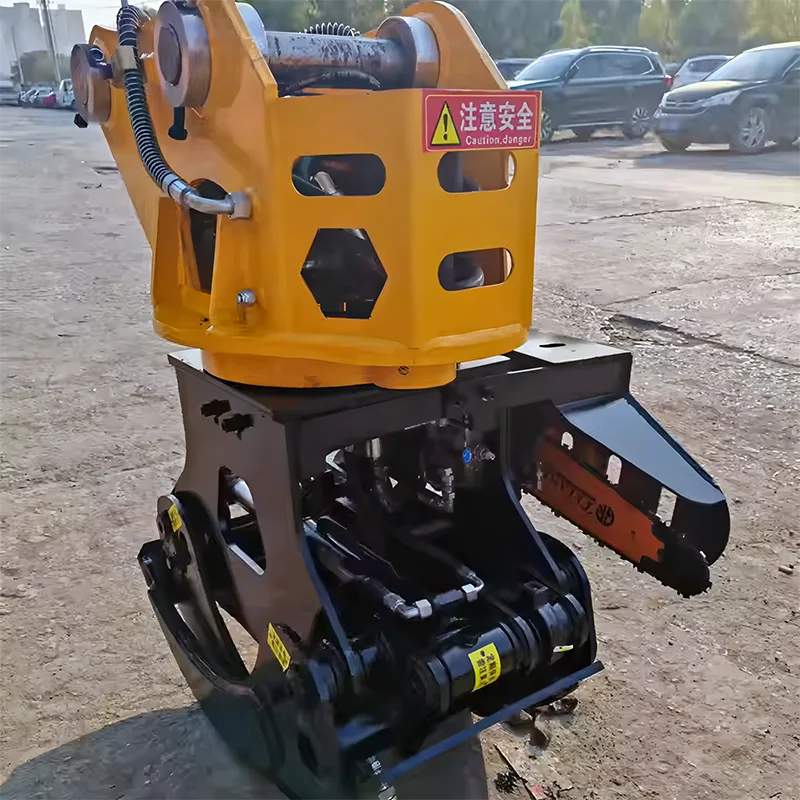
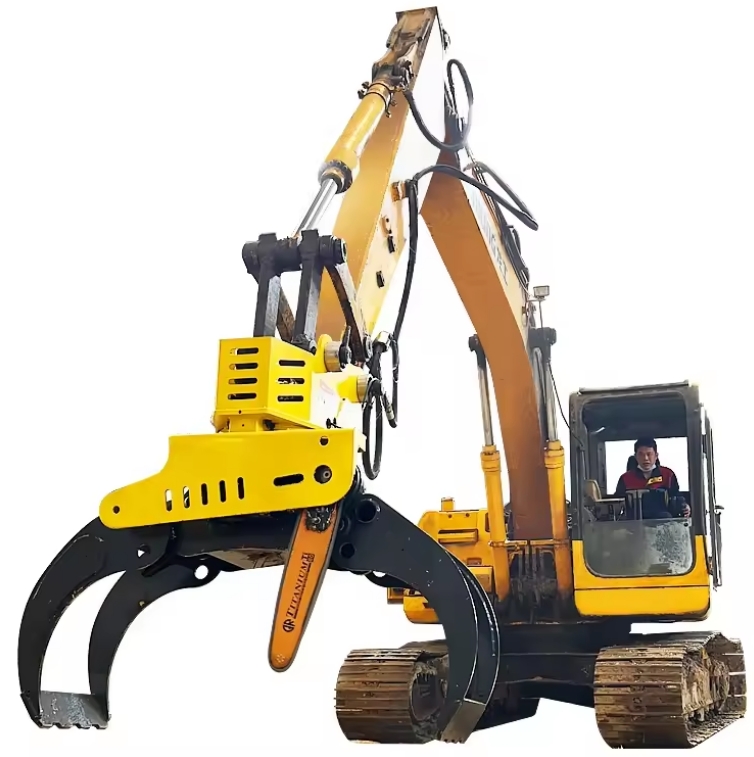
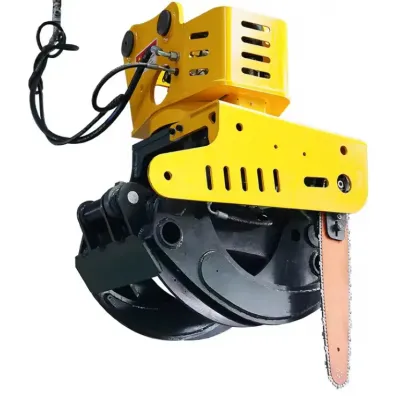
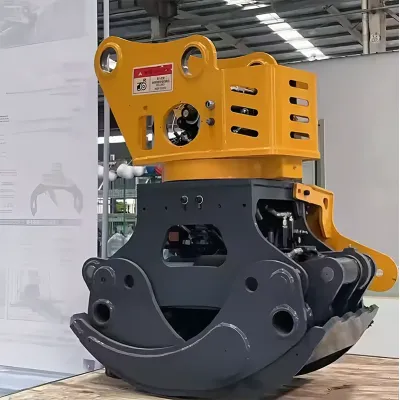
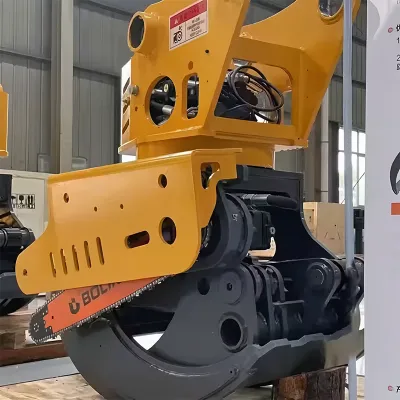
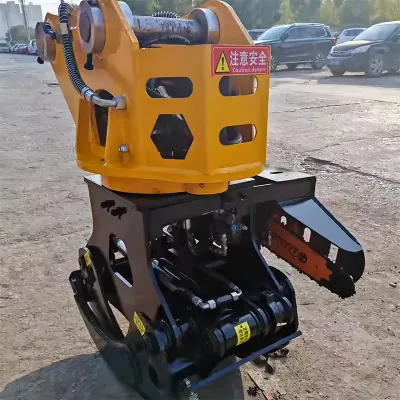
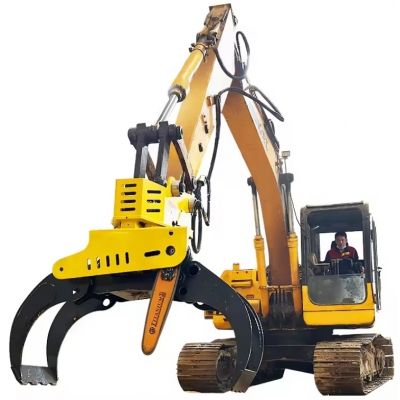
What sets a grapple saw apart is its ability to do three jobs with one tool: cut, clamp, and rotate. The grapple locks onto the trunk before the saw engages — that means controlled felling direction, not guesswork. Once the tree is down, the same clamp holds the log while the rotation motor spins it to any angle for truck loading, stacking, or processing. No second operator, no second attachment, no wasted movement.
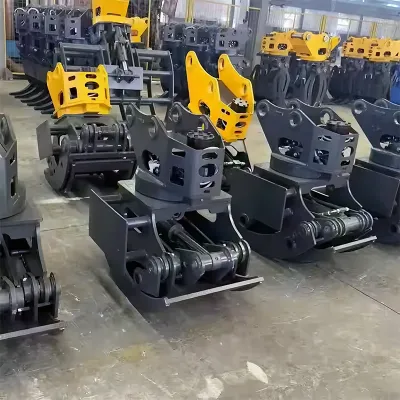
The lineup is straightforward. The TG-GS350 tips the scales at 450 kg, pairs with 6–10 ton excavators, runs an 18-inch bar, and handles logs up to 1–2 tons. The TG-GS450 is a step up at 550 kg, fits 10–20 ton machines, swings a 21-inch bar, and manages 2–3 ton loads. Both are built tough, with hydraulic drive from the machine's auxiliary circuit and custom brackets available for oddball pin sizes. For a complete run-down of the whole family, visit the grapple saws category page.
Technical Specifications
| Specification | TG-GS350 | TG-GS450 |
|---|---|---|
| Total Weight | 450 kg (992 lb) | 550 kg (1213 lb) |
| Overall Dimensions | 830×500×1100 mm (32.7×19.7×43.3 in) | 910×620×1150 mm (35.8×24.4×45.3 in) |
| Applicable Excavator Weight | 6–10 ton | 10–20 ton |
| Max. Working Pressure | 21–25 MPa (3046–3626 psi) | 28–32 MPa (4061–4641 psi) |
| Cylinder Working Pressure | 21 MPa (3046 psi) | 28 MPa (4061 psi) |
| Swing Motor Displacement | 625 mL | 825 mL |
| Swing Speed | 5–20 r/min | 10–30 r/min |
| Max. Opening Width | 1250 mm (49.2 in) | 1350 mm (53.1 in) |
| Motor Operating Pressure | 16 MPa (2321 psi) | 22 MPa (3191 psi) |
| Max. Load Capacity | 1–2 t (1.1–2.2 short ton) | 2–3 t (2.2–3.3 short ton) |
| Saw Guide Length | 18 in (457 mm) | 21 in (533 mm) |
Numbers are a starting point — actual performance will vary with your machine's hydraulics, the wood you're cutting, and site conditions. Always verify fit before ordering.
Model Selection Guide
Which one is right for you? Here's the short version: if your excavator is in the 6–10 ton class and you're dealing with smaller timber and lighter clearing jobs, the TG-GS350 with its 18-inch bar and 1–2 ton capacity is the natural choice. If you're running 10–20 tons and taking on bigger trees and heavier work, step up to the TG-GS450 — 21-inch bar, 2–3 ton load limit. But don't stop at tonnage. The real question is whether your machine can lift the attachment plus a log at full reach. That's the number that matters. Check your load chart. And if you want to see the full picture, head over to the main grapple saw page.
Installation & Mounting
Fitting a grapple saw to your excavator comes down to three measurements: pin diameter, pin spacing, and arm width. Don't guess — measure your machine. These numbers vary wildly between brands, and even between model years. Once you have them, we can match you with a standard bracket, a quick-coupler adapter, or a custom fabrication if your machine is an oddball. You'll also need a dedicated auxiliary circuit with enough flow to run the saw motor, grapple cylinders, and rotation motor — plus a case drain for the rotation unit. Hoses and fittings are included, routed to suit your specific machine.
Standard pin-on setup uses your existing bucket pins
Adapter plates available for all major couplers
Custom brackets made to order for non-standard pins
Full hydraulic hose kit supplied with the attachment
Key Features
One attachment does it all — saw, grapple, and rotator in a single unit
18″ or 21″ guide bar options to match your typical tree size
Hydraulic grapple locks onto the trunk for safe, controlled felling
360° continuous rotation for precise log orientation
Two weight classes: 450 kg for 6–10 t machines, 550 kg for 10–20 t
Load limits from 1 ton up to 3 tons
Generous jaw opening — 1250 mm on the GS350, 1350 mm on the GS450
Replacement chains, bars, and wear parts always in stock
Application Scenarios
Selective logging: cut and clamp in one motion — no second attachment needed to keep the log from rolling.
Log deck work: grab, spin, and place logs exactly where you want them for truck loading or milling.
Right-of-way clearing: slice through brush and trees, then move the debris out of the way without changing tools.
Storm response: fallen trees are unpredictable — the grapple gives you control over unstable, broken material.
Orchard removal: take out dead or diseased trees cleanly, without damaging the healthy ones next to them.
Backyard tree work: the compact footprint fits through gates and works close to houses and fences.
How It Works
The sequence is simple. Swing the open grapple around the trunk and clamp down — this locks the tree in place before the saw even starts. That's the safety move: the tree can't go anywhere until you want it to. Then hit the saw control; the chain cuts through the wood while the grapple holds firm. Once the cut is complete, lift the log with the excavator arm, then use the rotation function to orient it however you need — horizontal for a flatbed truck, vertical for stacking, or tilted for the processor. Release the grapple and you're done. From first clamp to final release, everything happens from the cab with standard hydraulic controls. The key to good results? Get the grapple positioned right before you cut, and keep your movements smooth.
Wear & Service
The chain and bar take the hardest hit, day in and day out. Check the chain every morning — sharpness, tension, damaged teeth. A dull chain doesn't just slow you down; it overloads the hydraulic motor and can kick back, which is no joke. Bars wear too — look for grooves, bending, or uneven rails, and swap them out before they compromise your cut quality. Beyond that, keep an eye on hydraulic hoses (chafing and cracking are the usual suspects), cylinder seals (watch for drips), pivot pins (play means wear), and the rotation motor (listen for rough operation). TGEC carries everything you'll need: chains, bars, sprockets, cylinders, seals, hoses, pins, and bushings. Lube the pivot points daily when you're working hard, and stick to your excavator's hydraulic service intervals. Don't forget bar oil — most units have an automatic oiler, but you still need to keep the reservoir topped up.
Dealer & Bulk Orders
We supply directly to dealers, contractors, rental fleets, and equipment brands — factory pricing, private-label options, and volume discounts for regular buyers. If you're ordering in quantity, we can discuss modifications: different bar lengths, custom jaw widths, special bracket configurations, coupler plates for odd machines, even your own paint scheme and badging. And if you're buying multiple attachment types (mulchers, shears, grapples, couplers), we can consolidate everything into one shipment to cut your freight costs. Give us a call with your target models and quantities, and we'll put together a bulk package.
Request a Quote
Getting a quote is straightforward. Share your excavator's make, model, and year — plus the tree diameters and approximate log weights you handle most often. Tell us what you're doing with it: felling, clearing rights-of-way, storm work, or orchard removal. We'll check hydraulic flow specs, pin measurements, and lift capacity, then send you a proposal with the right saw configuration, mounting brackets, hose kit, and delivery timeline. No guesswork, no surprises.