Product Overview
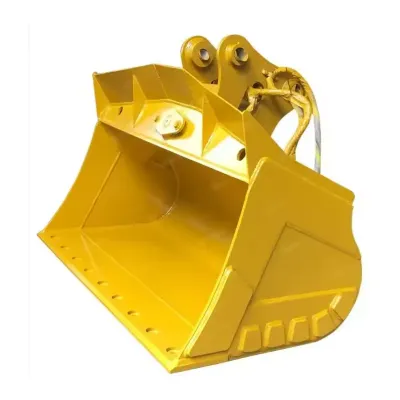
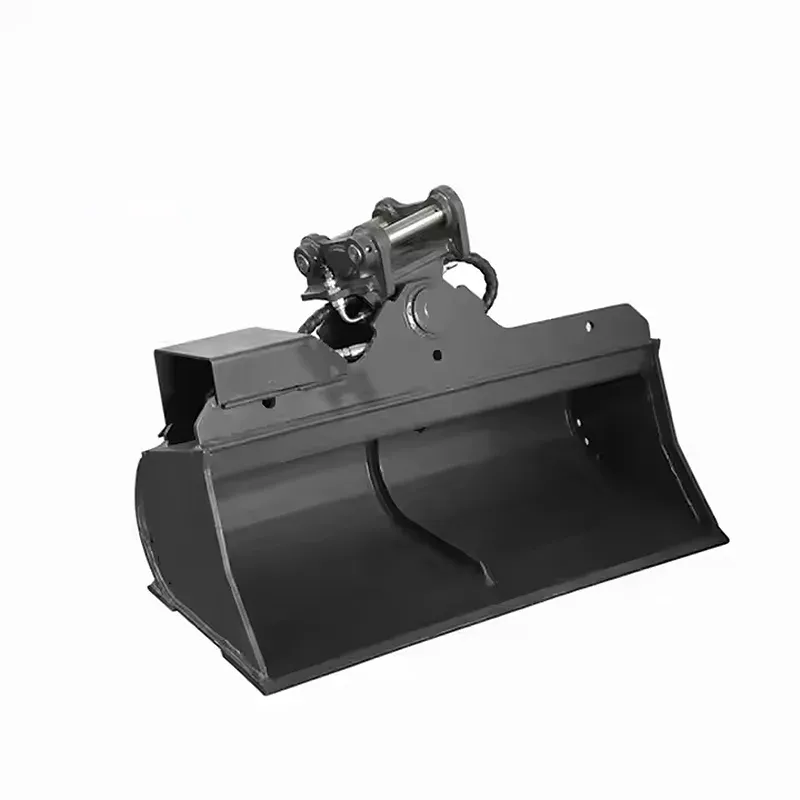
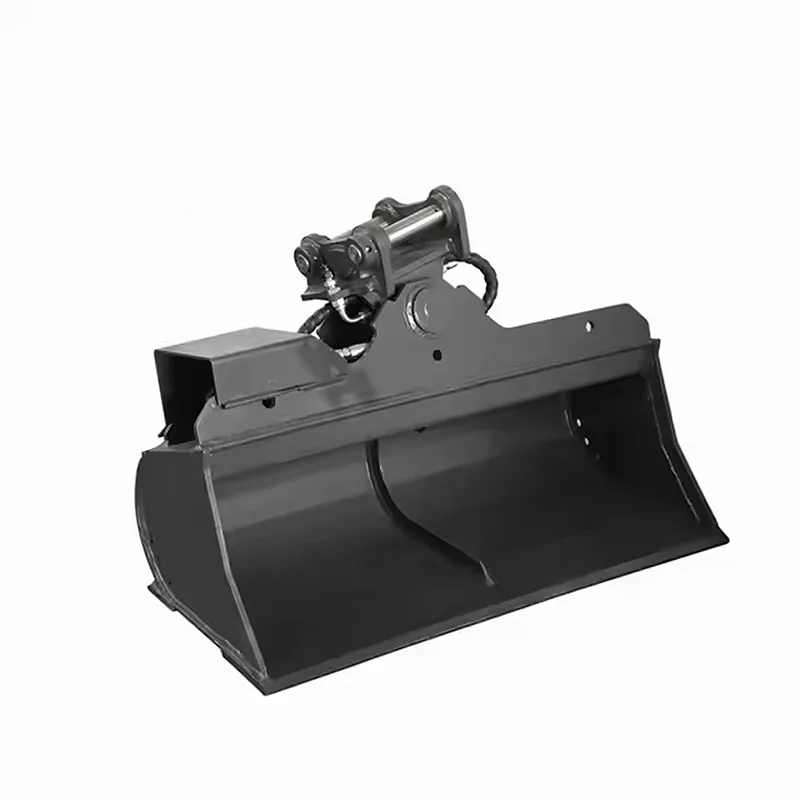
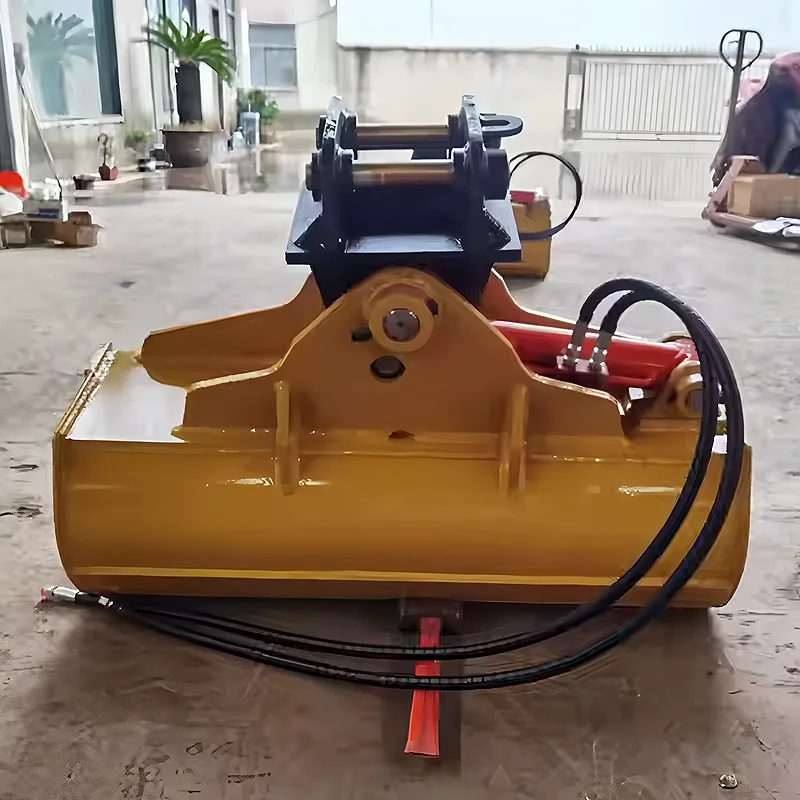
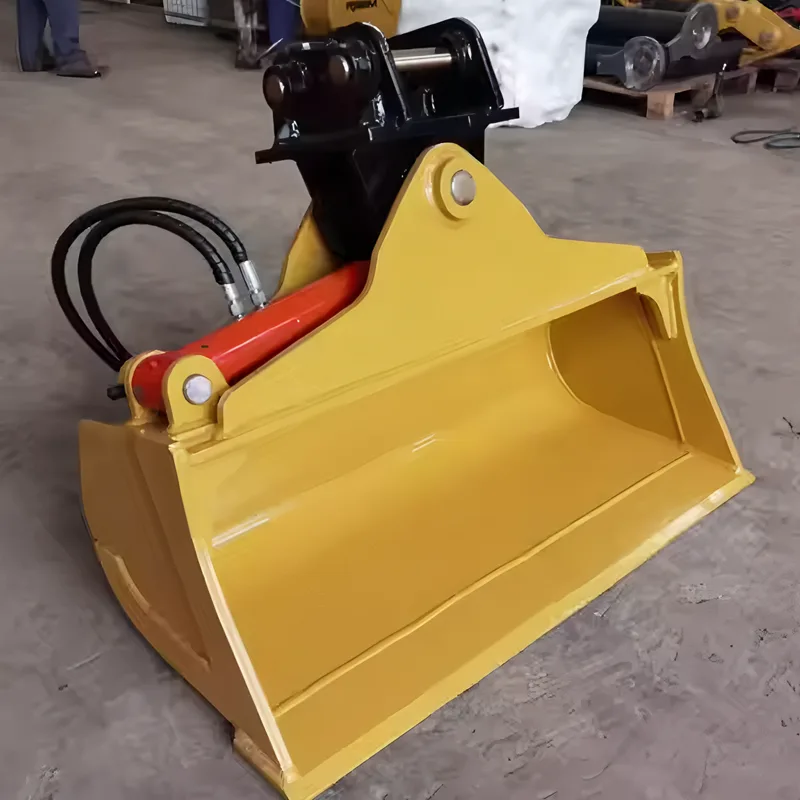
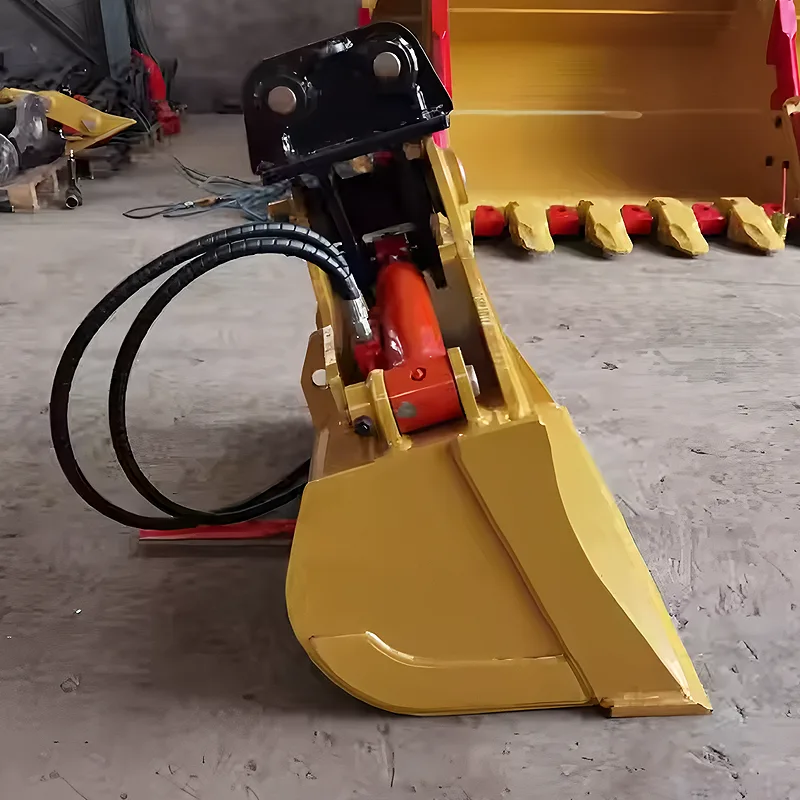
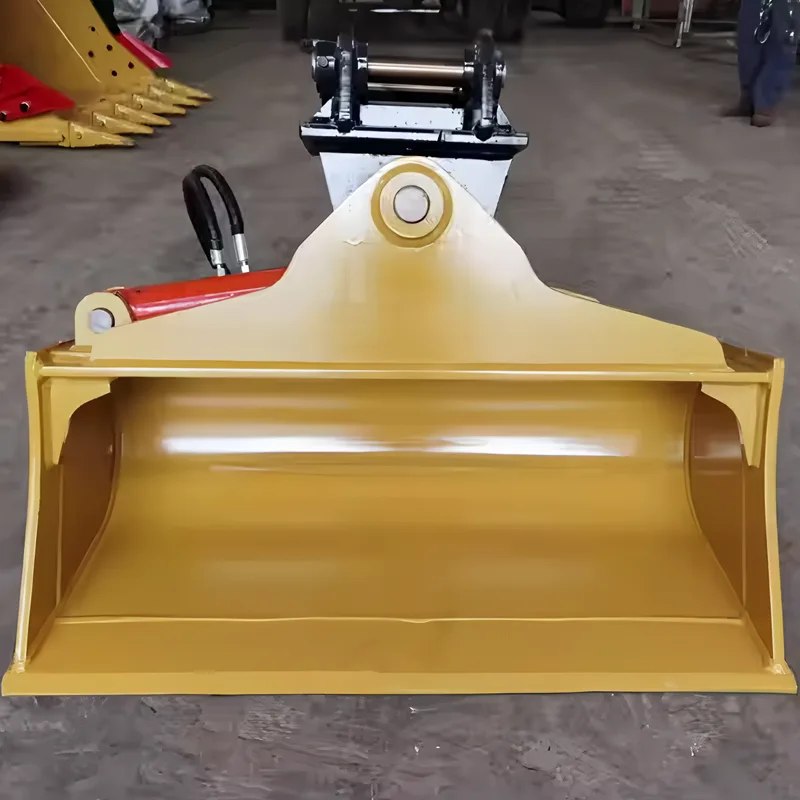
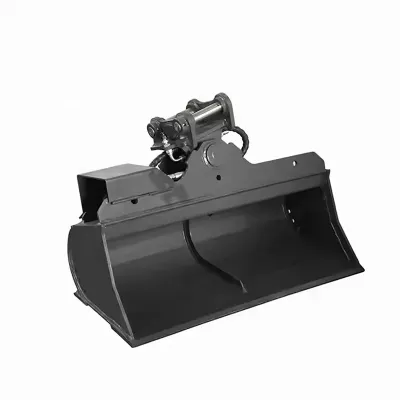
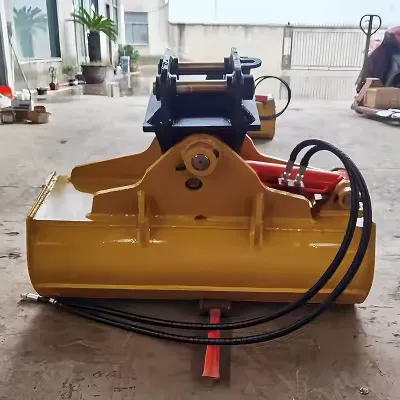
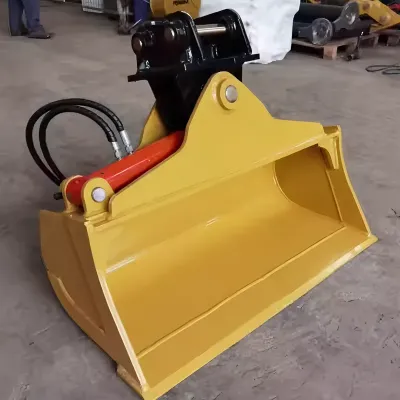
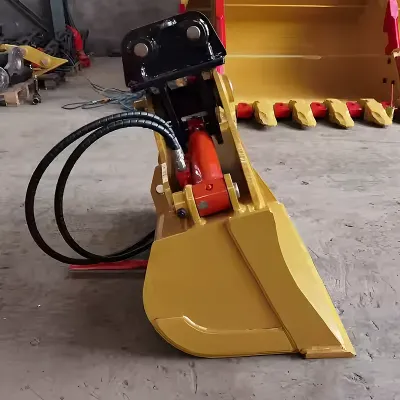
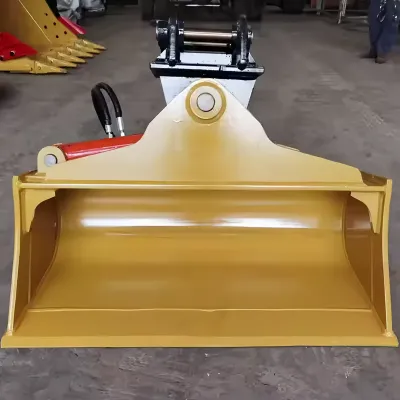
A tilt bucket incorporates a hydraulic rotating cradle positioned between the excavator stick and the bucket shell. That lets the operator angle the cutting edge as much as 45 degrees to either side—all without swinging the machine around. That one feature simplifies grading and contour work—instead of constant boom and stick corrections, the operator can angle the bucket to track the slope directly. Road crews, landscaping outfits, and drainage specialists find that a tilt bucket can reduce the number of passes needed to finish a grade and helps operators maintain a consistent grading angle.
TGEC designs its tilt buckets with a double-acting hydraulic cylinder housed inside the cradle assembly, shielded from debris and impact by the bucket shell and side plates. The bucket shell is fabricated from high-strength steel, with a reinforced cutting edge and optional bolt-on side cutters for harsh, abrasive conditions. Nine models cover excavators from 1 to 28 tons, with widths from 1000 to 2000 mm and capacities matched to the carrier's lift capability.
Within the excavator bucket range, the tilt bucket falls between the fixed ditch cleaning bucket and the more specialized V-ditch bucket. Operators who spend most of their time finishing slopes and contours will appreciate the tilt bucket's added flexibility over a fixed grading bucket, while those cutting trapezoidal drainage ditches may lean toward the V-ditch bucket for its built-in trench profile.

How a Tilt Bucket Improves Grading Work
The real edge a tilt bucket provides is the ability to angle the cutting edge independently of the boom and stick. With a standard fixed bucket, the operator has to constantly juggle boom height, stick extension, and bucket curl all at once to track a sloped surface—that takes a lot of corrections and often leaves wavy ridges between passes. With a tilt bucket, you dial in the bucket angle once to match the slope you want, then simply pull the bucket along the grade with the boom and stick while the tilted edge stays in constant contact. That can reduce operator fatigue and improve finish consistency across different skill levels.
The hydraulic tilt is controlled via the excavator's auxiliary circuit, usually through a third-function valve activated by a thumb switch or foot pedal. The double-acting cylinder gives positive tilt in both directions, with tilt angle limited to 45 degrees each side. Operators should check that their auxiliary circuit delivers enough flow and pressure to keep the tilt responsive under load—an undersized circuit can make the bucket lag or drift while grading.
Models & Specifications
Nine models cover excavators from 1 to 28 tons. Width and capacity are scaled to match the carrier's lift capacity at working reach.
| Parameter | TG-TB10 | TG-TB20 | TG-TB30 | TG-TB40 | TG-TB50 | TG-TB60 | TG-TB70 | TG-TB80 | TG-TB90 |
|---|---|---|---|---|---|---|---|---|---|
| Compatible Excavator Class | 1–2 t (1.1–2.2 ton) | 2–3 t (2.2–3.3 ton) | 3–4 t (3.3–4.4 ton) | 4–6 t (4.4–6.6 ton) | 7–9 t (7.7–9.9 ton) | 10–14 t (11–15.4 ton) | 15–18 t (16.5–19.8 ton) | 20–24 t (22–26.5 ton) | 25–28 t (27.5–30.9 ton) |
| Bucket Width | 1000 mm (39.4 in) | 1000 mm (39.4 in) | 1200 mm (47.2 in) | 1200 mm (47.2 in) | 1500 mm (59.1 in) | 1500 mm (59.1 in) | 1800 mm (70.9 in) | 1800 mm (70.9 in) | 2000 mm (78.7 in) |
| Unit Weight | 120 kg (265 lb) | 140 kg (309 lb) | 185 kg (408 lb) | 288 kg (635 lb) | 400 kg (882 lb) | 750 kg (1653 lb) | 850 kg (1874 lb) | 1210 kg (2668 lb) | 1290 kg (2844 lb) |
| Bucket Capacity | 0.05 m³ (0.07 yd³) | 0.08 m³ (0.10 yd³) | Configuration-specific | 0.55 m³ (0.72 yd³) | 0.60 m³ (0.78 yd³) | 0.65 m³ (0.85 yd³) | 0.75 m³ (0.98 yd³) | 1.30 m³ (1.70 yd³) | 1.40 m³ (1.83 yd³) |
Table data is for reference only. Actual specifications may vary based on the final configuration. Please contact the TianGe technical team for details.
Hydraulic Requirements and Mounting
The tilt bucket needs a double-acting auxiliary hydraulic circuit with a third-function control valve to run the tilt cylinder. The flow rate and pressure must be within the bucket's specified range for proper tilt speed and holding force. Auxiliary hydraulic requirements vary by bucket model and carrier configuration. Confirm the required flow and pressure with TianGe before ordering.
Mounting follows the same pin-on or quick-coupler interface as a standard digging bucket. The tilt bucket bracket must match the excavator's pin spacing, pin diameter, and linkage geometry precisely—any mismatch will cause binding in the tilt mechanism and accelerate wear on the pivot pins. When placing an order, provide the excavator make, model, operating weight, pin dimensions, and coupler type so TianGe can supply the correct bracket. The bucket can also be set up for mechanical or hydraulic quick couplers, in which case the bracket must match the coupler interface. Installation involves removing the standard bucket, aligning the tilt bucket bracket with the stick and linkage, installing the pins, and connecting the auxiliary hydraulic hoses to the third-function circuit.
Applications by Job Type
Road and Highway Construction
On road jobs, tilt buckets are used to shape shoulders, finish embankment slopes, and trim cut-and-fill transitions. Being able to angle the bucket lets the operator match the road shoulder's cross-slope in one pass, yielding a smooth, uniform surface that needs little hand touch-up. For highway work with long slope runs, the tilt bucket reduces the time spent repositioning the machine between passes.
Landscape and Site Development
Landscape contractors rely on tilt buckets for contour grading around foundations, shaping swales and drainage features, and finishing lawn areas. The tilted edge follows the site's natural contour without creating flat spots or ridges—critical for proper drainage and a clean look. On tight residential lots, the tilt bucket lets the operator work from a single stance and grade in multiple directions without swinging the machine over finished landscaping.
Drainage and Ditch Maintenance
For ditch maintenance, the tilt bucket is used to reshape banks and clear out sediment buildup without disturbing the existing trench profile. The operator angles the bucket to match the ditch side slope, then pulls it along the bank to strip vegetation and sediment while preserving the original grade. That avoids the constant boom and stick corrections needed when tracking a slope with a fixed bucket. For new trapezoidal ditch construction, contractors often combine the tilt bucket with a V-ditch bucket for the initial cut, then use the tilt bucket to finish the side slopes.
Operation Tips
For the best results with a tilt bucket, start by setting the bucket angle to match the desired slope before you begin the grading pass. Use the boom and stick to pull the bucket along the grade at a steady speed, keeping light, even contact between the cutting edge and the soil. Don't push the bucket too hard into the material—that can make the tilt cylinder drift and leave uneven cuts. On cohesive soils, a slight forward tilt helps the edge bite in; on loose granular materials, a flatter angle gives a smoother finish.
When working on steep slopes, position the excavator at the top of the grade and pull the bucket downward rather than pushing it uphill. That gives you better visibility and reduces the chance of the bucket catching and jerking the machine. Keep the auxiliary hydraulic circuit engaged throughout the pass to maintain steady tilt pressure, and avoid sudden angle changes mid-pass—they'll leave visible ridges in the finished surface.
Request a Quote — Tilt Bucket
Tell us your excavator make and model, operating weight, mounting or coupler type, pin spacing and pin diameter, preferred model (TG-TB10 through TG-TB90), primary application (road grading / landscape / ditch maintenance / site prep), typical slope angles, auxiliary hydraulic flow rate, and the quantity you need. Our team will confirm the right model and mounting bracket, verify the bucket width and capacity for your machine, and send you a quote based on your specs and delivery terms. Dealers and OEMs are welcome for volume orders, custom mounting brackets and private-label options.