Product Overview
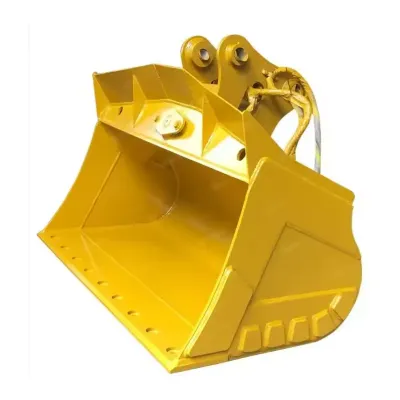
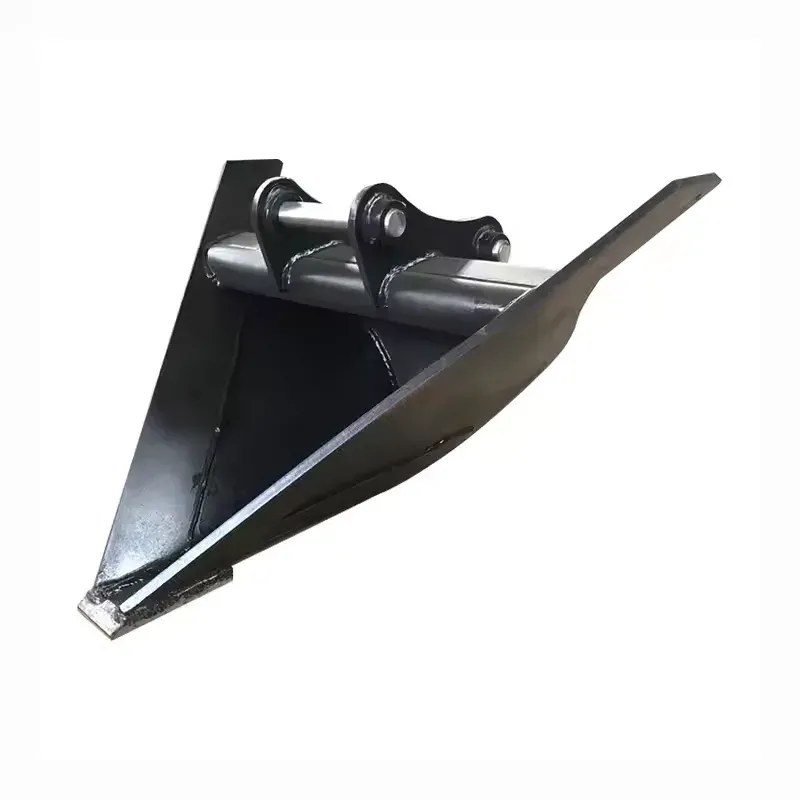
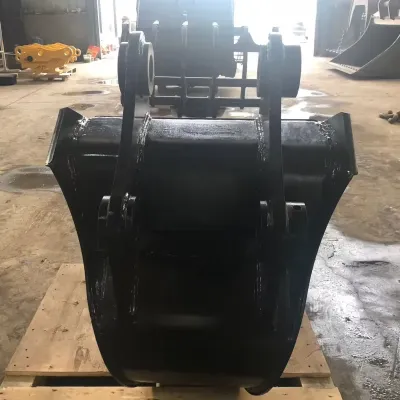
The V-ditch bucket is a purpose-built attachment for excavating trapezoidal drainage channels—think roadside ditches, farm irrigation lines, and stormwater swales—that have sloped banks and a narrow bottom, all in one go. Unlike a conventional trenching bucket, which is generally designed for narrower excavation profiles and may require additional shaping when a sloped drainage profile is needed, the V-profile tool forms both the side slopes and the trench floor simultaneously as the operator drives it into the ground and lifts out. That means no separate shaping pass with a tilt bucket or dozer on jobs that call for open drains.
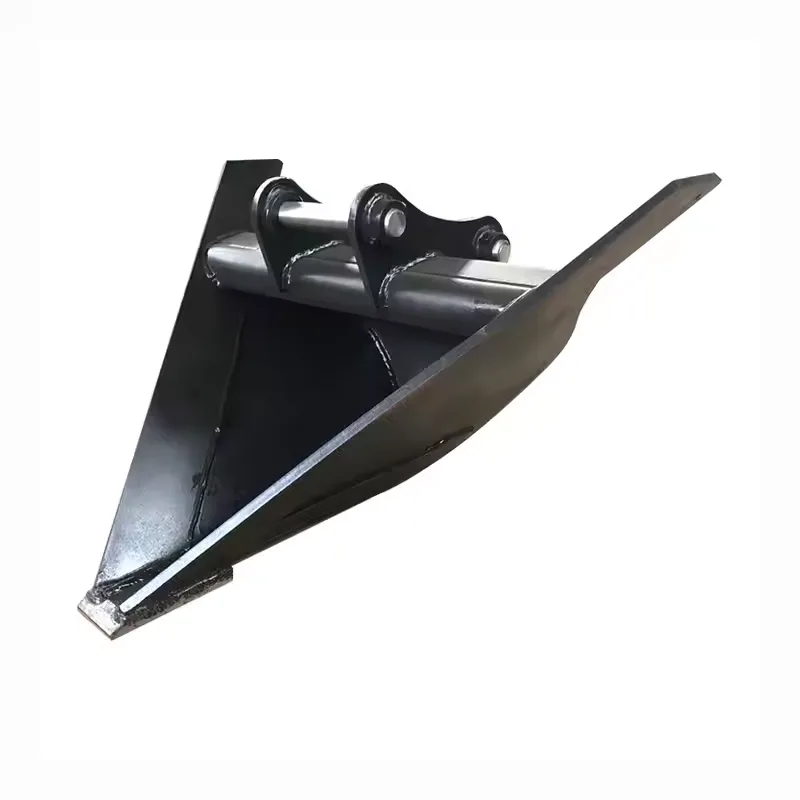
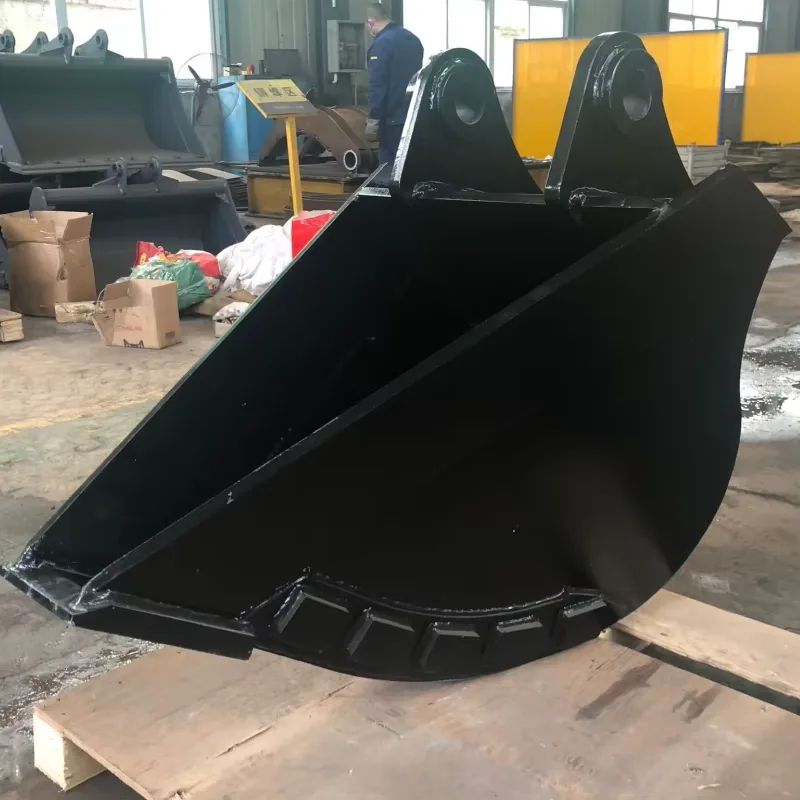
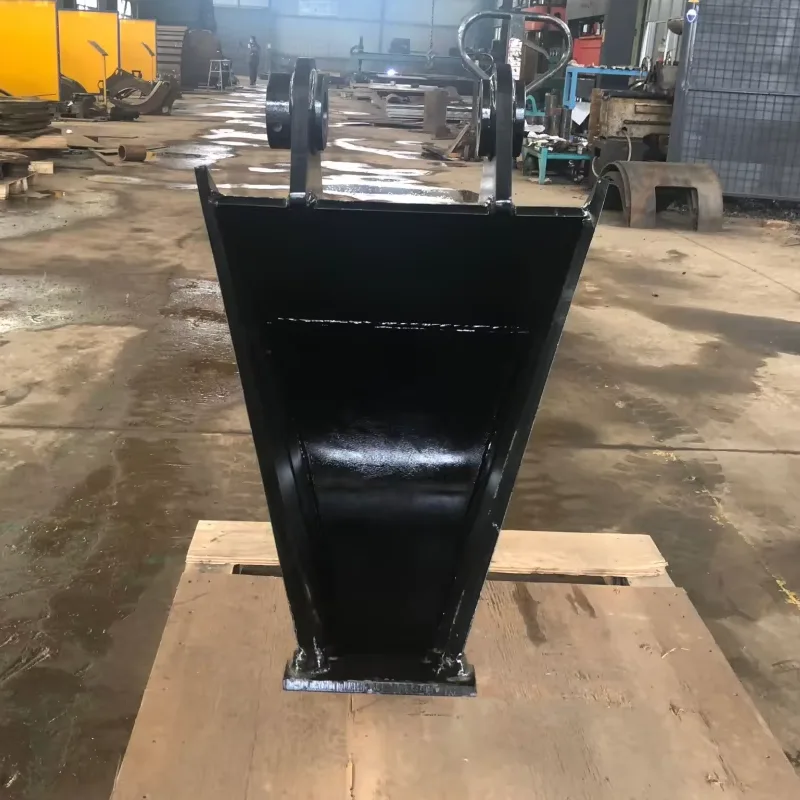
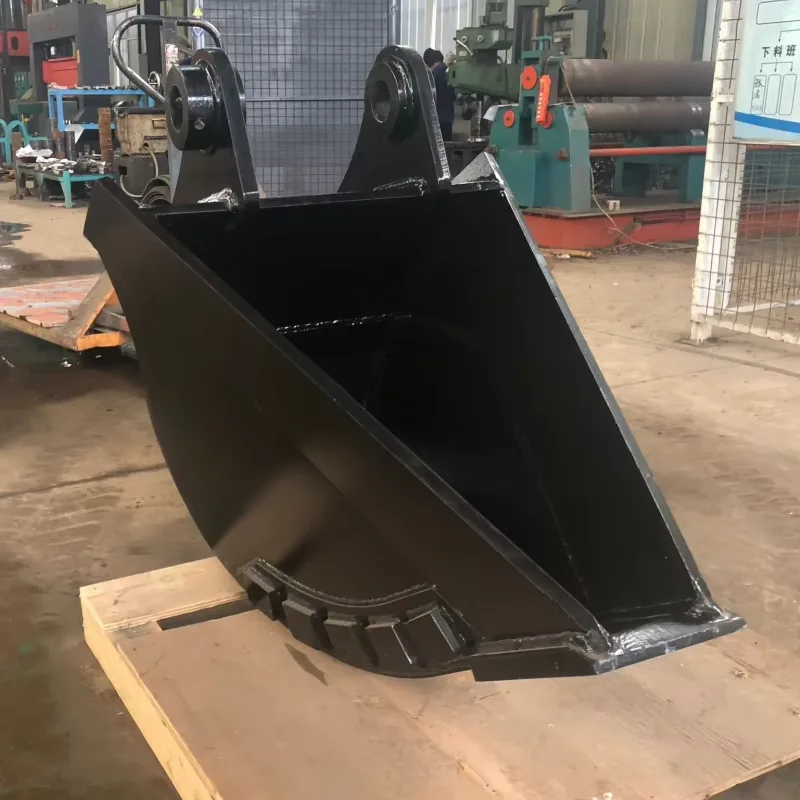
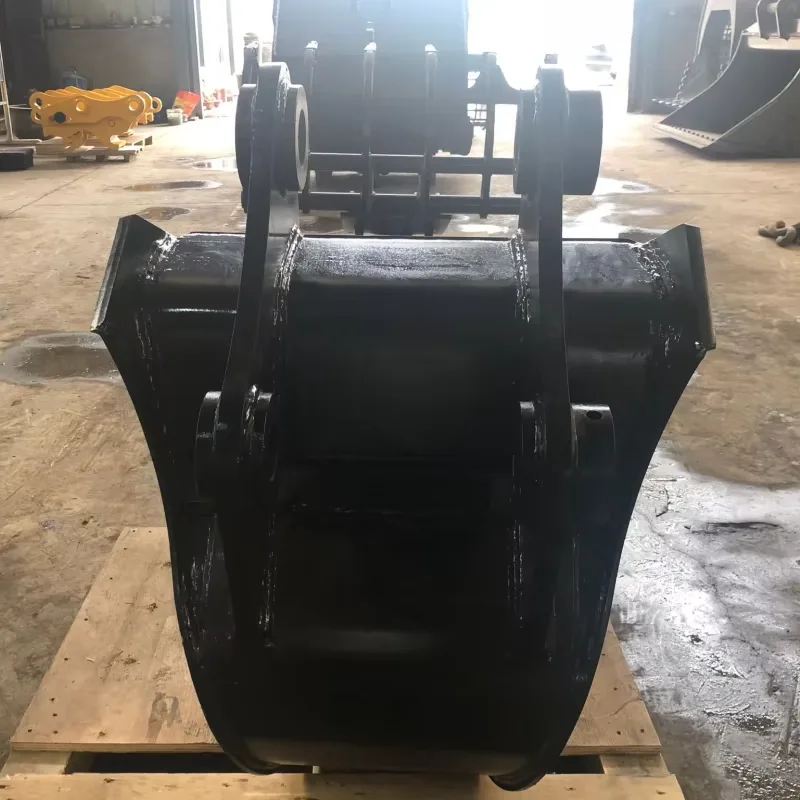
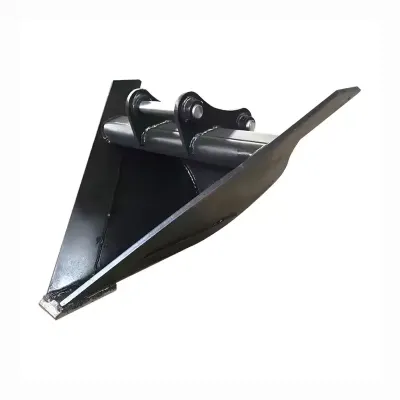
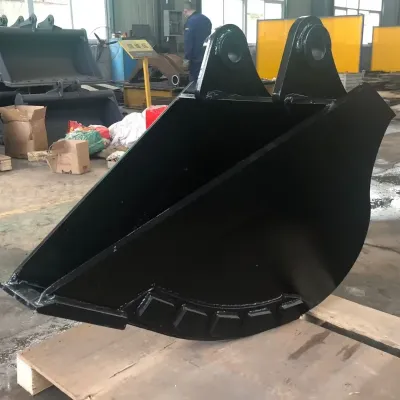
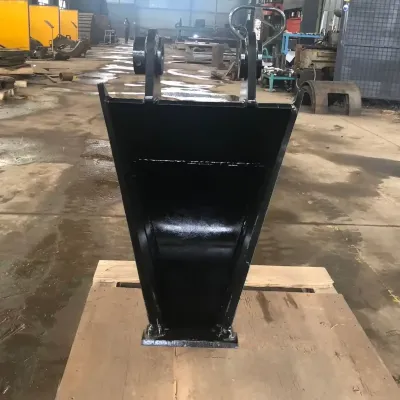
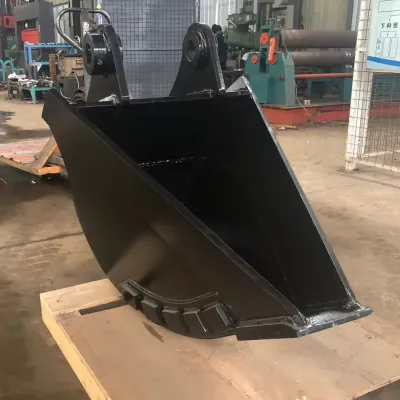
TGEC builds its V-ditch buckets with a formed V-profile that holds consistent side-wall angles from the cutting edge all the way back to the bucket body. The two angled side plates come together at a narrow base cutting edge, which bites into the soil first and sets the trench bottom width. As the bucket sinks deeper, the sloped plates carve out the side walls, leaving a clean, uniform trapezoid behind. Wear-resistant construction helps the bucket hold up in abrasive soils. Eleven models span excavators from 8 to 40 tons, with top widths from 1219 to 2032 mm and base widths from 305 to 610 mm.
Within the excavator bucket lineup, the V-ditch bucket is the most drainage-focused attachment we offer. Contractors who spend their time maintaining existing ditches or finishing slopes often prefer the flexibility of a tilt bucket, but for those who cut new trapezoidal drainage channels regularly, the V-ditch bucket is better suited to projects that require a fixed trapezoidal drainage profile.

V-Profile Design and Trench Formation
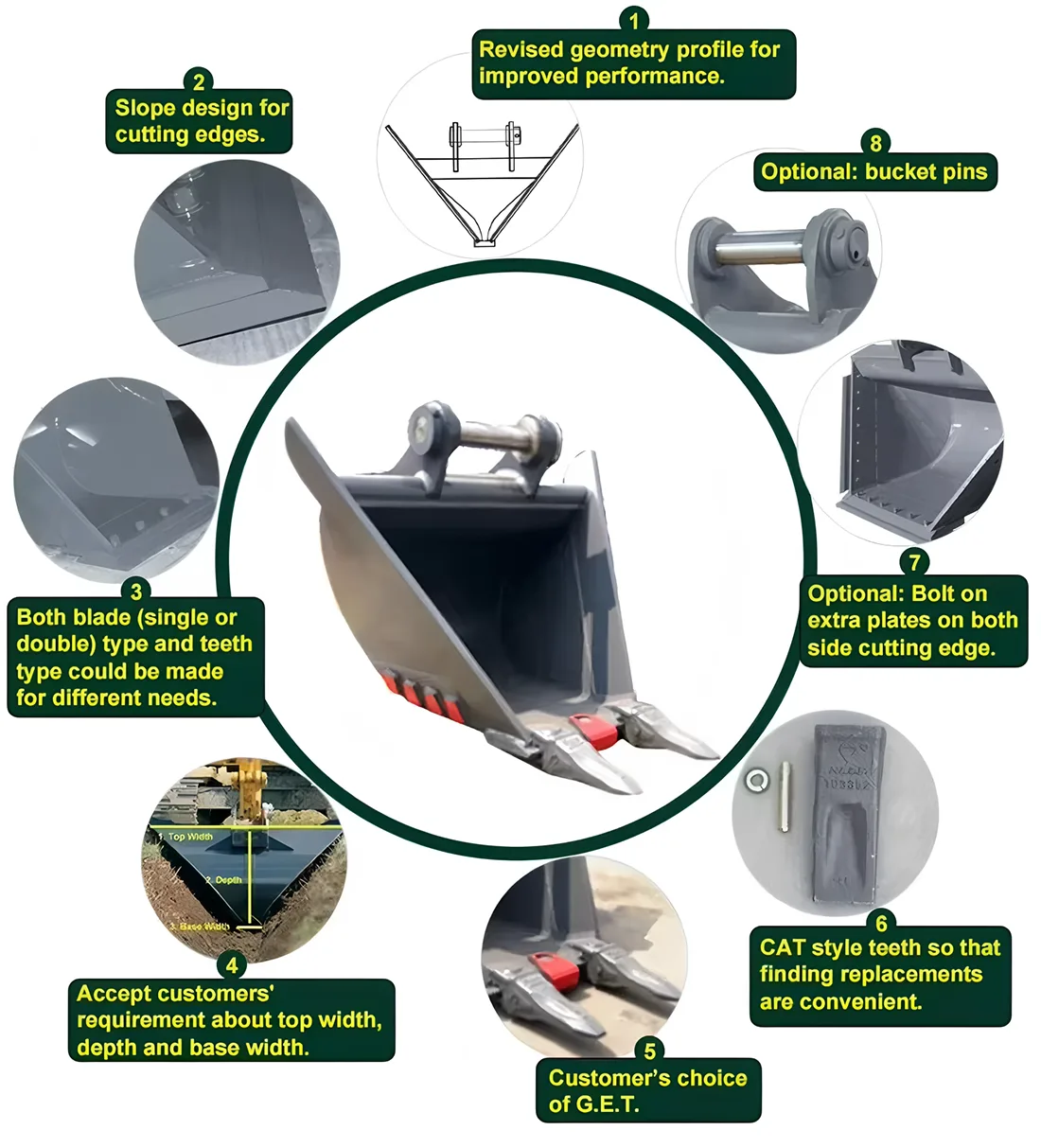
The geometry of a V-ditch bucket determines the exact shape of the trench it produces. The two side plates are set at a fixed angle determined by the bucket model, which defines the side-wall slope of the finished ditch. Confirm the exact angle for each model when ordering. The span between the top edges sets the trench opening width, while the base cutting edge determines the bottom width. Because these dimensions are baked into the bucket design, choosing the right model means matching its top width, base width, and side angle to the drainage specs of your project.
In operation, the operator positions the bucket over the trench line and drives it straight down into the soil using the boom and stick. The narrow base cutting edge penetrates first, establishing the bottom, while the angled side plates slice through the soil to form the banks. Once the bucket reaches the target depth, a slight curl breaks the soil free, and the operator lifts it out. The result is a clean trapezoid with consistent slopes and a narrow defined base, ready for pipe or open-channel use—all in one pass. This fixed-profile approach distinguishes the V-ditch bucket from conventional dig-and-shape methods.
Models & Specifications
Eleven models cover excavators from 8 to 40 tons. Top width and base width define the trapezoidal trench profile.
| Parameter | TG-VB4812 | TG-VB5418 | TG-VB5412 | TG-VB6018 | TG-VB6624 | TG-VB6320 | TG-VB6924 | TG-VB6620 | TG-VB7224 | TG-VB7420 | TG-VB8024 |
|---|---|---|---|---|---|---|---|---|---|---|---|
| Compatible Excavator Class | 8–12 t | 8–12 t | 12–20 t | 12–20 t | 12–20 t | 20–25 t | 20–25 t | 25–30 t | 25–30 t | 30–40 t | 30–40 t |
| Top Width | 1219 mm | 1372 mm | 1372 mm | 1524 mm | 1676 mm | 1600 mm | 1753 mm | 1676 mm | 1829 mm | 1880 mm | 2032 mm |
| Base Width | 305 mm | 457 mm | 305 mm | 457 mm | 610 mm | 559 mm | 610 mm | 508 mm | 610 mm | 508 mm | 610 mm |
| Unit Weight | 335 kg | 357 kg | 446 kg | 474 kg | 552 kg | 622 kg | 710 kg | 773 kg | 865 kg | 1140 kg | 1243 kg |
Table data is for reference only. Actual specifications may vary based on the final configuration. Please contact the TianGe technical team for details.
Applications in Drainage and Irrigation
Roadside and Highway Drainage
Road construction crews rely on V-ditch buckets to excavate the trapezoidal side ditches that carry stormwater away from the pavement. The uniform slope and consistent bottom width produced by the bucket provide a clean profile for highway drainage work without secondary shaping. Verify dimensions against project specifications. For long stretches of roadside ditch, the fixed-profile design reduces production time compared to digging a vertical trench and then shaping the slopes with a tilt bucket or dozer.
Agricultural Irrigation and Field Drainage
Farmers and irrigation contractors use V-ditch buckets to install open irrigation channels and field drainage ditches. The trapezoidal profile provides sloped side walls commonly specified for drainage channels, and the narrow base concentrates flow for water delivery. For irrigation districts with standardized channel dimensions, picking a V-ditch bucket with matching top width, base width, and side angle ensures uniformity across the whole network. The bucket also works well for cleaning out and reshaping existing irrigation channels that have silted in or developed eroded banks.
Site Development and Stormwater Management
On commercial and residential development sites, V-ditch buckets dig perimeter drainage ditches, swales, and stormwater conveyance channels that direct runoff to retention ponds or municipal systems. The clean trapezoidal profile is suitable for many drainage applications, and the fixed-profile design keeps the earthmoving phase moving quickly. Always verify profile dimensions against your project's specific drainage design requirements. The bucket can be used across a range of soil conditions; confirm the application and ground conditions when selecting the model.
Mounting and Compatibility
V-ditch buckets mount to the excavator stick using the same pin-on or quick-coupler interface as a standard digging bucket. Since the V-ditch bucket is a purely mechanical attachment with no hydraulic requirements, it can be used on excavators within the specified weight class when the mounting interface and lift capacity are suitable. The mounting bracket must match the excavator's pin spacing, pin diameter, and linkage geometry exactly. When ordering, provide the excavator make, model, operating weight, pin dimensions, and coupler type so TianGe can supply the correct bracket.
Because there are no hydraulic hoses to connect, installation is simple: remove the standard bucket, align the V-ditch bucket bracket with the stick and linkage, install the pins, and secure them with retainers. Because the attachment does not require hydraulic connections, installation is generally simpler than hydraulic attachments.
Operation Techniques for Clean V-Ditches
To get a clean, uniform V-ditch, start by marking the trench centerline with paint or stakes so the operator can track a straight line. Position the bucket directly over the centerline with the base cutting edge vertical, then drive it straight down into the soil using steady boom and stick pressure. Avoid angling the bucket or pushing sideways—that will distort the trench profile and leave uneven banks. Once the bucket reaches the desired depth, curl it slightly to break the soil free from the bottom, then lift straight up without dragging the side plates along the trench walls.
For long trench runs, maintain consistent depth by using the boom height as a reference or by setting up a laser-guided depth control system if available. Remove the excavated material from the trench area right away to keep it from falling back in and obscuring the profile. In hard or rocky ground, ease up on the downward pressure and make multiple shallower passes rather than forcing the bucket through in one go—excessive force can bend the side plates or damage the cutting edge. After each trench section, check the profile with a slope board or template to confirm that the side angles and base width match the design specs.
Request a Quote — V-Ditch Bucket
Tell us your excavator make and model, operating weight, mounting or coupler type, pin spacing and pin diameter, preferred model (TG-VB4812 through TG-VB8024), required trench top width and base width, side slope angle, primary application (roadside drainage / agricultural irrigation / site stormwater), typical soil conditions, and the quantity you need. Our team will confirm the right model and mounting bracket, verify the trench profile matches your design specifications, and send you a quote based on your specs and delivery terms. Dealers and OEMs are welcome for volume orders, custom profile dimensions and private-label options.