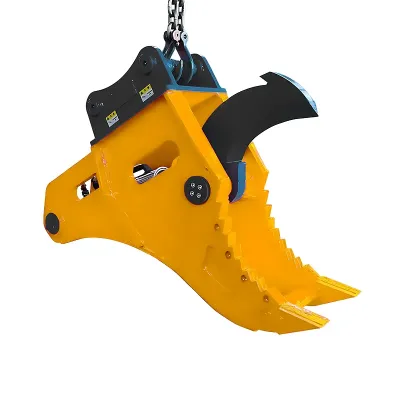
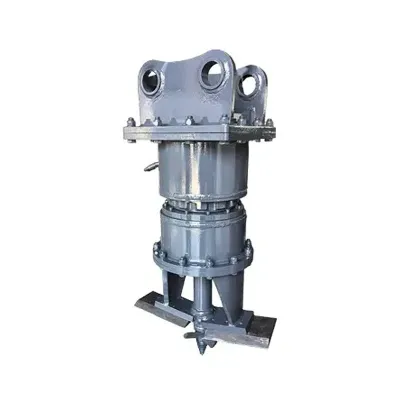
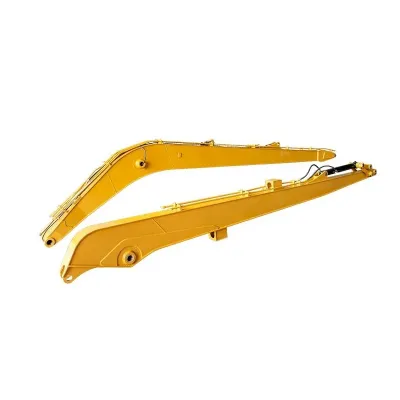
Picking the right excavator bucket starts with knowing what each type is actually meant to do. A bucket that's perfect for spreading topsoil will get chewed up fast in rocky ground, and a heavy-duty rock bucket is overkill—and too clumsy—for finish grading work. This guide runs through the nine main categories of excavator buckets, explains how they're built differently, and matches each one to the jobs where they really shine.
General Purpose Digging Bucket
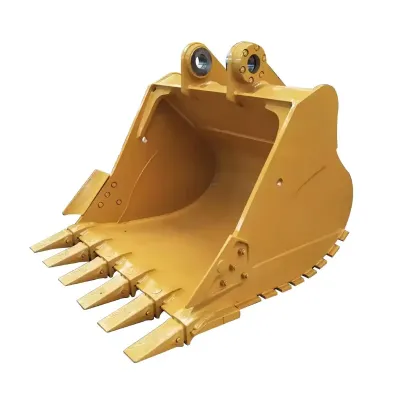
This is the bucket that comes standard on most excavators—the everyday workhorse. It's got a moderate depth, a curved bottom, and a standard cutting edge with either teeth or a bolt‑on edge. The side plates are tall enough to hold a full load of dirt for hauling, and the shape is designed to use the machine's breakout force to dig into loose to moderately compacted soil.
It handles all the usual tasks: digging foundations, trenching for utilities, loading trucks, backfilling, and general site work. It's the most versatile choice for contractors doing a mix of excavation in normal dirt. But if you're dealing with hard rock, highly abrasive material, or need precision grading, a specialty bucket will do a better job and last a lot longer.
Tilt Bucket
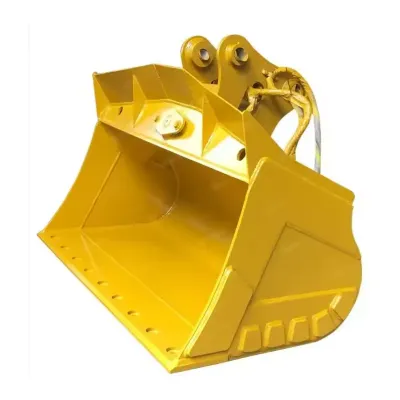
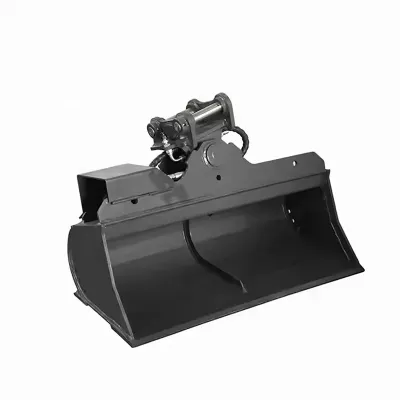
A tilt bucket has a hydraulic cradle between the bucket body and the mounting bracket that lets you tilt the bucket up to 45 degrees left or right right from the cab. That tilting action lets you follow slopes, contours, and uneven grades without having to move the machine, making it the go‑to tool for finish grading, slope work, and shaping contours.
You'll see these on road jobs for grading shoulders and embankments, in landscaping for shaping lawns and drainage swales, and on site development for finishing building pads and parking lots. They need a double‑acting auxiliary hydraulic circuit with enough flow to run the tilt cylinder. For contractors who do regular grading, a tilt bucket can save you from bringing in a separate dozer or motor grader on smaller jobs.
TGEC tilt buckets come in nine models for 1‑ to 28‑ton excavators, with 45‑degree tilt angles and widths from 1000 to 2000 mm.
V-Ditch Bucket
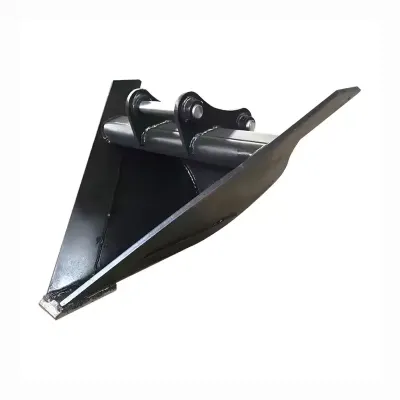
The V‑ditch bucket has a trapezoidal shape—two angled side plates that meet at a narrow base cutting edge. When you drive it into the ground, it cuts a sloped‑wall drainage trench with a flat bottom in one pass, so you don't have to go back and shape it with a tilt bucket or dozer. The side angle, top width, and base width are fixed for each model, so the trench profile stays consistent across the whole run.
This bucket is purpose‑built for roadside drainage ditches, farm irrigation channels, stormwater conveyance ditches, and perimeter drains around building sites. It's also used to clean out and reshape existing trapezoidal ditches that have silted in or eroded. For contractors who install or maintain drainage, the V‑ditch bucket is way more productive than digging a vertical trench and then shaping the slopes separately.
Grapple Bucket
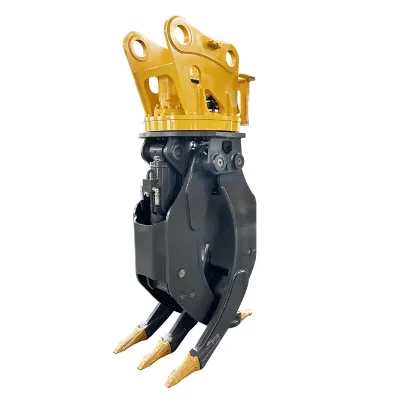
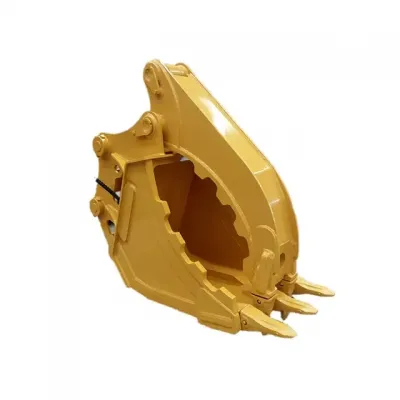
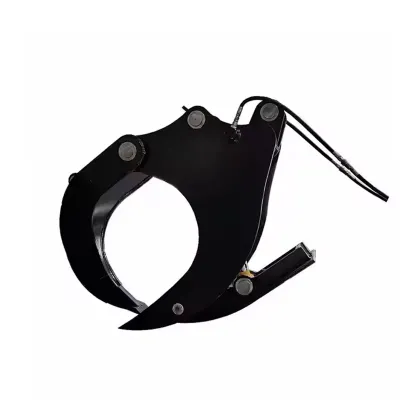
A grapple bucket pairs a standard digging bucket with a hydraulic grapple jaw mounted above it. The grapple opens wide to take in big, awkward loads, then clamps down with hydraulic force to hold the material while you lift and swing. That lets you handle stuff that would fall right out of a regular bucket—tree limbs, concrete chunks, demolition debris, large rocks.
It's a versatile tool for demolition cleanup, land clearing, recycling, and general construction where you're dealing with a mix of materials throughout the day. You can dig like a normal bucket with the grapple folded back, then switch to clamping mode for handling irregular loads. It needs a double‑acting auxiliary circuit to run the grapple cylinder. For contractors who need both digging and material handling in one attachment, the grapple bucket saves a lot of time swapping equipment.
Bucket With Thumb
A bucket with thumb uses a separate hydraulic thumb arm mounted to the excavator stick or linkage, rather than building the grapple into the bucket itself. The thumb swings across the bucket opening to clamp material against the cutting edge, and it folds back against the stick when you're not using it so you can dig normally.
This setup is popular with general contractors and landscapers who need occasional material handling without giving up the digging performance of a standard bucket. Since the thumb mounts to the stick, it can often work with multiple bucket sizes on the same machine. It needs a double‑acting auxiliary circuit with a third‑function control valve. For operators who mostly dig but occasionally need to handle rocks, logs, or debris, a thumb bucket gives you a good mix of versatility and digging ability.
Skeleton Bucket
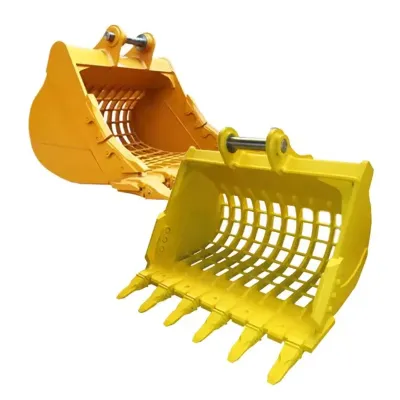
A skeleton bucket swaps out the solid shell for a framework of spaced steel tines. Fine material—soil, sand, small debris—falls right through, while larger rocks, concrete chunks, and other oversize stuff stay in the bucket. The tine spacing sets the separation size, typically from 50 to 100 mm.
This bucket is used for topsoil processing on construction sites, rock removal in agricultural fields, sorting demolition debris, and general material separation where you need a simple, durable, low‑cost solution. It doesn't need hydraulics and works like a standard digging bucket, so it'll fit any excavator in the right weight class. For high‑volume soil processing or precise classification, a rotary screening bucket gives more consistent results, but the skeleton bucket is a solid, budget‑friendly choice for basic separation.
Rotary Screening Bucket
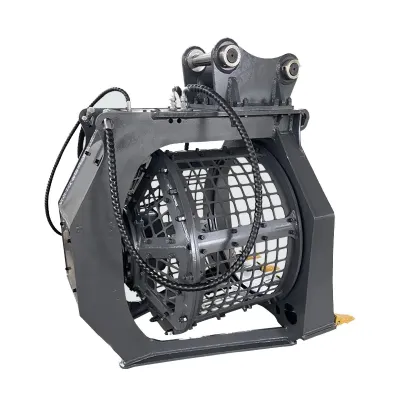
A rotary screening bucket uses a hydraulically driven rotating drum with paddles or star‑shaped elements to actively agitate and screen material inside a perforated shell. The continuous rotation breaks up clods, separates fines from oversize, and keeps the screen holes clear, giving you consistent output much more efficiently than a static skeleton bucket.
This attachment is for high‑volume topsoil processing, aggregate classification, demolition debris recycling, compost screening, and site remediation. The screen opening size is set by the perforations in the shell, and some models let you swap plates for different output sizes. It needs a high‑flow auxiliary circuit with enough flow to run the motor, and larger models usually require a case drain line. For contractors who process a lot of soil or aggregate regularly, a rotary screening bucket can replace a portable screening plant on smaller jobs.
Heavy-Duty Rock Bucket
A heavy‑duty rock bucket is built from thicker, high‑strength, abrasion‑resistant steel, with reinforced side plates, a double‑thick cutting edge, wear strips on the bottom and sides, and replaceable side cutters. It's made to take the pounding and abrasion of rock excavation, quarry work, and demolition debris that would eat a standard bucket alive.
You'll find these in quarries and mines for overburden removal and rock loading, on construction sites where you hit rock or hard ground, and in demolition for handling concrete and sharp debris. The heavy construction makes it less efficient in soft soil, so it's usually a specialty attachment rather than an everyday bucket. For contractors who work regularly in rock or abrasive conditions, the longer life of a rock bucket means less downtime and lower overall costs compared to replacing standard buckets over and over.
Ditch Cleaning Bucket
A ditch cleaning bucket—also called a grading bucket or cleanup bucket—has a wide, shallow profile with a flat bottom and low side walls. The wide cutting edge gives you a big contact area for smooth, even grading, and the low sides let you see the edge clearly while allowing material to spill off for spreading.
It's used for cleaning and maintaining drainage ditches, grading road shoulders and embankments, finishing building pads, spreading topsoil and aggregate, and general site cleanup. It's a lot wider than a standard bucket for the same machine, so you cover more ground per pass. It doesn't need hydraulics and works with any excavator in the right weight class. For contractors who do regular finish grading or ditch maintenance, a ditch cleaning bucket gets the job done faster and with better results than a standard digging bucket.
Crusher Bucket
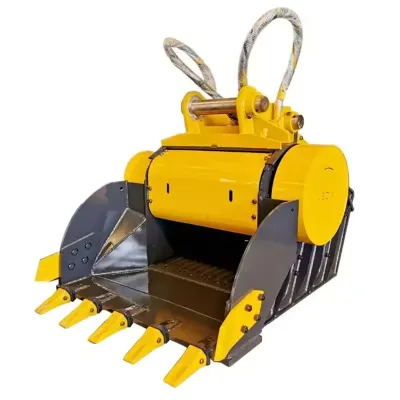
A crusher bucket packs a jaw crushing mechanism right into the bucket body, letting you crush concrete, rock, and demolition debris on site. Material goes in through the top, gets crushed between a fixed jaw and a hydraulically driven moving jaw, and drops out the bottom as sized aggregate. You can adjust the output size by changing the gap between the jaws.
This attachment is for concrete demolition and recycling, rock crushing in quarries and on construction sites, and site development where you can crush excavated rock and reuse it as fill or road base. Crushing on site cuts material volume by up to 60%, saves you from hauling oversize material to a recycling plant, and gives you reusable aggregate you'd otherwise have to buy. It needs a high‑flow auxiliary circuit with 200 bar pressure and 130 to 180 L/min flow depending on the model, plus a case drain line. For demolition and site development contractors, a crusher bucket turns a waste disposal problem into a valuable material source.
How to Select the Right Bucket Type
Start by figuring out your primary application. If you're doing a mix of general excavation in normal soil, a general purpose bucket is the most versatile pick. For finish grading and slope work, a tilt bucket gives you the control you need. For drainage trenching, a V‑ditch bucket forms the profile in one pass. For material handling and demolition cleanup, choose between a grapple bucket and a thumb bucket based on how much you need full digging performance versus clamping capability.
For material separation, a skeleton bucket is a cost‑effective choice for basic rock and debris removal, while a rotary screening bucket gives you higher production and more consistent classification for soil and aggregate. For rock excavation and quarry work, a heavy‑duty rock bucket stands up to the abuse that would destroy standard buckets. For ditch maintenance and general grading, a wide ditch cleaning bucket covers more ground per pass. For on‑site concrete and rock reduction, a crusher bucket turns waste into reusable material.
Once you've settled on the bucket type, make sure the model is sized for your excavator's operating weight and that the mounting bracket matches your pin dimensions and coupler type. For hydraulic attachments, confirm that your auxiliary circuit delivers the required flow and pressure. Explore the full TGEC excavator bucket range to find the right attachment for your machine and work.