Product Overview
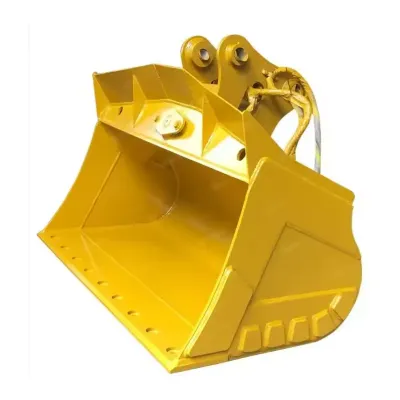
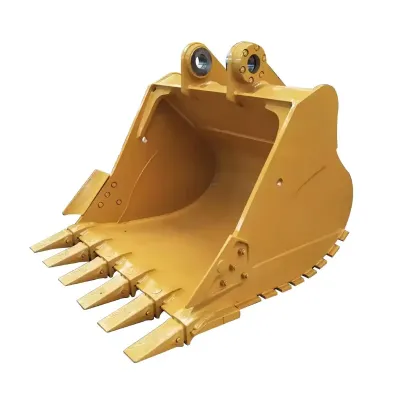
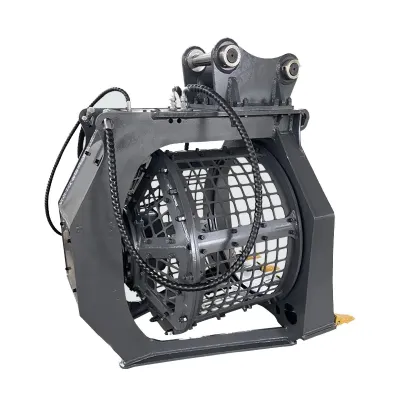
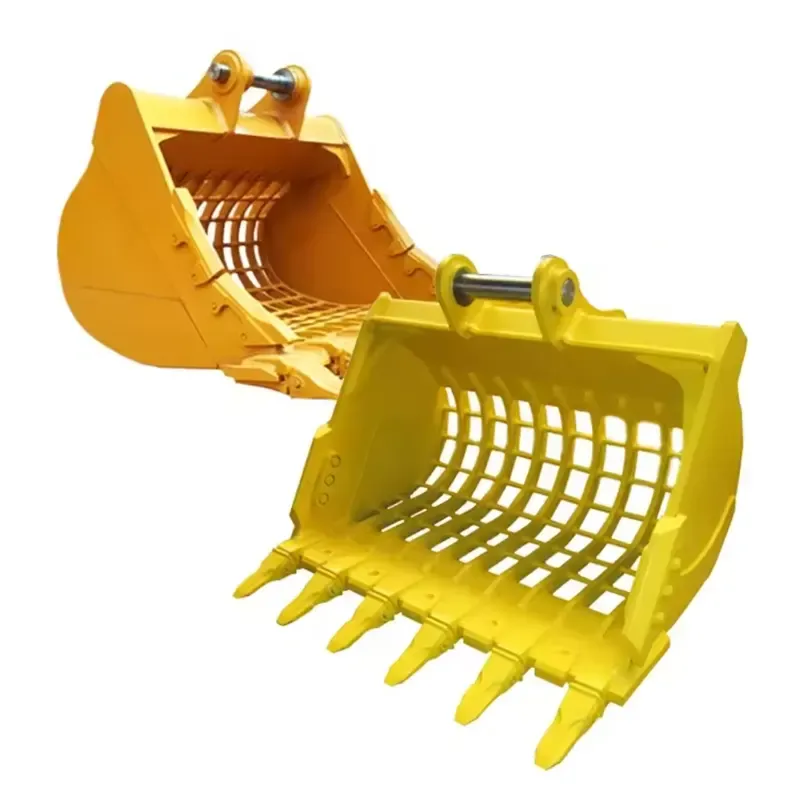
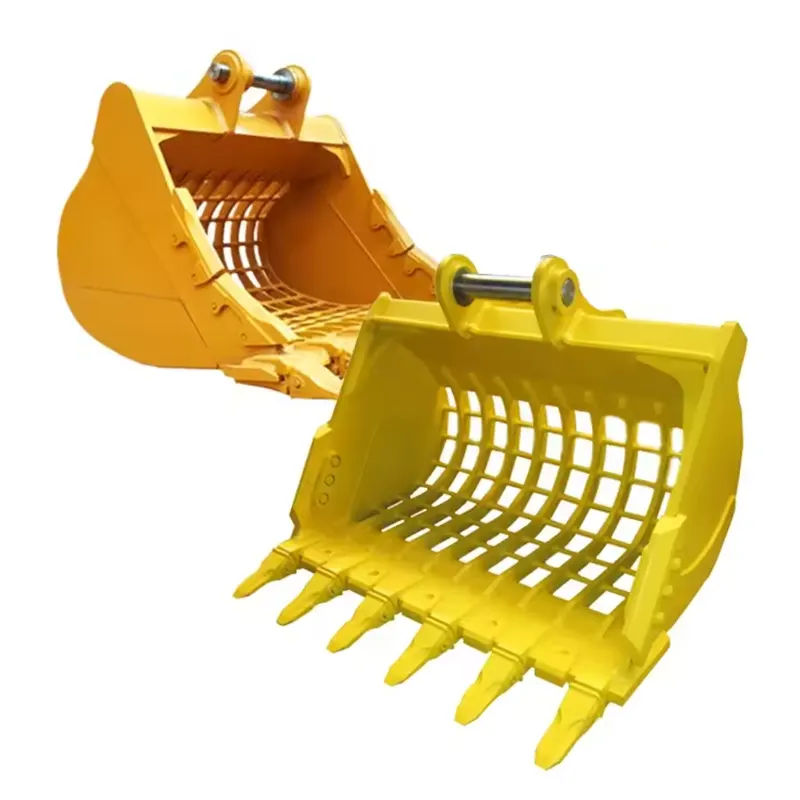
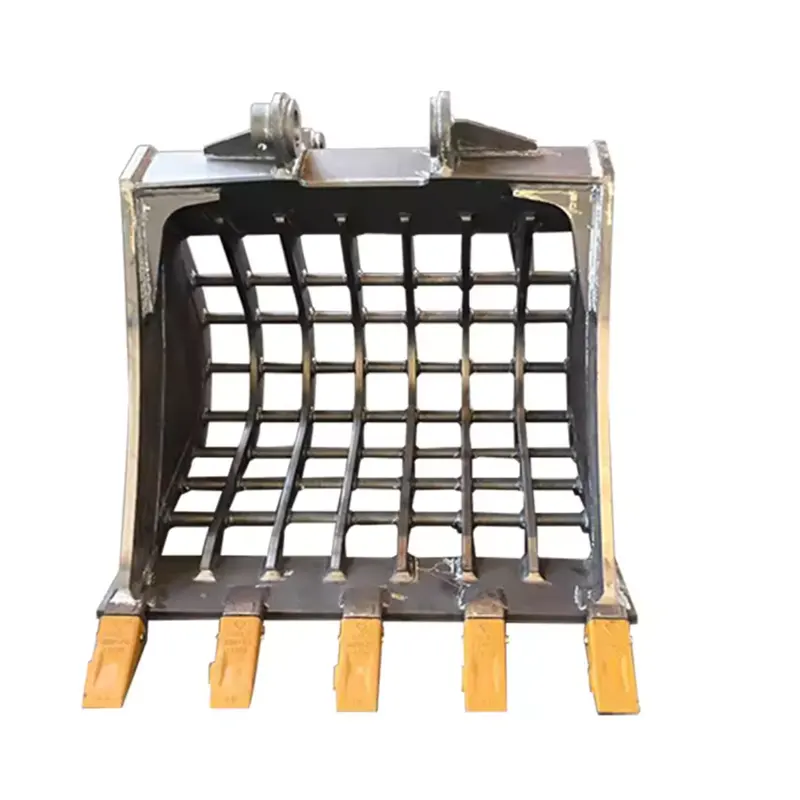
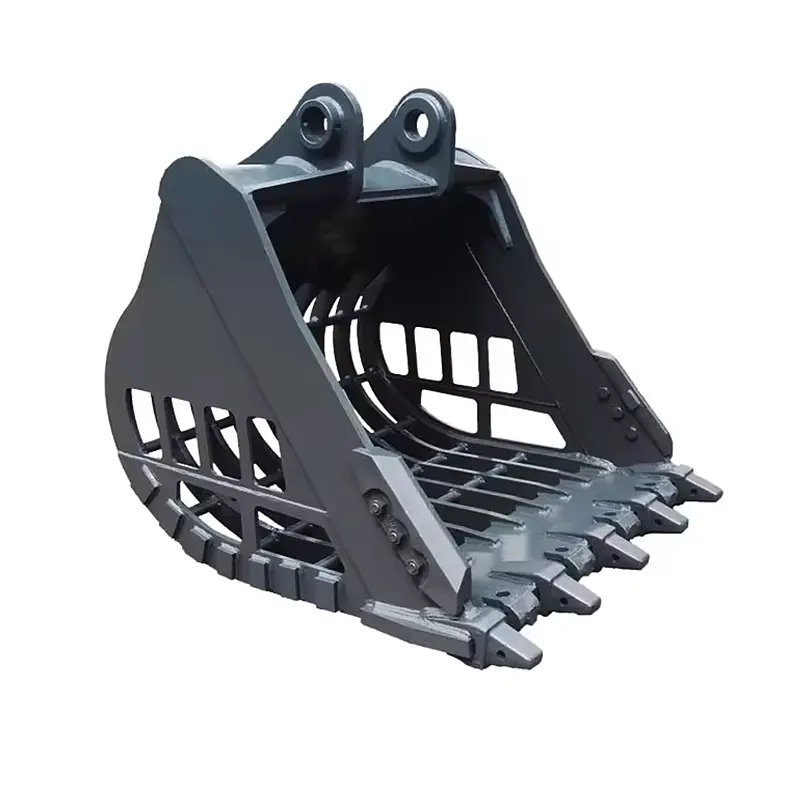
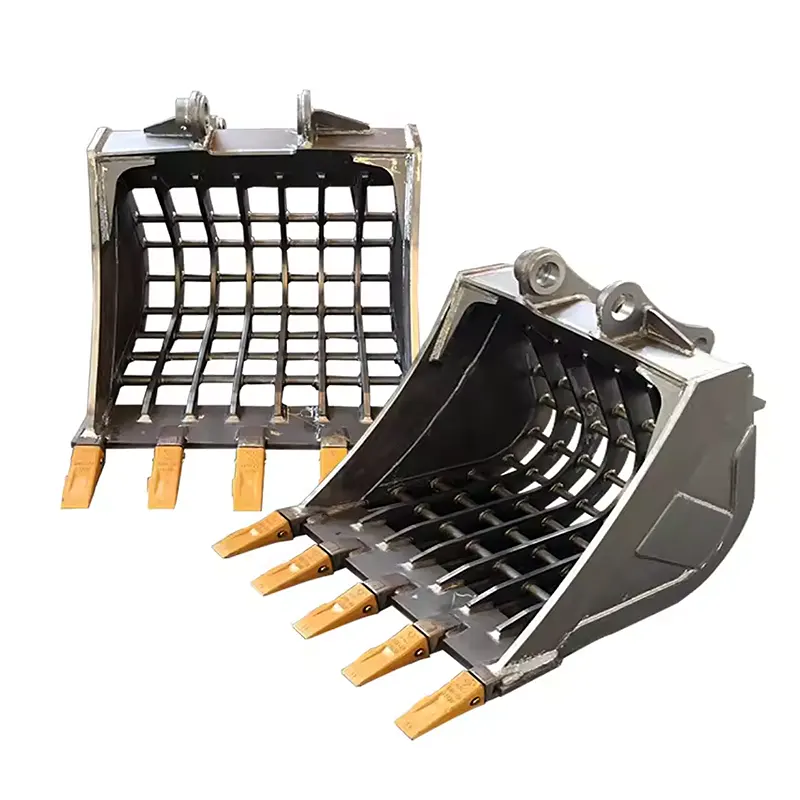
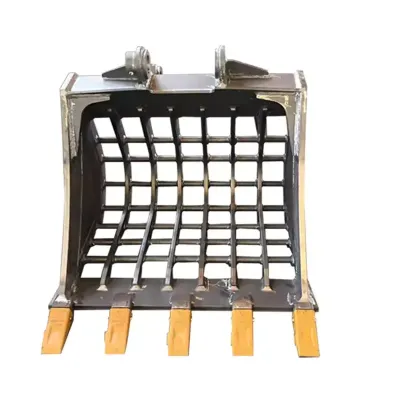
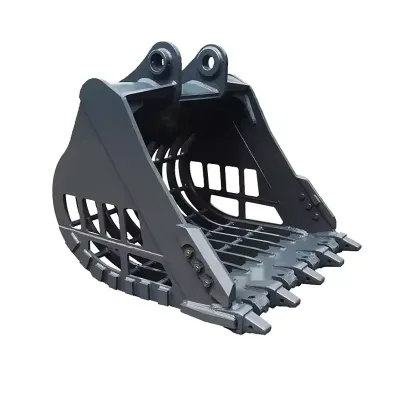
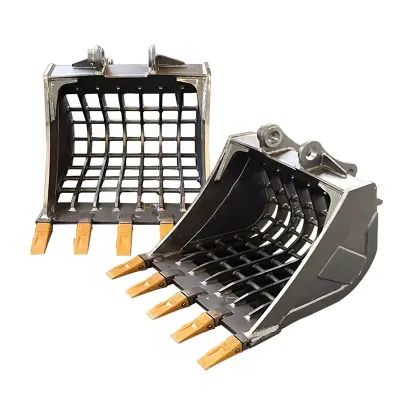
A skeleton bucket swaps out the usual solid steel body for an open framework of evenly spaced tines. That design lets fine material—soil, sand, small gravel—fall straight through, while larger items like rocks, concrete chunks, and timber stay inside. It's a straightforward way to separate materials on the fly, without any moving parts or hydraulics. Whether you're cleaning rocks out of topsoil, sorting demolition debris, or prepping a field for planting, this bucket handles material separation using only gravity and a controlled shake of the stick. Compared to a rotary screening bucket, it provides a simpler mechanical option with no hydraulics or moving parts for basic material separation.
TGEC builds these buckets from heavy‑gauge steel, with tines that are welded into a rigid frame and reinforced at the base. The cutting edge gets a hardened treatment to stand up to abrasive soils. We offer six models that cover machines from 1.5 all the way up to 30 tons, with widths from 600 to 1800 mm, tine spacing from 50 to 100 mm, and unit weights ranging from 120 to 780 kg. Depending on where you are, you might hear them called riddle buckets, sieve buckets, or rake skeleton buckets. In the excavator bucket line, they sit between a conventional digging bucket and the more complex rotary screening bucket.
Skeleton Design and Material Separation
The heart of this attachment is its open tine grid. Instead of a solid bottom and sides, you get parallel bars that run from the cutting edge all the way to the back frame. The gaps between those bars set the size cutoff—anything smaller than the gap drops out when you lift or shake the bucket, while anything larger stays trapped inside. Then you just dump the oversize pile separately, and you've sorted your material in one smooth cycle.
Choosing the right gap is key. A 50 mm spacing is designed to retain material larger than roughly 50 mm, though actual separation also depends on material shape, moisture content, and how the bucket is shaken. That gap works well for cleaning up topsoil or removing fine debris. A 100 mm spacing lets more material through and only catches big rocks and heavy chunks, suitable for coarse rock removal or sorting demolition rubble. Tine configuration can vary by build. Confirm available tine options with TianGe when ordering.
Models & Specifications
Six models cover excavators from 1.5 to 30 tons. Tine spacing sets the separation size for each version.
| Parameter | TG-SB06 | TG-SB08 | TG-SB10 | TG-SB12 | TG-SB15 | TG-SB20 |
|---|---|---|---|---|---|---|
| Compatible Excavator Class | 1.5–3 t (1.7–3.3 ton) | 3–5 t (3.3–5.5 ton) | 5–8 t (5.5–8.8 ton) | 8–12 t (8.8–13.2 ton) | 12–18 t (13.2–19.8 ton) | 18–30 t (19.8–33 ton) |
| Tine Spacing | 50 mm (2.0 in) | 60 mm (2.4 in) | 70 mm (2.8 in) | 80 mm (3.1 in) | 90 mm (3.5 in) | 100 mm (3.9 in) |
| Bucket Width | 600 mm (23.6 in) | 800 mm (31.5 in) | 1000 mm (39.4 in) | 1200 mm (47.2 in) | 1500 mm (59.1 in) | 1800 mm (70.9 in) |
| Unit Weight | 120 kg (265 lb) | 180 kg (397 lb) | 260 kg (573 lb) | 350 kg (772 lb) | 520 kg (1146 lb) | 780 kg (1720 lb) |
Table data is for reference only. Actual specifications may vary based on the final configuration. Please contact the TianGe technical team for details.
Applications
Topsoil Processing and Site Development
On residential or commercial sites, you often need to strip rocks and debris out of topsoil before seeding or landscaping. Just scoop up the mixed material with the skeleton bucket, give it a lift and a shake, and the clean soil falls through while the rocks stay behind. Dump the rocks in a separate pile, and the remaining soil is separated and ready for further processing or reuse on site. The tighter spacing (50–70 mm) on compact and mid‑size models works best for this, catching most rocks while letting the valuable soil pass.
Rock Removal and Agricultural Land Preparation
For farmers and land managers, removing surface rocks from a field before planting helps protect tillage equipment and supports seedbed preparation. Drive the skeleton bucket through the soil at a shallow angle to gather surface rocks, then lift and shake to let the dirt fall through. The rocks stay in the bucket and get hauled off. Wider tine gaps (80–100 mm) on larger models let more soil through while holding back the bigger rocks that would damage equipment. This approach works especially well for fields with scattered glacial till or surface stone.
Demolition Debris Sorting and Recycling
At demolition or recycling yards, the skeleton bucket pulls large concrete chunks, lumber, and scrap metal out of the finer debris—drywall dust, insulation, small fragments. Load up a mixed pile, shake it out, and the fines drop away while the oversize stays in the bucket. That initial sort supports downstream crushing or screening by removing oversize material first. You can also use it to clean up a site by separating reusable fill from waste that needs to go to the landfill.
Mounting and Compatibility
The skeleton bucket mounts exactly like a standard digging bucket—pin‑on or quick coupler, no hydraulics required. Since it has no moving parts or cylinders, it can be used on excavators within the specified weight class, provided the mounting interface and lift capacity are suitable. The only thing that matters is that the bracket matches your pin spacing, pin diameter, and linkage geometry. When you order, give us your excavator make, model, operating weight, pin dimensions, and coupler type so we can supply the right bracket.
With no hoses to hook up, installation is about as simple as it gets: take off your regular bucket, line up the skeleton bucket bracket, slide in the pins, and secure them. No calibration, no hydraulic setup—just start working. It also works with mechanical or hydraulic quick couplers as long as the bracket matches the coupler interface.
Operation Tips
To get the best separation, load the bucket with a mix of material, then lift it slowly and give the stick a gentle shake. That helps the fines find their way through the gaps. Don't overfill—too much material can bridge across the tines and block the flow. If you're dealing with wet, sticky clay, let it dry a bit before processing; otherwise, it'll cling to the bars. If clogging happens, just tap the bucket on the ground or give it a good shake to clear the stuck material.
When you're picking rocks out of soil, use a shallow angle and drag the bucket along the surface rather than digging deep. That way you collect the rocks without scooping up too much dirt, which helps the separation process. For demolition sorting, scoop from the bottom of the pile to get a representative sample, then shake to separate. Dump the oversize in a separate spot for further processing. Keep an eye on the tines—check for bends, cracks, or excessive wear, and replace or repair any damaged bars promptly to keep the separation consistent.
Request a Quote — Skeleton Bucket
Tell us your excavator make and model, operating weight, mounting or coupler type, pin spacing and pin diameter, preferred model (TG-SB06 through TG-SB20), required tine spacing, primary application (topsoil processing / rock removal / demolition sorting / agricultural), typical material types, and the quantity you need. Our team will confirm the right model and mounting bracket, verify the tine spacing and bucket width for your application, and send you a quote based on your specs and delivery terms. Dealers and OEMs are welcome for volume orders, custom tine spacing and private-label options.