Product Overview
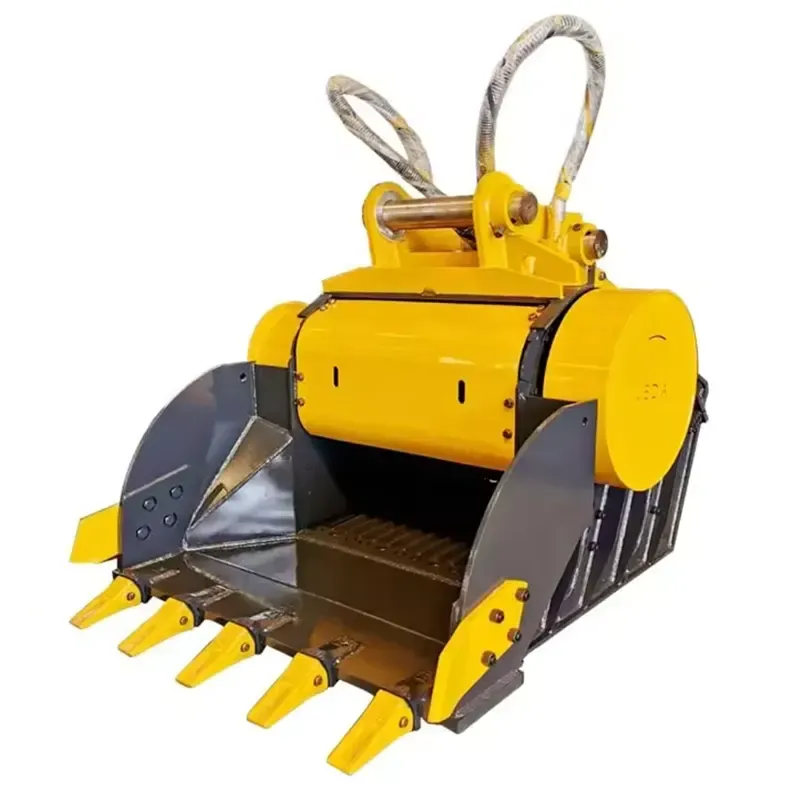
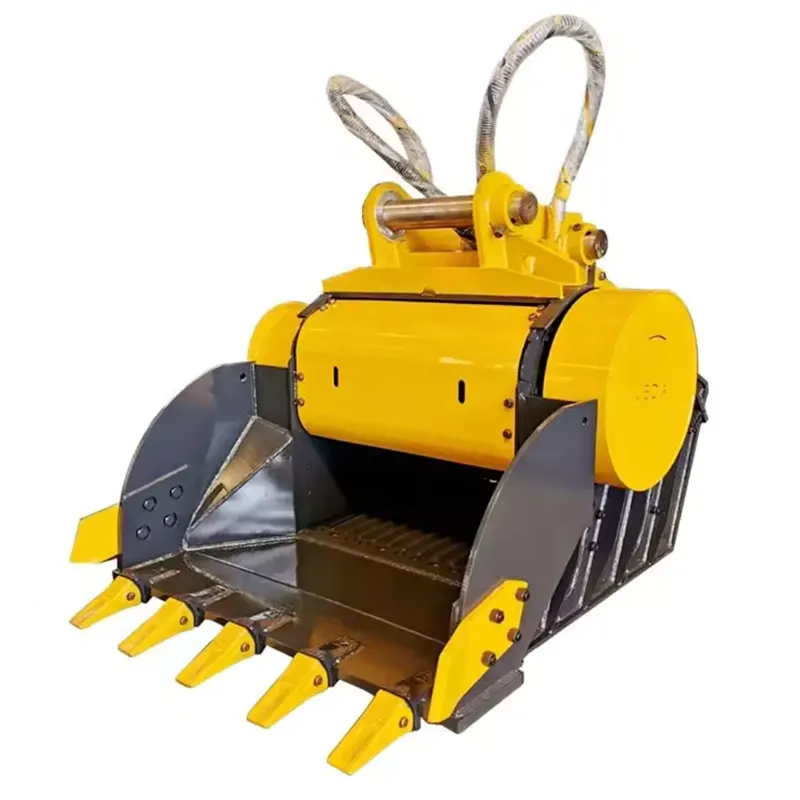
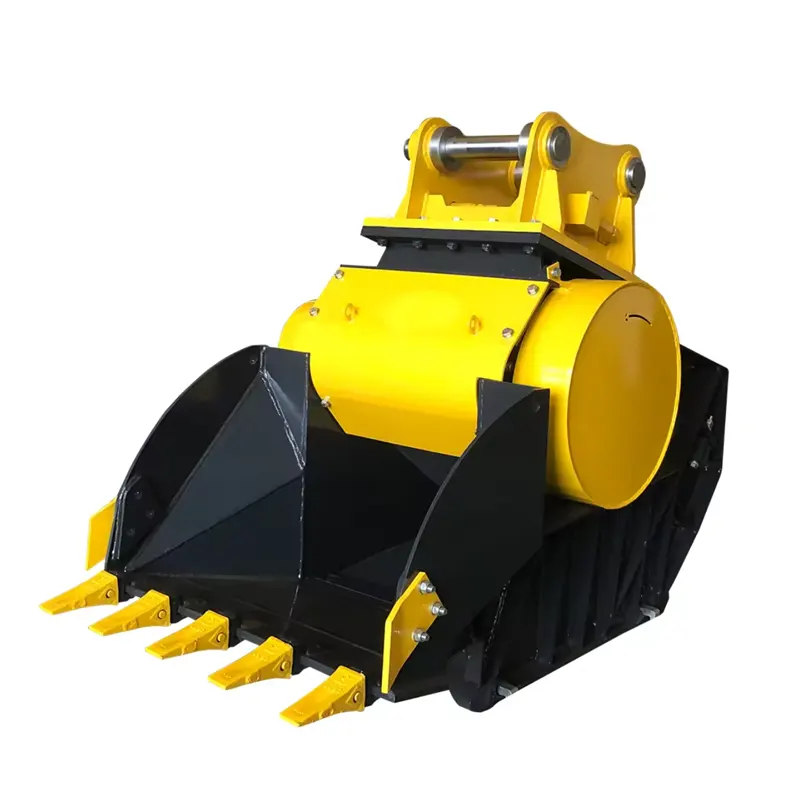
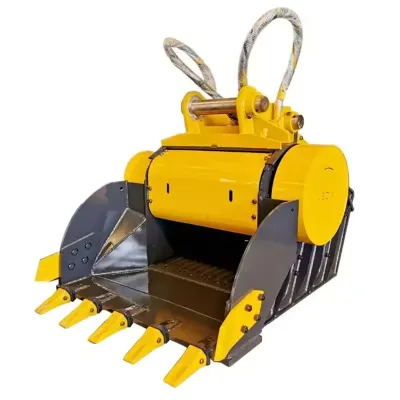
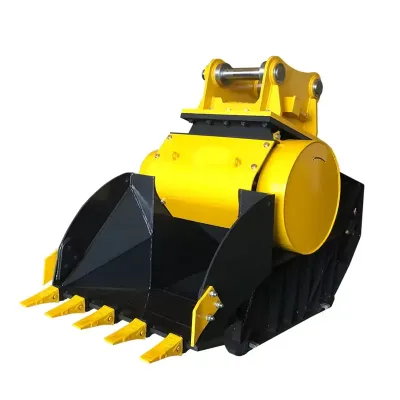
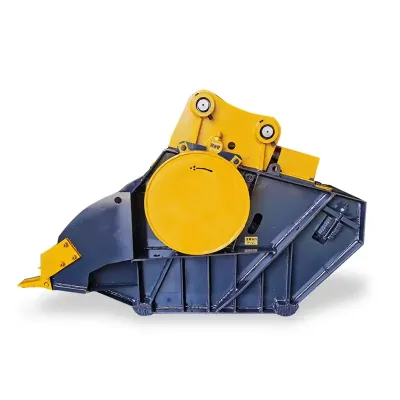
A crusher bucket turns your excavator into a mobile crushing plant. It's a hydraulically driven attachment that packs a jaw crusher right into the bucket body, so you can crush concrete, rock, and demolition debris on site—no need for a separate portable crusher. You feed material through the wide top opening, the internal jaw mechanism does the work, and the crushed product drops out the bottom at a consistent size. That means you can reduce material volume, avoid hauling oversize rubble to a recycling yard, and produce reusable aggregate for fill, road base, or drainage on the job.
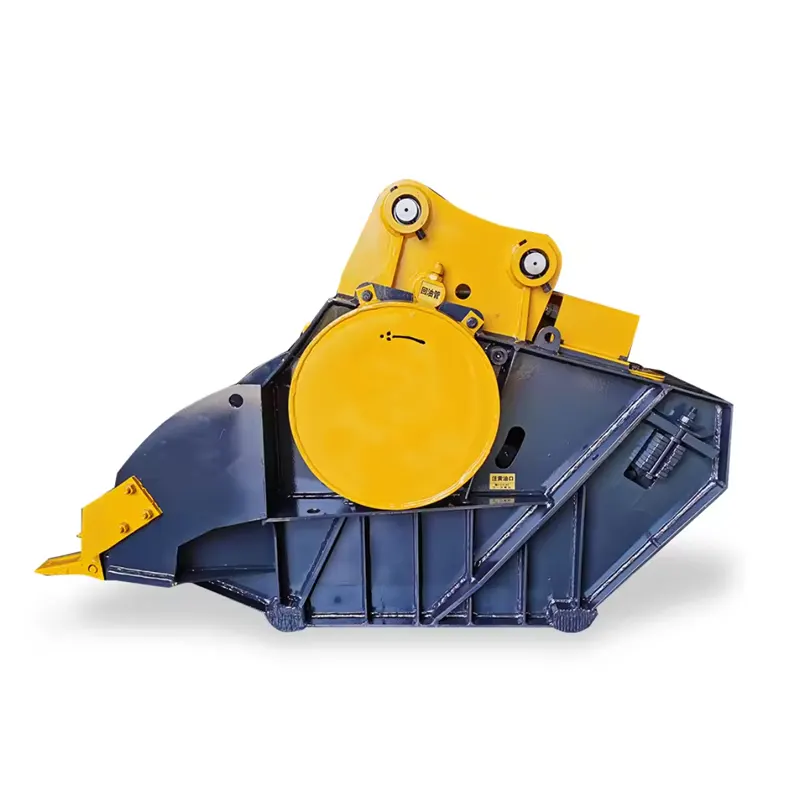
TGEC crusher buckets are built with a heavy‑duty steel housing that contains a jaw mechanism driven by a hydraulic motor. The fixed and moving jaw plates are replaceable wear parts; material specification depends on the model configuration. Depending on the model, jaw plates may be reversible to extend wear life, and are replaceable when worn out. The hydraulic motor drives the jaw mechanism through the drive system, which makes the moving jaw cycle back and forth to crush material. Output size is adjustable by changing the gap at the discharge end, so you can go from fine (15‑30 mm) all the way to coarse (80‑120 mm) depending on what you need. Three models fit excavators from 13 to 35 tons, with feed openings from 600 x 500 mm up to 900 x 500 mm, weights from 2050 to 3300 kg, capacities from 0.58 to 0.85 cubic meters, and that same wide output range across all models. In the excavator bucket family, this is the top‑end processing tool—a step beyond the rotary screening bucket when you need size reduction, not just sorting.
Jaw Crushing Mechanism
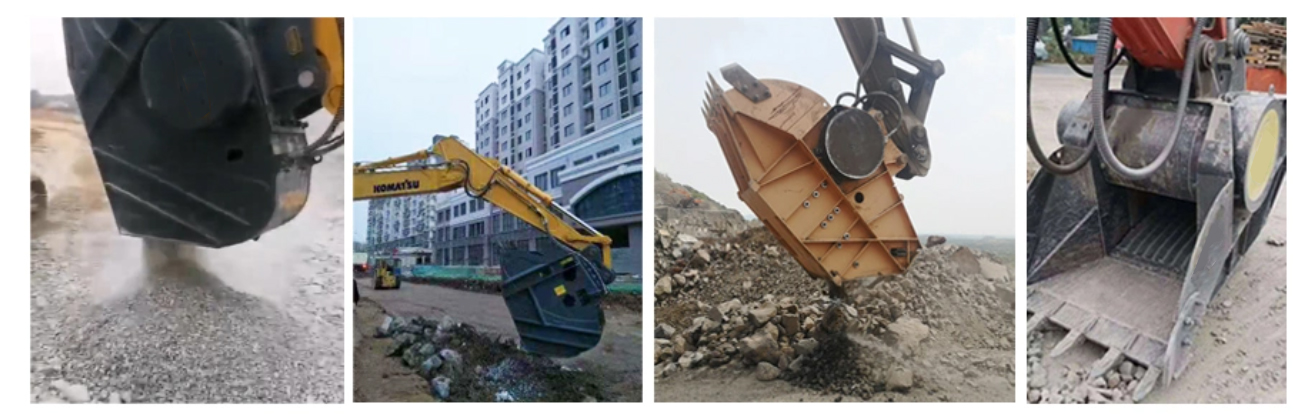
At the heart of every crusher bucket is the jaw crushing action. There's a fixed jaw plate mounted to the bucket body and a moving jaw plate on a swing jaw that pivots around the drive mechanism. When the hydraulic motor drives the mechanism, the swing jaw moves in an elliptical, reciprocating motion—pulling the moving jaw toward and away from the fixed jaw. Material dropped into the top opening gets caught between the two plates and is crushed by the compressive force as the moving jaw closes in. Once the material is small enough to fit through the gap at the bottom, it falls out the discharge opening and exits the bucket.
The jaw plates are the main wear parts, made from wear-resistant material; specific alloy and hardness depend on the model configuration. Reversible designs may be available depending on model configuration, allowing the unused wear surface to be used before replacement. The gap at the discharge end is adjustable, so you can change output from fine (15‑30 mm) up to coarse (80‑120 mm) by adjusting the jaw gap. Crushing force comes from the hydraulic motor and the mechanical advantage built into the jaw geometry; bigger models deliver more force for harder rock and thicker concrete. Hydraulic protection requirements depend on the machine circuit and bucket configuration. Confirm the recommended relief-valve settings before operation.
Models & Specifications
Three models are sized for excavators from 13 to 35 tons. Output size is adjustable from 15 to 120 mm on every model.
| Parameter | TG-CB04 | TG-CB06 | TG-CB08 |
|---|---|---|---|
| Compatible Excavator Class | 13–18 t | 19–28 t | 29–35 t |
| Feed Opening (W x H) | 600 x 500 mm | 700 x 500 mm | 900 x 500 mm |
| Unit Weight | 2050 kg | 2600 kg | 3300 kg |
| Bucket Capacity | 0.58 m³ | 0.70 m³ | 0.85 m³ |
| Working Pressure | 200 bar | 200 bar | 200 bar |
| Required Flow | 130 L/min | 150 L/min | 180 L/min |
| Output Size Range | 15–120 mm | 15–120 mm | 15–120 mm |
Table data is for reference only. Hydraulic and performance specifications should be confirmed against the final configuration. Please contact the TianGe technical team for details.
Applications
Concrete Demolition and Recycling
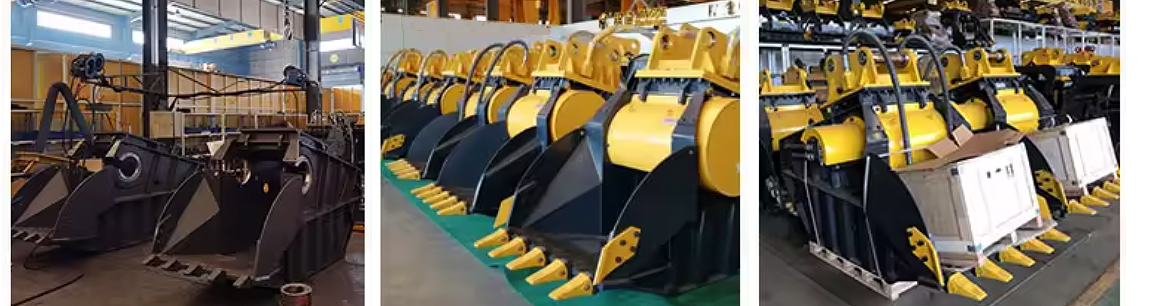
On demolition jobs, a crusher bucket takes concrete rubble from torn‑down buildings, bridges, and pavements and processes it into usable aggregate. Load the broken concrete into the bucket, and the jaws produce crushed material at your chosen output size, ready for fill, road base, drainage, or further processing. Crushing on site reduces hauling costs and truck traffic. The crushed concrete can often go back into the same site as backfill or temporary road material.
Rock Crushing and Quarry Work
In quarries and mining operations, crusher buckets process blasted rock into specified aggregate sizes for construction, road base, or concrete mix. Because the bucket rides on the excavator, you can move it around the site and crush material at the face, rather than hauling it to a fixed plant. This can be beneficial for smaller quarries, remote locations, or projects where a full‑size portable crusher does not make economic sense. The adjustable output lets you produce different gradations—fine for bedding, coarse for drainage—with the same bucket. For hard rock, the bigger models provide more crushing force; confirm suitability for your material when ordering.
Site Development and Earthworks
On construction sites, crusher buckets process rock excavated from foundations, grading, and utility trenches into usable fill. Instead of hauling rock off site and importing clean material, you can crush it on site and reuse it as backfill, road base, or drainage stone. This reduces disposal and import costs, cuts truck traffic, and lowers material transport volume. For sites with limited access or high hauling costs, on‑site crushing can be beneficial. The crushed material can also build temporary access roads, parking areas, and site pads.
Hydraulic Requirements and Mounting
A crusher bucket needs a high‑flow auxiliary hydraulic circuit to run the crushing motor. All three models are specified at 200 bar working pressure, with flow requirements ranging from 130 L/min for the smallest up to 180 L/min for the largest. It's critical that your machine can deliver that flow continuously—if it's short, the jaw will run too slowly, reducing production and risking jams. A case drain line may be required depending on your excavator's hydraulic setup and motor specification; verify availability before ordering. Verify that the circuit's relief-valve settings are appropriate for the bucket configuration before operation.
Mounting uses the standard pin‑on or quick‑coupler setup, with the motor and jaw mechanism housed in the bucket. The bracket has to match your pin spacing, pin diameter, and linkage geometry exactly. When you order, give us your excavator make, model, operating weight, pin dimensions, coupler type, and hydraulic specs (flow, pressure, case drain availability). The hydraulic hoses connect to the auxiliary circuit at the stick—high‑pressure supply and return lines plus a separate case drain if required. We route them along the stick and boom to keep them clear of the linkage. Installation is straightforward: mount the bucket, hook up the hoses and case drain, and run the crusher for a few minutes to purge air and check operation before you start processing material.
Operation and Maintenance Tips
To get the best crushing performance, feed material at a steady rate and avoid overloading—too much at once and you'll jam the jaw. The feed opening sets the maximum size you can put in, so break down anything oversized with a hydraulic hammer before feeding. For concrete, cut or remove large rebar to keep it from damaging the jaws. Adjust the output size by changing the gap at the discharge end: tighter gap for finer aggregate, wider gap for coarser. If the bucket jams, stop the crusher, reverse the jaw if your model supports it, and clear the jam before restarting. Never try to clear a jam while the crusher is running.
Regular maintenance keeps the crusher bucket running reliably. Grease the jaw bearings and drive mechanism at the intervals recommended for your model. Check the jaw plates often for wear; flip them when one side is worn down if the model supports reversible plates. Replace the plates when they're worn to the point that crushing efficiency drops or the base material shows through. Inspect hoses and fittings for leaks, abrasion, or bulges, and replace any damaged ones right away. If your model has a drive belt, check it for wear and tension, and adjust or replace as needed. Keep an eye on hydraulic oil temperature; if it exceeds the recommended limit, back off the workload or let the system cool. At the end of each shift, clean out the bucket and jaw area to keep compacted material from hardening and reducing efficiency. For long‑term storage, retract the jaw fully and relieve pressure from the circuit.
Request a Quote — Crusher Bucket
Tell us your excavator make and model, operating weight, mounting or coupler type, pin spacing and pin diameter, preferred model (TG-CB04 through TG-CB08), primary application (concrete recycling / rock crushing / site development), typical material type and hardness, required output size, auxiliary hydraulic flow rate and pressure, case drain availability, and the quantity you need. Our team will confirm the right model and mounting bracket, verify the hydraulic requirements and crushing capacity for your machine and application, and send you a quote based on your specs and delivery terms. Dealers and OEMs are welcome for volume orders, custom jaw configurations and private-label options.