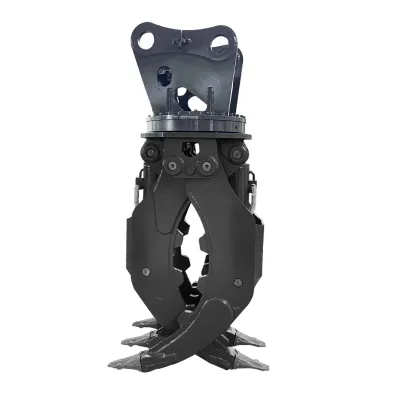
Product Overview
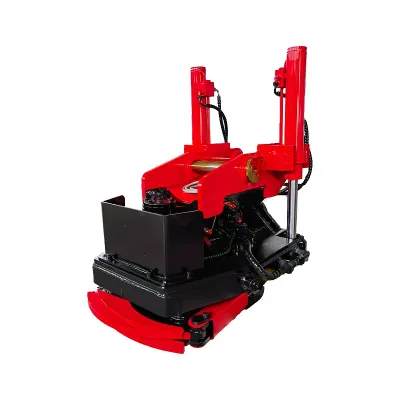
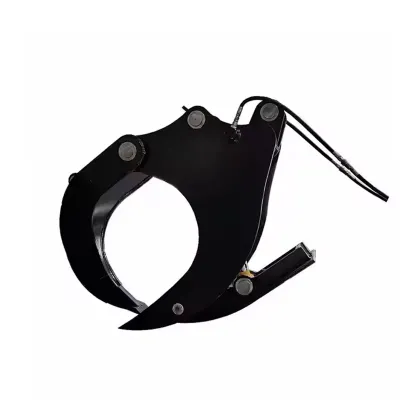
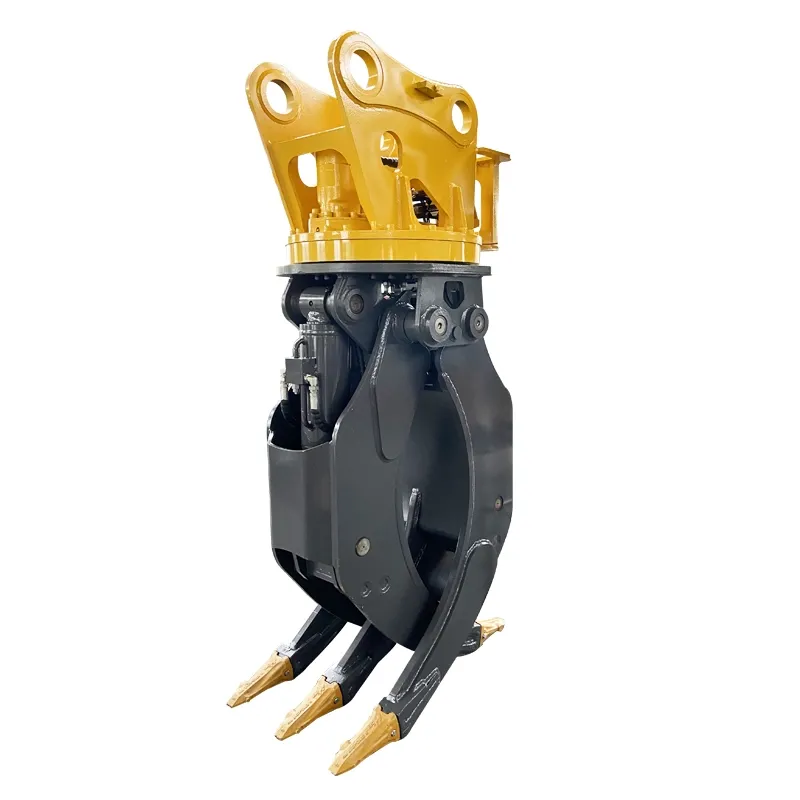
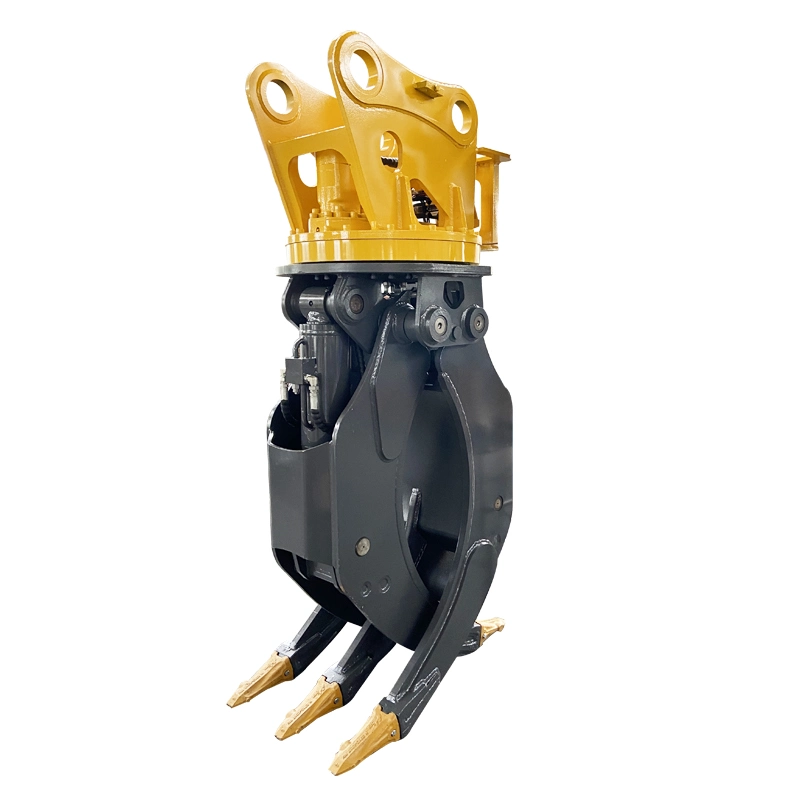
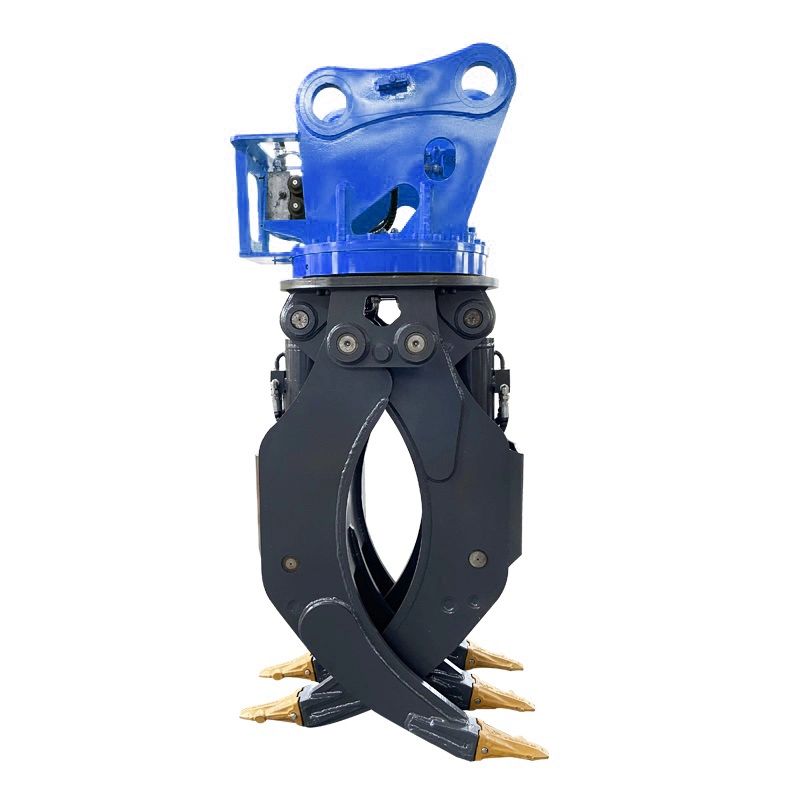
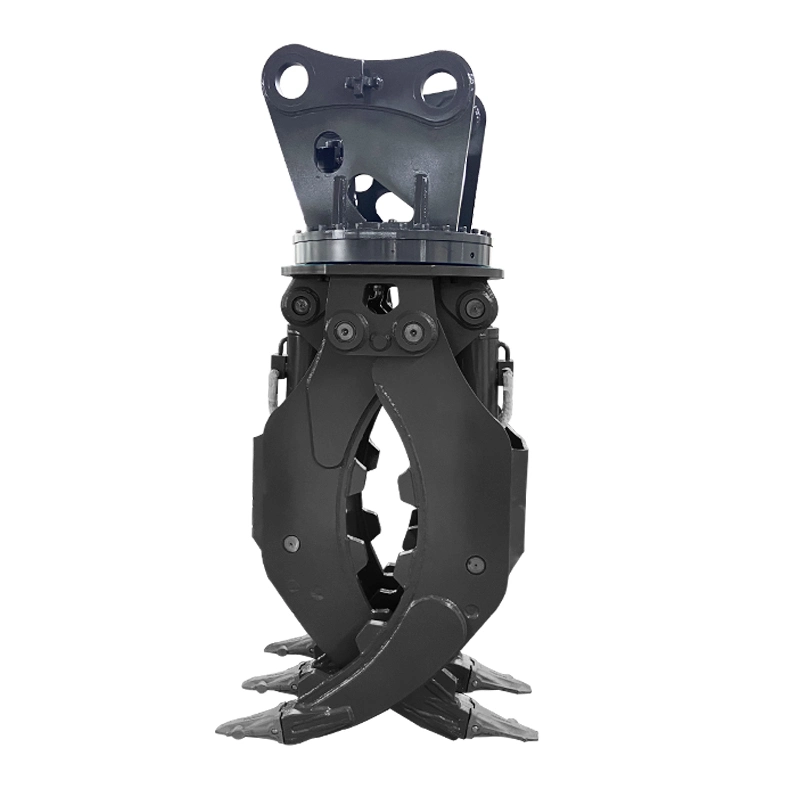
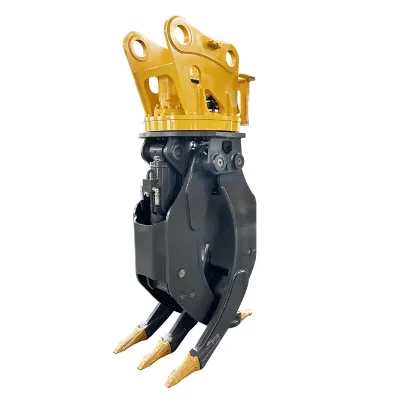
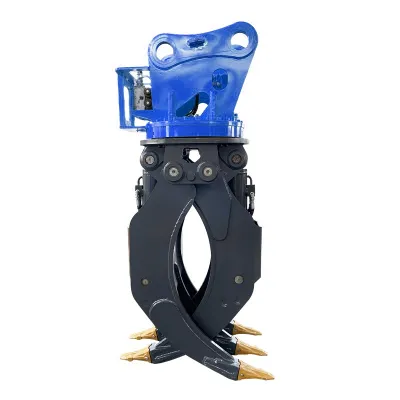
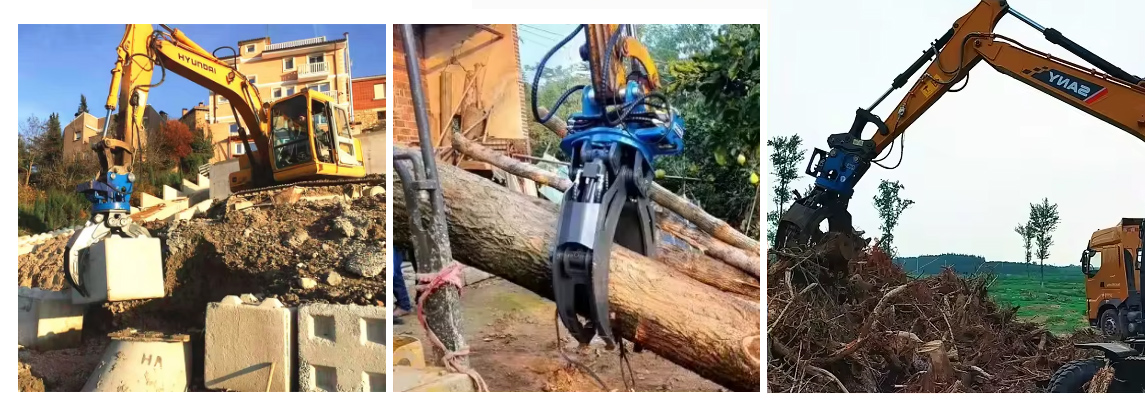
A dual-cylinder rotary grapple positions one hydraulic cylinder on each side of the frame instead of relying on a single central cylinder and linkage. The two cylinders apply clamping force to the two jaw halves from opposite sides of the frame, so force is distributed across both sides of the load rather than routed through a linkage from one central point. That layout gives you balanced clamping across the full jaw width and stable clamping when handling uneven loads, with a wider jaw opening in a relatively compact package. When you're dealing with large-diameter timber, heavy bundles, or long cylindrical materials where grip strength and load stability are priorities, this layout provides balanced clamping across the jaw width.
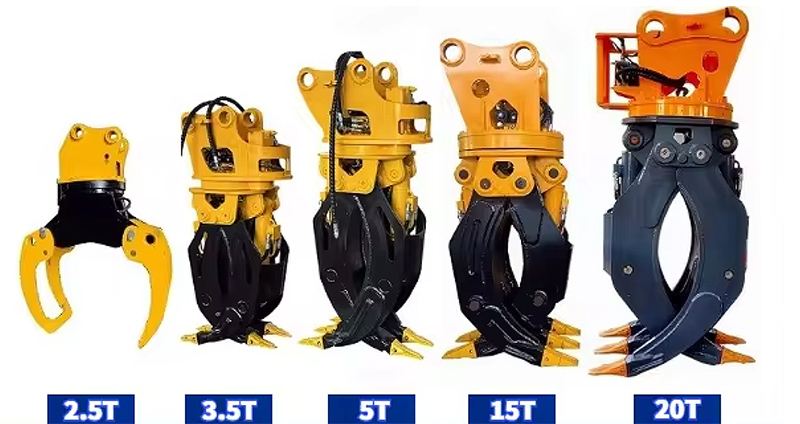
Within the TGEC excavator grapple family, the dual‑cylinder rotary grapple comes in four frame sizes—TG-DRG04 through TG-DRG10—covering excavators from 5 to 35 tons. Every model includes an integrated hydraulic rotator for 360‑degree orientation and a relief valve set to a specific pressure. For lighter scrap sorting and applications where a simpler single-cylinder configuration is preferred, see the Single‑Cylinder Rotary Scrap Grapple; if you need a dedicated log grapple with rotation, check out the rotary log grapple; if you don't need rotation at all, the mechanical grapple is a solid alternative.
Dual-Cylinder Advantage
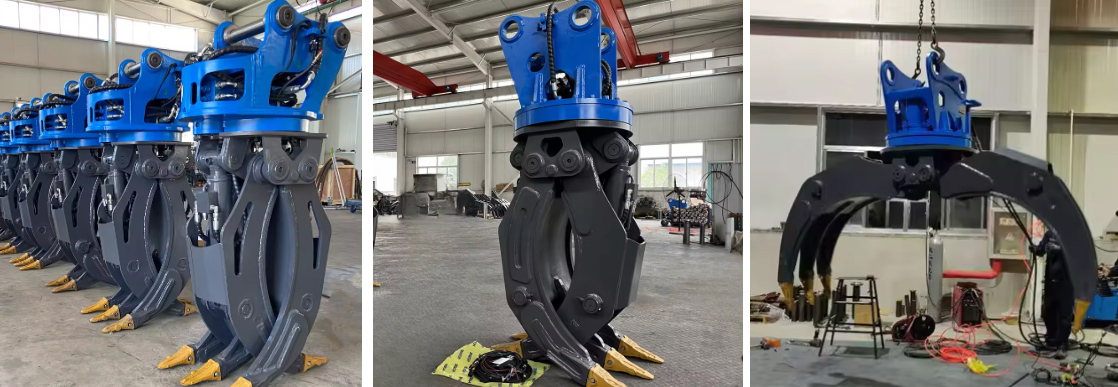
The difference between single‑ and dual‑cylinder grapples goes beyond the cylinder count. A single‑cylinder design uses one central cylinder connected to both jaws through a linkage. When that cylinder extends, the linkage closes both jaws, with force transmitted through pivot points and link arms. A dual‑cylinder layout mounts one cylinder on each side of the frame, with each cylinder applying force to the corresponding jaw half. The two cylinders distribute clamping force across both sides of the grapple.
That balanced distribution matters when you're grabbing log bundles or off‑center loads. With a single‑cylinder grapple, an uneven load may affect jaw synchronization. With a dual‑cylinder setup, the two cylinders apply force from opposite sides of the frame, helping distribute clamping force across both sides of the grapple even when the load is off‑center. The side‑mounted cylinders also free up central space, allowing a wider jaw opening in a compact form. The trade‑off is additional weight from the second cylinder, but for operators who prioritize grip and load stability, the dual‑cylinder configuration is suited to applications where balanced clamping and load stability are priorities.
Models & Specifications
Operating pressure, relief pressure, and flow requirements increase with model size to match the higher clamping demands of larger excavators and heavier loads.
| Parameter | TG-DRG04 | TG-DRG06 | TG-DRG08 | TG-DRG10 |
|---|---|---|---|---|
| Compatible Excavator Class | 5–8 t (5.5–8.8 ton) | 9–17 t (9.9–18.7 ton) | 18–25 t (19.8–27.6 ton) | 26–35 t (28.7–38.6 ton) |
| Attachment Weight | 430 kg (948 lb) | 890 kg (1962 lb) | 1630 kg (3594 lb) | 1680 kg (3704 lb) |
| Max Jaw Opening | 1371 mm (54.0 in) | 1539 mm (60.6 in) | 2492 mm (98.1 in) | 2492 mm (98.1 in) |
| Operating Pressure | 120–160 bar (1740–2320 psi) | 150–170 bar (2175–2465 psi) | 160–180 bar (2320–2610 psi) | 160–180 bar (2320–2610 psi) |
| Relief Pressure | 180 bar (2610 psi) | 190 bar (2755 psi) | 200 bar (2900 psi) | 210 bar (3045 psi) |
| Required Hydraulic Flow | 50–100 L/min (13.2–26.4 GPM) | 90–110 L/min (23.8–29.1 GPM) | 100–140 L/min (26.4–37.0 GPM) | 130–170 L/min (34.3–44.9 GPM) |
Table data is for reference only. Actual specifications may vary based on the final configuration. Please contact the TianGe technical team for details.
Relief Valve & Overload Protection
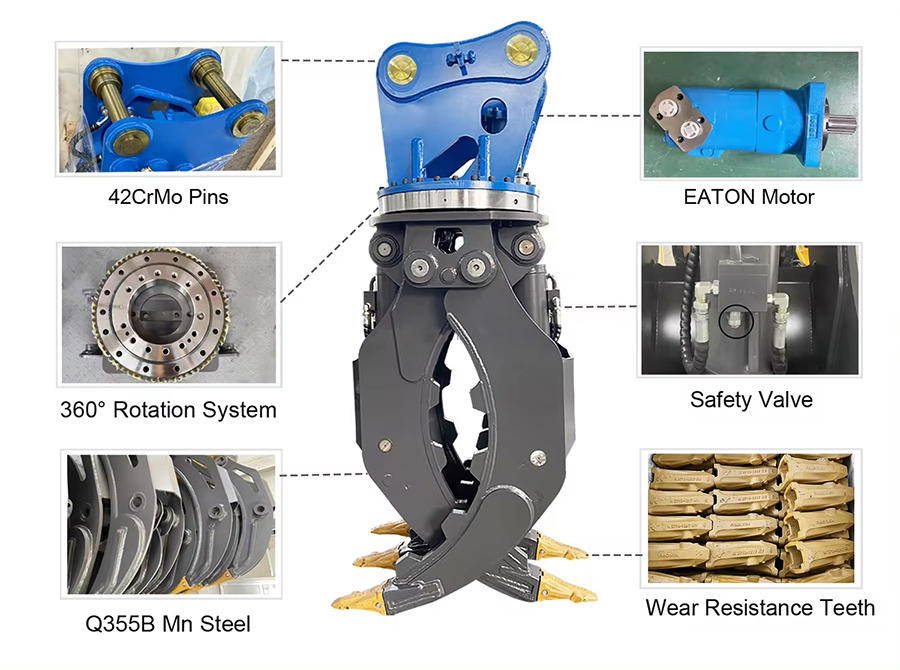
Every dual‑cylinder rotary grapple comes with a relief valve calibrated to a model‑specific pressure that protects the hydraulic system from overload. If the jaws close on something they can't crush—a rock, a steel beam, or a log jammed between the tines—cylinder pressure climbs until it hits the relief setting. At that point, the valve opens and routes oil back to the tank, stopping the pressure from going any higher. That shields the cylinders, hoses, fittings, and pump from pressure buildup, and also protects the grapple frame and jaws from excessive stress.
Relief pressure steps up across the range from 180 bar (TG-DRG04) to 210 bar (TG-DRG10), matching the higher operating pressures and clamping forces of the larger models. The valve is factory-set to the model-specific pressure. Never increase the relief setting above the factory spec—that can overload the system and cause component failure. If the valve trips repeatedly during normal work, it usually means the model is undersized for the job or the excavator's circuit pressure is too high. Contact our team for help with relief valve adjustment and model selection.
Application Comparison
Large Diameter Timber & Sawlogs
For big sawlogs and heavy timber, the dual‑cylinder grapple's balanced clamping and wide jaw opening are essential. The TG-DRG08 and TG-DRG10 models offer a 2492 mm jaw opening for large-diameter timber, and the dual‑cylinder force distribution helps keep the log stable during transport. The built‑in rotator lets the operator align each log with the sawmill infeed or truck bed. In sawmills processing large‑diameter hardwoods, this grapple provides the grip and stability for timber handling.
Log Bundles & Pulpwood
When you're moving log bundles, pulpwood, or small‑diameter timber in bulk, the dual‑cylinder design distributes clamping force across both jaws, helping keep the bundle secure. The two-cylinder layout acts on both sides of the load, so even an off‑center bundle is held more evenly than with a single-cylinder linkage. The wider jaw opening on TG-DRG08 and TG-DRG10 handles big bundles, while TG-DRG04 and TG-DRG06 cover medium bundles on smaller machines. For pulpwood loading and transport where bundles are the standard unit, this grapple helps keep bundles secure during loading and transport.
Utility Poles & Long Material
Utility poles, pilings, and long cylindrical materials demand a grapple that can manage both weight and length without excessive flex or twist. The dual‑cylinder design's balanced force distribution grips the pole securely at two points. The rotator lets you orient the pole for placement in a hole or on a truck—essential for utility installation work. For utility contractors and fencing crews handling poles and posts, this grapple provides the control and grip for pole and post handling. For extremely long poles that exceed the jaw width, combine the grapple with a sling or choker for extra support.
Hydraulic & Rotator Requirements
The dual‑cylinder rotary grapple needs two hydraulic circuits: one for the dual grapple cylinders (jaw open/close) and one for the rotator (360° rotation). The grapple cylinders run at the model‑specific operating pressure range (120 to 180 bar depending on model), with model-specific relief pressure ranging from 180 to 210 bar. The rotator requires a case drain line to handle internal motor leakage. Flow requirements for the grapple circuit range from 50 L/min (TG-DRG04) up to 170 L/min (TG-DRG10), with additional flow needed for the rotator. Make sure your excavator has dual auxiliary circuits with a case drain, or plan to add them before ordering a rotary grapple.
Maintenance & Service
The dual‑cylinder design gives you two cylinder assemblies to maintain instead of one, but each cylinder is simpler than a single‑cylinder‑with‑linkage system because there are no linkage arms or intermediate pivot points. In timber handling, rough bark and debris are the primary wear concerns—inspect both cylinder rods regularly for scoring or chrome damage. Check hose connections at both cylinders and the rotator for leaks, and look over hoses for abrasion or bulging. Maintain the rotator bearing and gear reduction oil according to the manufacturer's recommended service intervals. Lubricate jaw hinge pins and bushings according to the manufacturer's recommended service intervals, and inspect them periodically for excessive play. With proper care, a dual‑cylinder rotary grapple provides reliable service in timber and material handling applications.
Request a Quote — Dual-Cylinder Rotary Grapple
Send us your excavator make and model, operating weight, auxiliary circuit configuration (dual circuit with case drain required), mounting or coupler type, preferred model (TG-DRG04 / TG-DRG06 / TG-DRG08 / TG-DRG10), typical log diameter range, primary application, and quantity. Our team will verify compatibility, confirm flow and pressure requirements, and provide a quote based on your specs and delivery terms. Dealers and OEMs welcome for volume supply, custom jaw configurations, and private‑label options.