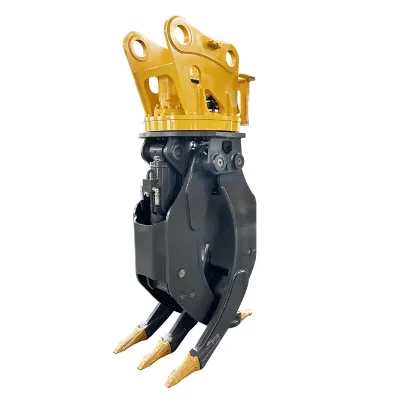
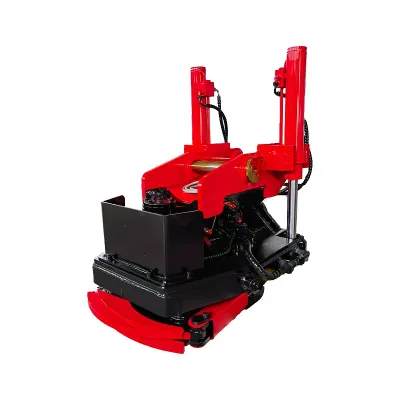
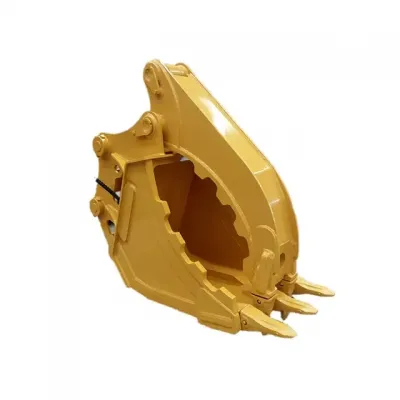
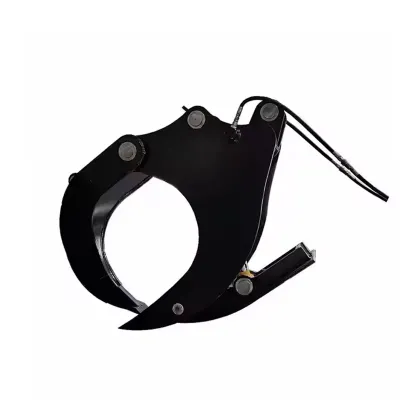
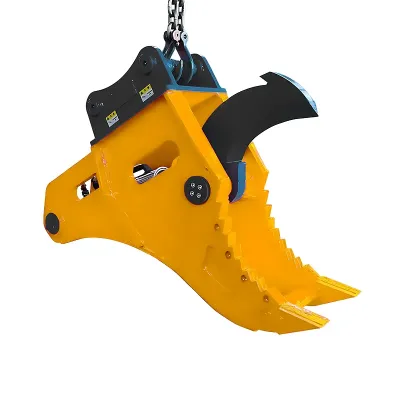
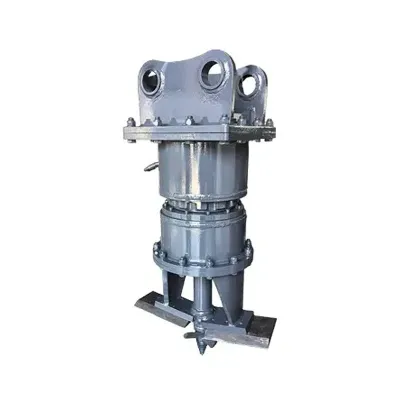
A rotating excavator grapple packs a hydraulic rotator between the boom mount and the grapple body, letting the whole attachment spin continuously in either direction. For some jobs, that's a game-changer—it cuts cycle times, saves wear on your undercarriage, and lets you place loads with precision that a fixed grapple just can't deliver. For others, it's an expensive add-on that adds maintenance points without moving the needle on productivity. This guide breaks down how rotators work, what they need from your machine, and how to figure out whether the investment is worth it for your operation.
Rotating grapples are a common sight in the excavator grapple attachments market, especially for timber work and scrap sorting. Deciding whether to spec rotation should be driven by your actual workflow, not by the assumption that more features are always better.
How a Hydraulic Rotator Works
A hydraulic rotator is a compact, motor-driven rotary joint that sits between the excavator boom mounting bracket and the grapple body. Pressurized oil drives a motor inside the rotator, which turns the output flange connected to the grapple through a gear reduction. That reduction gives you high torque at a controlled speed, so you can orient heavy loads precisely. Most rotators deliver continuous 360-degree rotation in either direction, with no mechanical stop limiting how many times you can spin.
The rotator also acts as a hydraulic swivel, letting oil pass through the rotating joint to the grapple cylinders below. That means you can open and close the grapple while it's spinning, without hoses twisting or binding. A case drain line is typically required to return leakage oil from the rotator motor back to the tank, keeping pressure from building up and damaging seals.
Carrier Requirements: Circuits and Flow
A rotating grapple needs two independent auxiliary hydraulic circuits: one for the grapple cylinders and one for the rotator motor. The grapple circuit handles jaw opening and closing, while the rotator circuit controls rotation direction and speed. Some excavators come with dual auxiliary circuits from the factory; others may need an additional circuit installed, which can mean adding control valves, hoses, and a foot pedal or joystick button for rotator control.
Hydraulic flow requirements depend on the rotator size and grapple model. Smaller rotating grapples for 5 to 8 ton excavators typically need 50 to 120 L/min combined across both circuits, while larger models for 18 to 35 ton carriers may require 100 to 200 L/min or more. Rotator operating pressure is commonly 250 bar, with grapple cylinder pressure ranging from 120 to 300 bar depending on the setup. Before you spec a rotating grapple, confirm that your excavator can deliver the required flow to both circuits at the same time—the combined demand can exceed what a single auxiliary pump can supply.
For a detailed breakdown of hydraulic flow and carrier compatibility across grapple types, the article on excavator grapple hydraulic flow and compatibility covers the specifications you need to check.
Applications Where Rotation Earns Its Cost
Timber handling is where rotation pays off most clearly. Loading logs onto trucks means aligning the timber with the bed, and stacking in yards calls for precise placement. Without rotation, the operator has to reposition the whole excavator to change log orientation, which eats up time and chews up undercarriage parts—especially on surfaces like gravel and pavement. The rotary log grapple from TGEC is purpose-built for this, with curved tines and an integrated rotator.
Scrap sorting and recycling also benefit from rotation. When you're separating ferrous and non-ferrous metal into different piles, rotating the grapple lets you drop material in the right direction without swinging the boom across multiple piles. That cuts cycle time and reduces the chance of dropping material in the wrong spot. In waste transfer stations, rotation helps you orient bulky waste for efficient compaction and container loading.
Utility and pole handling is another strong case. Setting utility poles, fence posts, and long cylindrical materials needs precise orientation to get the pole in the hole or onto the truck. A rotating grapple lets the operator fine-tune the pole angle without repositioning the excavator—critical in tight spots like city streets and backyards.
Applications Where Rotation Is Harder to Justify
For general rock handling on site prep and landscaping jobs, rotation is often overkill. Rocks are typically picked and dropped in a general area with no real orientation requirement, and the operator can position the excavator to get the drop direction they need. A fixed mechanical or hydraulic grapple handles these tasks for less money and with fewer things to maintain.
Demolition work is a mixed bag. Some demolition sites benefit from rotation when sorting debris into separate containers, but many demolition jobs are just picking and dropping material into a roll-off or pile without any orientation precision. If your demolition work is mostly structural teardown and bulk loading, a fixed grapple may be enough. If sorting and separation are a big part of the job, rotation adds value.
Dredging and clamshell bucket work sometimes use rotation for precise placement, but many dredging operations just drop material into a barge or spoil area where orientation doesn't matter. The clamshell bucket itself is the key feature, and rotation is optional depending on whether you need precise placement.
Maintenance Considerations for Rotating Grapples
The rotator adds maintenance that a fixed grapple doesn't have. The rotator bearing should be greased daily during heavy use, following the manufacturer's grease point locations and volume recommendations. The rotator hydraulic seal can leak over time, especially if the case drain line is restricted or if the rotator is run beyond its pressure rating. A leaking rotator seal means disassembly and seal replacement—a bigger job than swapping out a standard grapple cylinder seal.
The rotator also adds weight to the attachment, which cuts into your effective lift capacity. When you compare rotating and fixed grapples of the same jaw size, the rotating model will be heavier and may need a larger excavator class. The extra hydraulic hoses and connections for the rotator circuit are also potential leak points that need periodic inspection.
Despite those considerations, a well-maintained rotator is durable and can give you years of reliable service. The key is sticking to the maintenance schedule and staying within the specified pressure and flow limits. For operators who use rotation every day, the productivity gains typically far outweigh the maintenance costs.
Rotation Decision Summary
Spec a rotating grapple when your workflow regularly demands precise load orientation—timber loading and stacking, scrap sorting into separate piles, utility pole setting, and any job where repositioning the excavator for every orientation change takes up meaningful time. Go with a fixed grapple when your work is mostly picking and dropping without precise placement—general rock handling, bulk demolition loading, land clearing, and basic material movement. The rotator adds cost, weight, maintenance, and hydraulic circuit requirements, so it should only be specified when the application genuinely benefits from continuous orientation control.
For a comparison of rotary and mechanical log grapple designs specifically, the article on log grapple selection covers both configurations in detail.
Rotation Questions
Frequently asked questions about rotating grapple systems.