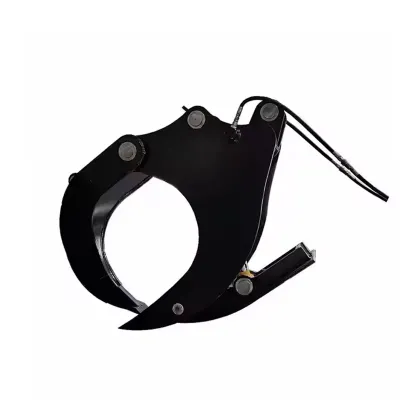
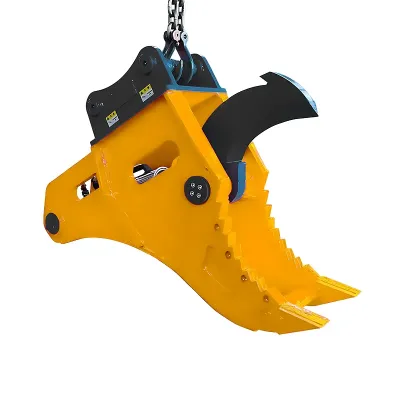
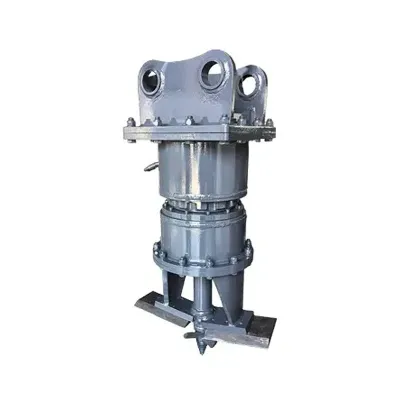
Log grapples are purpose-built attachments with curved tines designed to cradle round timber and keep logs from rolling during lifting and transport. Within that category, buyers face a choice between rotary configurations with built-in hydraulic rotators and mechanical designs that run off the bucket curl function with no auxiliary hydraulics. The choice drives cycle time, what your machine can handle, maintenance costs, and the type of timber work the attachment can do efficiently. This guide walks you through the design differences, which applications each one fits, and the spec checks that help you figure out which log grapple is right for your operation.
Both rotary and mechanical log grapples are part of the broader excavator grapple product family, and manufacturers typically offer both configurations across a range of excavator sizes.
Curved Tine Design: The Defining Feature of Log Grapples
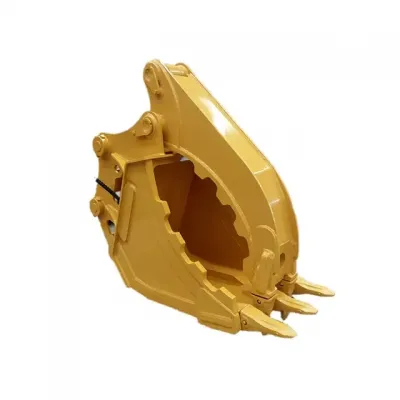
What sets a log grapple apart from a general-purpose one is the shape of the tines. Log grapple tines curve inward in an arc that matches the curve of a round log, creating a cradle that holds timber securely without needing a ton of clamping force. That curved shape also lets the tines wrap around multiple logs at once, which comes in handy when you're dealing with small-diameter timber or brush. General-purpose grapples with straight or shallow tines let round logs roll or slip during lifting—especially when the boom moves or the load shifts.
The number of tines varies by model. Some log grapples use two large curved jaws, while others use three or four narrower tines for more contact points. Two-jaw designs give you a wide opening for big logs and are simpler to maintain, while multi-tine designs spread clamping force across more points and handle smaller-diameter bundles more securely. The choice comes down to your typical log size and whether you're handling single big logs or bundles of smaller timber.
Rotary Log Grapples: Design and Capabilities
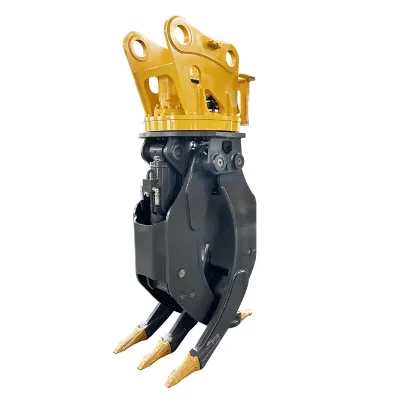
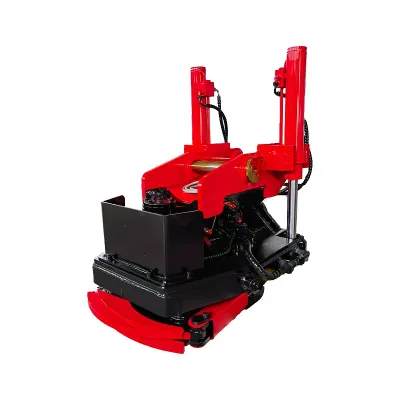
Rotary log grapples have a hydraulic rotator built in between the boom mount and the grapple body, giving you continuous 360-degree rotation. That lets the operator position logs precisely for truck loading, feeding a sawmill, stacking timber, or setting utility poles. The rotator needs a second auxiliary hydraulic circuit, and the grapple itself needs a primary circuit for opening and closing the jaws. Most rotary log grapples also include a case drain line for the rotator motor.
The rotary log grapple from TGEC uses a rotator with specified rotation and working pressures, and comes in multiple sizes covering a range of excavator classes. Within the rotary category, you'll find both single-cylinder and dual-cylinder versions. Single-cylinder designs use one central cylinder and a linkage to drive both jaws, giving you a lighter, simpler setup. Dual-cylinder designs put a cylinder on each side of the frame, delivering more balanced clamping force and higher overall grip strength for heavy timber. The dual-cylinder rotary grapple is built for operators handling large-diameter loads where maximum clamping force is a priority.
Mechanical Log Grapples: Design and Trade-offs
Mechanical grapples run off the excavator's standard bucket curl function, using a linkage to turn bucket motion into jaw opening and closing. They don't need auxiliary hydraulic circuits, which means they work with virtually any excavator regardless of what kind of plumbing it has. The mechanical grapple from TGEC comes in five sizes for 3 to 23 ton excavators, with opening widths from 1050 to 2200 mm.
The upsides of mechanical log grapples are simplicity, light weight, and low cost. No hydraulic cylinders, hoses, or rotator means fewer parts to leak, wear out, or service. The attachment is lighter, which matters on smaller excavators with limited lift capacity. The trade-offs are that mechanical grapples can't rotate independently, they produce less clamping force than hydraulic models, and jaw force is tied to the bucket curl cylinder output. For general log handling, land clearing, and brush removal where precise orientation isn't critical, mechanical log grapples deliver solid performance at a lower entry price.
Application Matchup: Where Each Design Wins
Rotary log grapples are the standard for commercial timber operations where loading and stacking are everyday work. Sawmills, logging contractors, and tree services that handle high volumes of timber benefit from being able to orient logs without repositioning the excavator. In truck loading, rotation lets the operator align logs with the bed in one motion, instead of swinging the boom and moving the carrier for every log. In timber yards, rotation enables neat stacking that makes the most of your storage space and makes later retrieval easier.
Mechanical log grapples are a good fit for land clearing, landscaping, and utility work where the main job is moving logs and brush from one spot to another without needing precise orientation. A contractor clearing a building lot typically picks up logs and drops them in a staging pile or chipper, and the orientation of the drop doesn't affect productivity. In those cases, the lower cost, simpler maintenance, and universal compatibility of a mechanical grapple outweigh the benefits of rotation.
Some operations justify having both. A logging contractor might use a rotary grapple for truck loading and yard work, and keep a mechanical grapple on a smaller machine for land clearing and brush removal. For operators who handle a mix of precision timber work and general clearing, the decision may come down to which task accounts for more of your operating hours.
Specification Checks Before Buying
Whether you choose rotary or mechanical, several specs determine whether a log grapple will perform on your excavator. First is compatible excavator class—every model specifies a weight range, and running outside that range can overload the boom or leave the carrier underutilized. Second is jaw opening, which should comfortably exceed the typical log diameter you handle. A grapple with a 1050 mm opening can handle logs up to that size, but if you regularly work with 800 mm logs, a larger opening gives the tines more room to wrap around the timber securely.
For rotary grapples, check that your excavator has two available auxiliary circuits with enough combined flow. The rotator and grapple circuits run simultaneously, so the combined flow demand has to stay within the machine's hydraulic pump capacity. You'll also need a case drain line for the rotator. For mechanical grapples, no hydraulic checks are needed, but verify that the mounting bracket matches your excavator's pin spacing and coupler type.
For a broader look at how grapple types compare across all material categories, the article on excavator scrap grapples covers a different material type and provides useful contrast for buyers evaluating multiple attachment options.
Log Grapple Selection Priorities
Start by identifying your dominant timber task. If loading, stacking, and precise orientation take up most of your operating hours, a rotary log grapple is the right choice—go single-cylinder for general timber work or dual-cylinder for heavy, large-diameter logs. If your work is mostly picking and dropping without precise placement, a mechanical log grapple delivers reliable performance at lower cost with universal excavator compatibility. From there, verify excavator class, jaw opening against your typical log diameter, and for rotary models, dual auxiliary circuits and case drain availability. Running through these checks in order narrows the field quickly and points you to the model that will perform best on your specific jobsite.
Timber Handling Questions
Common questions from buyers selecting a log grapple.