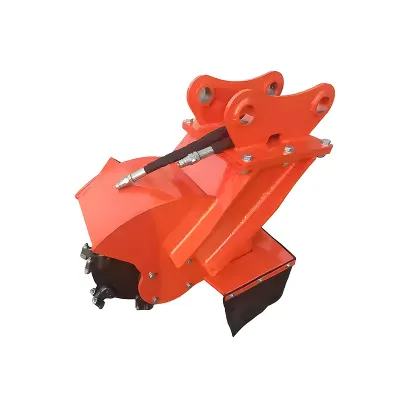
The 3-to-5-ton compact excavator class has become one of the fastest-growing segments in both rental fleets and contracting operations, and the vegetation-reduction attachments designed for these machines have kept pace with that demand. A mini excavator mulcher delivers professional-grade forestry clearing capability to a carrier that can slip through gates, reach across ditch lines, and work inside tight residential lots where full-sized equipment won't fit. But not every mulcher on the market plays well with every compact excavator—pair the wrong unit with your machine, and you will likely face sluggish cutting performance, hydraulic strain, or early component fatigue.
Getting the specification right comes down to a handful of carrier and attachment variables that interact more closely than many operators realize. This guide covers the critical checkpoints: hydraulic output, cutting width, drum versus disc architecture, and mounting style. Whether you run a 3-ton machine for light landscaping or a 5-ton excavator for commercial clearing, understanding these factors will help you choose a mulcher that delivers consistent production without overtaxing your carrier.
What Makes a Mini Excavator Mulcher Useful
The biggest advantage of putting a mulcher on a compact excavator comes down to reach and positioning. Unlike a skid steer or track loader, which has to drive straight into the material, an excavator boom reaches over obstacles, dips into ravines, and works from a stable stance on sloped or uneven ground. That makes these mulchers especially valuable for clearing along fence rows, maintaining pond banks, cutting new trail corridors, and doing selective clearing in environmentally sensitive areas where you want to minimize ground disturbance.
On top of that, mulching in place eliminates the logistical headache of hauling brush and limbs off-site. The attachment reduces woody material to a consistent chip that can stay on the ground as erosion-friendly cover, which cuts disposal expenses and reduces vehicle traffic around the jobsite. For contractors who already own a mini excavator, adding a mulcher opens up a new service offering without the capital outlay for a dedicated forestry machine.
Core Selection Criteria
Start with the Excavator Operating Weight
The operating weight of your excavator is the first specification to nail down—and it's non-negotiable. Mulcher manufacturers publish a compatible weight range for every model, and ignoring that window invites trouble. Fit a unit meant for a 6-to-9-ton machine onto a 3-ton carrier, and you'll be hauling around dead weight that your hydraulics can't feed. Go the other way, and you'll leave productivity on the table because the mulcher simply isn't aggressive enough for the bigger machine. For carriers in the 3-to-5-ton bracket, look for attachments explicitly rated for that band, such as the TG-M02, which is purpose-built for that weight class.
Check Auxiliary Hydraulic Flow First
Hydraulic flow is the real performance driver—get this wrong, and nothing else matters. Every mulcher operates within a specific flow window, measured in liters or gallons per minute, and your excavator's auxiliary circuit needs to deliver that rate consistently at working pressure. Feed it too little oil, and the rotor or disc won't achieve the tip speed needed for a clean cut—stalls and ragged edges will be the norm. Push too much flow through it, and you'll overspeed the motor, build excess heat, and risk blowing seals in short order. For most 3-to-5-ton mini excavators, auxiliary flow lands somewhere between 30 and 60 L/min, so choose a mulcher whose operating range fits squarely in that zone.
Balance Cutting Width Against Attachment Weight
Wider cutting swaths mean fewer passes to clear an area, but that extra width comes with added weight—and that weight hangs at the end of the boom, directly eating into your lift capacity and machine stability. For compact excavators, a cutting width in the 700-to-900-mm range offers a practical compromise between coverage and carrier limitations. Before you commit, check your excavator's rated lift capacity at the expected working reach, and make sure it exceeds the mulcher's weight plus the dynamic loads generated during real-world cutting.
Know the Maximum Cutting Capacity
Maximum cutting capacity tells you the largest stem diameter the mulcher can handle effectively—a figure that scales with attachment size and the hydraulic muscle of the carrier. In the 3-to-5-ton class, most mini excavator mulchers will process material up to 80 to 100 mm in diameter, though that number shifts with wood species and operator technique. Feed it a trunk that exceeds the rated diameter, and you'll stall the cutting rotor, accelerate tooth wear, and potentially stress the drive components. For larger trees, the best practice is to drop them first with a chainsaw or shear, then mulch the downed material in manageable passes.
Mounting Configuration Matters
Mini excavators typically use either a direct pin-on connection or a quick-coupler system. Pin-on mounting gives you a rigid, slop-free interface that transfers hydraulic power to the attachment with maximum efficiency, while a quick coupler lets the operator swap tools without leaving the cab—a clear win for job sites that require frequent attachment changes. If your machine runs a quick coupler, double-check that the mulcher's mounting bracket matches your specific coupler brand and pin spacing. Most manufacturers offer custom brackets to fit popular mini excavator brands and coupler styles.
Drum Mulcher vs. Disc Mulcher – Which Design Suits Your Work?
Excavator mulchers generally fall into two camps: drum designs and disc designs. Each has its own strengths, and the right choice depends largely on the type of vegetation you tackle most often. For a deeper dive, see this drum mulcher vs disc mulcher comparison, but for mini excavators the decision usually comes down to whether you are cutting standing timber or clearing surface growth.
Drum mulchers feature a horizontal rotating cylinder outfitted with carbide-tipped teeth that grind material as it is pulled across the drum surface. They handle mixed material exceptionally well—downed trees, stumps, thick brush, and everything in between—and they tend to leave a finer, more consistent mulch finish. For mini excavator operators who deal with a variety of brush, small timber, and slash, a drum mulcher is often the more adaptable option. The drum mulcher with hydraulic thumb adds an extra layer of utility, letting the operator grab and reposition limbs while mulching.
Disc mulchers, by contrast, spin a vertical disc with cutting teeth around its perimeter, and they are engineered to face standing timber head-on. They excel at felling and mulching upright trees in a single pass, but they demand more finesse from the operator and they tend to be less effective on surface brush and downed material. On a mini excavator, the smaller disc models can be viable for selective tree removal, but the limited hydraulic flow on compact carriers may cap their effective cutting diameter.
Common Applications for Compact Excavator Mulchers
-
Residential property clearing and fence-line maintenance in tight-access areas
-
Pond and lake bank management where the boom needs to reach out over the water
-
Building and maintaining trails for hikers, mountain bikers, and equestrian use
-
Utility right-of-way clearing along power lines, gas pipelines, and fiber-optic routes
-
Post-storm cleanup to process fallen branches and downed small timber
-
Controlling invasive species on conservation lands and natural preserves
Final Selection Checklist
Before you finalize your order, run through these verification steps: confirm that your mini excavator supplies a continuous 30-to-60 L/min auxiliary flow and includes a case drain circuit; verify that the mulcher's weight stays within your machine's lift capacity at the working reach; select a cutting width that aligns with the typical stem density on your sites; and choose between a drum or disc design based on whether standing trees or surface brush make up the bulk of your work. Pin-on mounting offers the most rigid setup for heavy cutting, while a quick coupler adds flexibility if your excavator handles multiple attachment types across different jobs.
The TGEC engineering team can verify the correct model and mounting bracket for your specific excavator. Browse the full excavator mulchers range or send us your machine specs for a customized recommendation. For a more detailed look at sizing principles, see our companion piece on matching a mulcher to excavator size.
Compatibility Questions
Straight answers on sizing a mulcher to your excavator's hydraulic output and physical specs.