Stick an auger on a mini excavator, and you've got a compact, versatile hole-drilling rig that's perfect for fence posts, footings, tree planting, and sign work. But picking the right auger drive is about more than just matching the model to your machine's weight. You need a drive that lines up with your excavator's hydraulic output, puts out enough torque for the hole sizes you're drilling, and works with the right bit for the ground you're in. This guide covers the key factors that go into choosing a mini excavator auger system—carrier size, hydraulics, bit selection, and what you actually need it to do.
Start With Your Mini Excavator Specifications
Your excavator is the first thing to look at. Mini excavators in the 1.5 to 8 ton range have very different hydraulic outputs, and the auger drive has to run within the machine's available flow and pressure. A 2 ton mini might only put out 40 to 50 L/min of auxiliary flow at 80 to 120 bar, while a 6 ton machine can deliver 60 to 95 L/min at 100 to 190 bar. The TG-EG2000 and TG-EG3000 are built for the lower end, needing 40 to 75 L/min at 80 to 170 bar, while the TG-EG5500 and TG-EG7000 step up to 60 to 95 L/min at 80 to 200 bar for bigger mini excavators.
Beyond the hydraulics, think about your excavator's lift capacity at the boom reach you typically drill at. An auger drive weighing 55 to 135 kg isn't huge compared to a bucket full of dirt, but the downward drilling force and the weight of a fully extended bit can affect stability on the smallest machines. A 1.5 ton mini with a 55 kg drive and a 600 mm bit is stable for residential post holes, but the same machine with a 300 mm bit in compacted soil might struggle with both torque and stability. Match the drive to the machine, and don't overload a small mini with a drive meant for a bigger carrier.
Match Torque to Hole Size and Ground Conditions
Torque is the number that really matters for an auger drive. It's what tells you whether the bit can turn through the ground at the size you need. The TGEC mini excavator range starts at 2510 Nm on the TG-EG2000 and goes up to 8250 Nm on the TG-EG8000. As a rough rule of thumb, a 150 mm (6 in) hole in standard soil needs about 1500 to 2500 Nm, a 250 mm (10 in) hole needs 3000 to 5000 Nm, and a 350 mm (14 in) or bigger hole in compacted ground might need 6000 Nm or more. These are ballpark numbers—actual requirements depend on soil type, moisture, and bit design.
Ground conditions have a big effect on torque demand. Loose topsoil and sand are easy on the drive—the bit cuts freely and the flights clear material with no trouble. Clay and compacted fill need more torque because the material resists penetration and tends to stick to the flights. Hardpan, gravel, and fractured rock demand the most torque, and you might need a specialized rock bit with carbide teeth. If you regularly drill in tough ground, go with a drive that has more torque than the minimum rating for your hole size. A drive that's marginal in standard soil will stall over and over in compacted or wet conditions, slowing you down and putting extra wear on the hydraulic system.
Select the Right Auger Bit
The auger bit is the part that actually does the digging, and picking the right one for your ground conditions is just as important as choosing the drive. Standard earth bits have a single or double flight design with cutting teeth at the leading edge, built for general soil, loam, and topsoil. They're the most common type and handle the majority of residential and commercial post-hole work. Clay bits have a different tooth pattern and flight spacing to keep sticky clay from building up on the screw—which can cause the bit to bind and stop turning. Rock bits use heavy-duty carbide-tipped or bullet teeth designed to penetrate hard ground, compacted soil, and light rock; they're a must for footing work in tough terrain.
Bit diameter should match the hole size you need most often. Fence posts usually need 150 to 200 mm (6 to 8 in) holes, while deck footings and pole barn posts may call for 250 to 400 mm (10 to 16 in) or bigger. Tree planting holes vary by species and root ball size, often ranging from 200 to 450 mm (8 to 18 in). It's more practical to own one or two bit sizes that cover your most common work than to buy a bunch of sizes that just sit on the shelf. The bit connection has to match the drive output shaft, or you'll need an adapter. For a deeper dive into matching bits to ground conditions, check out our auger bit selection guide.
Consider Drilling Depth and Extensions
Standard auger bits usually drill to a depth equal to their flight length—typically 600 to 1200 mm (2 to 4 ft) depending on the bit size and design. For most fence post and sign post work, that's plenty. If you need deeper holes—for utility pole bases, pole barn footings, or deep foundation piers—extension shafts are available to add depth. Extensions connect between the drive output shaft and the bit, adding length in 300 to 1000 mm (1 to 3 ft) increments or more. You can stack multiple extensions for very deep holes, but each one adds the potential for wobble and makes it harder to keep the drill string straight.
When you're planning for deep drilling, make sure the drive has enough torque for the bit diameter at depth—deeper holes mean more consistent soil resistance and more material for the flights to lift. Also check that your excavator boom has enough reach to pull the extended bit all the way out of the hole, and that the machine stays stable with the extended drill string. For most mini excavator auger work, standard bit depth is fine, and extensions are more of an occasional accessory than a daily need.
Evaluate Mounting and Connection Options
The auger drive mounts to the mini excavator boom with a bracket that replaces the bucket mounting. The bracket has to match your excavator's pin-to-pin spacing, pin diameter, and stick width. TGEC supplies custom brackets for all the major mini excavator brands—just give us the machine make, model, and pin dimensions and we'll get you the right fit. If your mini has a quick coupler, the bracket can be configured to match that interface, so you can swap between the auger drive and other attachments quickly. A hydraulic quick coupler that also handles the auxiliary lines makes hose connection a lot easier and cuts down setup time.
For the hydraulic hookup, you'll connect the drive's supply and return hoses to the excavator's auxiliary circuit. Some drives need a case drain line for motor leakage, and your mini excavator has to have a case drain port available. If it doesn't, the TianGe technical team can recommend the right motor configuration for your hydraulic setup. Always check the output shaft rotation direction before you attach the bit—reversed rotation will make the bit unscrew from the drive instead of drilling into the ground. For step-by-step installation help, see our auger installation guide.
Application-Based Selection
For residential fencing and small post work, a 1.5 to 3 ton mini excavator with the TG-EG2000 or TG-EG3000 and a 150 to 200 mm standard earth bit covers most jobs. This combo is light, maneuverable in tight yards, and has enough torque for standard soil. If you're also drilling footings and larger posts, a 3 to 6 ton mini with the TG-EG5500 or TG-EG7000 gives you 5600 to 7300 Nm of torque, handling 250 to 350 mm holes in moderate ground. For operators who work mainly in compacted soil, clay, or rocky ground, choosing a drive with torque at the upper end of your excavator's range will keep the bit turning when conditions get tough.
Rental companies and dealers should stock drive models that cover the most common mini excavator sizes in their market. The TG-EG2000 through TG-EG5500 cover the 1.5 to 6 ton range, which is where most mini excavators in residential and light commercial use live. Offering a selection of auger bits in 150, 200, 250, and 300 mm diameters, plus a set of extensions, lets renters handle a wide variety of post-hole and footing applications with one drive unit.
Final Selection Checklist
Before you pull the trigger on a mini excavator auger system, run through this: does your excavator's weight fall within the drive model's range? Does your auxiliary flow and pressure match the drive specs? Does the drive's max torque cover your largest typical hole diameter and ground conditions? Does the auger bit diameter and type match what you do most? Does the output shaft connection fit your bits, or do you have the right adapter? Is the mounting bracket correct for your excavator or quick coupler? And does the drive weight plus extended bit stay within your excavator's lift capacity at working reach? Give the supplier your excavator make, model, hydraulic specs, and drilling requirements, and they'll make sure you get the right drive, bit, and mounting package for your operation.
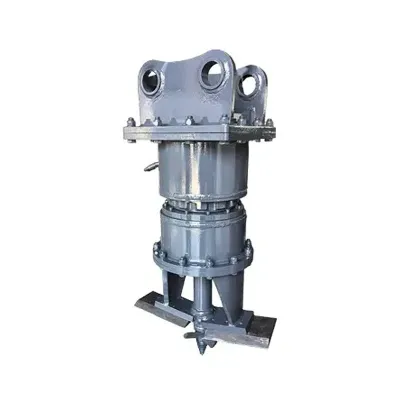
The TGEC excavator hydraulic auger drive is available in fourteen models, with the TG-EG2000 through TG-EG8000 specifically sized for mini excavators from 1.5 to 8 tons. Reach out to the TianGe sales team with your mini excavator details and drilling requirements for a configuration recommendation and quote.