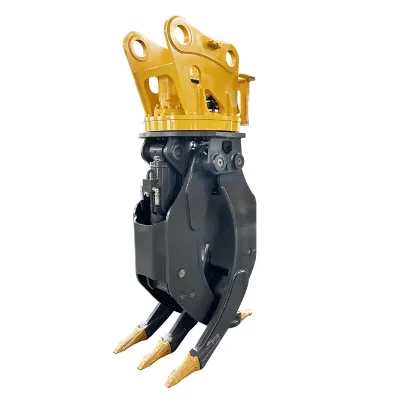
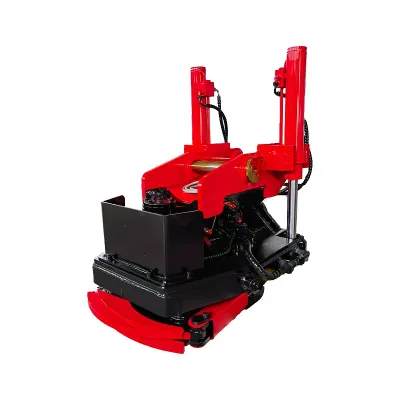
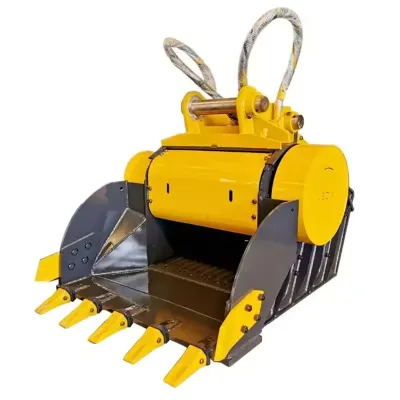
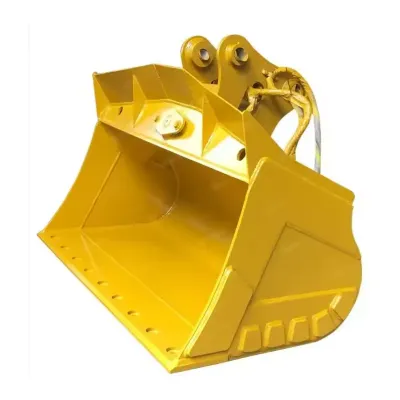
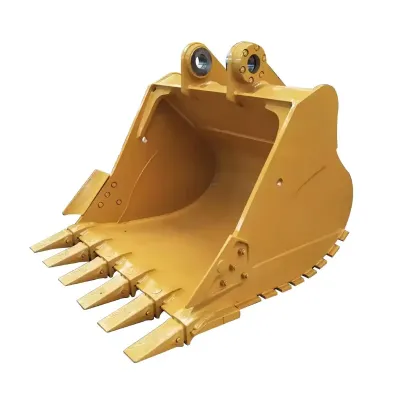
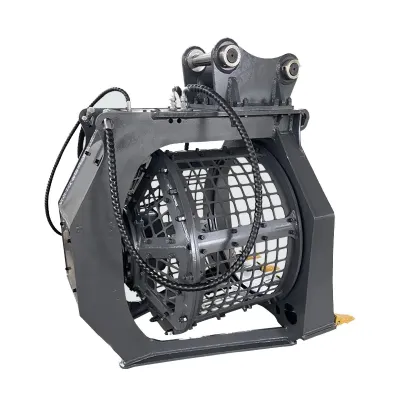
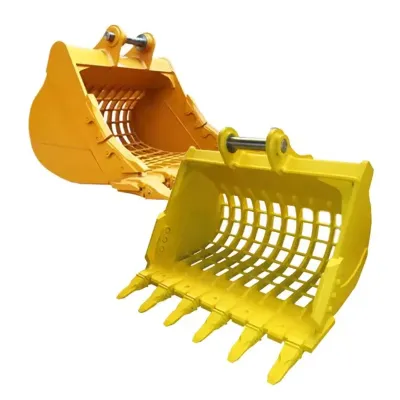
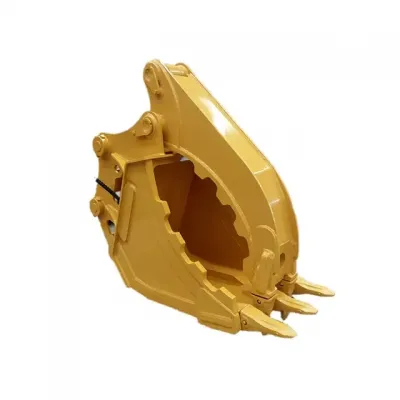
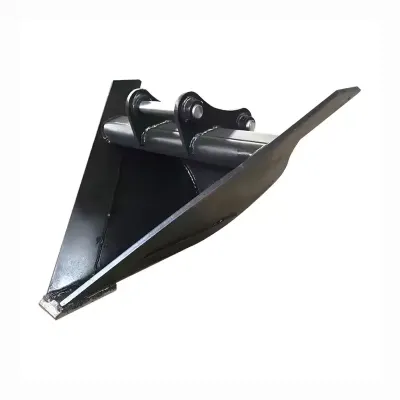
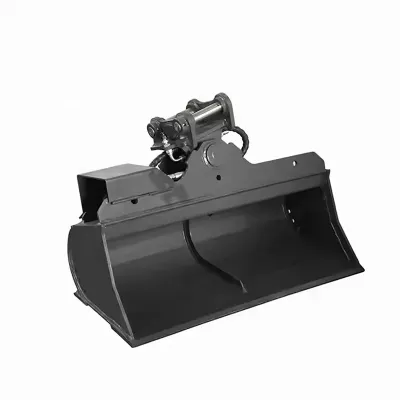
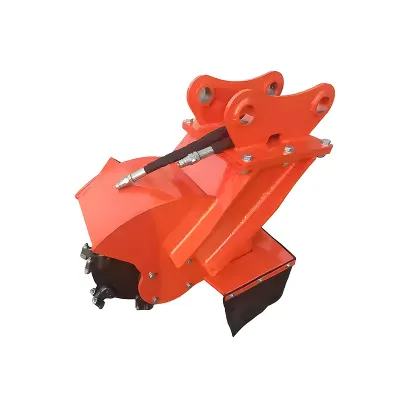
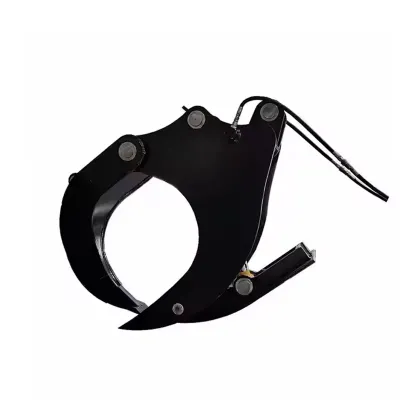
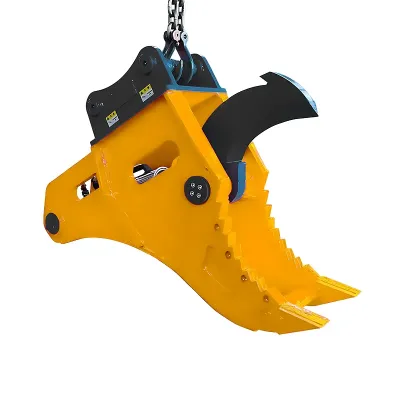
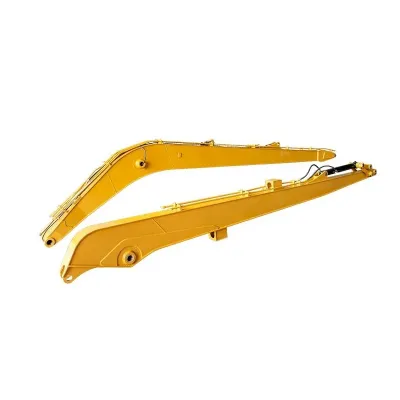
Stick a hydraulic shear on an excavator, and you've just turned a digging machine into a serious cutting tool that can slice through concrete, structural steel, rebar, pipe, and scrap metal. This setup is a staple on demolition sites, scrap yards, vehicle recycling facilities, and industrial decommissioning projects where you need to cut hard materials cleanly and precisely. Knowing how the shear mounts, what hydraulic specs it needs, and which type suits which job goes a long way toward making a smart decision when you're adding this attachment to your equipment lineup.
How a Hydraulic Shear Mounts to an Excavator
The shear takes the place of the bucket on the excavator boom, hooking up through a custom mounting bracket that's machined to match your machine's pin dimensions—pin-to-pin spacing, pin diameter, and stick width. Most shear makers supply brackets that are engineered for specific excavator models from the big names like Caterpillar, Komatsu, Hitachi, Volvo, JCB, Kubota, and others. If your machine has a mechanical or hydraulic quick coupler, the bracket gets configured to fit that coupler interface, so you can swap between the shear and other attachments without hopping out of the cab.
Installation is pretty straightforward: pull the bucket off, line up the shear bracket with the boom and linkage, drive in the boom and linkage pins, and lock them down with retainers. It's routine work for experienced techs, but the one thing you can't afford to mess up is making sure the bracket is a dead match for the excavator. A bracket that doesn't fit right can put extra stress on the boom and stick, cause premature wear on pins and bushings, and create unsafe operating conditions. Always double-check that the mounting bracket is purpose-built for your specific excavator make and model—skip the universal adapters.
Hydraulic Requirements for Excavator Shears
Hydraulic shears get their muscle from the excavator's auxiliary hydraulic circuit, and getting the shear matched to the machine's hydraulic capacity is key to good performance and long component life. The two big numbers are hydraulic flow (liters per minute or gallons per minute) and operating pressure (bar or psi). Not enough flow and the jaws close like molasses, killing your productivity. Too much flow and you'll over-speed the cylinders, build up heat, and chew through seals and internal parts faster than you should. The auxiliary circuit relief valve should be set to the shear manufacturer's recommended maximum pressure to avoid damage from overpressure spikes.
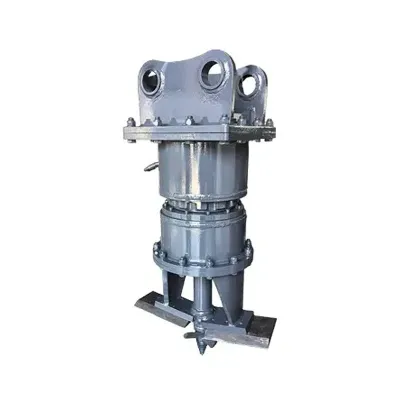
Rotating shears need a second auxiliary circuit or a diverter valve to run the rotation motor independently from the jaw cylinders. That way, the operator can spin the housing while opening or closing the jaws—a huge plus for efficient material handling in demolition and scrap work. If your excavator doesn't have that second circuit, you might need to add a diverter valve or extra hydraulic lines to support rotation, and that's something to sort out before you buy a rotating shear. Also, make sure the excavator's hydraulic cooling system can handle the extra load from continuous shear work—prolonged cutting generates a lot of heat, and if the system can't keep up, you'll cook your hydraulic fluid and lose performance.
Common Shear Types and Their Applications
There are several shear configurations out there, each dialed in for specific materials and job site conditions. The rotating multi-purpose demolition shear is the Swiss Army knife of the bunch—built for building demolition, concrete cutting, and structural dismantling where you're dealing with a mix of concrete, rebar, and light steel. The 360° rotation gives you pinpoint positioning in tight spots, and the interchangeable blades let you switch between concrete and metal cutting on the fly.
For scrap yards and metal recyclers that mostly handle steel, the scrap metal shear is a dedicated cutter with jaw geometry and blade design optimized for heavy sections, plate, and structural members. The double-cylinder scrap shear uses twin synchronized cylinders to spread cutting force evenly across the full jaw width, which is a big advantage when you're dealing with bulky, irregular scrap that tends to twist or shift under uneven pressure. For auto wrecking and vehicle recycling, the vehicle dismantling shear has a narrow jaw profile that reaches into engine compartments and wheel wells, with blade geometry that's tuned for the thin sheet metal and structural sections you find in cars and trucks.
Picking the right shear comes down to what you're doing most of the time, what materials you're processing, and what your excavator's hydraulic system can handle. Contractors who do a mix of demolition work usually get the most mileage out of a multi-purpose configuration, while dedicated scrap processors and vehicle recyclers get better throughput with shears that are purpose-built for their specific material stream.
Operating Considerations and Best Practices
Running an excavator-mounted shear the right way starts with a solid pre-use routine: check that hydraulic connections are tight and leak-free, inspect the cutting blades for wear or damage, grease all pivot points, and make sure the rotation mechanism (if equipped) moves smoothly in both directions. When you're cutting, the operator should line up the jaws perpendicular to the material to get maximum effective cutting force and reduce blade wear. Cutting at an angle wastes power, puts extra stress on the jaw arms and pivot points, and can cause the material to slip out of the jaws.
If you've got a rotating shear, use the rotation function to get the right angle instead of moving the whole excavator—that saves time and cuts down on wear and tear on the undercarriage. When you're working with bulky stuff, get the material as far back into the jaw as you can, where the cutting force is highest, rather than trying to cut at the jaw tips where you've got less leverage. And don't skimp on maintenance: grease pivot points daily, check blades regularly and replace them when they need it, and stick to the excavator manufacturer's schedule for hydraulic fluid and filter changes. That's how you keep the shear running strong and reliable through years of tough work.