Getting familiar with the parts of an excavator boom pays off when it's time to troubleshoot, perform maintenance, or order replacement components. The boom is a welded steel fabrication with several distinct structural and mechanical sections, each designed to handle specific loads during the digging and lifting cycle. This guide walks you through the main boom parts, explains what each one does, and highlights the areas that need the most frequent attention.
Main Structural Sections
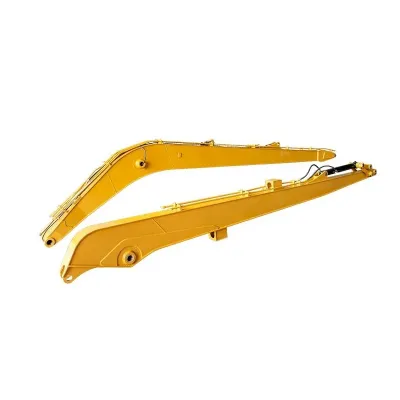
The boom body is a box-section fabrication built from high-strength steel plate. It's made up of a top plate, bottom plate, and two side plates welded together into a hollow, rectangular cross-section. Inside the box, at various intervals, you'll find internal reinforcement plates—often called diaphragms or gussets—that help resist bending and torsional forces. The boom foot end is wider and heavier to handle the highest stress levels, while the arm end tapers down to connect to the dipper arm.
Most booms are painted or coated to resist corrosion, and some feature wear pads or wear strips on the top and bottom surfaces where contact with other components or debris buildup is common. Certain booms include access plates or inspection holes, though standard booms are typically sealed up tight after manufacturing.
The Boom Foot
The boom foot—also referred to as the boom base or boom swing tower connection—is the end of the boom that mounts to the excavator's upper carriage. It contains the main boom pivot pin hole, where a large-diameter pin passes through the boom foot and the upper carriage to allow the boom to pivot up and down. The boom foot also includes the mounting points for the boom cylinders, where the base end of each cylinder attaches through a pin and bushing.
This area sees some of the highest stress on the entire boom, since it carries the full weight of the boom, arm, bucket, and load, plus all the digging forces transmitted through the structure. The pivot pin hole is lined with a replaceable bushing that wears over time. Cracks in the boom foot region are especially concerning because they can spread quickly under load and lead to catastrophic failure if not caught early.
Pivot Points and Bushings
The boom has two main pivot points: the boom foot pivot at the upper carriage connection, and the arm pivot at the far end where the dipper arm attaches. Each pivot consists of a pin hole in the boom, a removable bushing pressed into that hole, and a pin that passes through the bushing and the mating component. The bushing provides a replaceable wear surface—typically made from hardened steel or bronze with grease grooves to help distribute lubrication.
Grease fittings (zerks or Alemite fittings) are installed at each pivot point to make regular greasing quick and easy. Proper greasing cuts down on friction, prevents metal-to-metal contact, and extends the life of both the bushing and the pin. When bushings wear out, they allow play in the pivot, which can throw off alignment, cause uneven loading, and accelerate wear on surrounding parts. Pivot pins should also be checked periodically for wear, grooving, or bending.
Cylinder Mounts and Linkage
The boom cylinders attach to the boom at two locations: the base end near the boom foot, and the rod end at a bracket on the upper portion of the boom. Each mount uses a pin hole, bushing, and pin—similar to the main pivot points. These mounts transfer hydraulic force from the cylinders into the boom structure, so they're reinforced with thick gusset plates to spread the load across the boom box section.
On some booms—especially two-piece and high-reach configurations—you'll find additional cylinder mounts for intermediate boom sections or auxiliary functions. These follow the same basic pin-and-bushing design, though they may be smaller depending on the cylinder size and force requirements. All cylinder mounts should be inspected for cracks, particularly around the welds where the gusset plates meet the boom body.
Wear Items and Inspection Points
The main wear items on an excavator boom are the pivot bushings, pivot pins, cylinder pin bushings, and wear pads. These parts are designed to be replaced periodically as part of routine maintenance. The boom structure itself should be checked for cracks, especially at the boom foot, pivot points, cylinder mounts, and any areas where the cross-section changes. Keep an eye out for paint flaking, rust staining, visible cracks, or unusual noises during operation—these can all be early warning signs.
When ordering replacement boom parts, the most useful info to have on hand includes the excavator make and model, the boom part number (if available), pin diameter at each pivot, pin-to-pin spacing between pivot points, and bushing dimensions. For custom or specialized boom assemblies like high-reach or piling booms, the original manufacturer drawings or serial number are essential for getting the right parts.