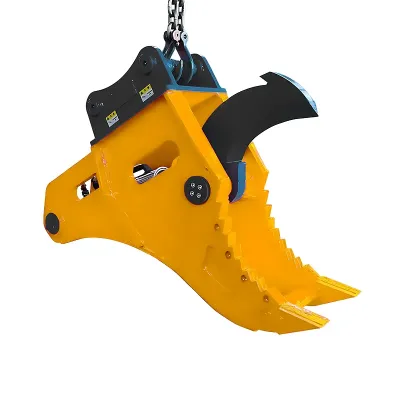
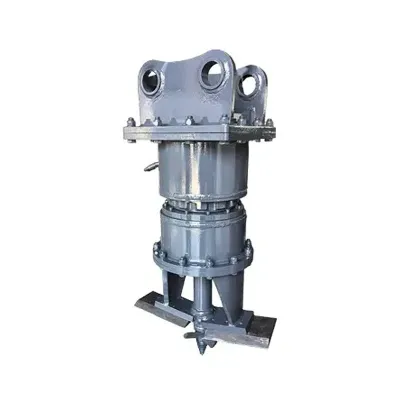
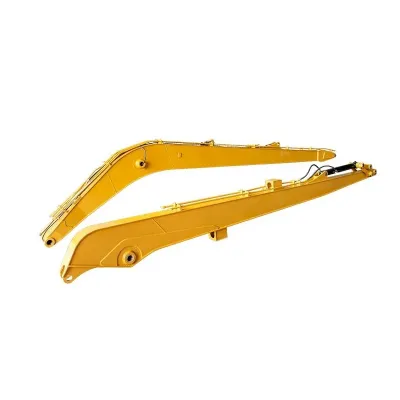
Mini excavators are increasingly used for small-scale tree transplanting in landscaping, nursery, and municipal work, but matching a tree spade to a mini machine requires careful evaluation. Tree spades are heavy—even the smallest TGEC model weighs 830 kg—and need a dedicated auxiliary hydraulic circuit to drive the blade cylinders. Mini excavators have limited lift capacity (especially at reach), may lack sufficient hydraulic flow, and can be unstable with a heavy attachment. A poor match results in slow operation, incomplete blade penetration, equipment strain, or tipping. This guide covers the key factors: lift capacity, hydraulics, mounting, stability, and tree size limits.
Lift Capacity and Machine Weight
Lift capacity is the most critical factor. The combined weight of the spade plus extracted root ball must stay within the excavator's rated lift capacity at working radius. The TG-TS60 weighs 830 kg, recommended for 5–10 ton excavators. The root ball can add several hundred kilograms depending on size (300–700 mm diameter) and soil moisture—wet soil adds significant weight. Mini excavators below 5 tons generally lack sufficient capacity, especially at extended reach or on uneven ground. Even 5–6 ton machines should be evaluated using the load chart with combined spade + max root ball weight at your typical working radius, not nominal operating weight. Counterweight matters—use maximum counterweight configuration. Always verify the machine can safely lift the full expected load at the maximum reach you'll use. For general selection across all sizes, see our tree spade selection guide.
Auxiliary Hydraulic Requirements
Tree spades need a dedicated auxiliary circuit with sufficient flow and pressure for reliable blade operation. Insufficient flow means slow penetration; insufficient pressure may not drive blades through heavy or compacted soil. Most modern 5-ton-plus mini excavators have at least one auxiliary circuit, but older machines, base models, or units already using the circuit for another attachment (breaker, auger, grapple) may not have an available circuit. Verify actual flow and pressure from the spec sheet or by measurement—nominal ratings may not reflect actual output, especially on smaller machines. Also check hydraulic oil cooler capacity—continuous spading generates heat; overheating degrades oil, seals, and performance. Oil type, viscosity, and condition matter too—contaminated oil accelerates wear. If the machine lacks an adequate circuit, a technician can install one, but this adds significant cost; factor it into the decision. For limited hydraulics, consider whether the TG-TS60 can operate effectively within the machine's limits or if a larger machine is more appropriate.
Mounting Dimensions and Compatibility
Mounting compatibility must be verified before ordering. Three critical dimensions: pin diameter, pin center distance (between bucket pin and link pin), and arm width (inner arm plate spacing). These vary significantly between brands and models—even within the same weight class. Always measure your actual machine rather than relying on published specs. If using a quick coupler, the spade bracket must match the coupler interface; different brands use different geometries, pin sizes, and locking mechanisms. An adapter plate or custom bracket may be required. The coupler weight must be factored into lift capacity. Custom brackets are available for non-standard dimensions; adapter plates can be fabricated for most major coupler brands. When ordering, provide excavator make, model, serial number, measured pin dimensions, and coupler information. Also verify clearance—spade, bracket, and hoses must clear tracks, blade, cab, and counterweight through full arm motion, tilt, and rotation. Clearance issues are more common on compact mini machines.
Machine Stability and Operating Conditions
Stability is a critical safety concern with mini excavators. The heavy attachment shifts the center of gravity forward, especially with the root ball extracted at reach. Mini excavators have less ground contact and counterweight than larger machines, making them more susceptible to tipping—particularly on slopes, uneven terrain, or soft ground. For safe operation: work on level, stable ground whenever possible; avoid slopes; keep loads close to the machine; avoid sudden movements; ensure tracks are fully on stable ground; and use maximum counterweight. In soft or muddy ground, tracks can sink—use ground protection mats. On rocky or uneven terrain, the machine may not sit level, affecting both stability and root ball quality (the spade should be vertical for a uniform ball). Wind also matters—a leafy tree acts as a sail; gusts can destabilize the machine, especially with load at reach. For mini excavator spading, limit operations to calm conditions, level ground, and smaller trees well within capacity. If your work regularly involves larger trees, slopes, or uneven terrain, a larger excavator is safer and more appropriate. Always follow the manufacturer's safety guidelines and never exceed rated lift capacity or operate in conditions that compromise stability.
Tree Size and Application Limits
When using a tree spade on a mini excavator, respect practical limits. The TG-TS60 handles 50–120 mm trees with 300–700 mm root balls, recommended for 5–10 ton excavators. On 5–6 ton mini excavators, the practical tree size may be smaller than the rated 120 mm due to lift and hydraulic constraints. Attempting upper-end trees with an underpowered machine can result in incomplete penetration, poor root balls, excessive strain, or stability issues. Stay within the comfortable operating range of your specific combo. Mini excavator spading is best for small nursery stock, young landscape trees, and compact ornamentals in confined spaces—backyards, narrow paths, tight landscape areas where larger machines can't access. Applications include small-scale nursery work, residential landscaping, urban planting, and park maintenance. If your work regularly involves larger trees (over 100 mm), heavy soils, or high-volume transplanting, a larger excavator with a larger spade will be more productive and yield better survival rates. Evaluate your typical tree sizes, soil conditions, and site access—if most work falls within the mini's comfortable range, it's a capable tool; if it frequently exceeds those limits, upgrade to a larger machine. For specifications and model details, see the TGEC excavator tree spade product page.