When you need to dig a long, narrow trench, you've got a basic choice: stick with the bucket you already have on your excavator, or add a chain trencher attachment. The right call depends on the length of the trench, the width and depth you need, the soil you're dealing with, what equipment you've got, and how much you want to spend on attachments. This comparison lays out the practical differences between trenching with a chain trencher versus a standard bucket, and also looks at when a dedicated ride-on trencher makes more sense than an excavator-mounted unit.
Chain Trencher vs. Excavator Bucket
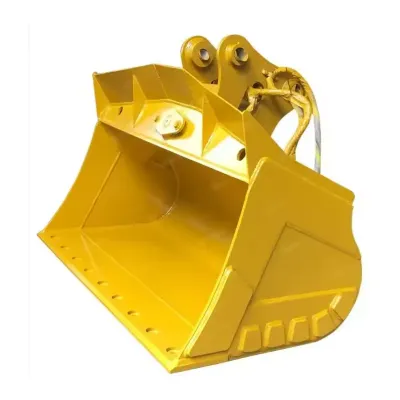
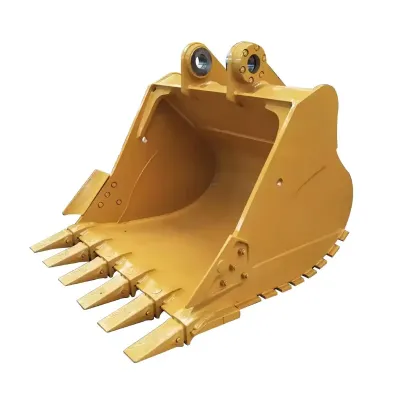
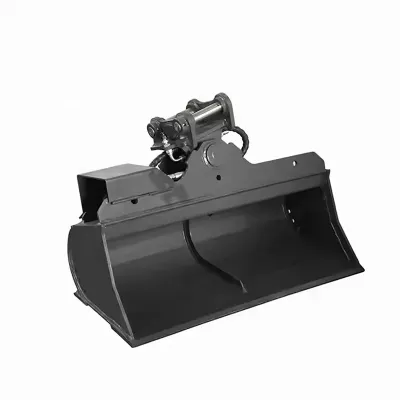
A standard excavator bucket digs by scooping material in a curling motion, which leaves you with a wide, V-shaped trench with uneven sidewalls. To hit the required depth, the operator has to make multiple passes, and each pass widens the trench even more. The result is a trench that's wider than it needs to be, which means more backfill material and more time patching up the surface. For short trenches or irregular excavations, that's fine. But for long utility runs where you need a narrow, consistent trench, the bucket method is a slow, inefficient way to go.
A chain trencher cuts a narrow, uniform-width trench with clean sidewalls and a flat bottom in one forward pass. The rotating chain with cutting teeth only excavates the width of the chain—typically 150 to 300 mm—and the preset depth foot keeps the depth consistent across the whole run. The spoils are dumped neatly alongside the trench, making backfill straightforward. For utility, cable, and irrigation trenches that need a specific width and depth, the chain trencher is significantly faster and gives you a much cleaner trench than a bucket ever will.
Productivity Comparison
Take a 50 m utility trench at 600 mm deep and 150 mm wide. A chain trencher on a mini excavator can knock it out in a single forward pass at a steady walking pace—typically 15 to 30 minutes, depending on the ground. The same trench with a bucket means multiple passes on each section, repositioning the machine, and cleaning up the irregular walls—often taking 1 to 2 hours. The productivity gap just gets wider as the trench gets longer, because the trencher keeps a consistent pace while the bucket method piles up time on every section.
The chain trencher also cuts down on backfill volume. A 150 mm wide trench at 600 mm deep moves about 90 liters of soil per meter. A bucket-dug trench for the same pipe might be 400 mm wide at the top and 200 mm at the bottom, moving roughly 180 liters per meter—twice the material. All that extra soil has to be hauled, backfilled, and compacted, which adds handling time and cost. On long runs, the savings in excavation and backfill volume alone can pay for the attachment.
When the Bucket Is the Better Choice
A chain trencher is great for long, straight, narrow trenches, but it's not the right tool for everything. For short trenches under 10 m, the time it takes to swap from bucket to trencher and set up the depth foot might be more than the time you save. For irregular excavations like foundation footings, utility pits, bell holes for pipe connections, or any trench that changes direction a lot, the bucket gives you the flexibility that a straight-line trencher can't match. And if you need a trench wider than 300 mm or deeper than the model's max preset, you're looking at a bucket or a larger trencher.
Ground conditions matter too. In solid rock, concrete, asphalt, or heavily frozen ground, trencher teeth can't penetrate—you need a bucket or a rock saw. In soil with big boulders or large roots, the chain can jam or stall, and you'll have to clear the obstruction with a bucket before you can keep going. Contractors who run into these conditions regularly need to think about whether the trencher will get enough use in suitable soil to justify the cost, or whether renting one for specific jobs is the smarter play.
Excavator-Mounted Trencher vs. Ride-On Trencher
A ride-on trencher is a self-propelled machine built just for trenching, with a powerful engine, heavy digging chain, and an operator station on tracks or wheels. These machines crank out high production on large, open job sites and can dig deeper and wider than most excavator-mounted units. They're the standard for big utility installations, pipeline work, and highway projects where you're trenching for hundreds of meters. But ride-on trenchers are expensive to buy and haul, need a dedicated operator, and can't do anything else on the job site.
An excavator-mounted trencher turns your existing excavator into a trenching machine—ideal for contractors who already own an excavator and need trenching as one of several attachment functions. You can switch between bucket, trencher, breaker, and other attachments as the job demands, giving you equipment versatility. The excavator-mounted unit is also much more maneuverable in tight spaces, urban job sites, and residential yards where a ride-on trencher can't get in. For small to mid-size contractors doing utility, irrigation, and landscaping work, the excavator-mounted trencher is usually the more practical and cost-effective move.
Cost Considerations
A chain trencher attachment for a mini excavator costs a fraction of what you'd pay for a dedicated ride-on trencher, and you don't need extra transport since it rides on the excavator already on the trailer. The attachment pays for itself through reduced labor time on trenching jobs and the ability to take on utility and irrigation work you'd otherwise have to sub out. For contractors who dig trenches on a regular basis, the productivity gains and expanded service offerings usually justify the investment within a reasonable time frame.
For contractors who only need a trencher once in a while, renting an excavator-mounted unit or a ride-on trencher for specific projects might be more economical than buying. Rental rates vary by region and model size, but a weekly rental of a mini excavator trencher is generally affordable for a single big job. If you find yourself renting repeatedly, though, it's worth running the numbers—cumulative rental costs can quickly overtake the purchase price of an attachment.
Which Option Fits Your Operation?
Go with a chain trencher attachment if you already own an excavator, dig long narrow trenches for utility, cable, or irrigation work, operate in tight or residential spaces, and want the flexibility to swap between attachments. Stick with digging with a bucket if you mostly do short, irregular, or wide excavations, hit rock or hard ground regularly, or only trench occasionally. Choose a ride-on trencher if you work on large open sites with long runs, need depths beyond what an excavator-mounted unit can handle, and can justify a dedicated machine and operator.
For most small to mid-size contractors, the excavator-mounted chain trencher hits the sweet spot between productivity, versatility, and cost. The TGEC excavator chain trencher is available in four models covering 2.5 to 12 ton excavators, with adjustable trench widths and preset depths for a variety of utility and irrigation applications. For help picking the right model for your machine, check out our excavator trencher selection guide.