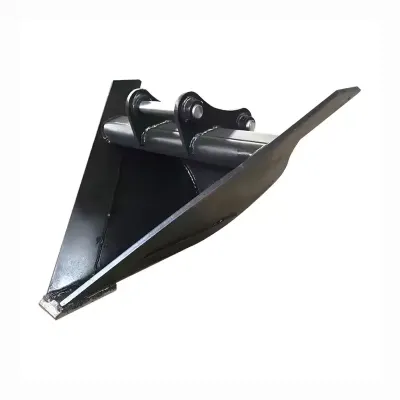
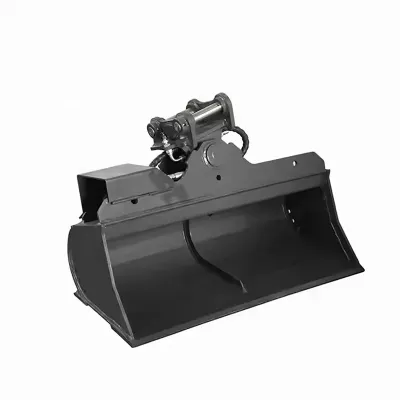
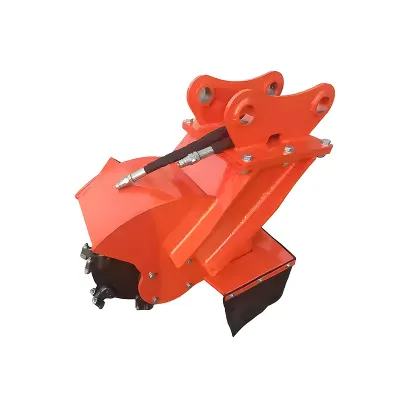
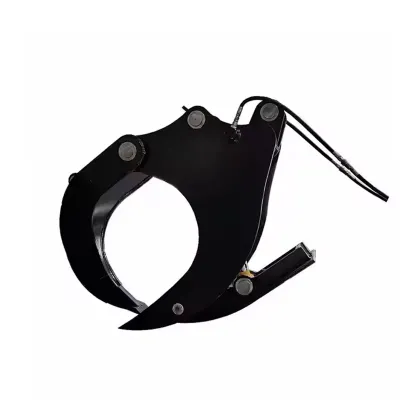
The chisel – or working tool – is the part of a hydraulic breaker that actually contacts the material you're trying to break. Picking the right one for the job makes a huge difference in productivity, tool life, and overall operating costs. Yet a lot of operators just run whatever chisel came with the breaker, never stopping to think whether a different shape might work better for what they're doing. This guide walks you through the four main breaker chisel types – what they look like, what they're good for, and where they fall short. For more on breaker configurations, check out the full TGEC lineup of excavator breaker working tools and spare parts.
All breaker chisels share the same basic anatomy. The shank – the straight section that slides into the breaker's front head – is held in place by retaining pins that pass through holes in the shank. The shank diameter has to match the front head and bushings, and the overall length and pin-hole spacing have to be right for your specific breaker model. The working end – the tip – is what changes from one chisel type to the next, and that's what determines how the breaker's impact energy gets transferred into the material. Chisels are forged from high-strength alloy steel, usually with chromium and molybdenum in the mix, and heat-treated to strike a balance between hardness (for wear resistance) and toughness (to handle repeated impacts). The tip gets extra surface hardening to stand up to abrasion, while the shank and pin-hole areas are kept a bit softer to resist cracking under shock loads.
Moil Point Chisel
The moil point is the most common breaker chisel out there – it's the one that comes standard with most new breakers. It has a sharply pointed tip that concentrates the full force of each blow into a single point, giving you maximum penetration into the material surface. That pointed tip creates a high-stress zone that starts cracks in the material, and those cracks spread until the material fractures apart. The moil point works on just about everything – reinforced concrete, plain concrete, rock of all hardness levels, brick, masonry, and asphalt. That's why it's the go‑to general‑purpose tool for contractors who see a mix of demolition and construction work.
The big advantage of the moil point is its versatility and penetrating power. Because it puts all the energy into a tiny spot, it can crack hard, dense materials that broader tools would just bounce off of. It also handles both flat surfaces and odd-shaped material with no problem. Use it for general building demolition, foundation removal, breaking concrete slabs, rock excavation on construction sites – pretty much any job where the material type varies or isn't known ahead of time. The downsides? The sharp point wears down faster in highly abrasive materials – quartz‑rich rock or tough concrete will blunt it quicker than a broader tool. As the tip rounds over, penetration drops off and efficiency goes with it, so you have to keep an eye on it and swap it out when it's too worn. Also, the moil point isn't great for cutting or crushing applications – that's where a flat wedge or blunt tool would shine. For most contractors, the moil point should be the backbone of your chisel inventory, with other types on hand for jobs where they have a clear edge.
Blunt Tool Chisel
The blunt tool – also called a flat‑end tool or crushing tool – has a wide, flat working end that spreads impact energy over a much bigger area than a pointed moil point. Instead of penetrating, it delivers a compressive, shattering blow that crushes material from the surface inward. That broad flat face creates a wide impact zone that breaks material into smaller, more uniform chunks. The blunt tool is the standard choice for secondary crushing in quarries, where oversized boulders left over from blasting or primary breaking need to be knocked down to a size that can be loaded onto trucks or fed into a crusher.
The blunt tool is built for secondary crushing of oversized boulders in quarries and mines, slag breaking in steel mills and industrial plants, ground compaction (yes, you can use a breaker to compact soil or aggregate), and general secondary reduction of large rock or concrete pieces. In quarry stockpile areas, the blunt tool is often faster and more efficient than a moil point because it crushes rather than penetrates – you're less likely to get the tool stuck in the rock. It's not recommended for primary breaking of solid concrete or hard rock – the flat end doesn't concentrate energy enough to start fractures, so it tends to bounce off rather than bite in. For secondary work, though, the blunt tool lasts longer than a moil point because the broad end wears more slowly and stays effective even as it rounds over. If you're in quarrying or mining, keeping a blunt tool on hand for secondary crushing can boost productivity and cut tool costs versus using a moil point for everything.
Flat Wedge Chisel
The flat wedge – also called a chisel point, cutting chisel, or flat point – has a wide, blade‑like working end that cuts or splits rather than penetrating or crushing. The wedge‑shaped tip has a long cutting edge that spreads energy across a line instead of a point, giving you a slicing, splitting action that works great for cutting through flat materials and separating material along natural planes. The flat wedge is especially handy for asphalt pavement removal, where the broad blade cuts cleanly through asphalt layers with minimal shattering or spalling – you get clean edges that make pavement repair and replacement much easier.
The flat wedge is the tool for asphalt cutting and pavement removal on road jobs, splitting rock slabs in quarry and dimension‑stone work (where you're following natural bedding or cleavage planes), digging pits in rocky subsoil, cutting flat concrete slabs when you want clean sections, and any breaking job where a cutting action beats a point impact. On asphalt, the flat wedge gives you cleaner cuts with less damage to the surrounding pavement compared with a moil point, which tends to shatter and leave ragged edges. For flat concrete floors or slabs where you're cutting sections for removal rather than pulverizing the whole thing, the wedge gives you cleaner, more manageable pieces. In rock, you can use it to split along natural fracture planes – handy in dimension‑stone work where you want flat, even pieces. The flat wedge isn't as effective for general point breaking in hard rock or heavily reinforced concrete – that's where you need the concentrated penetration of a moil point. But for asphalt work, flat‑slab cutting, or rock splitting, having a flat wedge on hand can make a noticeable difference in quality and efficiency.
Conical Point Chisel
The conical point – also called a cone chisel, pyramidal point, or tapered point – has a tapered, cone‑shaped working end that sits somewhere between a sharp moil point and a blunt tool. The cone tapers from a wider base down to a point, spreading impact energy over a larger area than a sharp moil while still giving you enough concentration to penetrate. The real benefit shows up as it wears. As the tip rounds over, the cone's cross‑section gets progressively larger, so it maintains a useful point shape longer than a moil point that just goes flat once the tip wears away. That makes the conical point a strong choice for medium‑hard, abrasive materials where moil point wear is a constant headache.
Use the conical point for penetrative breaking in medium‑hard materials like sedimentary rock, moderately abrasive concrete, and general demolition where you need both penetration and reasonable tool life. It's also a good choice for jobs where moil points tend to blunt too quickly. In medium‑hard rock, you get good penetration while the tapered shape resists rapid blunting, stretching the time between tool changes. It's not the right call for very hard rock like granite or basalt – there, you need the sharp, concentrated bite of a moil point to crack that dense material. And it's not for crushing – that's blunt tool territory. For contractors working a lot in medium‑hard abrasive ground, the conical point can be a great middle ground, cutting down on tool changes and lowering your overall tool spend. It's available for most breaker sizes and is a smart addition to the toolbox if abrasive materials are a regular part of your work.
Tool Selection Guidance
Choosing the right chisel for the job comes down to material type, the breaking action you need, your breaker size, and how fast you expect the tool to wear. For general‑purpose work where the material varies or isn't nailed down, the moil point is the safest, most versatile bet – it should be your default. For specific jobs where another tool type gives you a clear advantage, having that tool handy and using it when it counts will boost productivity and cut tool costs. The key is matching the tool to the main job, not using one tool for everything – because the wrong tool doesn't just slow you down; it also speeds up wear on both the chisel and the breaker itself.
For contractors with a mixed workload, a typical inventory might include one or more moil points as your go‑to general‑purpose tools, a flat wedge for asphalt and flat‑slab cutting, and a blunt tool if secondary crushing is a regular thing. If you're working mostly in medium‑hard abrasive rock, throw a conical point in the mix to stretch tool life. Quarry and mining operations should have moil points for primary breaking, blunt tools for secondary crushing, and maybe conical points for medium‑hard rock. No matter what types you carry, inspect all tools regularly for wear, cracks, and damage, and swap them out when needed to keep breaker performance up and protect the more expensive internal components. TGEC supplies all four standard hydraulic breaker chisel types for every breaker in our excavator breaker lineup, and our tech team can help you pick the right tool and wear package for your specific material and application. Match the tool to the job, and you'll see better productivity, longer equipment life, and lower operating costs.