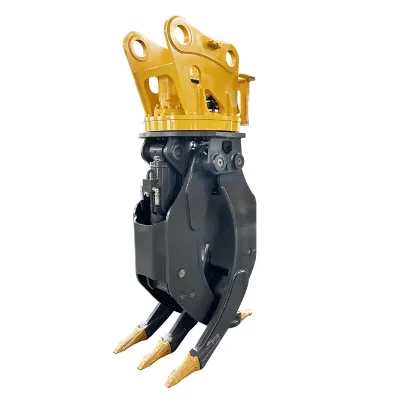
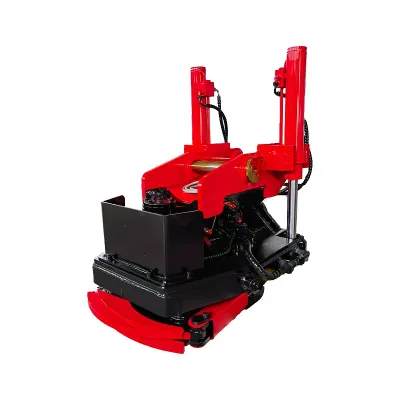
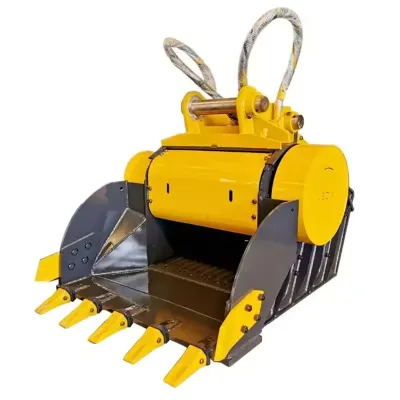
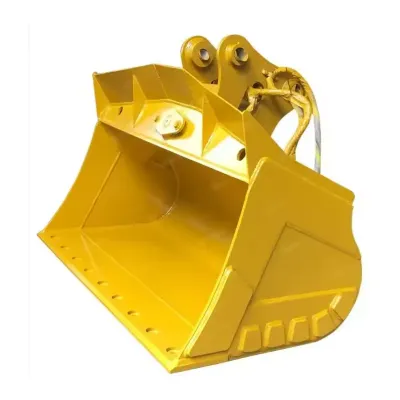
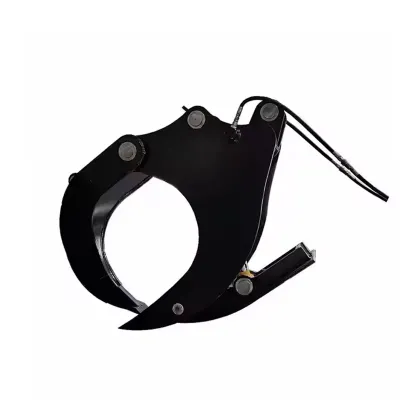
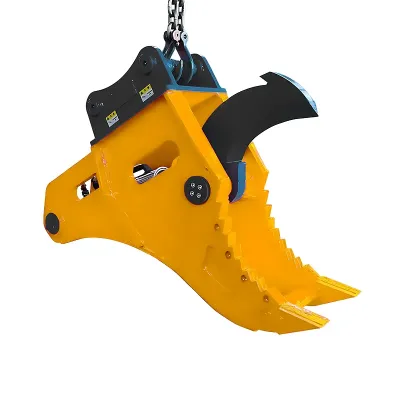
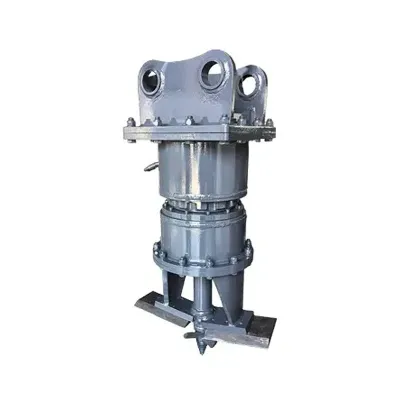
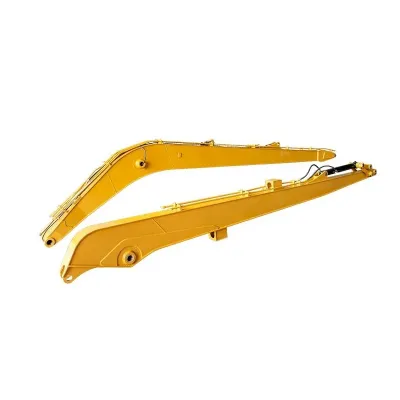
The choice between a mechanical and hydraulic excavator grapple isn't about which one is "better"—it's about which one fits your machine, your work, and your budget. A hydraulic grapple delivers more clamping force and finer control, but it needs auxiliary circuits, adds components that can leak, and costs more up front. A mechanical grapple works on just about any excavator via the existing bucket curl function, costs less, and has fewer things to break, but it doesn't generate as much force and gives you less control. Knowing where each system shines helps you avoid overbuying—or ending up with a grapple that can't keep up with what you're asking it to do.
How Each System Generates Clamping Force
A hydraulic grapple uses dedicated cylinders mounted right on the frame. Pressurized oil from the excavator's auxiliary circuit pushes the cylinder pistons, which in turn move the jaw linkage to open and close the tines. Clamping force comes from the cylinder bore size, the hydraulic system pressure, and the mechanical advantage built into the jaw linkage. Because the cylinder is sized specifically for that grapple, the force can be dialed in for the job—a scrap grapple might use big-bore cylinders for high crushing power, while a log grapple uses moderate cylinders with curved tines for a secure cradle. The operator can feather the jaw speed and force using the auxiliary control lever, which is handy when you're handling fragile material.
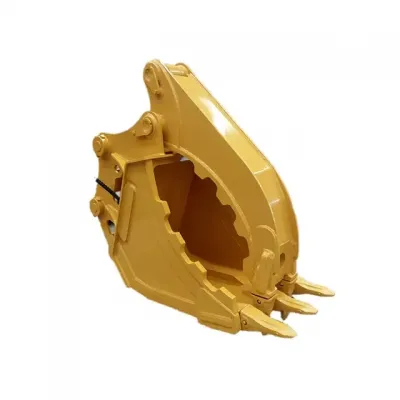
A mechanical grapple doesn't have its own cylinders. It bolts onto the boom in place of the bucket and ties into the existing bucket curl linkage. When the operator curls the bucket with the standard control, the bucket curl cylinder drives that linkage, and that motion gets translated into jaw opening and closing. So the clamping force is limited by the excavator's bucket curl cylinder output, multiplied by the grapple linkage's mechanical advantage. Since the curl cylinder was designed for digging and curling—not for squeezing material—the force is generally lower than what a dedicated hydraulic grapple can put out. The linkage does multiply the force, but mechanical losses at the pivot points eat into the effective grip. There's also no independent speed control—jaw speed follows the bucket curl speed, which isn't as fine-tuned as a dedicated auxiliary circuit.
Cost and Complexity
Hydraulic grapples cost more out of the gate because they come with cylinders, hoses, fittings, seals, and—on rotating models—a rotator with its own motor and case drain. The grapple itself is more expensive to build, and if your machine doesn't already have auxiliary hydraulics, you'll need to add them, which can run into thousands of dollars in parts and labor. The hydraulic system also adds complexity: more parts mean more things that can go wrong, and you'll need to keep an eye on hoses, seals, and fittings. If you need that level of performance, the cost is justified. If you don't, it's money you could have spent elsewhere.
A mechanical grapple is the budget-friendly option from every angle. The grapple itself costs less because there's no hydraulic hardware—just steel, tines, pivot pins, and linkage arms. Installation doesn't require any hydraulic work: pull the bucket, bolt on the grapple, connect the linkage pins, and you're in business. No hoses to route, no valves to install, no extra levers to figure out. If you run multiple excavators or rent machines for different jobs, a mechanical grapple can be swapped between them without worrying about whether each one has the right auxiliary setup. That flexibility is a big plus for contractors who move between sites and equipment.
Maintenance and Downtime
Hydraulic grapples need regular attention to the hydraulic system. Cylinder seals can start leaking, hoses can rub and fray, fittings can work loose, and—on rotary models—the rotator bearing and seal need periodic service. A hydraulic leak not only shuts you down but also creates a mess and an environmental headache. Cylinder rods should be checked regularly for scoring, seal leaks, and bending. Hoses need to be inspected for abrasion, especially where they run close to the frame or pivot points. If you're working in abrasive environments like scrap yards or demolition sites, hydraulic component wear accelerates, and maintenance costs over the life of the grapple can really add up.
Mechanical grapples have the lowest maintenance requirements of any grapple type. The main wear items are the pivot pins and bushings at the jaw hinges and linkage points. They need regular greasing and occasional replacement when play develops. There are no hydraulic seals to leak, no hoses to inspect, and no rotator bearings to service. The rake tines will wear down over time in abrasive conditions, but they can be built back up with welding or replaced individually. For operators who value minimal downtime and low upkeep, the mechanical grapple is the most reliable way to go. A well-maintained mechanical grapple can run for thousands of hours with nothing more than daily greasing and the occasional pin and bushing swap. The heavy-duty mechanical grapple from TGEC is built specifically for that kind of low-maintenance, high-reliability operation.
Performance by Application
Hydraulic grapples are the right call for jobs that demand high clamping force, precise control, or both. Scrap handling needs high force to crush bulky light-gauge metal and secure dense rebar bundles. Demolition work requires crushing power to break up structural debris and concrete. High-volume timber loading calls for precise control to orient logs for truck stacking. In all of these cases, the hydraulic grapple's dedicated cylinders and auxiliary control deliver performance a mechanical grapple simply can't match. If your primary work falls into any of these categories, a hydraulic grapple is the way to go, despite the higher cost and upkeep.
Mechanical grapples perform best when moderate clamping force is enough and simplicity is an advantage. General rock handling, land clearing, brush removal, landscaping, and utility work all fit here. The material is relatively regular in shape—rocks, logs, brush—and the loads don't need the extreme compression of scrap or demolition. The mechanical grapple's ability to work on any excavator without auxiliary hydraulics makes it especially valuable for small contractors, rental fleets, and operators who use multiple machines. If you occasionally run into material that needs more force than your mechanical grapple can provide, you can either break it down into smaller pieces or rent a hydraulic grapple for that specific job—rather than buying a hydraulic grapple for full-time use when most of your work doesn't require it.
Which Should You Choose?
Start with your excavator. If it doesn't have auxiliary hydraulic circuits and you're not planning to add them, the decision is made—a mechanical grapple is your only practical option. If your machine does have auxiliaries, then look at your primary application: high-force work (scrap, demolition, high-volume timber loading) points toward hydraulic, while general-purpose work (rock, land clearing, landscaping, utility) leans mechanical. Also consider your equipment flexibility—if you regularly swap attachments between machines or rent equipment, a mechanical grapple's universal compatibility is a major plus. Browse the full TGEC excavator grapple range to compare both configurations, and check out our excavator grapple types article for a complete breakdown of jaw designs. If rotation is part of your decision, our rotating grapple guide covers when a rotator is worth the extra investment.