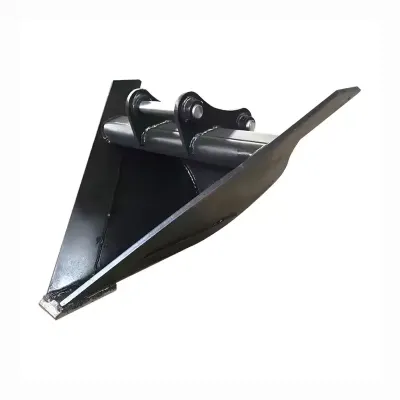
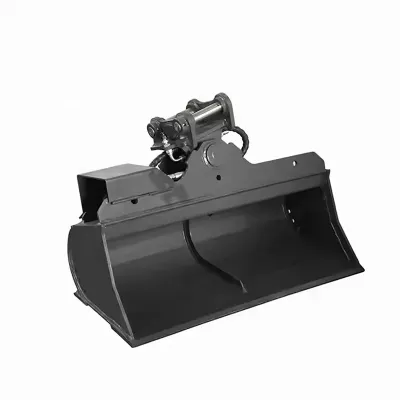
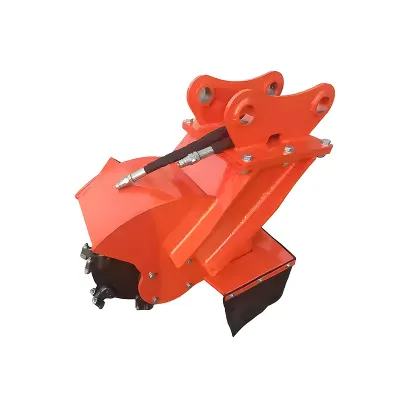
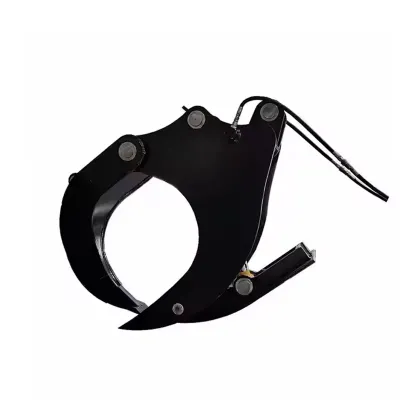
An excavator grapple isn't a one-size-fits-all attachment—it's a whole family of tools built around the same core function (grab and move stuff) but tuned for different materials, hydraulic setups, and precision needs. The naming can get confusing because the same attachment might be called a grapple, a grab, or a sorting grab depending on where you are and what you're doing. The key is understanding the different configurations so you don't end up buying a grapple designed for one type of material and trying to force it to work on another. Grapple types break down along three lines: jaw design (how the tines or jaws are shaped), power source (hydraulic vs. mechanical), and rotation (rotary vs. fixed). Most grapples sit at the intersection of these three.
By Jaw Configuration
Multi-Finger Scrap Grapple
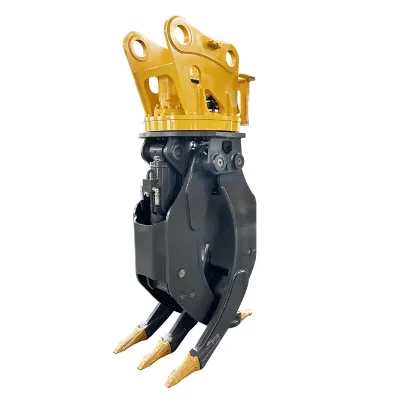
The multi-finger scrap grapple—also called an orange peel, polyp, or lotus grapple—uses four or five independent tines that open and close like flower petals. Each tine moves on its own, which lets the grapple wrap around odd shapes like bundled rebar, loose sheet metal, mixed demolition debris, and bulky scrap. If one tine hits a hard spot, the others keep closing, so you don't lose your grip on the rest of the load. This is the most versatile scrap-handling design out there, and you'll see it all over scrap yards, recycling facilities, and demolition sites. The multi-finger hydraulic scrap grapple from TGEC comes in both rotary and fixed versions.
Demolition Grapple
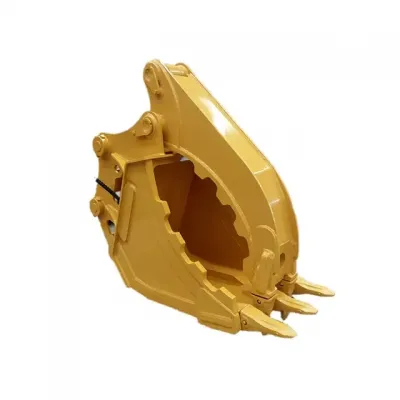
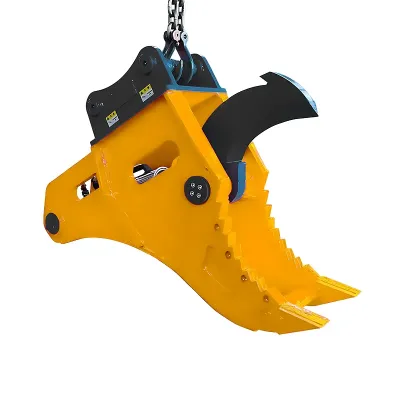
A demolition grapple uses two solid jaw plates—often with serrated edges or replaceable teeth—instead of independent tines. The solid jaws deliver serious crushing force, which you need for breaking apart structural debris, concrete chunks, and compacted demolition material. The serrated edges bite into the material to keep it from slipping, and the wide jaw plates spread the clamping force over a large area. You'll typically see these on demolition sites, construction debris sorting, and C&D; recycling facilities. They're not great for round logs (flat jaws don't cradle round material) or really bulky irregular scrap (solid jaws don't conform as well as independent tines).
Log Grapple
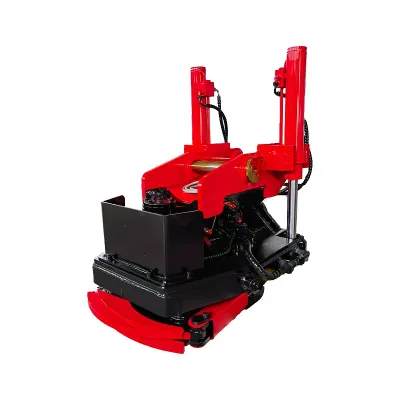
A log grapple uses curved tines designed to cradle round timber. The curve wraps around the log, creating a geometric barrier that stops it from rolling off—a straight jaw pressing on a round log gives you just two contact points, and the log can roll right between them. A curved tine contains the log geometrically. These are used for timber handling, land clearing, tree service, utility pole work, and woody vegetation management. They come in rotary versions (for precise truck loading and stacking) and fixed versions (for general pick-and-drop work), and in both hydraulic and mechanical flavors. The rotary log grapple is the go-to for high-volume timber loading.
Clamshell Grapple Bucket
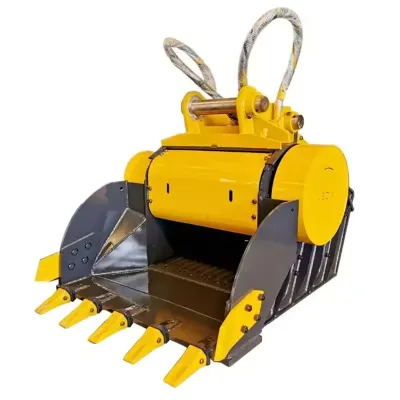
A clamshell grapple bucket uses two hinged shell halves that open and close like a clamshell. The shells are deep and bucket-like, so the grapple can scoop and hold loose material like sand, gravel, grain, sludge, and industrial bulk materials. Unlike other grapples that grasp from the sides, a clamshell scoops from below, which makes it ideal for free-flowing materials that would just fall through tines. You'll see these used for dredging, industrial bulk handling, deep excavation (reaching into narrow shafts or pits), and loading/unloading loose materials from barges or hoppers. They can be mechanical (run off the bucket curl linkage) or hydraulic (with dedicated cylinders for independent shell control).
By Power Source
Hydraulic Grapple
A hydraulic grapple uses dedicated hydraulic cylinders to open and close the jaws. The cylinders are powered by the excavator's auxiliary hydraulic circuit, which supplies pressurized oil to drive the cylinder pistons. Hydraulic grapples give you more clamping force than mechanical ones because the cylinder force can be tailored to the grapple size and application, independent of the excavator's bucket curl linkage. They also offer finer control—you can modulate jaw opening and closing speed with the auxiliary control lever. The catch is that your excavator needs auxiliary hydraulic circuits with enough flow and pressure, and you've got hydraulic components (cylinders, hoses, seals) that need upkeep. They're the standard for demanding jobs like scrap handling, demolition, and high-volume timber loading.
Mechanical Grapple
A mechanical grapple runs off the excavator's existing bucket curl function—no dedicated hydraulic cylinders. It mounts to the boom in place of the bucket and hooks into the bucket linkage. When you curl the bucket, the linkage opens and closes the grapple jaws. Mechanical grapples don't need auxiliary hydraulic circuits, extra hoses, valves, or any hydraulic modifications to the excavator. They work with virtually any machine, including older units, rentals, and compact excavators that lack auxiliary hydraulics. The trade-off is lower clamping force (limited by the bucket curl cylinder and linkage) and less precise control. They're a great fit for general rock handling, land clearing, timber work, and any job where simplicity and low cost matter more than max force. The mechanical vs hydraulic grapple comparison dives deeper into the trade-offs.
By Rotation
Rotary Grapple
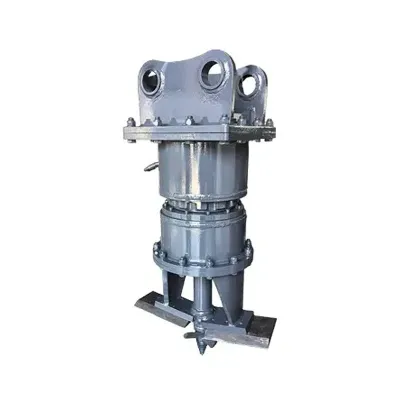
A rotary grapple has a 360-degree rotator between the mounting bracket and the grapple body, so the operator can rotate the load independently of the excavator boom. The rotator is powered by a dedicated hydraulic motor and needs a case drain line to handle the return oil. Rotary grapples are a must when precise load orientation matters—loading logs parallel to a truck bed, sorting scrap into narrow bins, placing demolition debris in specific piles, or aligning material for downstream processing. The rotator adds cost, weight, and maintenance (the rotator bearing and seal need periodic attention), but the productivity boost from less repositioning and faster cycle times makes it worth it for high-volume work.
Fixed Grapple
A fixed (non-rotating) grapple has no rotator—the grapple orientation is controlled entirely by the excavator boom position. The operator has to position the machine to get the load pointing the right way, which takes more space and more undercarriage movement. Fixed grapples are lighter, cheaper, simpler to maintain, and don't need a case drain circuit. They're fine for general rock handling, land clearing, bulk material movement, and any job where you're just dropping material in a general area without needing precise orientation. If you think you might need rotation down the road but primarily do general work, a fixed grapple with the option to add a rotator later is worth considering—but retrofitting a rotator after purchase involves hydraulic work and isn't always cost-effective.
Quick Type Reference
When you're picking a grapple, start with the jaw configuration that matches your main material, then figure out whether your excavator can handle a hydraulic grapple or needs a mechanical one, and finally decide whether your placement precision calls for a rotary model. The full TGEC excavator grapple lineup covers every combination of these three dimensions. For a step-by-step selection process, check out our excavator grapple selection guide.