When you're looking at excavator attachments for clearing vegetation, two names come up again and again—flail mower and mulcher—and they're often mixed up. Both run on hydraulic power and both cut plant material, but that's where the resemblance ends. A flail mower is really a heavy-duty mower for grass, weeds, and light brush, giving you a clean, even cut. A mulcher, on the other hand, is built for woody stuff—trees, thick brush, and stumps—turning them into coarse chips. Choose the wrong one for your site, and you'll end up with weak performance, extra wear, and time wasted on breakdowns.
This piece walks through the main differences between flail mowers and mulchers for excavators: cutting action, material size limits, finish quality, hydraulic needs, upkeep routines, and the jobs each one handles best. Once you see where each attachment really shines, you'll have a clear path to picking the one that matches your vegetation and production goals.
Cutting Mechanism – How Each Tool Actually Cuts
Flail Mower
An excavator flail mower spins a horizontal drum that carries dozens of small, free-swinging blades—called flails—attached with bolts or rivets. As the drum turns, centrifugal force throws the flails outward, and they slice through vegetation on impact. Because the flails can swing backward when they hit something solid like a rock or a post, they're much less likely to suffer damage from hidden obstacles. That's the big selling point of the flail design, and it makes these mowers a smart pick for areas where you're never quite sure what's hiding in the grass.
Flail mowers come in cutting widths from about 1 meter for mini excavators up to 2 meters or more for bigger machines. The operator sets the cutting height by positioning the boom, and many models have adjustable skid shoes or roller guides to help keep the cut consistent as you work across uneven ground.
Mulcher
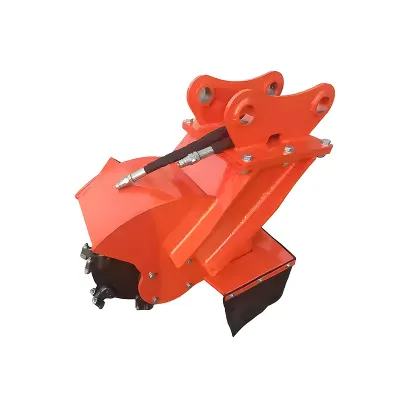
An excavator mulcher—whether drum or disc style—uses heavy carbide-tipped teeth that are fixed or semi-fixed to a rotating drum or disc. Unlike a flail mower's swinging blades, mulcher teeth stay in position, delivering a high-torque shearing and grinding force that can chew through standing trees, thick branches, and dense brush. A drum mulcher pulls material across a horizontal cylinder, while a disc mulcher uses a vertical spinning disc to face standing timber head-on. Both leave behind coarse fragments that work well as ground cover or for later collection.
Because the teeth are fixed, mulchers demand more hydraulic power than flail mowers—they need that extra oomph to shear woody material. They also put more vibration and stress on the attachment and the carrier, which is why they're built with heavier steel and more robust mounting systems.
Material Capacity – What Size Vegetation Can Each Handle?
| Vegetation Type | Flail Mower | Mulcher |
|---|---|---|
| Grass and weeds | Excellent — clean, even cut | Overkill — can cut but inefficient |
| Light brush (up to 25 mm) | Good — flails handle small stems | Excellent — grinds easily |
| Thick brush (25–75 mm) | Moderate — may require multiple passes | Excellent — single-pass processing |
| Small trees (75–150 mm) | Poor — flails may bend or break | Excellent — designed for this range |
| Large trees (150 mm+) | Not recommended | Good to excellent depending on model |
| Stumps and surface roots | Poor — risk of flail damage | Excellent — drum grinds stumps |
The big takeaway here is woody stem size. A flail mower is at home with grass and light brush, typically handling stems up to about 25 to 50 mm in diameter, depending on the specific model. Push it beyond that, and you'll bend or break flails, get poor cut quality, and see the machine shake itself apart. A mulcher, though, is made exactly for that woody material—it can take stems from 75 mm up to over 200 mm, based on the attachment and the hydraulic capacity of your carrier.
Finish Quality – The Look of the Result
The difference in finished appearance is just as clear. A flail mower leaves a clean, manicured cut, much like a commercial lawnmower—grass and light brush come out at a consistent height, with clippings spread evenly. That makes flail mowers ideal for parks, golf course roughs, highway shoulders, and any area where appearance matters. The small flails also tend to chop the clippings fine enough to serve as natural mulch, which is a bonus for soil health.
A mulcher produces a coarse, uneven chip—wood fragments and shredded vegetation that are functional but far from neat. That coarse material works great for erosion control and weed suppression, but it won't win any beauty contests. For forestry clearing, utility line maintenance, or site prep, the rough finish is perfectly acceptable. But if you're maintaining a recreational area or a landscaped property, the flail mower is the one that'll leave things looking tidy.
Hydraulic Demands – What Your Excavator Needs to Supply
Flail mowers are relatively easy on hydraulics. Because the flails swing freely and the cutting action is lighter, they typically need only 30 to 80 L/min, depending on width. That means they can run on smaller excavators with standard auxiliary circuits, and they generate less heat, so you can mow for long stretches without stopping to cool down.
Mulchers, on the other hand, are hydraulic hogs—they require anywhere from 50 to 250 L/min, depending on size and design, because their fixed carbide teeth need sustained high torque to shear wood. That means you need a high-flow auxiliary circuit and a cooling system that can handle the continuous load. And you'll likely be limited to mid-size or larger excavators that can deliver that flow without overheating. Run a mulcher on inadequate flow, and you'll see stalls, ragged cuts, and accelerated wear on both the attachment and the machine.
Maintenance and Wear Parts
Flail Mower Maintenance
Flail mower upkeep mainly revolves around the flail blades themselves. They're the primary wear item, and they can be replaced individually—many models even let you swap them without pulling the drum. Flails wear from cutting and from occasional contact with dirt and rocks, so a daily check for bends, cracks, or excessive wear is a must. Other routine tasks include inspecting hydraulic hoses, greasing bearings and pivot points, and checking the belt or direct drive system. On the whole, flail mowers cost less to maintain than mulchers, because the flails are simpler and cheaper than carbide mulcher teeth.
Mulcher Maintenance
Mulcher maintenance is more involved because the carbide teeth take a beating from high-impact loads and abrasive wood. You'll need to inspect them daily for wear, cracks, or looseness, and replacing them is a regular expense. A drum mulcher might have 11 to 24 teeth, while a disc mulcher carries 22 to 30 primary teeth plus secondary ones. Beyond teeth, you're also checking hydraulic hoses, greasing bearings, clearing debris from the housing, and periodically inspecting the drum or disc for cracks and warping. With more expensive wear parts and heavier construction, the overall maintenance tab for a mulcher is notably higher than for a flail mower.
Typical Applications
Flail Mower Applications
-
Parks, recreational areas and golf course rough maintenance
-
Road shoulder and highway median vegetation control
-
Orchard and vineyard floor management
-
Residential and commercial property lawn and brush maintenance
-
Embankment and slope mowing where reach is required
-
Light vegetation clearing in areas with hidden obstacles
Mulcher Applications
-
Forestry land clearing and timber stand improvement
-
Right-of-way clearing for roads, power lines and pipelines
-
Site preparation for residential and commercial development
-
Stump grinding and root removal
-
Invasive species control on conservation land
-
Storm cleanup and disaster recovery vegetation reduction
Let Vegetation Guide Your Choice
The practical rule of thumb is roughly 50 mm in stem diameter. If most of your material stays below that—grass, weeds, light brush—a flail mower gives you a neat cut and runs on less hydraulic power. Once you're dealing with thicker woody stems, heavy brush, or stumps, you need the brute force of a mulcher, despite its higher purchase and maintenance costs. And don't forget finish expectations: if you're working on a golf course, park, or ornamental site, the clean look of a flail mower is non-negotiable. For forestry, pipeline, or development sites, the coarse chip from a mulcher is perfectly fine.
Many contractors keep both in the fleet—the flail mower for regular maintenance contracts, the mulcher for heavy clearing days. See the full excavator mulchers range or check out our detailed guide on choosing a mulcher for forestry and land clearing when woody vegetation is your primary concern.
Attachment Selection Questions
Straightforward answers on when to use a flail mower versus a mulching attachment.