Mini excavators are the go‑to machines for residential construction, landscaping, utility work, and indoor demolition. Their small footprint lets them get into backyards, basements, and tight city lots where bigger equipment just won't fit. But that same compact size also means limited lift capacity and breakout force, so choosing the right bucket matters more than on larger machines. Too big, and you'll make the machine unstable or risk damaging components. Too small, and you're leaving productivity on the table. This guide breaks down bucket sizes for mini excavators from 1 to 6 tons, with practical recommendations for the work you're most likely to do.
Why Mini Excavator Bucket Selection Is Different
Mini excavators run with tighter margins than their big brothers. They weigh less, so stability is more of a concern, and their hydraulic systems deliver less breakout force and auxiliary flow. A 1.5‑ton machine might only have 200‑300 kg of lift capacity at full reach—so even a moderate‑sized bucket filled with wet clay can push right up to the limit. The bucket itself, which can weigh 30‑80 kg, eats into that payload before you even start digging.
Job site constraints also play a big role. Mini excavators often work in tight spots where a wide bucket can't swing or dump without hitting walls, fences, or other obstacles. Narrow residential utility trenches, small foundation holes, and interior demolition all call for buckets that can maneuver in close quarters. For mini excavator operators, the right bucket isn't just about capacity—it's about matching the attachment to the machine's limits and the specific demands of each site.
Mini Excavator Bucket Size Reference
The table below gives general sizing guidelines for general purpose digging buckets on mini excavators from 1 to 6 tons. Actual sizes vary by manufacturer and bucket style. Always double‑check against your machine's manual and lift chart.
| Machine Class | GP Bucket Width | GP Bucket Capacity | GP Bucket Weight | Typical Trenching Widths | Max Grading Width |
|---|---|---|---|---|---|
| 1–1.7 t (1.1–1.9 ton) | 300–450 mm (12–18 in) | 0.02–0.05 m³ (0.03–0.07 yd³) | 25–50 kg (55–110 lb) | 150–300 mm (6–12 in) | 600–900 mm (24–35 in) |
| 1.8–2.5 t (2.0–2.8 ton) | 350–600 mm (14–24 in) | 0.03–0.08 m³ (0.04–0.10 yd³) | 35–70 kg (77–154 lb) | 200–400 mm (8–16 in) | 800–1200 mm (31–47 in) |
| 2.6–3.5 t (2.9–3.9 ton) | 450–700 mm (18–28 in) | 0.05–0.12 m³ (0.07–0.16 yd³) | 55–100 kg (121–220 lb) | 250–450 mm (10–18 in) | 1000–1500 mm (39–59 in) |
| 3.6–4.5 t (4.0–5.0 ton) | 500–800 mm (20–31 in) | 0.08–0.18 m³ (0.10–0.24 yd³) | 80–140 kg (176–309 lb) | 300–500 mm (12–20 in) | 1200–1600 mm (47–63 in) |
| 4.6–6 t (5.1–6.6 ton) | 600–900 mm (24–35 in) | 0.12–0.25 m³ (0.16–0.33 yd³) | 110–180 kg (243–397 lb) | 350–600 mm (14–24 in) | 1500–1800 mm (59–71 in) |
These are general guidelines for standard digging buckets in average soil. Actual sizes vary by manufacturer, bucket type, and material density. Always check your operator manual and lift chart before buying.
Common Mini Excavator Bucket Types and Sizes
General Purpose Digging Bucket
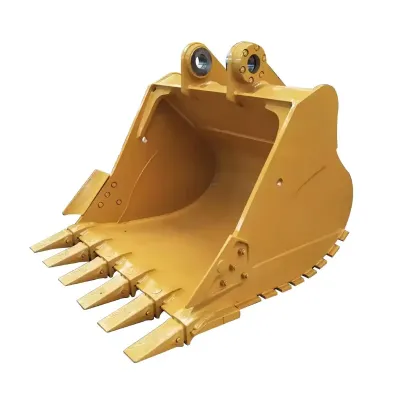
The general purpose bucket is the standard attachment for mini excavators—the one you'll use for digging foundations, trenching, loading, and backfilling. It's got a moderate depth and a curved bottom that penetrates well and holds material for transport. For mini excavators, the width is usually matched to the machine's track width, which gives you a good balance of capacity and stability. Most owners use this as their everyday bucket and add specialty buckets as needed.
When you're picking a general purpose bucket for a mini, pay close attention to the weight. These machines have limited lift capacity, and a heavy bucket cuts into your payload fast. For example, a 3‑ton machine with a 100 kg bucket and a 200 kg lift capacity at working reach can only carry about 100 kg of material—roughly 0.07 cubic meters of topsoil. A lighter bucket of the same width would let you move more dirt per cycle.
Trenching Bucket
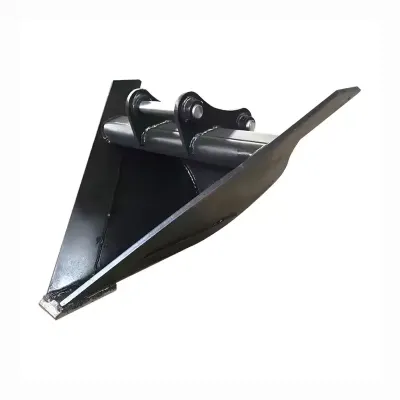
Trenching buckets for mini excavators are narrower than general purpose buckets, made for digging residential utility lines, drainage, and small foundations. Common widths range from 150 mm for electrical and communication conduits up to 450 mm for water and sewer lines. The narrow width reduces the amount of material you have to excavate, which cuts down on backfill and leaves less disturbance to the surrounding soil. In residential yards, that means less damage to lawns and landscaping.
Match the bucket width to the trench size you need for the specific utility. The trench has to be wide enough for the pipe plus bedding material, but any extra width is just wasted excavation. If you work with multiple utility sizes, it's worth keeping a couple of different trenching widths on hand. For deeper trenches, the narrower bucket also reduces the load at extended reach, which helps keep the machine stable and prevents it from tipping forward.
Grading and Cleanup Bucket
Grading and cleanup buckets for mini excavators are wide and shallow, built for spreading topsoil, finishing slopes, cleaning ditches, and general site cleanup. They're typically 1.5 to 2 times wider than a general purpose bucket on the same machine, with a flat bottom and low sides for smooth grading and spreading. For mini excavators, grading buckets range from about 600 mm on the smallest machines up to 1800 mm on 5‑ to 6‑ton models.
The wide, shallow profile means these buckets carry less material per load despite their width, so the total weight stays within the machine's limits. But that wide cutting edge can feel clumsy on very small machines, so make sure you can control it precisely for finish work. For landscapers running mini excavators, a grading bucket is one of the most useful attachments you can have—it lets you finish lawns, shape beds, and spread soil without needing a separate skid steer or tractor.
Specialty Buckets for Mini Excavators
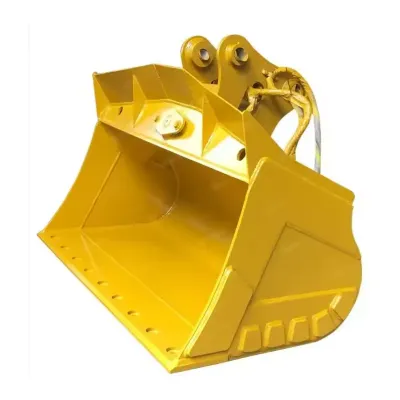
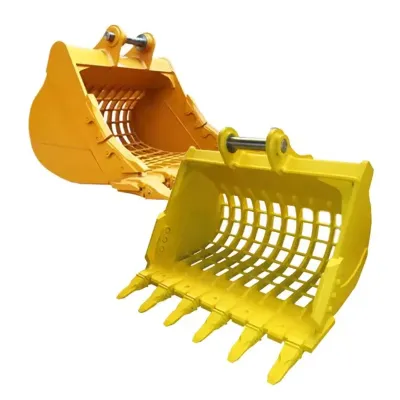
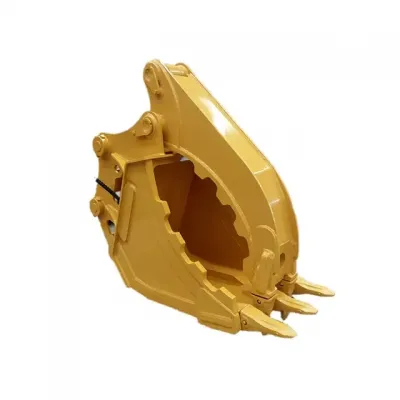
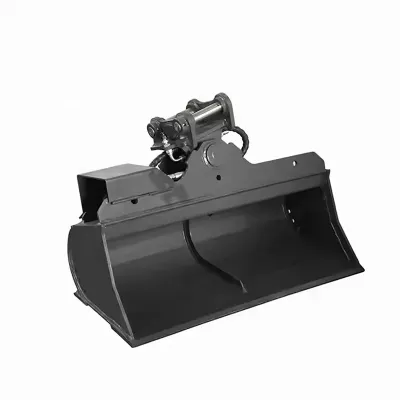
Several specialty bucket types are available for mini excavators, though the size range is more limited than for larger machines. Tilt buckets are offered for 1‑ to 6‑ton machines, with widths from 800 to 1500 mm, and they need auxiliary hydraulics with enough flow for the tilt cylinder. Buckets with thumb are popular on minis for handling rocks, logs, and debris, with thumb sizes matched to the bucket width. Skeleton buckets for minis start at around 1.5 tons, with widths from 600 to 1200 mm and tine spacing from 50 to 80 mm for separating rocks and debris.
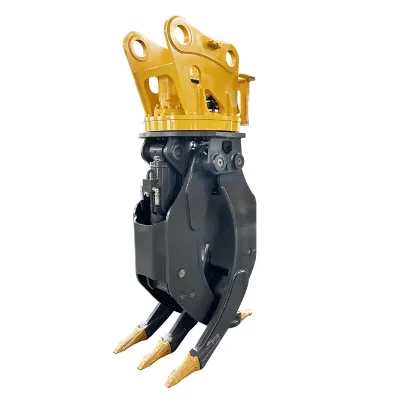
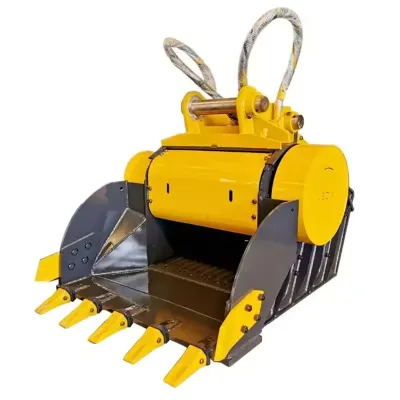
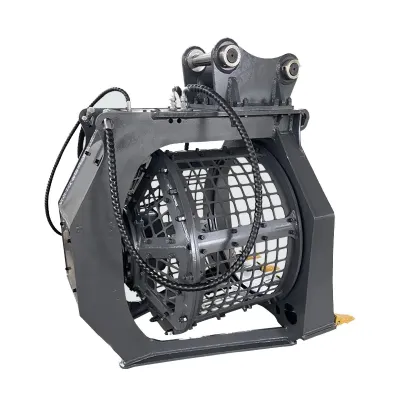
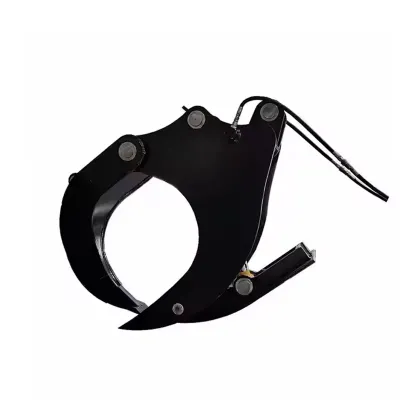
Hydraulically powered attachments like grapple buckets, rotary screening buckets, and crusher buckets are less common on minis due to limited flow and lift capacity, but smaller models are available for 3‑ to 6‑ton machines. Always verify the hydraulic flow and pressure requirements, plus the attachment weight, before you install a powered attachment on a mini. For most mini excavator work, mechanical attachments like skeleton buckets and grading buckets give you plenty of capability without the extra weight and complexity of hydraulic systems.
Practical Selection Tips for Mini Excavator Owners
Start by thinking about what you do most often. If you're mainly digging residential foundations and utility trenches, a general purpose bucket plus one or two trenching sizes will cover most jobs. If you do a lot of landscaping and finish work, add a grading bucket. If you regularly handle rocks, logs, or demolition debris, consider a bucket with thumb. If you screen topsoil or separate debris, a skeleton bucket might be useful.
When you're comparing bucket sizes, always calculate the total load weight—bucket weight plus material weight—and compare it to your machine's lift capacity at the reach you'll actually be working at. For mini excavators, lift capacity at full reach can be 30‑50% less than the maximum rating, so don't rely on that best‑case number alone. If you're often working at extended reach—digging deep trenches or reaching over obstacles—go with a smaller bucket to keep stability.
Also consider the job site itself. Mini excavators work in backyards, through gates, and around existing structures, so the bucket width has to let the machine swing and dump without hitting anything. A wide grading bucket might not be practical if you're working between buildings or fences. Measure the tightest access points and swing areas on your typical sites, and make sure your buckets can work within those limits.
Finally, don't skimp on mounting quality. Mini excavator buckets take a beating in tight quarters, and a well‑built bucket with the right pin dimensions and hardened bushings will last longer and need less attention. TGEC offers mini excavator buckets in a range of sizes and configurations, with custom brackets for specific machine models and quick‑coupler setups.