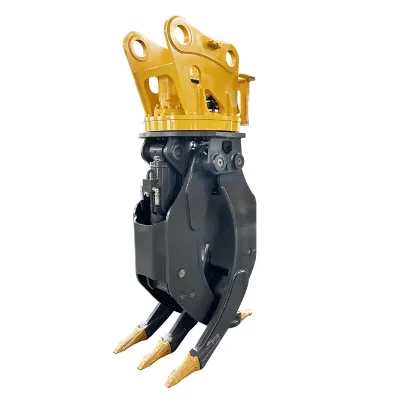
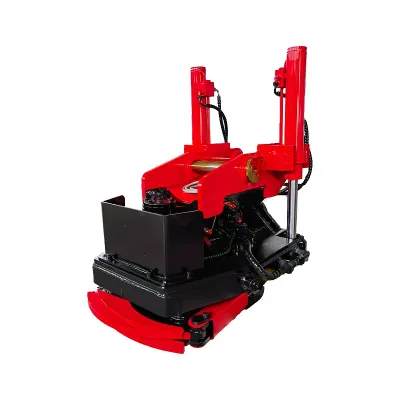
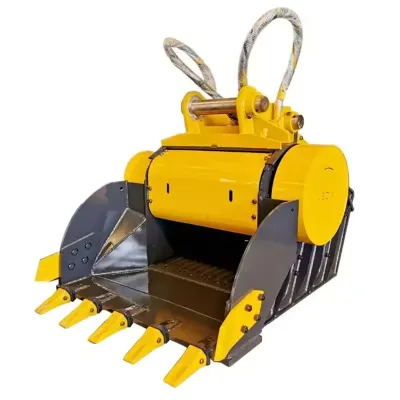
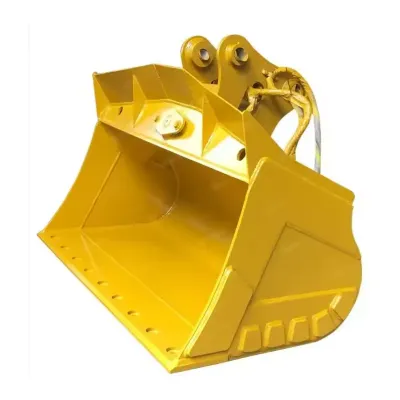
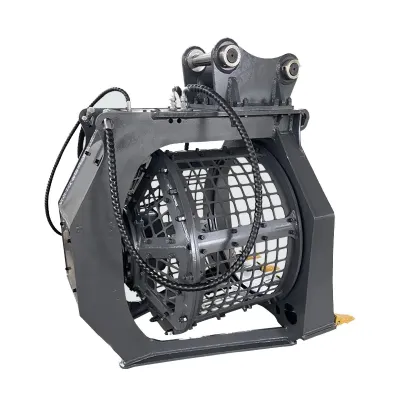
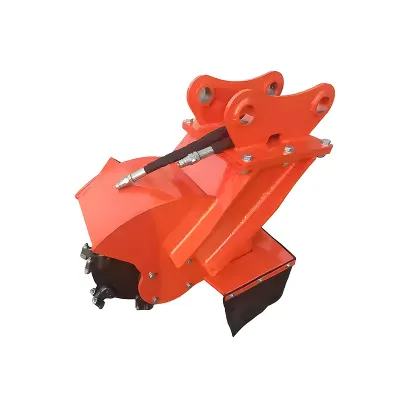
Getting the match right between a drum cutter and your excavator is the single most important thing you can do for performance, longevity, and safety. Go too big, and you'll overtax the hydraulics, create unsafe lift conditions, and risk premature motor or bearing failure. Go too small, and you're leaving capacity on the table—cutting rates will suffer, and the small drum will get overloaded, accelerating tooth wear. Unlike a lot of excavator attachments where you can mostly go by tonnage class, drum cutters need a closer look at hydraulic capacity, lift capacity, mounting dimensions, and what you're actually cutting. This guide walks through each matching criterion, explains why it matters, and gives you a practical way to pick the right model for your machine and job.
Hydraulic Flow: The Primary Matching Criterion
Hydraulic flow is the most critical spec for drum cutter matching because it directly controls drum speed—which drives cutting performance and motor life. Every drum cutter model has both a recommended flow range and a maximum flow limit. Run inside that recommended range and the drum turns at its designed speed—typically 50–100 rpm depending on the model—giving you the right balance of cutting torque and tooth penetration. Run below the minimum and the drum spins too slowly, cutting productivity drops, and the teeth start scraping instead of cutting, which wears them out faster and loads the motor harder. Run above the maximum and you overspeed the motor and drum, putting excessive stress on bearings, hammering the teeth, and risking catastrophic motor or bearing failure. For example, the TG-02DC for mini excavators only needs 20–40 L/min with a 45 L/min max, while the TG-50DC for big quarry machines needs 400–500 L/min with a 550 L/min max. Before you pick a model, get your machine's actual auxiliary hydraulic flow from the manual or your dealer, and make sure it falls within the recommended range for the model you're considering. Don't rely on tonnage alone—two excavators in the same weight class can have very different hydraulic outputs depending on whether they're standard-flow or high-flow.
Hydraulic Pressure and Circuit Configuration
All TGEC drum cutter models are rated at 315 bar (4568 psi) working pressure, but pressure matching and circuit configuration still matter. First, make sure your excavator's auxiliary circuit relief valve is set to 315 bar or less—if it's higher, you can damage the motor during high-load cutting when the system hits relief pressure. Second, check whether your auxiliary circuit is single-acting or double-acting—drum cutters need bidirectional flow so the drum can spin both ways (forward for cutting, reverse to free it if it binds). Third, find out if you have a case drain line on the auxiliary circuit. Case drains are strongly recommended on all drum cutter models to handle motor backpressure, provide cooling, and keep seals from blowing out. If your machine doesn't have a dedicated case drain, you may need to install one, which adds cost and complexity. Fourth, make sure the auxiliary circuit has decent filtration—hydraulic motors and gear reductions don't like contamination, and dirty fluid or old filters will shorten component life. Finally, check that your quick-disconnect couplers are rated for the pressure and flow, and that they're the right size and type for the attachment's hoses.
Excavator Size and Lift Capacity
Excavator operating weight and lift capacity are the second major matching factor, especially for the bigger drum cutter models that can weigh thousands of kilograms. The TGEC line runs from the 145 kg TG-02DC for 0.7–2.5 ton mini excavators up to the 5200 kg TG-50DC for 50–70 ton quarry machines—so there's a huge range. While each model is aimed at a specific tonnage class, tonnage alone doesn't guarantee safe operation. The real measure is your excavator's lift capacity at the working reach where you'll actually be cutting. A drum cutter sits at the end of the boom and arm, and the effective weight the machine has to support increases with reach because of leverage. For instance, a 1370 kg TG-20DC on a 15 ton excavator might be fine at close reach, but could approach or exceed the safe lift limit with the boom fully extended for deep trenching or high wall profiling. Check the load chart for your machine—not just the operating weight—to confirm that the attachment weight plus the bucket linkage is within safe limits at your typical working reach. Also keep in mind that cutting generates lateral and vertical forces that add to the effective load, so leave yourself a 15–20% safety margin below the rated lift capacity. On mini excavators, attachment weight is especially critical because small machines have limited counterweight and lift capacity, and an oversized drum cutter can make the machine tip or get unstable during cutting.
Mounting Dimensions and Coupler Compatibility
Even if your hydraulics and weight specs line up, wrong mounting dimensions will stop you cold or create dangerous slop in the attachment. The three measurements you need are pin-to-pin spacing, pin diameter, and coupler type. Pin-to-pin spacing—the distance between the upper and lower bucket pin centers—varies by excavator make and model, even within the same tonnage class. The drum cutter's mounting bracket has to be machined to match this spacing exactly. If it's off, you can't install it without modification, and forcing the pins can damage both the bracket and the excavator linkage. Pin diameter has to be exact—too small and you get excessive play that wears out both the bracket and the linkage fast, and can let the attachment shift during cutting; too large and it simply won't go in. Coupler type determines the bracket interface: direct pin-on uses the standard bucket pins and is the simplest, most rigid connection, while quick couplers—pin-grabber, hydraulic wedge-lock, or proprietary systems—need a coupler-specific bracket with different geometry and pin layout. Always tell your supplier what coupler you're using when you order, because the bracket can't be easily modified after the fact. Also check the excavator's existing bucket linkage pins and bushings for wear before installation—worn parts will cause play in the drum cutter and hurt cutting precision. And watch for any stick-mounted auxiliary valves, diverter valves, or hydraulic lines that might interfere with the cutter housing or bracket—those might need to be moved or modified during installation.
Application and Material Matching
Beyond basic hydraulic and weight matching, the job you're doing and the material you're cutting should guide your model choice. Harder, more abrasive rock needs a higher-torque, lower-speed model that can keep cutting without stalling, while softer concrete or asphalt can be cut productively with a higher-speed, lower-torque model. The TGEC line shows this progression: the TG-02DC puts out 1592 Nm at 100 rpm for light utility work, while the TG-50DC delivers 50495 Nm at 50 rpm for heavy quarry rock cutting. For precision trenching, a narrower drum is better to minimize rock removal and backfill volume; for surface milling and rock face profiling, a wider drum boosts productivity. The number and type of cutting teeth also vary by model and application—conical bullet teeth for general rock, chisel-shaped teeth for concrete, and specialized picks for specific materials. Tooth configuration can often be customized for your primary material, so talk to the supplier about it when you order. Duty cycle matters too—continuous production cutting in a quarry needs a heavier, more robust model with higher torque and stronger bearings than intermittent use on civil construction sites. Dust and water conditions also factor in: dry, dusty quarry work calls for more frequent tooth inspections and may benefit from integrated water spray dust suppression, while wet or underwater cutting needs extra sealing and corrosion protection. The Excavator Drum Cutter product page has detailed specs for all eight models to help with application-based selection. For more on where these attachments are most effective, see our excavator drum cutter applications guide.
Practical Selection Framework
A systematic approach to picking a drum cutter means evaluating criteria in order of importance. First, get your excavator's auxiliary hydraulic flow and pressure specs from the manual or dealer, and rule out any models whose recommended flow range doesn't match your machine's output. Second, check your excavator's lift capacity at the typical working reach against the attachment weight, with a 15–20% safety margin, and eliminate any models that exceed safe lift limits. Third, confirm mounting dimensions—pin-to-pin spacing, pin diameter, and coupler type—and make sure a compatible bracket is available for your excavator. Fourth, evaluate your primary application and material type, and from the remaining models pick the one that gives you the right torque, drum speed, width, and tooth configuration for the work. Fifth, think about total cost of ownership—purchase price, replacement tooth costs, expected service intervals, and parts and service availability. Sixth, if you still have multiple models in the running, go with the larger one that's still within safe hydraulic and lift limits—a slightly oversized cutter will generally give you better productivity and longer life than an undersized one that's always running at its limit. Finally, confirm whether a case drain line is available and whether any hydraulic circuit modifications are needed before you finalize the order, since those can add significant installation cost if you don't plan for them.
Summary
Matching a drum cutter to your excavator means checking hydraulic flow and pressure, lift capacity at working reach, mounting dimensions and coupler compatibility, and application and material requirements—not just looking at excavator tonnage. Hydraulic flow is the top priority, because running outside the recommended range kills performance or leads to early failure. Lift capacity has to be verified from the load chart at your actual working reach, with a safety margin, especially for the bigger models. Mounting dimensions—pin spacing, pin diameter, and coupler type—have to be confirmed before you order so everything fits. Application and material type guide the choice of torque, drum speed, width, and tooth configuration from the models that pass the hydraulic, weight, and mounting checks. The TGEC excavator drum cutters line has eight models covering 0.7 to 70 ton excavators, and our team can do a full compatibility review based on your machine specs and job needs to recommend the optimal model and setup.