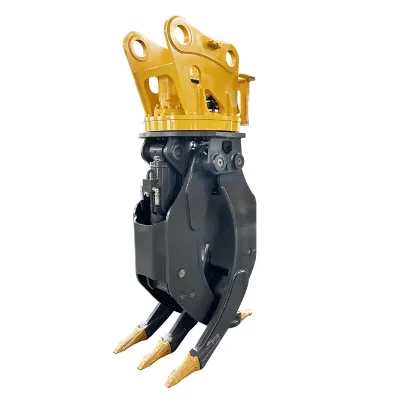
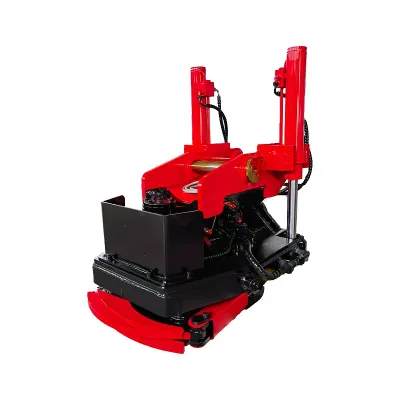
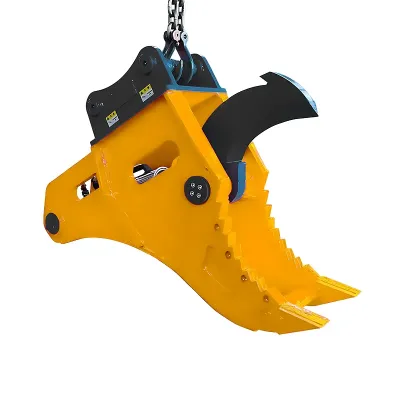
Running a grapple on a mini excavator is a different game than on a 20-ton machine. Lift capacity at working reach might only be 300 to 800 kg. Auxiliary flow often tops out around 40 to 60 L/min. The boom and stick are shorter, so reach and dump height are limited. And with a machine that weighs just 3 to 6 tons, a heavy attachment can make the whole rig feel tippy during a swing. Choosing a grapple for a mini excavator means working within those limits—not just scaling down a full-size unit. The right attachment plays to the compact carrier's strengths without overloading its hydraulics, maxing out its lift capacity, or turning into a safety hazard.
Lift Capacity is the First Constraint
Before you even look at grapple models, dig out your mini excavator's lift chart and find the rated capacity at the reach and height you actually work at. Manufacturers publish maximum lift numbers that are measured close in, near ground level—but in real life, you're working at extended reach, with the boom raised, swinging loads. All of that reduces what you can actually handle. A grapple that weighs 200 kg plus a 150 kg load is 350 kg total—that might be fine at close reach, but exceed the rating at the reach you actually use. Always check the combined grapple-plus-load weight against the lift chart at your working reach, not the spec-sheet maximum.
Attachment weight also affects machine stability during a swing. A mini excavator's counterweight is sized for the base machine, and a heavy grapple at the end of the boom creates a tipping moment that the counterweight has to offset. If the grapple is too heavy, the machine can feel unstable when you swing a load to the side—especially at full extension. That's not just uncomfortable; it's a safety issue. Before you put it into production, test the grapple with a typical load at full reach and swing through the full range. If the machine feels light on the tracks or the boom struggles to raise the load, that grapple is too heavy for that carrier.
Auxiliary Hydraulics on Compact Excavators
A lot of mini excavators—especially older units, budget models, and rental machines—don't have auxiliary hydraulic circuits at all. Even when they do, flow is typically low: 40 to 60 L/min for 3 to 6 ton machines, compared to 80 to 160 L/min on mid-size excavators. A hydraulic grapple needs enough flow to run the cylinders at a useful speed—low flow means slow jaw opening and closing, which drags out your cycle time and kills productivity. If flow is really low, the grapple might not even build enough clamping force because the cylinder can't reach pressure before the relief valve kicks in.
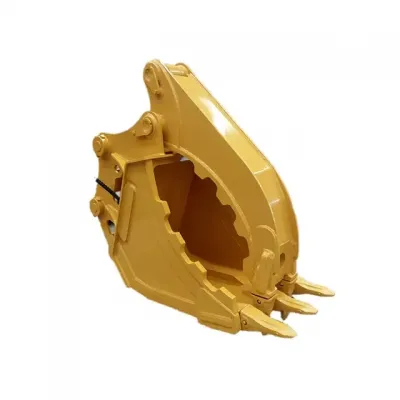
Before you spec a hydraulic grapple for a mini, check three things: first, does the machine have auxiliary circuits (or are you willing to add them)? Second, does the flow rate meet or exceed the grapple's minimum requirement? Third, is the auxiliary pressure compatible with the grapple's relief valve setting? Adding auxiliaries to a mini that doesn't have them can run $2,000 to $5,000 or more in parts and labor—which might be more than the grapple itself. For a lot of mini operators, a mechanical grapple that runs off the bucket curl function is the more practical move because it needs no auxiliary hydraulics at all. The mechanical grapple TG-HMG30, for example, weighs just 125 kg and fits 3 to 4 ton mini excavators with zero hydraulic modifications.
Jaw Size and Material Matching
Mini excavators work on smaller sites with smaller material, so your grapple jaw size should match your typical load, not the biggest thing you could possibly grab. A grapple with a 1500 mm opening on a 4-ton machine might be able to reach around a big log, but the jaw itself is heavy, and the combined grapple-plus-log weight is likely to exceed your lift capacity. A smaller grapple with a 1000 to 1200 mm opening is a better fit for a compact carrier handling typical landscaping and utility material. Jaw width matters too—a wide jaw adds weight and can make the machine feel unstable during a swing, while a narrow jaw limits the size of bundle you can handle.
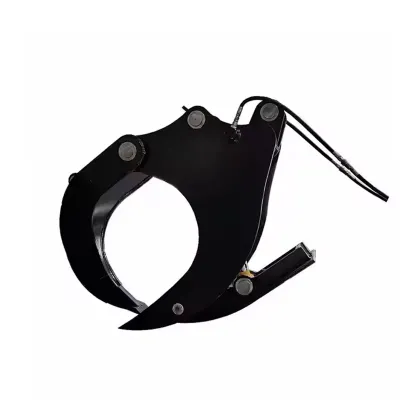
For mini excavator operators, the most common grapple jobs are landscaping (rock picking, brush removal, moving logs), utility work (trench cleanup, pole handling), tree service (branch and log removal), and light land clearing. All of these involve material that's manageable within the compact carrier's lift limits. A mechanical log grapple with curved tines handles logs and brush effectively. A heavy-duty mechanical grapple with wide tooth spacing handles rock and general debris. If you occasionally need to handle scrap or demolition material, a small hydraulic multi-finger grapple might work—but only if your excavator has enough flow. Check the numbers before you buy, because a lot of mini excavators simply can't power even a small hydraulic scrap grapple.
Mechanical Grapples: The Default Choice for Compact Carriers
For most mini excavator operators, a mechanical grapple is the most practical option. It costs less, needs no auxiliary hydraulics, weighs less than a comparable hydraulic grapple, and requires almost no maintenance. The mechanical design runs off the existing bucket curl function, so the operator uses the same controls they already know—no extra levers or foot pedals to figure out. Installation is simple: pull the bucket, bolt on the grapple, connect the linkage pins, and go to work. You can swap it between machines without worrying about hydraulic compatibility—handy if you run multiple compact excavators or rent machines for specific jobs.
The trade-off is clamping force. A mechanical grapple on a mini excavator produces force that's limited by the bucket curl cylinder, and on a 3 to 6 ton machine, that's only a fraction of what a mid-size excavator can generate. For general rock, timber, and brush handling, that's usually enough—the material is fairly regular in shape and doesn't need extreme compression. For scrap handling or demolition crushing, it may not be sufficient, and you'd either need to move up to a larger excavator with a hydraulic grapple or break the material down into smaller pieces. When the mechanical grapple's force is adequate, the simplicity, low cost, and universal compatibility make it the clear winner for compact carriers.
Making the Final Choice
Work through the constraints in order. First, check your mini excavator's lift chart at working reach and figure out the maximum combined grapple-plus-load weight you can handle. Second, determine whether your machine has auxiliary hydraulics and what flow they deliver—if you don't have auxiliaries or flow is low, a mechanical grapple is your default. Third, match the jaw opening and width to your typical material size, keeping the grapple weight within your lift limits. Fourth, decide whether your primary application demands more clamping force than a mechanical grapple can deliver—if it does, confirm that a hydraulic grapple can actually run within your machine's flow and lift constraints. The full TGEC excavator grapple range includes compact mechanical models that are a good fit for mini excavators. For a broader selection framework, see our excavator grapple selection guide. If you're digging into hydraulic compatibility specifically, our hydraulic flow and compatibility article covers the technical details.