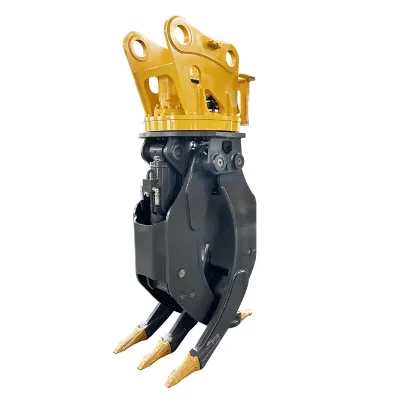
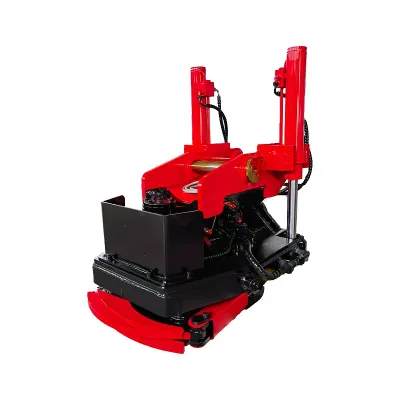
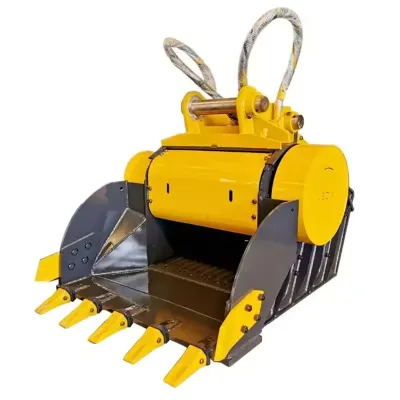
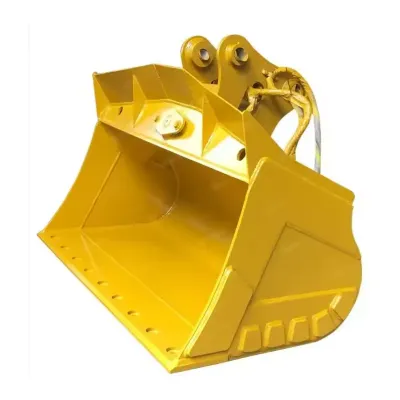
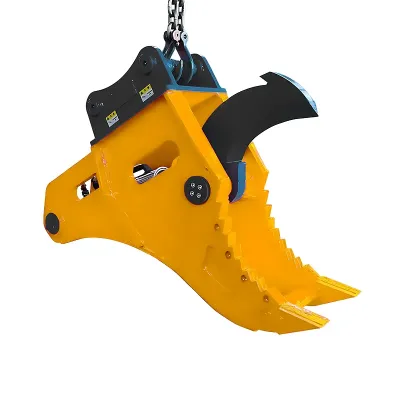
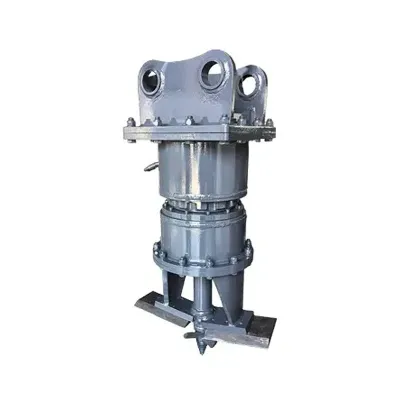
Picking the right excavator pile driver is all about balancing three things: the machine you're running, the piles you need to drive, and the site conditions you're dealing with. Go too small and you'll waste time; go too big and you'll overload the hydraulics and kill your lift capacity. The configuration call — mast-type vibratory vs. side-grip — comes down to whether you've got open space or tight quarters. This guide walks you through the key decisions so you can match the right driver to the job.
Excavator Size and Hydraulic Capacity
Start with your excavator's operating weight — that's the first filter for pile driver selection. Each driver model is rated for a specific carrier weight range, and your machine should fall right in the middle of it. A driver built for a 30‑ton excavator has more centrifugal force and weighs more than one for a 15‑ton machine. Strap it onto a smaller carrier and you'll get instability, reduced lift, and hydraulics that can't keep up. Go the other way — too small for a big machine — and you're leaving power on the table, with slow cycle times.
But weight isn't everything. Auxiliary hydraulic capacity is just as critical. Vibratory drivers need dedicated circuits for the vibration motor and the clamp jaw, with flow requirements that can run from 60 to 250 L/min depending on the model. Side‑grip drivers add rotation and tilt circuits, which drives up the total flow demand even more. Too little flow means weak vibration and slow driving; too much pressure can blow seals and hoses. Make sure your excavator's auxiliary system can handle the flow and pressure for all functions at the same time. Also check that the hydraulic oil cooler is up to the extra heat that continuous vibration puts out.
Pile Type and Piling Work
The kind of pile you're working with and the type of job you're doing shape both the driver configuration and the model size. Sheet piles — the go‑to for retaining walls, cofferdams, and bulkheads — work well with both mast‑type and side‑grip drivers. H‑beams, used for soldier pile walls and foundation support, need a clamp that grabs the flange securely. Tubular or pipe piles, common in foundations and marine work, require a clamp that fits the right diameter range. And size matters — bigger, heavier piles need more centrifugal force and a larger excavator to drive them effectively.
The scale of the job also matters. Long sheet‑pile runs on open sites favor mast‑type vibratory drivers — they hold vertical alignment and keep interlocks tight through repetitive cycles. Scattered pile locations — like solar farms or sites with multiple isolated footings — are a better fit for side‑grip drivers, which move with the excavator and skip the crane repositioning. If you're doing both driving and extraction, confirm that the driver can handle both — most vibratory drivers can, but you'll want to match the extraction force to your pile length and soil conditions.
Site Constraints and Configuration Choice
Site constraints often settle the debate between mast‑type and side‑grip. Open sites with plenty of overhead room and room to maneuver favor mast‑type drivers, which give you higher production rates and better vertical alignment. Tight urban sites — narrow corridors, alongside existing buildings — call for the maneuverability of a side‑grip driver, with its 360‑degree rotation and ±30‑degree tilt for getting piles into awkward spots.
Overhead clearance is a big one. Mast‑type drivers need vertical room equal to the mast height plus the pile length — that can be 10 meters or more. Under bridges, near power lines, under building overhangs, or in any low‑headroom space, a mast‑type driver just won't fit. Side‑grip drivers lose the mast entirely, cutting down the overall height so you can work in tight overhead environments. Ground conditions also come into play — very dense soil or hard rock may require predrilling or pre‑augering before you can drive vibratory, regardless of which configuration you choose. And on sensitive sites near existing structures or underground utilities, you may need vibration monitoring and a driver that can run at reduced amplitude or with shorter vibration cycles.
Mounting and Compatibility
Once you've settled on the configuration and model range, the last step is making sure it actually fits your excavator. The mounting bracket needs to match your arm pin diameter, pin center distance, and arm width. Those numbers vary between brands and models — even within the same weight class — so a driver that fits one 20‑ton machine might not fit another without a custom bracket. Most suppliers will fabricate a bracket to your exact excavator dimensions.
If you're using a quick coupler, verify that the driver bracket works with that interface. Different coupler brands have different mounting patterns, and you might need an adapter plate. Also factor in the combined weight of the coupler plus the driver against your excavator's lift capacity at the working radius — especially when you're handling long piles. Always check the load chart with the driver weight included. Your supplier should confirm compatibility based on your excavator model, serial number, and quick‑coupler specs before shipping anything.
Related Questions
What factors should be considered when choosing an excavator pile driver?+
How does excavator size affect pile driver selection?+
What type of piling work should be considered when selecting a pile driver?+
When should a vibratory pile driver be considered for excavator work?+
Picking the right excavator pile driver comes down to three things: your machine, your piles, and the ground you're working in. Skimp on any of those, and you'll either bounce off dense soil or overload your excavator. This guide walks you through the main checkpoints so you can zero in on the right setup before you ask for a quote.
Start With Your Excavator
Your carrier sets the ceiling. Each pile driver model is built for a specific excavator weight range—because the attachment itself plus the dynamic load from driving has to stay within what the boom can safely handle at reach. Go too heavy, and you risk instability, accelerated wear on the boom, or even a tip-over. Always check your machine's rated operating weight and match it against the carrier class listed for each model.
Next up: hydraulics. Vibratory pile drivers need a dedicated high-flow auxiliary circuit to feed the motor, and flow requirements vary from 120 to 370 L/min depending on the model. If your excavator can't deliver that, the motor won't hit its rated vibration frequency—and you'll lose serious driving performance. Also verify the circuit's max pressure; most of these units run between 300 and 330 bar. And if you've got a quick coupler, note the brand and model—mounting adapters aren't one-size-fits-all.
Match the Pile Type and Size
Now look at the pile itself. Sheet piles are the bread and butter for vibratory drivers, and most models will handle standard profiles as long as the clamp can grip them. H-piles and wide-flange beams need a clamp that can bite into the web or flanges, and bigger sections mean more weight. Tubular and round piles require a clamp or chuck designed for circular shapes, and larger diameters get heavier fast—which may push you toward a higher-force unit.
Don't forget length. Longer piles create more skin friction, both going in and coming out, and the combined weight of the attachment plus a long pile can push your excavator's lifting capacity to its limit at full stick-out. If you're putting in combination walls with sheet piles and tubular king posts, you may need a model that handles both profiles comfortably. When you ask for a compatibility check, always include your pile dimensions, weights, and lengths.
Evaluate Soil and Site Conditions
Ground conditions make or break vibratory driving. Granular soils—sand and gravel—take vibration beautifully because the shaking temporarily fluidizes the matrix and drops friction way down. Cohesive soils like clay and silt resist more, and if you hit dense glacial till or hardpan, you might need pre-drilling, a beefier model, or a completely different approach. Water table matters too; saturated sand drives easier than dry sand every time.
Then there's the site itself. Overhead clearance and access tell you whether a standard top-grip unit will work or if you need to go side-grip. Open sites with plenty of headroom? A top-grip vibro hammer is your most straightforward, cost-effective bet. But if you're under a bridge, near power lines, under a slab, or inside a deep excavation where the boom can't get above the pile top, a side-grip driver that clamps from the side might be your only option. Side-grip also shines when you're working tight against existing structures where lateral space is at a premium.
Choose Between Driving and Extraction Needs
If all you're doing is driving permanent piles, you can pick a model based mainly on driving force. But if you also need to pull temporary sheet piles or H-piles after the job wraps up, the same vibratory driver can handle extraction—just clamp the pile, fire up the vibration to break the soil bond, and let the boom do the lifting. Extraction is harder on the machine and the excavator, especially if the pile has been in the ground for a while.
For shoring jobs where you plan to reuse piles, make extraction performance a top priority. Deeper embedment, sticky clay soils, and heavier sections all ramp up the pullout resistance. If you expect tough pulls, go for a model with higher centrifugal force and double-check that your excavator has enough lifting muscle at the radius you'll be working.
Final Selection Checklist
Before you pull the trigger, run through this list with your supplier or manufacturer:
-
Excavator operating weight falls within the compatible carrier class for the selected model.
-
Auxiliary hydraulic flow and pressure meet or exceed the attachment requirements.
-
Excavator lifting capacity at the working radius can handle the attachment weight plus pile weight.
-
Clamp configuration is compatible with your pile types and section sizes.
-
Centrifugal force is sufficient for the soil conditions and pile lengths on your project.
-
Mounting bracket or quick coupler adapter fits your excavator boom head geometry.
-
Overhead clearance and site access allow the chosen clamp configuration (top-grip or side-grip) to operate.
-
If extraction is required, the model and excavator combination can handle the expected extraction loads.
For a deeper dive into vibratory driving technology and how it stacks up against other methods, check out our guide on how an excavator vibro hammer works. To see the full lineup and specs, browse the excavator pile drivers product range, or reach out to our technical team with your excavator and pile details for a custom recommendation.