Product Overview
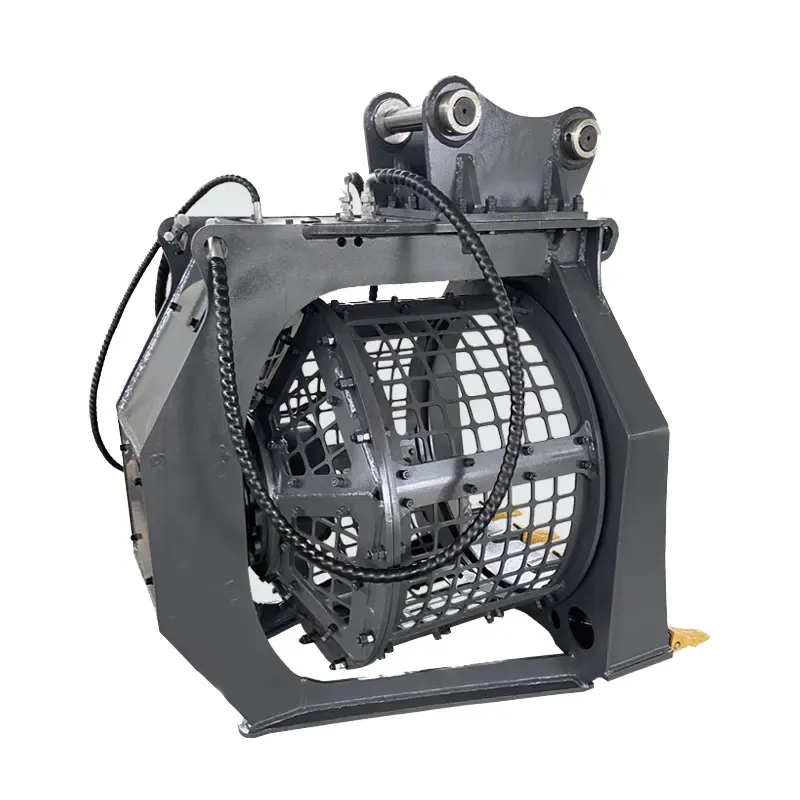
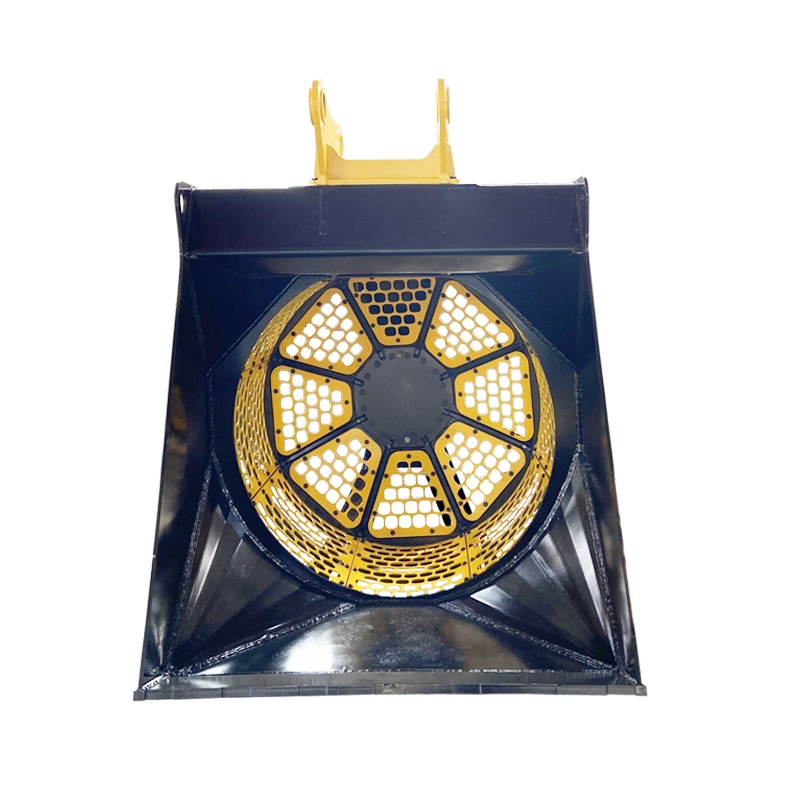
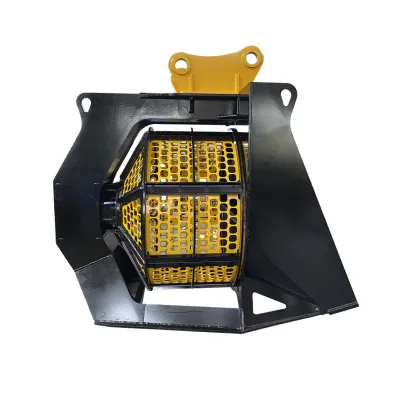
A rotary screening bucket takes material processing to the next level. Instead of relying on gravity and a good shake like a skeleton bucket, this one uses a hydraulically driven drum or paddle assembly that spins inside a perforated shell. The constant rotation breaks up clods, scrubs fines through the openings, and holds back oversize pieces—delivering consistent throughput for high-volume jobs. It is the preferred choice when you have to move a lot of dirt, classify aggregate, or sort through demolition rubble on a tight schedule.
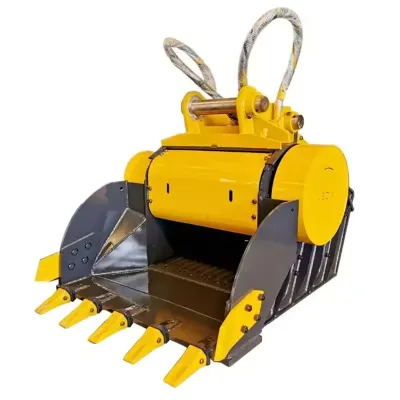
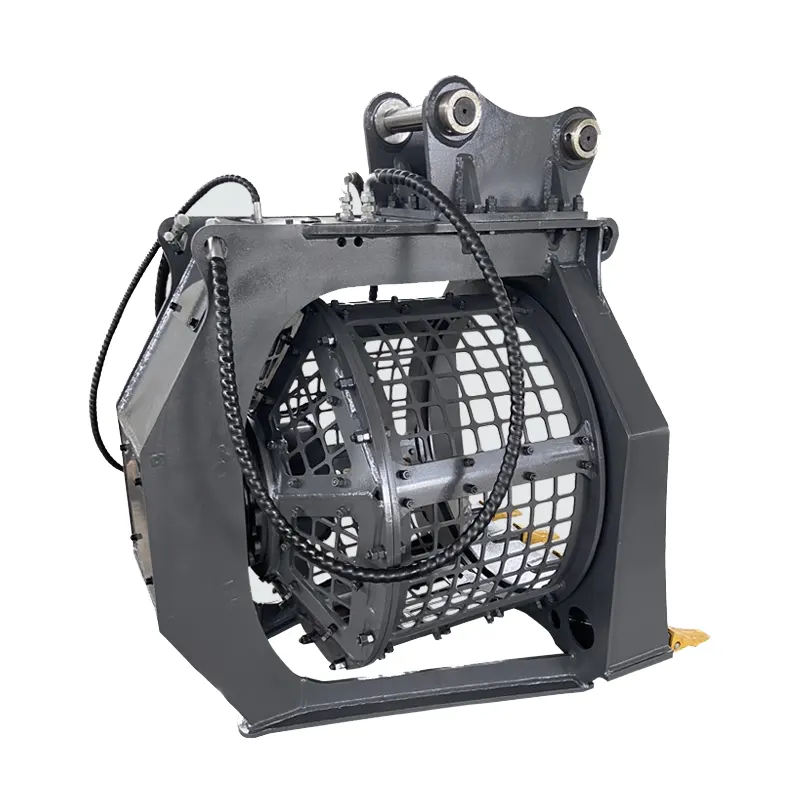
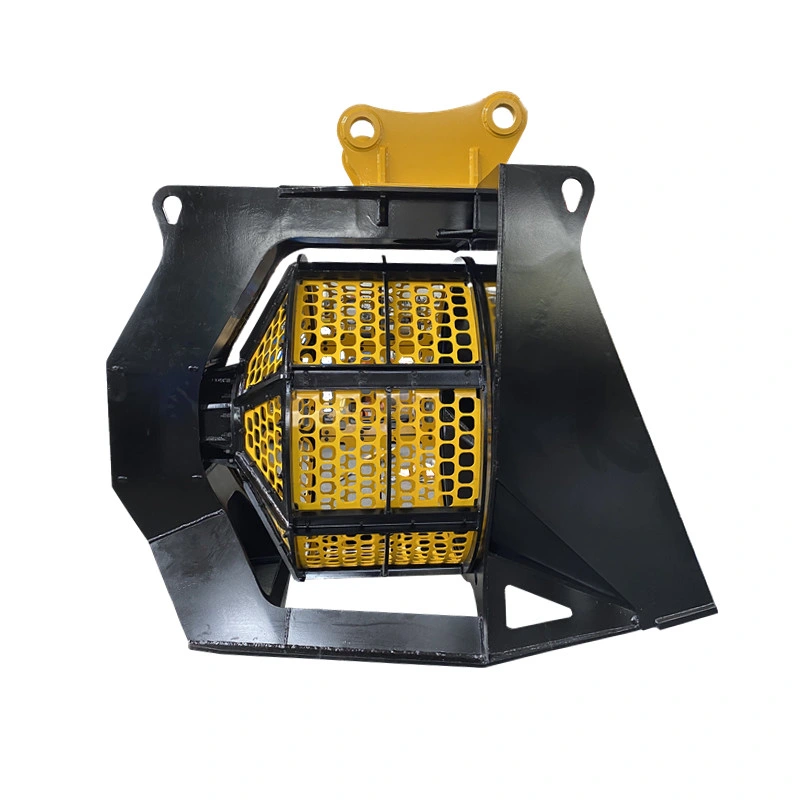
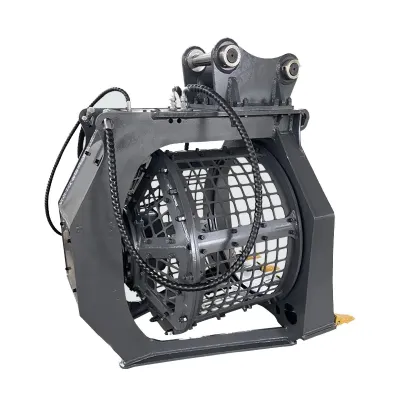
TGEC builds these with a rugged outer bucket that houses a rotating drum fitted with paddles or star‑shaped elements. As the drum turns, it tumbles the material, pushing the smaller particles through the screen holes while the big stuff stays inside for later disposal. A hydraulic motor up top runs the drum via a gearbox, with torque and speed matched to your machine's hydraulic output. We offer five models that cover excavators from 3.5 all the way up to 38 tons, with screen diameters from 592 to 1470 mm, drum speeds from 30 to 45 rpm, and weights ranging from 260 to 2800 kg. In the excavator bucket family, this is the top‑tier processing attachment—well beyond the simpler skeleton bucket for jobs that demand active, high‑volume screening.
Rotary Screening Mechanism
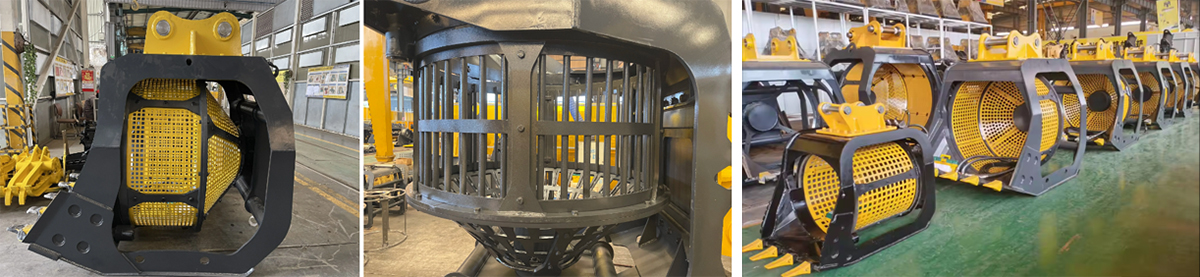
The real workhorse here is the hydraulically driven drum inside the bucket. Radial paddles or star‑shaped elements are mounted on the drum, and as it rotates, they lift, tumble, and shear the material against the perforated bottom and sides. That action breaks up compacted soil, separates fines from oversize, and helps reduce screen hole plugging—something a static bucket cannot do as effectively. The continuous movement helps maintain consistent throughput, including with damp or clay-heavy feed, though very wet material may require smaller loads.
The hydraulic motor is connected to your machine's auxiliary circuit, with flow and pressure specs that vary by model. A relief valve protects the motor and gearbox if the drum jams on a piece of oversize rock or rebar. The screen opening itself is defined by the hole size in the shell; you can order different perforations to match the output you need. Some configurations use interchangeable screen plates, allowing different screening sizes to be selected for different applications. Typical drum speeds land between 30 and 45 rpm—fast enough to do the job but slow enough to keep wear and tear in check.
Models & Specifications
Five models are sized for excavators from 3.5 to 38 tons. Drum diameter and flow requirements scale up with the carrier.
| Parameter | TG-RSB02 | TG-RSB08 | TG-RSB12 | TG-RSB16 | TG-RSB18 |
|---|---|---|---|---|---|
| Compatible Excavator Class | 3.5–5.5 t (3.9–6.1 ton) | 5–8 t (5.5–8.8 ton) | 11–18 t (12.1–19.8 ton) | 19–28 t (20.9–30.9 ton) | 29–38 t (31.9–41.9 ton) |
| Screen Diameter | 592 mm (23.3 in) | 700 mm (27.6 in) | 1005 mm (39.6 in) | 1420 mm (55.9 in) | 1470 mm (57.9 in) |
| Rotating Speed | 30–35 rpm | 35–40 rpm | 30–35 rpm | 30–35 rpm | 35–45 rpm |
| Working Pressure | 10–12 MPa (1450–1740 psi) | 12–15 MPa (1740–2180 psi) | 18–21 MPa (2610–3050 psi) | 18–22 MPa (2610–3190 psi) | 20–23 MPa (2900–3340 psi) |
| Required Flow | 18–20 L/min (4.8–5.3 GPM) | 40–45 L/min (10.6–11.9 GPM) | 90–100 L/min (23.8–26.4 GPM) | 90–100 L/min (23.8–26.4 GPM) | 90–100 L/min (23.8–26.4 GPM) |
| Unit Weight | 260 kg (573 lb) | 515 kg (1135 lb) | 965 kg (2127 lb) | 1700 kg (3748 lb) | 2800 kg (6173 lb) |
Table data is for reference only. Actual specifications may vary based on the final configuration. Please contact the TianGe technical team for details.
Applications
Topsoil Processing and Excavated Soil Processing
On construction sites, stockpiled topsoil is often full of rocks, roots, and debris. Run it through the rotary screening bucket, and you get clean, usable soil that's ready for landscaping or final grading. The rotating drum crushes clods and separates the fines from the junk, so you can spread it right where you need it. That means you don't have to bring in expensive clean fill or haul away contaminated material—big savings on both material and trucking. For site processing, you can process excavated soil and separate reusable fines from unwanted material, keeping usable material on site and only disposing of what cannot be reused.
Aggregate Classification and Recycling
In aggregate or recycling yards, this bucket acts like a portable screener. Set the hole size to get the gradation you want—specified fines, coarse fractions, or oversize that needs another pass through the crusher. The rotating action helps process damp or clay‑laden material more effectively than a static screen, though very wet material may require smaller loads and extra cycle time. For concrete recycling, it pulls out the reusable aggregate while the fines fall through, and the oversize can go right back into the crusher. On smaller jobs, this saves you from setting up a whole screening plant; you just process the material right where it sits.
Demolition Debris Processing
At demolition sites, mixed debris is a mess—drywall, insulation, wood, metal, concrete chunks. The screening bucket breaks up the soft stuff, letting the fines fall out while holding onto the bigger pieces. The screened fines can often be used as fill on site, cutting disposal costs, while the retained material goes to recycling or landfill. For demolition work, it screens material by size, helping separate finer fractions from larger pieces for more efficient handling and recycling. Processing on site also shrinks the volume you have to haul away, saving you money on transportation and tipping fees.
Hydraulic Requirements and Mounting
To run the screening bucket, you need a double‑acting auxiliary circuit with enough flow and pressure to spin the motor. The smallest model needs just 18‑20 L/min, while the big ones require 90‑100 L/min, with pressures ranging from 10 to 23 MPa depending on the size. Case drain requirements depend on the hydraulic motor configuration. Confirm the required auxiliary circuit and case drain specifications before ordering. Make sure your circuit has a relief valve set to the manufacturer's spec to guard against jams.
Mounting uses the same pin‑on or quick‑coupler setup as any bucket. The motor and gearbox are fixed to the bucket shell, so the bracket has to match your pin spacing, pin diameter, and linkage geometry. When you order, give us your excavator make, model, operating weight, pin dimensions, coupler type, and hydraulic details (flow, pressure, case drain availability). The hoses route along the stick to stay clear of the boom and linkage. Installation is straightforward: mount the bucket, connect the hoses (and case drain if needed), and run the motor according to the manufacturer's startup procedure before beginning screening operations.
Operation and Maintenance Tips
To get the best screening, load the bucket, then engage the drum while the bucket is raised slightly off the ground. Let it spin for several seconds to work the material through, then lower and dump the oversize. Don't overload—too much feed will slow the screening and can stall the drum. For wet or sticky material, run smaller loads and give the drum extra time to break up clods. If the screen holes start to clog, run the drum at full speed and give the bucket a firm tap on the ground to knock the trapped material loose.
Keep up with regular maintenance to avoid downtime. Lubricate the drum bearings and gearbox according to the manufacturer's maintenance schedule. Inspect hoses and fittings for leaks, abrasion, or bulges—replace any damaged ones right away. Check the screen plate for wear, cracks, or enlarged holes; when the openings get out of spec, swap it out. Examine the paddles or star elements; if they're worn down, agitation suffers. If you have interchangeable plates, keep spares with different hole sizes on hand for quick changes. At the end of each shift, clean out the bucket interior and screen plate to prevent hardened material from building up.
Request a Quote — Rotary Screening Bucket
Tell us your excavator make and model, operating weight, mounting or coupler type, pin spacing and pin diameter, preferred model (TG-RSB02 through TG-RSB18), required screen opening size, primary application (topsoil processing / aggregate classification / demolition recycling / excavated soil processing), typical material types, auxiliary hydraulic flow rate and pressure, case drain availability, and the quantity you need. Our team will confirm the right model and mounting bracket, verify the hydraulic requirements and screen size for your application, and send you a quote based on your specs and delivery terms. Dealers and OEMs are welcome for volume orders, custom screen configurations and private-label options.