Walk onto any active construction, demolition, or land-clearing site and you'll see an excavator with a grapple—but not every grapple is the right fit for the work being done. A multi-finger scrap grapple on a logging site struggles to hold round logs. A mechanical log grapple in a scrap yard can't compress bulky light-gauge metal. That mismatch costs cycle time, accelerates wear, and frustrates operators who know the attachment is holding them back. Picking the right excavator grapple comes down to four decisions, taken in order: what material you're handling, what hydraulics your machine has, whether you need rotation, and how the grapple size matches your carrier. Run through them step by step, and the right choice becomes clear.
Step 1: Match the Grapple to Your Primary Material
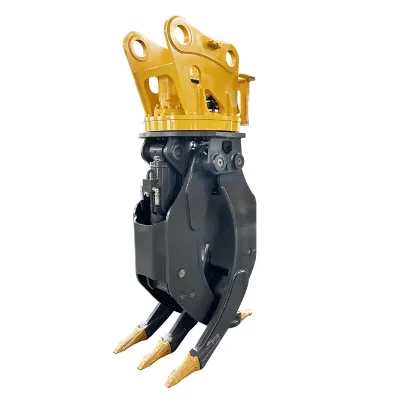
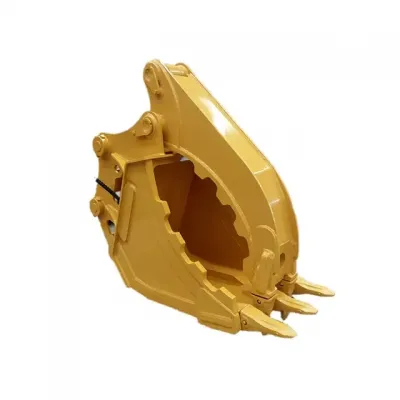
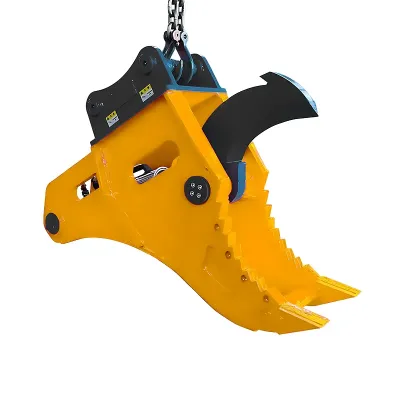
The material you handle most often dictates the jaw configuration you need. Scrap metal—whether loose sheet, bundled rebar, or mixed demolition debris—calls for a grapple with multiple independent tines that conform to irregular shapes and compress bulky loads. A multi-finger hydraulic scrap grapple with four or five independently moving tines handles this range because each tine wraps around uneven material on its own. For demolition work where crushing force matters more than conforming grip, a demolition grapple with solid jaw plates and serrated edges provides the bite needed to break apart structural debris.
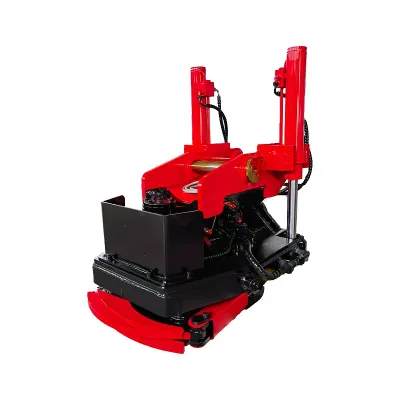
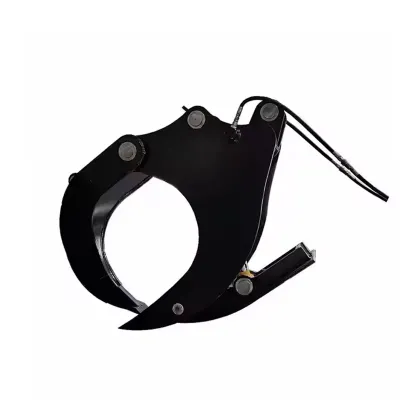
Timber and woody material demand a different jaw geometry. Round logs roll between straight jaws, so log grapples use curved tines that cradle the log circumference geometrically rather than relying on friction alone. For land clearing and brush, the same curved-tine design compresses bundles of saplings and woody vegetation. Rock and general demolition debris fall somewhere in between—a heavy-duty mechanical grapple with wide tooth spacing sifts soil while retaining rocks, and its simple mechanical design works on any excavator without auxiliary hydraulics. If you handle a mix of materials, identify the dominant one (the material you spend 60% or more of your time on) and choose for that. A grapple designed to do everything usually does nothing well.
Step 2: Verify Hydraulic Compatibility Before Anything Else
Hydraulic grapples require auxiliary hydraulic circuits with enough flow and pressure to run the cylinders and, on rotary models, the rotator. Before you start comparing models, check what your excavator actually provides. Most mid-size excavators (12 to 25 tons) have auxiliary circuits delivering 80 to 160 L/min at 200 to 300 bar, which covers the majority of hydraulic grapple configurations. Compact excavators (under 10 tons) may have lower flow—40 to 80 L/min—which limits the grapple size and cylinder bore you can run. Very large excavators (30 tons and up) typically have high-flow auxiliary circuits that can power the largest grapple models, but the circuit must be properly set up with a case drain for rotary models.
If your excavator doesn't have auxiliary hydraulics—common on older machines, rental units, and budget compact excavators—a mechanical grapple that runs off the bucket curl function is the practical choice. Mechanical grapples need no extra hoses, valves, or circuit modifications, and they work on virtually any excavator. The trade-off is lower clamping force and no rotation, but for general rock handling, land clearing, and timber work where precise placement isn't critical, the mechanical design is adequate and significantly less expensive. If you're thinking of adding auxiliary hydraulics later, keep in mind that converting a mechanical grapple to hydraulic isn't cost-effective—plan for the configuration you need from the start.
Step 3: Decide Between Rotary and Fixed Based on Placement Precision
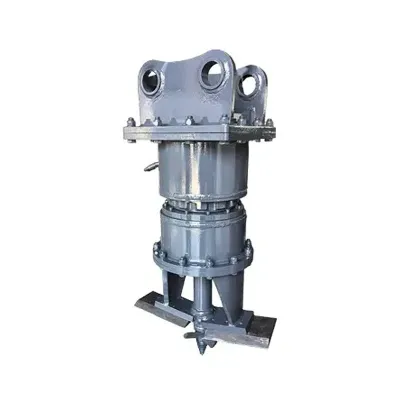
A rotary grapple adds a 360-degree rotator between the mounting bracket and the grapple body, letting the operator rotate the load independently of the excavator boom. This is essential when precise orientation matters: loading logs parallel to a truck bed, sorting scrap into narrow bins, placing demolition debris in specific piles, or aligning material for a downstream process like a chipper or conveyor. The rotator adds cost, weight, hydraulic complexity (it needs a case drain line), and maintenance (the rotator bearing and seal need periodic service). For high-volume operations where cycle time is money, the productivity gain from rotation justifies the extra investment.
A fixed (non-rotating) grapple relies on the excavator boom position to orient the load. The operator has to position the machine to get the drop direction right, which takes more space and more undercarriage movement. For general rock handling, land clearing, bulk material movement, and applications where material is dropped in a general area without precise orientation, a fixed grapple is enough. It's lighter, less expensive, simpler to maintain, and works with excavators that lack the case drain circuit rotary models require. The decision comes down to this: if you regularly load trucks, sort into bins, or place material with precision, choose rotary. If you mostly pick and drop in general areas, fixed is the more practical choice.
Step 4: Size the Grapple to Your Excavator — Weight, Opening and Lift Capacity
Grapple sizing isn't just about matching the excavator weight class. Three factors interact: the grapple's weight, the jaw opening relative to your material size, and your excavator's lift capacity at working reach. The grapple weight reduces your effective payload—a 970 kg grapple on an 18-ton excavator leaves less lift capacity for material than a 510 kg grapple. Always check the combined grapple-plus-material weight against your excavator's lift chart at the typical working reach and height, not just against the machine's maximum lift rating (which is measured close in, near ground level).
The jaw opening must comfortably exceed your typical material size. A log grapple with a 1500 mm opening can securely handle logs up to about 1000 to 1200 mm in diameter—the effective diameter is less than the nominal opening because the curved tines reduce clearance at the contact points. For scrap grapples, the jaw width and opening determine the maximum bundle size the grapple can compress and grasp. If you occasionally run into material larger than your grapple opening, you'll need to cut it into sections or step up to a larger model. When you're between two adjacent models, choose the larger one if your excavator's lift capacity allows—a slightly oversized grapple handles a wider range of material, while an undersized one will constantly struggle with oversized loads.
Final Selection Notes
After working through these four steps, you should have a shortlist of one or two grapple configurations that match your material, hydraulics, rotation needs, and carrier size. Before you finalize, verify mounting bracket compatibility—the grapple has to match your excavator's pin spacing, pin diameter, and linkage geometry, or be compatible with your quick-coupler interface. If you use multiple excavators or plan to swap the grapple between machines, a mechanical grapple is the most flexible because it works on any machine with a bucket curl function. Hydraulic grapples require that every machine you swap to has compatible auxiliary circuits. Browse the full excavator grapple range to compare configurations, and use the excavator grapple selection checklist to verify your final choice before you request a quote. If you still need to understand the full range of jaw configurations available, our excavator grapple types article covers every configuration in detail.