Welcome to the Official Website of TianGe Attachments.

Demolition Sorting Grapple

Demolition Sorting Grapple

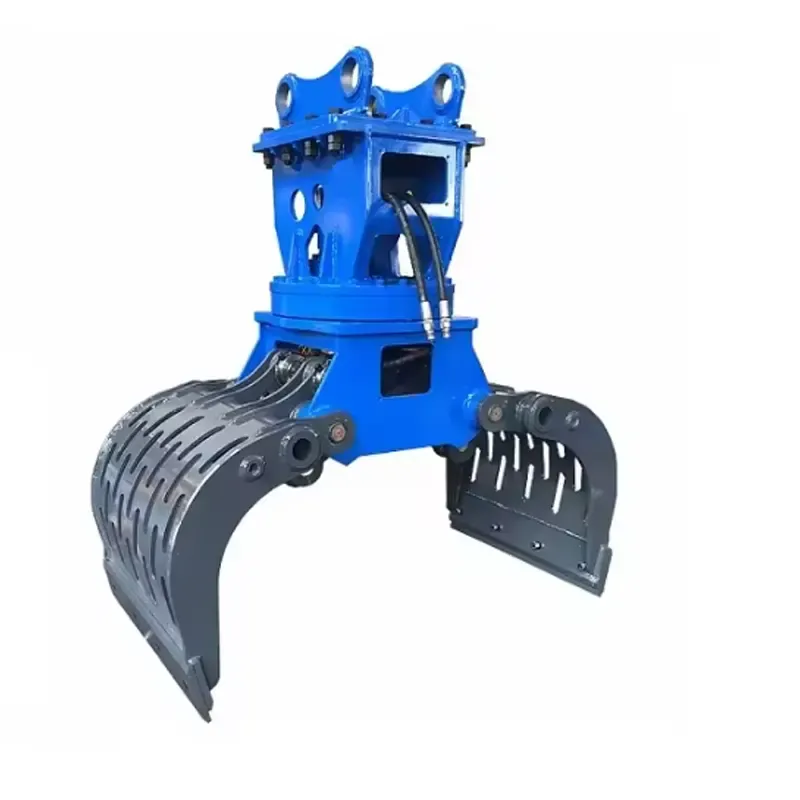
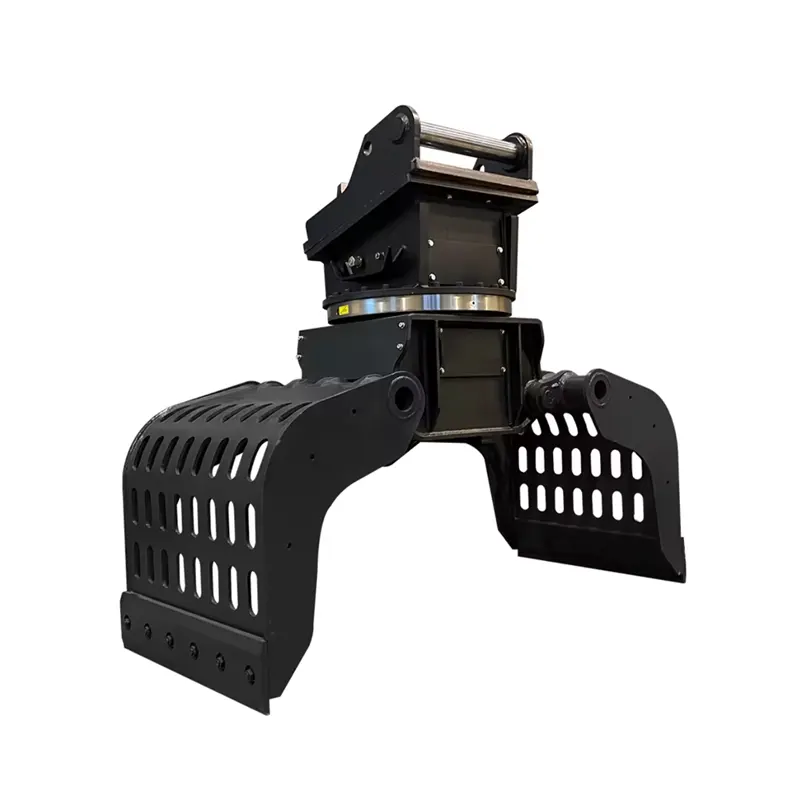
Solid serrated jaws provide a broad gripping surface for demolition debris, mixed waste and rock handling. Four models cover 3 to 40 ton excavators with operating pressure scaling from 110 to 200 bar.
Product Name: Demolition grapple / Sorting grapple / Demolition selector grapple / Rock sorting grab
Type: Grapples
After-sales Service: Provided
Warranty: 1 Year
Customization: Available
Shipping Cost: Negotiate with us about shipping cost and estimated delivery time.
Get a quote
Overview
FAQ

Product Overview

A scrap grapple uses independent tines to conform around odd shapes. A demolition grapple is built for a different job—controlling bulky, rigid material with two wide, solid jaws. The broad clamping surface keeps a firm hold on chunky debris, while serrated edges bite into slick surfaces that would slip off a flat jaw. The deep jaw profile helps contain mixed loads during handling and swing.

Part of the TGEC excavator grapple lineup, the demolition grapple comes in four frame sizes—TG-DG02 through TG-DG08—matched to excavators from 3 to 40 tons. Operating pressure ranges from 110 to 200 bar across the model range, with each model specified for a different excavator class. If you're dealing mostly with irregular scrap metal, take a look at the multi-finger hydraulic scrap grapple.

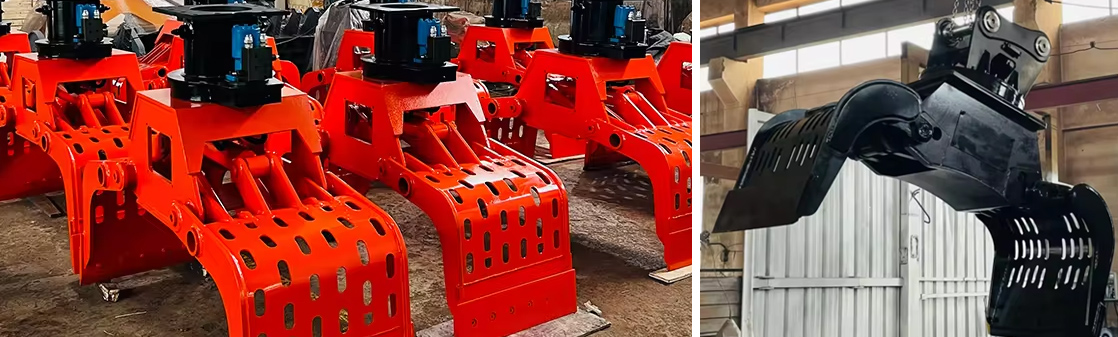
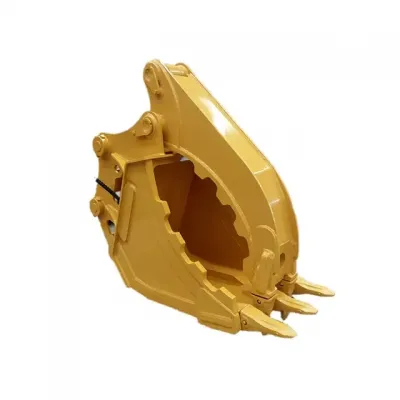
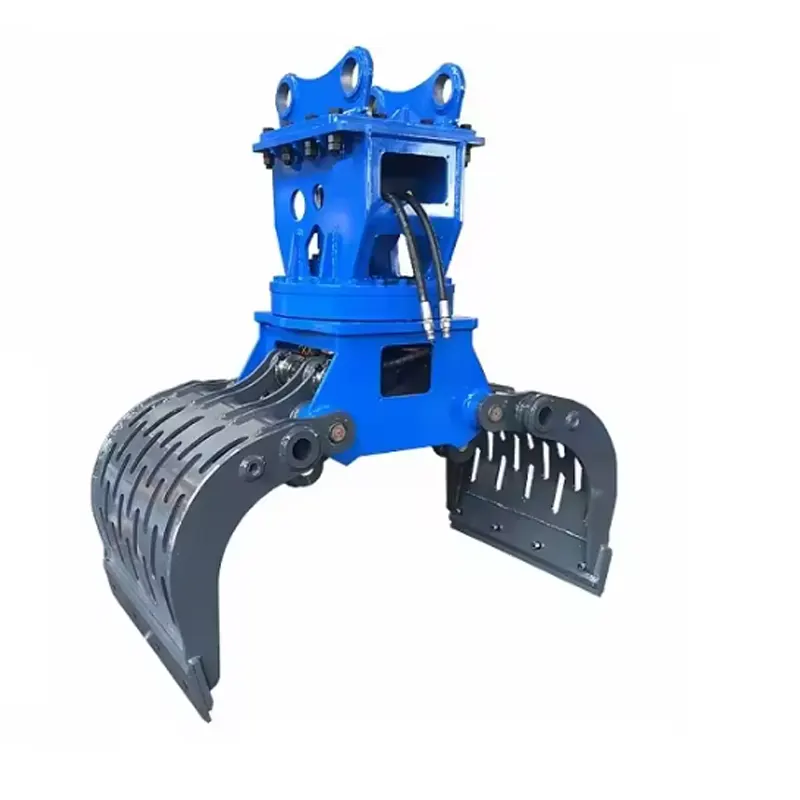
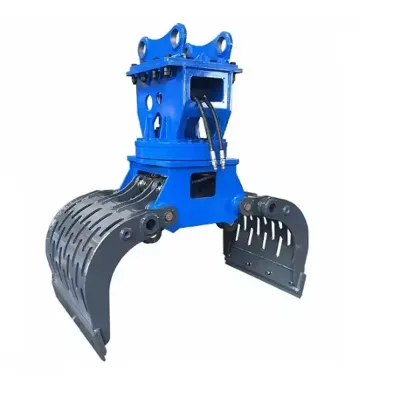
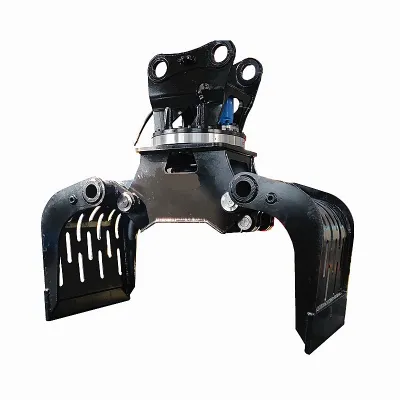
TGEC demolition grapple with solid serrated jaws

Models & Specifications

Operating pressure and flow requirements increase with each model size, as each model is specified for a different excavator class and intended application load.

ParameterTG-DG02TG-DG04TG-DG06TG-DG08
Compatible Excavator Class3–8 t (3.3–8.8 ton)8–15 t (8.8–16.5 ton)15–25 t (16.5–27.6 ton)25–40 t (27.6–44 ton)
Attachment Weight380 kg (838 lb)750 kg (1653 lb)1280 kg (2822 lb)1650 kg (3638 lb)
Max Jaw Opening1100 mm (43.3 in)1600 mm (63.0 in)2100 mm (82.7 in)2400 mm (94.5 in)
Operating Pressure110–150 bar (1595–2175 psi)120–160 bar (1740–2320 psi)150–180 bar (2175–2610 psi)160–200 bar (2320–2900 psi)
Required Hydraulic Flow30–60 L/min (7.9–15.9 GPM)50–90 L/min (13.2–23.8 GPM)80–120 L/min (21.1–31.7 GPM)120–180 L/min (31.7–47.6 GPM)

Table data is for reference only. Actual specifications may vary based on the final configuration. Please contact the TianGe technical team for details.

Jaw Design & Clamping Force

The solid jaw is what makes this grapple different. Instead of open tines, it uses a broad steel plate with serrated edges along the top and bottom. When the jaws close on concrete block, the flat surface spreads clamping force across the whole contact area, gripping and repositioning bulky concrete and masonry pieces rather than poking through them. The serrations grab slick surfaces—wet concrete, plastic sheeting, smooth stone—that would slide right off a flat edge, and the deep jaw profile keeps the load contained during transport.

Jaw force depends on hydraulic pressure, cylinder size and the grapple's jaw geometry, and this grapple scales both across the model range. TG-DG02 runs at 110 to 150 bar with 30 to 60 L/min, suited for light demolition and small excavator sorting. TG-DG08 runs at 160 to 200 bar with 120 to 180 L/min, operating within the higher hydraulic pressure and flow range specified for larger carriers and heavier material-handling applications on 25 to 40 ton carriers. Each model is configured to the typical operating parameters of its excavator class.

Application Breakdown

Primary: Demolition & Structural Teardown

On demolition sites, this grapple breaks down and sorts mixed debris as the building comes down. The solid jaws grip and separate concrete block, masonry, rebar and metal framing, and load sorted fractions into separate containers. Serrated edges grip smooth concrete during processing, and the deep jaw profile helps contain mixed loads during handling and swing. For contractors who process material on site instead of hauling unsorted waste to a landfill, sorting recyclable fractions at the point of teardown can reduce the amount of mixed waste sent for disposal and simplify material recovery.

Secondary: Waste Transfer & Recycling Sorting

At waste transfer stations and MRFs, the demolition grapple sorts mixed C&D waste into designated bins for concrete, wood, metal, and general trash. The broad jaw surface can handle bulky items such as mattresses, furniture and large plastic pieces that may be difficult to capture with open-tine grapples, helping consolidate material in the container. The grapple also agitates piles: hovering over a waste pile and opening/closing the jaws loosens compacted material and exposes buried recyclable fractions.

Tertiary: Rock Handling & Site Prep

On site prep, landscaping, and riverbank projects, the grapple moves large rocks, boulders, and stone. Serrated edges grip smooth rock surfaces that would slip in a flat bucket, and the wide jaw opening handles big boulders. While this grapple isn't designed for primary rock breaking—that's a hydraulic breaker's job—it excels at moving and placing rock that's already broken or naturally sized for handling.
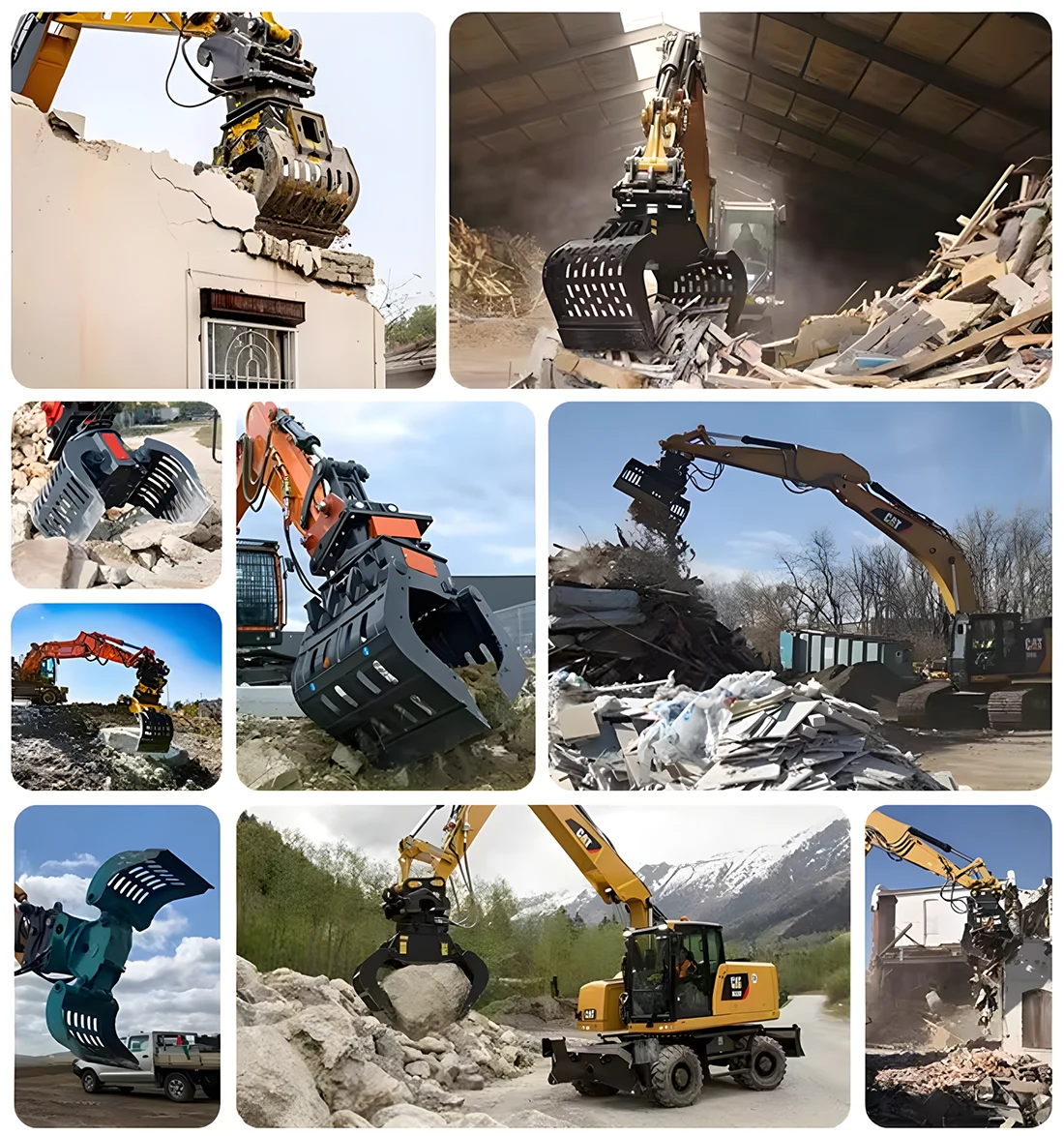
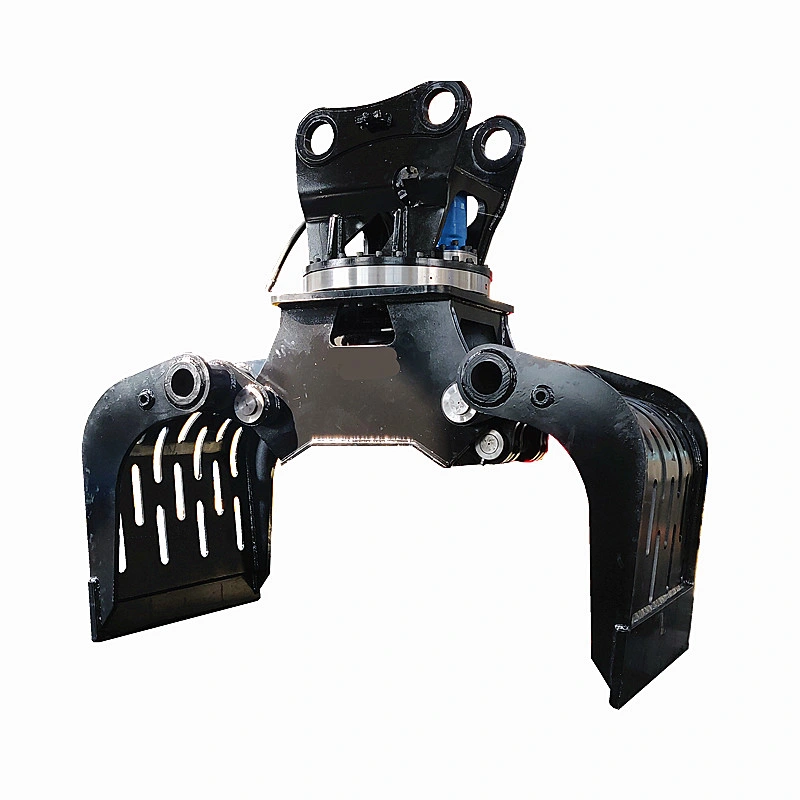
TGEC demolition grapple sorting construction debris

Carrier Matching

Carrier compatibility depends on more than excavator operating weight. Confirm auxiliary pressure and flow, lift capacity at working reach, mounting configuration and available clearance. The grapple weight and expected load should also be checked against the excavator's lift chart. Operating below the specified pressure range can reduce available clamping force, while insufficient hydraulic flow can increase jaw cycle time. A pressure and flow test under load is the surest way to confirm compatibility. Give us your excavator make, model, and auxiliary specs, and we'll confirm the right model.

Field Operation Tips

When processing concrete, approach with jaws partially open and close gradually so the serrated edges bite before you apply full force. For sections with exposed rebar, approach from the exposed side to help the jaws grip both the rebar and surrounding material. When sorting mixed debris, use the jaw width to your advantage: the broad surface can be used to spread material on the ground to expose buried fractions before grasping. Don't use the grapple as a hammer or pry bar—the solid jaws are made for clamping and grasping, not impact or levering, which can bend the jaw plates or damage cylinder rods. After heavy demolition work, inspect the jaw serrations for chipping or cracking and check cylinder rods for scoring from flying debris.

Request a Quote — Demolition Grapple

Send us your excavator make and model, operating weight, auxiliary flow and pressure, mounting or coupler type, preferred model (TG-DG02 / TG-DG04 / TG-DG06 / TG-DG08), primary application, and quantity. Our team will verify compatibility, confirm the right pressure and flow configuration, and provide a quote based on your specs and delivery terms. Dealers and OEMs welcome for volume supply, custom jaw configurations, and private-label options.
Frequently Asked Questions

How does a demolition grapple differ from a scrap grapple?+

A demolition grapple uses two solid, broad jaws with serrated edges to clamp and grasp material, applying force across a wide contact area. A scrap grapple uses four or five independent tines that conform to irregular shapes. The demolition grapple excels at processing concrete and masonry, handling bulky waste and moving rock, while the scrap grapple excels at grasping irregular metal shapes. For demolition work with significant concrete and masonry, the demolition grapple is the right tool; for scrap yards and metal recycling, the multi-finger scrap grapple is better.

Is the demolition grapple designed for primary concrete demolition?+

The demolition grapple is primarily a sorting and material-handling attachment. Its solid jaws can reduce concrete block and masonry during demolition sorting, but it is not a replacement for a hydraulic breaker or dedicated pulverizer on primary demolition work. For heavily reinforced concrete—foundation walls, bridge decks, structural columns—a breaker or pulverizer is the more efficient and appropriate tool. Use the demolition grapple for sorting, gripping and moving material after initial breaking, or for secondary reduction of block and masonry on teardown sites.

Why does operating pressure increase across the DG model range?+

The DG models use different operating pressure ranges because they are configured for different excavator classes and application loads. Larger models operate within higher specified pressure ranges to support their intended hydraulic and clamping configuration. Smaller models are specified for lower pressure ranges consistent with the auxiliary circuit limits of compact excavators. Actual jaw force depends on cylinder size, linkage geometry and mechanical advantage, not pressure alone.

What is the maximum jaw opening across the DG model range?+

Jaw opening ranges from 1100 mm (TG-DG02) to 2400 mm (TG-DG08). The opening sets the upper limit for what can fit between the jaws, but the practical material size also depends on jaw geometry, material shape, and how the grapple closes around the load. For material larger than your grapple opening, break it into smaller sections first. Select a model based on the typical material size and contact geometry rather than opening width alone.

When should I use a demolition grapple at a waste transfer station versus a dedicated waste grapple?+

The demolition grapple works well at transfer stations handling primarily C&D waste—concrete, wood, metal and bulky construction items. Its broad jaw surface can handle bulky items such as mattresses, furniture and large plastic pieces that may be difficult to capture with open-tine grapples, helping consolidate material in the container. If your station processes mostly municipal solid waste rather than C&D waste, or handles wet, fine organic material, a dedicated waste grapple with different jaw geometry and tine spacing may be more appropriate. The demolition grapple also agitates piles to loosen compacted material and expose buried recyclable fractions.

How do I maintain the serrated jaw edges?+

Inspect the serrated edges after each heavy demolition shift for chipping, cracking or excessive wear. The serrations are the primary gripping surface — worn or chipped edges reduce bite on smooth material and can cause the load to slip. Depending on the jaw construction, worn or chipped serrations may be repairable by qualified welding procedures. Contact TGEC for the recommended repair or replacement method for your model. Severe cracking or deformation of the jaw plate typically requires jaw replacement. Avoid using the grapple as a hammer or prying tool, as impact and levering forces are the most common cause of jaw damage. Keep the jaw hinge pins greased daily to ensure smooth jaw movement and even wear across the serration surface.

How do I confirm the TG-DG04 fits my excavator?+

The TG-DG04 is matched to 8 to 15 ton excavators, but operating weight alone is not enough to confirm fit. Verify that your excavator's auxiliary circuit operates within the specified 50–90 L/min and 120–160 bar ranges, then check lift capacity at your typical working reach against the 750 kg attachment weight plus expected load. Also confirm mounting configuration and available clearance. If your machine is at the lower end of the 8 to 15 ton range or has a weak auxiliary pump, the TG-DG02 may be a safer match. Send us your excavator make, model and auxiliary specs and we'll confirm compatibility.

What hydraulic hose protection is needed for demolition work?+

Demolition environments expose hoses to flying concrete chips, sharp rebar and abrasive dust. Hoses should be routed along the grapple frame and through protective spiral wraps or steel sleeves where they pass near the grasping area. Any hose segment exposed to the load path should be shielded by the grapple structure or a steel guard. After installation, cycle through full open and close while observing hose movement to identify rubbing points, and add abrasion protection there. Inspect hoses daily for cuts, abrasion or bulging, and replace at the first sign of damage — a hose failure mid-lift can cause the load to drop unexpectedly. Where required by the carrier and application, use appropriate hose protection and load-control components recommended by the hydraulic system manufacturer.

Can the jaw plates be replaced or re-serrated?+

Jaw plate construction varies by model — contact the TGEC team for the specific configuration and wear part options available for your grapple. Depending on the jaw construction, worn serrations may be repairable by qualified welding procedures. Contact TGEC for the recommended repair or replacement method for your model. If the jaw plate itself is cracked or deformed, replacement is recommended rather than repair. Keeping the hinge pins greased and avoiding prying or impact loads extends jaw plate service life significantly.
Please make sure to include your phone number with the country code (e.g., 86 for China, 1 for USA).