Welcome to the Official Website of TianGe Attachments.

Clamshell Grapple Bucket

Clamshell Grapple Bucket

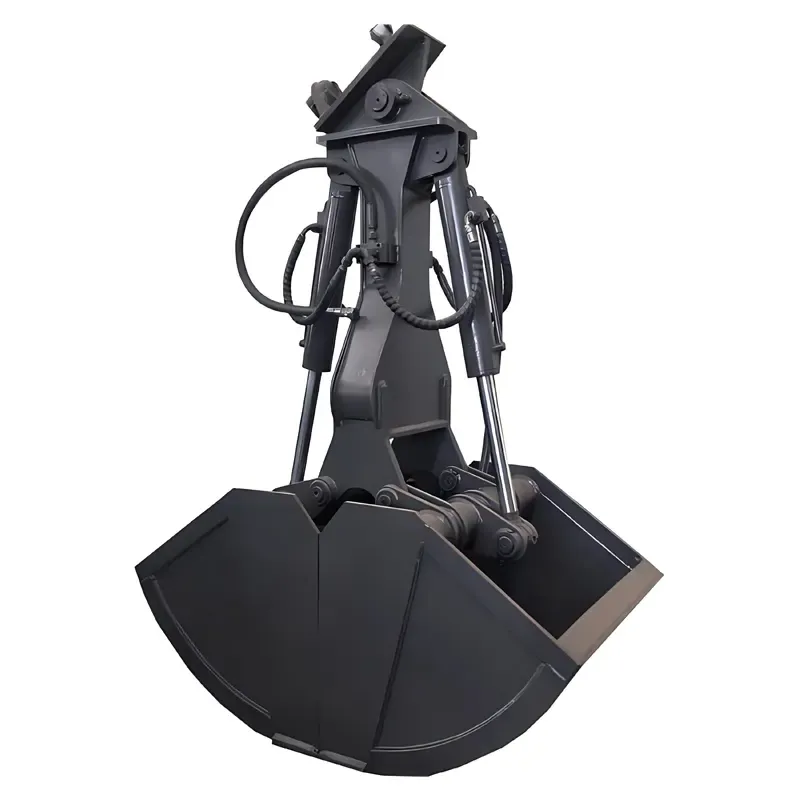
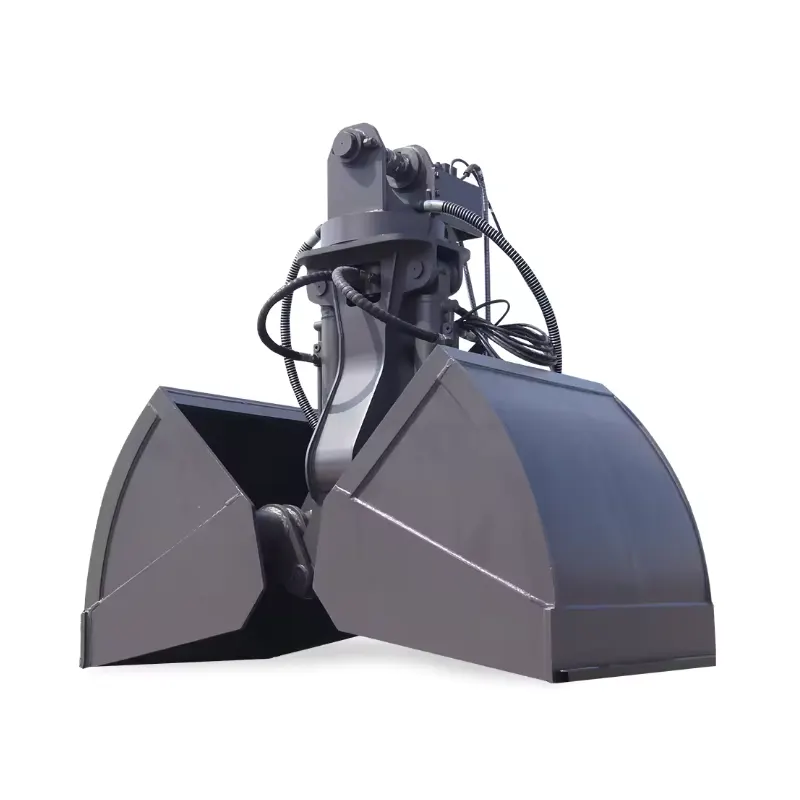
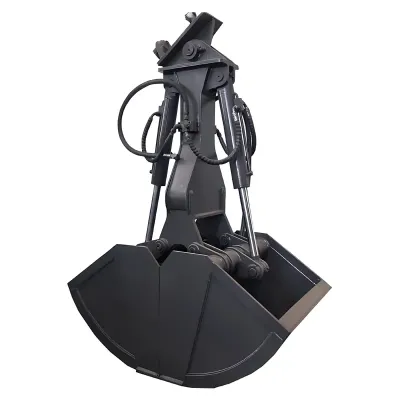
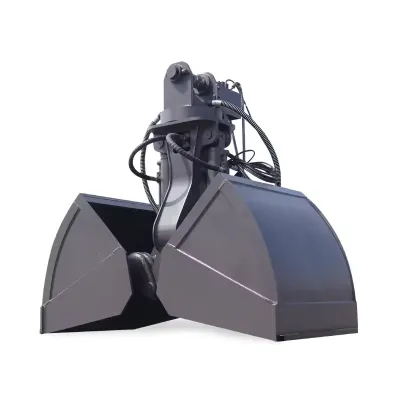
Two hinged shell halves close to form an enclosed bucket for dredging, deep excavation and bulk material handling. Seven models cover capacities from 0.5 to 4.0 cubic meters, with five key dimensions labeled A through E.
Product Name: Clamshell bucket / Clamshell grapple / Shell grab / Excavator clamshell grab
Type: Grapples
After-sales Service: Provided
Warranty: 1 Year
Customization: Available
Shipping Cost: Negotiate with us about shipping cost and estimated delivery time.
Get a quote
Overview
FAQ

Product Overview

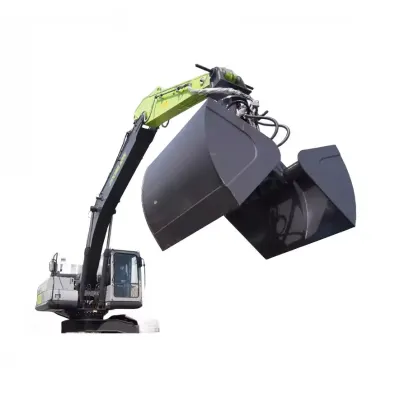
Two hinged shells that close into an enclosed container—This design makes clamshell buckets well suited to dredging, deep excavation, and bulk material handling. Unlike open‑tine grapples that let fines fall through, the clamshell forms an enclosed bucket when closed, holding sand, gravel, sludge, and other loose materials. The hinged action lets the bucket dig from above—shells penetrate the pile as they close, filling without needing to push horizontally.

Part of the TGEC excavator grapple lineup, the clamshell grapple bucket comes in seven sizes—TG-GB05 through TG-GB40—with struck capacities from 0.5 to 4.0 m³. Each model is defined by five dimension profiles (A through E) covering width, depth, shell curvature, overall height, and opening. For grasping irregular objects rather than loose material, compare the demolition grapple.

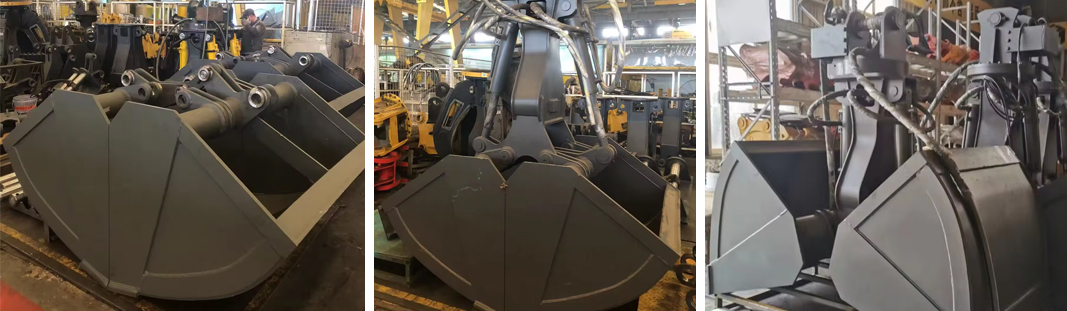
TGEC Clamshell Grapple Bucket – Two Hinged Shell Halves for Dredging and Bulk Material Handling

Dimension Reference: A Through E

Each clamshell model is defined by five dimensions labeled A through E. A = overall shell width. B = shell depth from hinge pivot to cutting edge when closed—determines pile penetration. C = shell profile radius/curvature, affecting closure and retention. D = overall height from top bracket to closed‑shell bottom. E = maximum opening between cutting edges at full open.

These dimensions are interconnected—larger capacity typically increases several at once. When selecting, check all five against your excavator's geometry: boom/stick clearance at full curl, max dump height, and jobsite height limits. A bucket too tall may hit the boom; one too wide may affect lateral stability during swing.

Models & Specifications

Capacity scales from 0.5 to 4.0 m³ across seven models, with corresponding increases in weight and opening width.

ParameterTG-GB05TG-GB10TG-GB15TG-GB20TG-GB25TG-GB30TG-GB40
Bucket Capacity (Struck)0.5 m³ (0.65 yd³)1.0 m³ (1.31 yd³)1.5 m³ (1.96 yd³)2.0 m³ (2.61 yd³)2.5 m³ (3.27 yd³)3.0 m³ (3.92 yd³)4.0 m³ (5.23 yd³)
Attachment Weight878 kg (1936 lb)1180 kg (2601 lb)1450 kg (3197 lb)1750 kg (3858 lb)2050 kg (4519 lb)2400 kg (5291 lb)3100 kg (6834 lb)
Max Opening (E)800 mm (31.5 in)1000 mm (39.4 in)1200 mm (47.2 in)1400 mm (55.1 in)1600 mm (63.0 in)1800 mm (70.9 in)2400 mm (94.5 in)

Table data is for reference only. Actual specifications may vary based on the final configuration. Please contact the TianGe technical team for details.
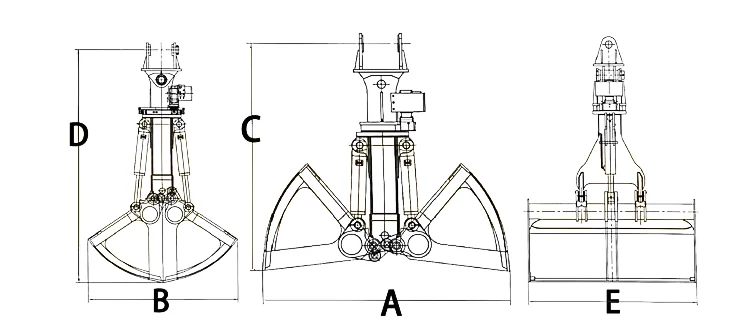
Clamshell grapple bucket dimension reference drawing – profiles A through E

Clamshell Design & Digging Action

A clamshell bucket works differently than a standard excavator bucket. A standard bucket is pushed horizontally into material. A clamshell is lowered from above, and the two shells close around the pile, with cutting edges penetrating downward and inward as they rotate around the hinge pivot. The vertical digging action is well suited to deep shafts, narrow excavations, and dredging pits where conventional horizontal digging is limited. The enclosed shells also retain fines like sand, silt, and sludge during transport.

Shell profile (dimension C) affects both digging and retention. A deeper profile gives more volume and better fine‑material retention but needs more closing force. A shallower profile closes more easily for coarse materials like large gravel but may allow fines to spill. Cutting edge construction varies by model — contact the TGEC team for the specific wear protection options available. Hydraulic clamshells require a bidirectional auxiliary circuit with a relief valve for overload protection.
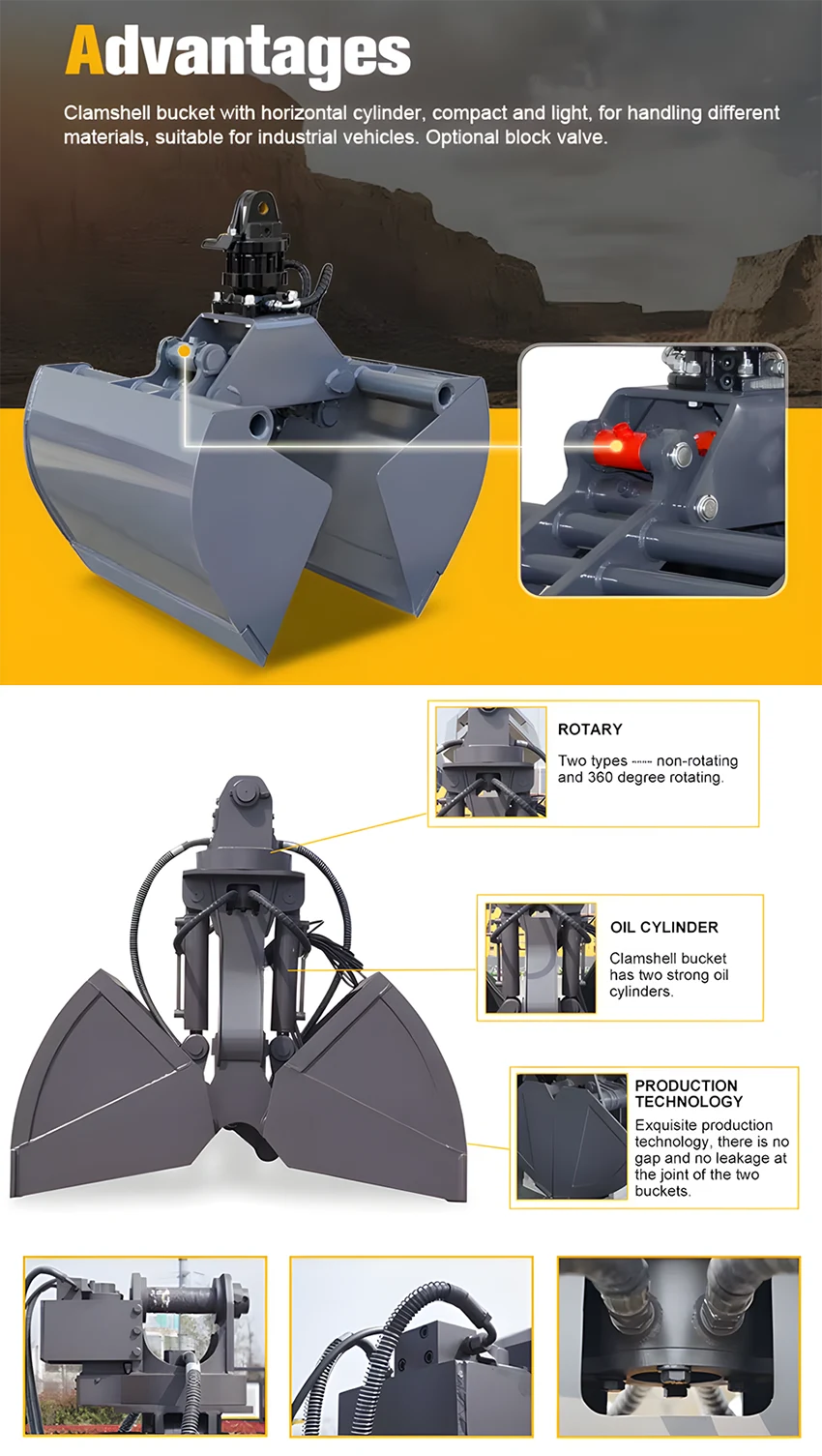
Clamshell bucket design – shell profile and digging action

Applications by Industry

Dredging & Marine Construction

Dredging is where clamshell buckets are most essential. Vertical digging reaches below water to excavate sediment, silt, sand, and mud from riverbeds, harbors, and lakes. Enclosed shells retain dredged material during lifting, preventing washback. The bucket is lowered through the water by crane or long‑reach excavator, closed on bottom material, lifted, and dumped into a barge or spoil area. For marine dredging, confirm the hydraulic and sealing configuration with the TGEC technical team for submerged applications, and specify corrosion protection for saltwater use.

Industrial Bulk Material Handling

In industrial settings, clamshells handle coal, ore, grain, fertilizer, and other bulk materials. The enclosed design retains fine and powdery materials, and vertical digging allows working tall stockpiles from above. Material density is critical—a 2.0 m³ bucket with coal (0.8 t/m³) holds 1.6 tons, while the same bucket with iron ore (2.5 t/m³) holds 5 tons, which may exceed lift capacity.

Deep Excavation & Foundation Work

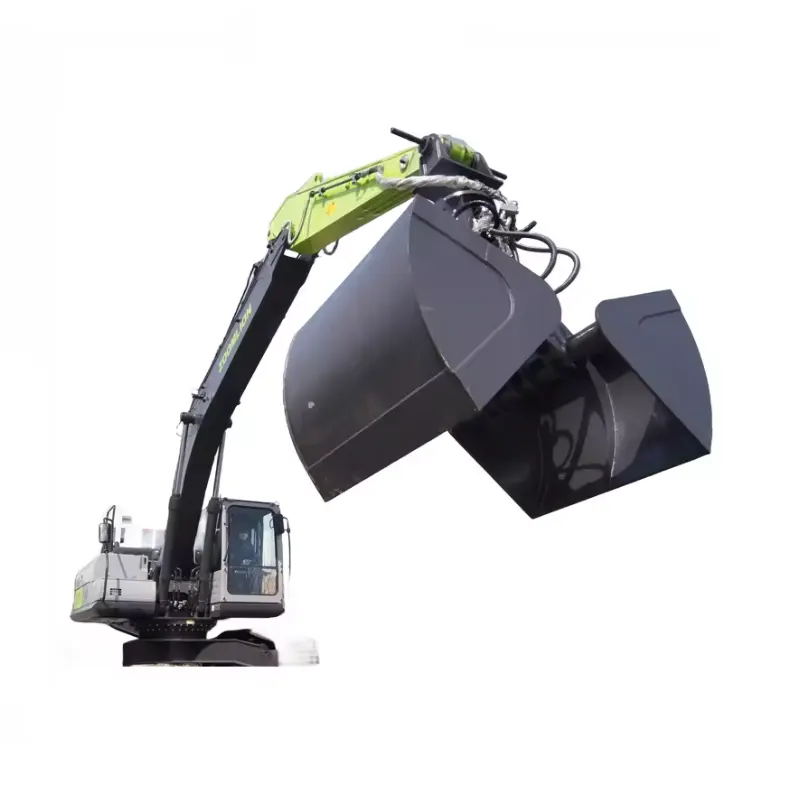
For deep excavation, foundation shafts, and confined‑space digging, the clamshell reaches where standard buckets can't. Vertical action removes material from deep, narrow shafts and trenches where horizontal penetration is impossible. In foundation work, clamshells excavate caissons, pile holes, and slurry wall trenches. Enclosed shells retain wet concrete, slurry, and mixed soil during removal. For deep excavation work, verify that the carrier boom/stick reach is sufficient for the required depth; a long‑reach excavator or crane mount may be needed for deeper applications.
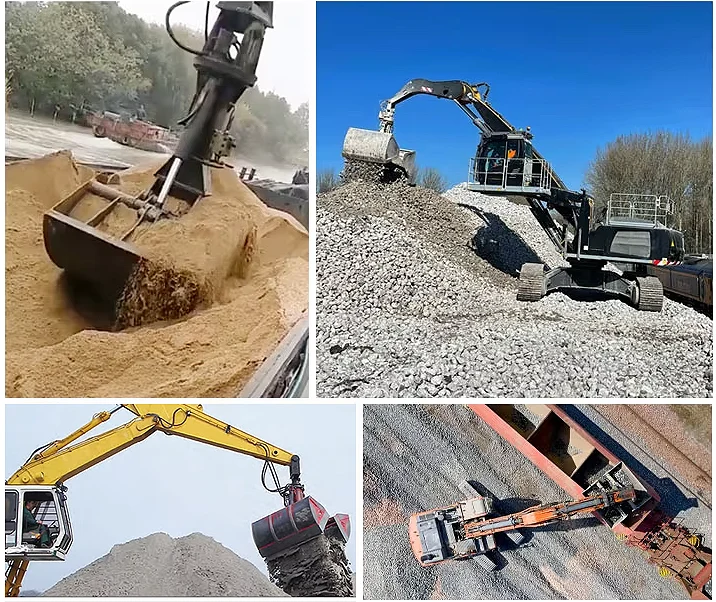

Clamshell bucket applications – dredging, bulk material, and deep excavation

Carrier & Hydraulic Matching

Clamshell selection starts with excavator weight and lift capacity. Models range from TG-GB05 (0.5 m³, 878 kg) to TG-GB40 (4.0 m³, 3100 kg), with carrier compatibility determined by lift capacity, hydraulics, geometry, and mounting requirements. The hydraulic clamshell needs a bidirectional auxiliary circuit with sufficient flow and a relief valve for protection. Verify that bucket weight plus full payload (at material density) stays within lift capacity at working reach. For dredging and deep excavation, confirm boom/stick reach without exceeding stability limits.

Wear & Maintenance

Cutting edges are the primary wear component, especially in abrasive materials. Inspect regularly and replace or repair the cutting edge when wear begins to affect digging performance or shell closure. Grease hinge pivot points daily and check periodically for excessive play. Inspect cylinder rods for scoring and seals for leakage, particularly after dredging. Check shell plates for cracking or deformation at hinge connections and cutting edge welds. For dredging, rinse with fresh water after saltwater use to prevent corrosion, and inspect hydraulics for water intrusion.

Request a Quote — Clamshell Grapple Bucket

Provide your excavator make/model, operating weight, lift capacity at working reach, auxiliary flow/pressure, mounting/coupler type, preferred model (TG-GB05 through TG-GB40), primary application (dredging / bulk material / deep excavation), typical material density, and quantity. Our team will verify capacity and weight compatibility, confirm hydraulic requirements, and provide a quote. Dealers and OEMs welcome for volume supply, custom shell profiles, and private‑label options.
Frequently Asked Questions

How is clamshell bucket capacity measured — struck or heaped?+

Clamshell bucket capacity is typically specified as struck capacity, which is the volume of material the bucket holds when filled level with the cutting edges (no material heaped above the rim). Heaped capacity includes the additional volume of material that can be piled above the rim, and varies depending on the material angle of repose. The TGEC specification table lists struck capacity. For fine materials with a low angle of repose (sand, silt), the actual loaded volume may be close to struck capacity. For coarse materials with a high angle of repose (large gravel, rock), the heaped volume may be significantly higher. When calculating payload, use the material density multiplied by the expected loaded volume (struck or heaped) and verify against the excavator lift capacity.

Can a clamshell bucket dredge below water level?+

Yes, dredging below water level is one of the primary applications for clamshell buckets. The bucket is lowered through the water column, closed on the bottom material, then lifted and dumped. The enclosed shells retain the dredged material during lifting, preventing washback. For submerged operation, confirm the hydraulic and sealing configuration with the TGEC technical team before specifying. For deep dredging exceeding the excavator boom reach, use a long-reach excavator or crane-mounted clamshell. Always verify the bucket weight plus material weight against the carrier lift chart at the dredging depth and reach.

What information is needed for a clamshell bucket quote?+

To provide an accurate quote, provide: excavator make and model, operating weight, lift capacity at working reach, auxiliary hydraulic flow and pressure, mounting or coupler type, preferred model (TG-GB05 through TG-GB40), primary application (dredging / bulk material / deep excavation), typical material density, and quantity. Our team will verify capacity and weight compatibility, confirm hydraulic requirements, and provide a quote with delivery terms. Dealers and OEM inquiries welcome for volume supply, custom shell profiles, and private-label options.

How does material density affect clamshell bucket selection?+

Material density directly determines the payload weight for a given bucket capacity, and is one of the most important factors in bucket selection. A 2.0 m³ bucket carrying coal (approximately 0.8 t/m³) holds about 1.6 tons, while the same bucket carrying iron ore (approximately 2.5 t/m³) holds 5 tons. The combined bucket weight plus payload must be within the excavator lift capacity at working reach. For high-density materials (ore, rock, wet concrete), choose a smaller bucket capacity to keep the payload within lift limits. For low-density materials (coal, grain, wood chips), a larger bucket capacity can be used without exceeding lift capacity. Always calculate the expected payload at your material density before selecting a bucket size, and verify against the excavator lift chart.

Can the shell dimensions or profile be customized?+

Yes, shell profile and dimensions can be configured for the intended material and application where customization is available. The five dimension profiles (A through E) define width, depth, curvature, height, and opening. When specifying a custom configuration, provide your material type, typical density, excavator geometry constraints, and primary application. Contact the TGEC team with your requirements for a profile recommendation and custom configuration pricing.

Can the clamshell bucket be used for deep foundation shaft excavation?+

Yes, deep foundation shaft excavation is a major application for clamshell buckets. The vertical digging action allows material removal from deep, narrow shafts and caissons where horizontal penetration is impossible. The bucket is lowered into the shaft, closed on the bottom material, lifted out, and dumped — repeated until the desired depth is reached. For slurry wall construction and caisson drilling, the clamshell removes soil while maintaining the slurry level. For deep shafts, verify that the carrier boom/stick reach is sufficient for the required depth; a long-reach excavator or crane-mounted clamshell may be needed for deeper applications. Verify the bucket weight plus material weight against the carrier lift chart at the shaft depth and boom reach. Also ensure the bucket width (dimension A) is smaller than the shaft diameter to allow clearance during lowering and lifting.

What carrier factors should be verified before ordering a clamshell bucket?+

Before ordering, verify: excavator operating weight and lift capacity at the intended working reach, auxiliary hydraulic circuit configuration (double-acting with sufficient flow and pressure), mounting or coupler interface, boom/stick clearance at full curl and max dump height, and jobsite height or width limits. The bucket weight plus full payload at your material density must stay within the excavator lift chart. For dredging, confirm boom/stick reach without exceeding stability limits. Contact the TGEC team with your excavator specs for model-specific compatibility confirmation.

What clamshell bucket size fits a 20-ton excavator?+

For a 20-ton excavator, TG-GB15 (1.5 m³, 1450 kg) and TG-GB20 (2.0 m³, 1750 kg) may be candidates, depending on material density, lift capacity, hydraulic configuration, and working reach. TG-GB15 is recommended for high-density materials (rock, ore, wet soil) where the payload plus bucket weight must stay within lift limits. TG-GB20 can be used for low-density materials (coal, grain, wood chips) where the larger volume does not exceed lift capacity. Before confirming, calculate the expected payload at your material density: payload = bucket capacity × material density. Then add the bucket weight and verify the total is within your 20-ton excavator lift capacity at working reach. Also verify that the auxiliary hydraulic circuit provides sufficient flow for the cylinder operation. If your machine has limited lift capacity or weak auxiliary hydraulics, the TG-GB10 (1.0 m³, 1180 kg) may be a safer match.

Can the cutting edges be replaced or hardfaced?+

Yes, the cutting edges are the primary wear component and can be replaced or hardfaced. Some clamshell buckets use bolt-on cutting edges that can be unbolted and replaced when worn. Others use welded-on edges that require cutting out the worn edge and welding in a new one. Hardfacing is a common method to extend edge life — apply a layer of wear-resistant welding alloy to the cutting edge surface when the original edge shows signs of wear. For abrasive materials like sand, gravel and rock, inspect the cutting edges weekly and replace or repair when wear begins to affect digging performance or shell closure. Worn cutting edges reduce digging penetration and increase the force required to close the shells, so timely maintenance is important for efficient operation. Contact our team for replacement edge options and hardfacing recommendations for your specific model and application.

What hydraulic circuit is required for a clamshell bucket?+

A hydraulic clamshell bucket requires a bidirectional (double-acting) auxiliary hydraulic circuit to control both shell opening and closing. The circuit must deliver sufficient flow and pressure for the specific bucket model — verify the exact requirements with the TGEC technical team before ordering. A relief valve should be installed in the circuit to protect the cylinders and hydraulic system from overload when the shells encounter an obstruction they cannot move. Verify that your excavator auxiliary circuit is configured for double-acting operation and can meet the required flow and pressure simultaneously. If your excavator does not have a double-acting auxiliary circuit, a mechanical clamshell bucket (operated through the bucket curl linkage) may be an alternative for some applications.
Please make sure to include your phone number with the country code (e.g., 86 for China, 1 for USA).