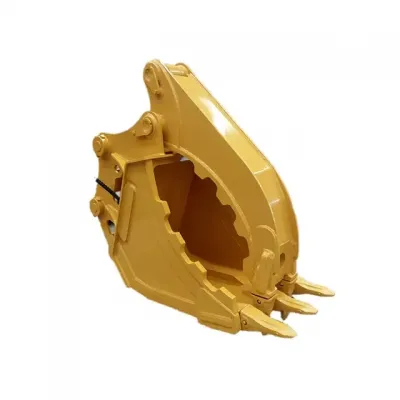
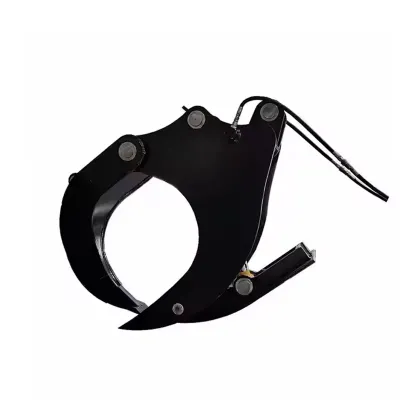
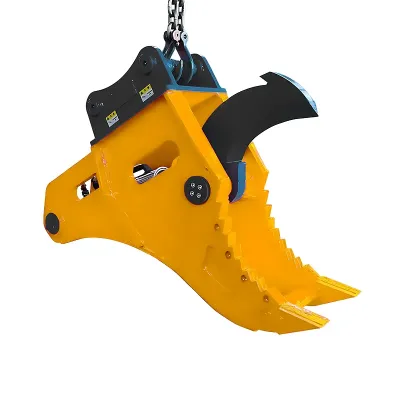
A hydraulic grapple that doesn't match your excavator's hydraulic system is an expensive doorstop. Too little flow and the jaws creep open and closed, stretching cycle times and killing productivity. Too much pressure and the relief valve vents constantly, cooking the oil and wasting power. Miss the case drain on a rotary model and the rotator seal blows within hours. Yet plenty of buyers spec a grapple by excavator weight class alone, never bothering to check their machine's actual hydraulic parameters. The result? A grapple that underperforms, fails early, or needs costly modifications to work at all. Taking a few minutes to verify hydraulic compatibility before you buy saves weeks of downtime and a pile of repair bills.
Why Hydraulic Flow Matters
Hydraulic flow is the volume of oil delivered to the grapple cylinders per unit of time, measured in liters per minute (L/min) or gallons per minute (GPM). Flow determines how fast the cylinders extend and retract, which directly controls jaw opening and closing speed. A grapple designed for 100 L/min running on a circuit that delivers only 50 L/min will open and close at half its intended speed. The operator waits for the jaws to cycle on every grab, and over a full shift, that waiting time adds up to a lot fewer loads moved. Flip it around: a grapple designed for 50 L/min on a 150 L/min circuit can see cylinder speeds that exceed design limits, hammering the linkage, wearing out seals prematurely, and risking structural damage.
Flow also affects the grapple's ability to hold clamping force under load. When the jaws close on material and the operator holds the control lever, cylinder pressure builds until the relief valve opens. If flow is too low, it takes longer to reach full pressure, and the operator might let off the lever before the grapple gets to maximum clamping force. That means a weaker grip and a higher chance of dropping the load during the swing. Enough flow lets the cylinder hit full pressure quickly, so the operator can achieve and maintain maximum clamping force with just a brief lever hold.
Flow Rate: Minimum, Optimum and Maximum
Every hydraulic grapple has a specified flow range with three key numbers: minimum, optimum, and maximum. The minimum flow is the lowest rate at which the grapple will work acceptably—below that, jaw speed is too slow for productive work and the cylinder may not build enough pressure. The optimum flow is where the grapple performs best, balancing jaw speed, clamping force, and component life. The maximum flow is the highest the grapple can handle without exceeding cylinder speed limits, causing shock loading, or building excess heat. Running above the maximum can make the cylinders extend and retract too fast, creating impact forces when the jaws hit full open or full closed.
When matching a grapple to your excavator, your auxiliary circuit flow should fall within the grapple's specified range—ideally at or near the optimum. If your excavator flow is below the minimum, you've got three choices: step down to a smaller grapple model with a lower flow requirement, accept slower jaw speed, or install a flow amplifier (which adds cost and complexity). If your flow exceeds the maximum, you can put in a flow divider or restrictor to cut the flow to the grapple, but that generates heat and wastes power. Better to pick a grapple model designed for the higher flow. Always check the actual auxiliary flow of your specific excavator—two machines in the same weight class can have very different auxiliary flow depending on the manufacturer, model year, and optional hydraulic packages.
Pressure and Relief Valve Settings
Hydraulic pressure, measured in bar or PSI, determines how much force the cylinders can put out. Cylinder force equals piston area times system pressure. A grapple with a 100 mm bore cylinder at 250 bar generates roughly 19,600 N of force; at 300 bar, that same cylinder puts out about 23,600 N. More pressure means more clamping force, but it also puts more stress on cylinder seals, hoses, fittings, and structural parts. Every hydraulic grapple has a maximum operating pressure and a relief valve setting that protects the system from overpressure. The relief valve opens when pressure exceeds the set point, sending oil back to the tank and keeping the cylinders and hydraulic system from being damaged.
The grapple's relief valve setting should be matched to your excavator auxiliary circuit's maximum pressure. If the excavator circuit pressure is higher than the grapple relief setting, the relief valve will open frequently during normal operation, making heat and wasting power. It also means the grapple never hits the full clamping force it could produce at the higher circuit pressure. If the excavator circuit pressure is lower than the grapple relief setting, the grapple runs at circuit pressure, which may be below design pressure and result in less clamping force. The ideal match is when the grapple relief valve is set just above the excavator circuit's maximum working pressure—this lets the grapple run at full circuit pressure without the relief valve opening in normal use, while still protecting against pressure spikes. When you spec a grapple, give the manufacturer your excavator auxiliary circuit maximum pressure so they can set the relief valve right.
Case Drain for Rotary Models
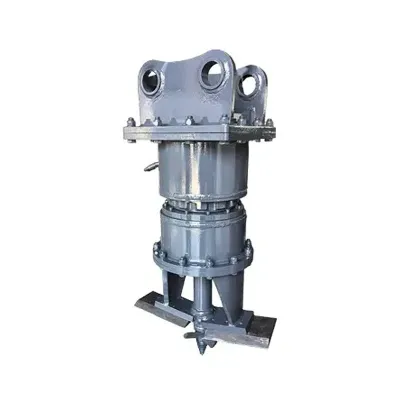
Rotary grapples have a hydraulic rotator that uses a hydraulic motor for 360-degree rotation. Unlike hydraulic cylinders, which have two ports (extend and retract), a hydraulic motor has three: pressure inlet, return outlet, and case drain. The case drain is a small line that lets internal leakage oil from the motor drain back to the hydraulic tank. Without a case drain, that leakage oil builds up pressure inside the motor housing and can blow out the motor shaft seal, causing external oil leaks and letting dirt into the motor. A blown seal not only loses oil and causes contamination, but it also lets abrasive grit into the motor, accelerating wear and potentially leading to catastrophic motor failure.
Before you buy a rotary grapple, make sure your excavator auxiliary circuit includes a case drain line. A lot of standard auxiliary circuits have only two lines (pressure and return) for running cylinders, and no case drain. If your machine doesn't have one, you'll need to add it—usually by running a small hose from the rotator case drain port back to the hydraulic tank, with a connection at the tank or a dedicated case drain manifold. Adding a case drain is less expensive than adding a full auxiliary circuit, but it still takes hydraulic know-how and proper installation to make sure the line is routed right, doesn't chafe on moving parts, and connects to a suitable drain point on the tank. If you're not sure whether your excavator has a case drain, check the machine's hydraulic schematic or call your dealer. Fixed (non-rotating) hydraulic grapples don't need a case drain because they use cylinders only, with no hydraulic motor.
Auxiliary Circuit Types: Single Acting vs Double Acting
Excavator auxiliary circuits come in two main types: single acting and double acting. A single-acting circuit delivers pressurized oil in one direction only, with return flow going straight to tank. This works for attachments that need force in one direction, like breakers and compactors. A double-acting circuit delivers pressurized oil in both directions, so the attachment can be powered both ways—for a grapple, that means cylinders can both extend (close the jaws) and retract (open the jaws) under power. Most hydraulic grapples need a double-acting auxiliary circuit because the jaws have to open and close hydraulically. Some mechanical grapples with hydraulic-assisted opening might work with a single-acting circuit, but that's less common.
Make sure your excavator auxiliary circuit is double-acting before you spec a hydraulic grapple. If it's single-acting, you might be able to convert it to double-acting by adding a control valve and return line, but that takes hydraulic modifications. Some excavators come with a dedicated double-acting auxiliary circuit as standard; others offer it as an option. The circuit might also be set up as "continuous flow" (for attachments that run all the time, like augers) or "proportional" (for attachments that need variable speed control, like grapples). A proportional auxiliary circuit with a foot pedal or joystick trigger lets the operator fine-tune jaw speed and force, which is ideal for grapple work. A continuous flow circuit may not give you the same level of control.
Compatibility Verification Checklist
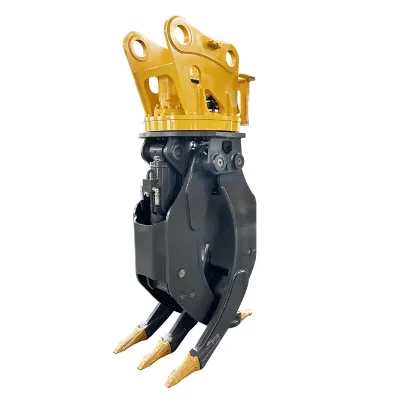
Before you buy a hydraulic grapple, gather this info about your excavator and run it past the grapple manufacturer: auxiliary circuit flow rate (L/min or GPM), auxiliary circuit maximum working pressure (bar or PSI), whether the circuit is single- or double-acting, whether a case drain line is available (required for rotary models), the control type (proportional, continuous flow, or on/off), and the mounting interface (pin-on dimensions or quick-coupler type). Give this to the manufacturer when you request a quote so they can verify compatibility and set the relief valve correctly. The demolition grapple and other hydraulic models from TGEC are available with relief valve settings matched to your specific excavator. For a broader selection framework, see our excavator grapple selection guide, and use our selection checklist to verify all specifications before purchase.