Product Overview
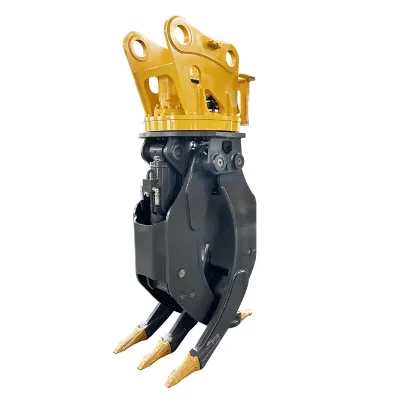
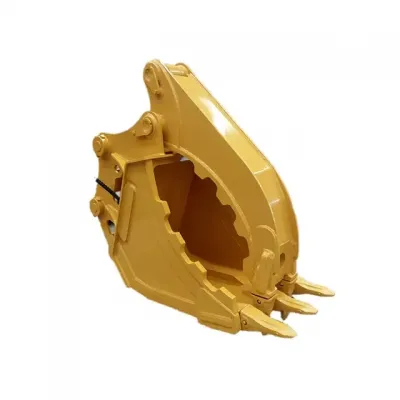
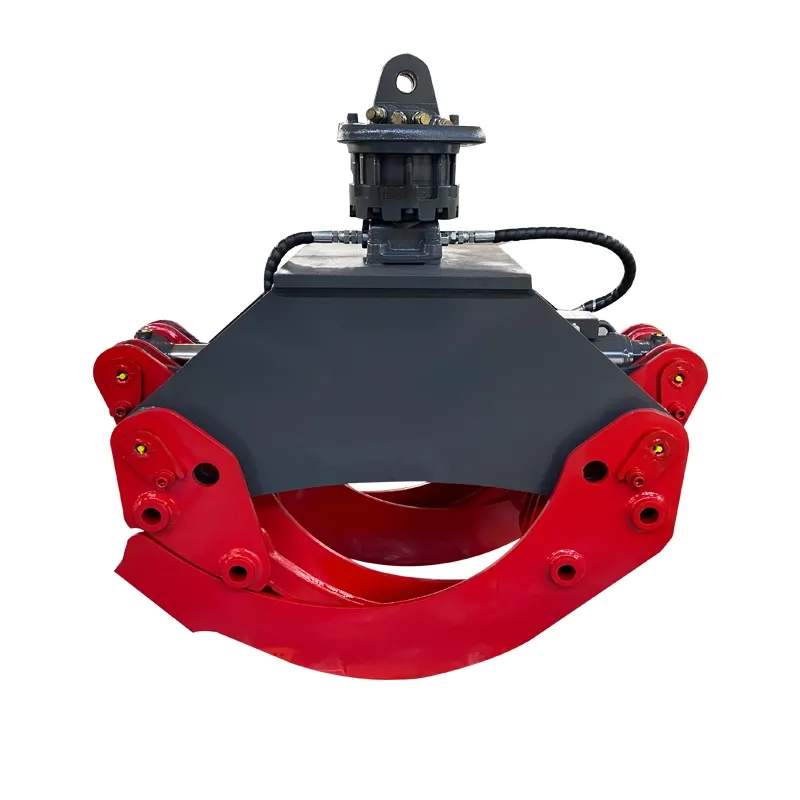
A rotary grapple adds hydraulic rotation and requires auxiliary hydraulics, but it allows the operator to orient logs without repositioning the excavator. This is useful for truck loading, timber stacking and sawmill operations where log orientation affects placement. A fixed grapple may require carrier repositioning when a log needs to be reoriented, while a rotary grapple allows the operator to change log orientation independently of the excavator boom.
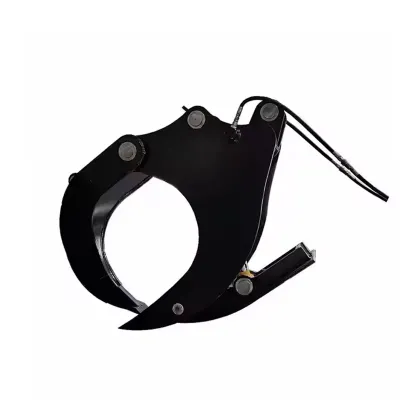
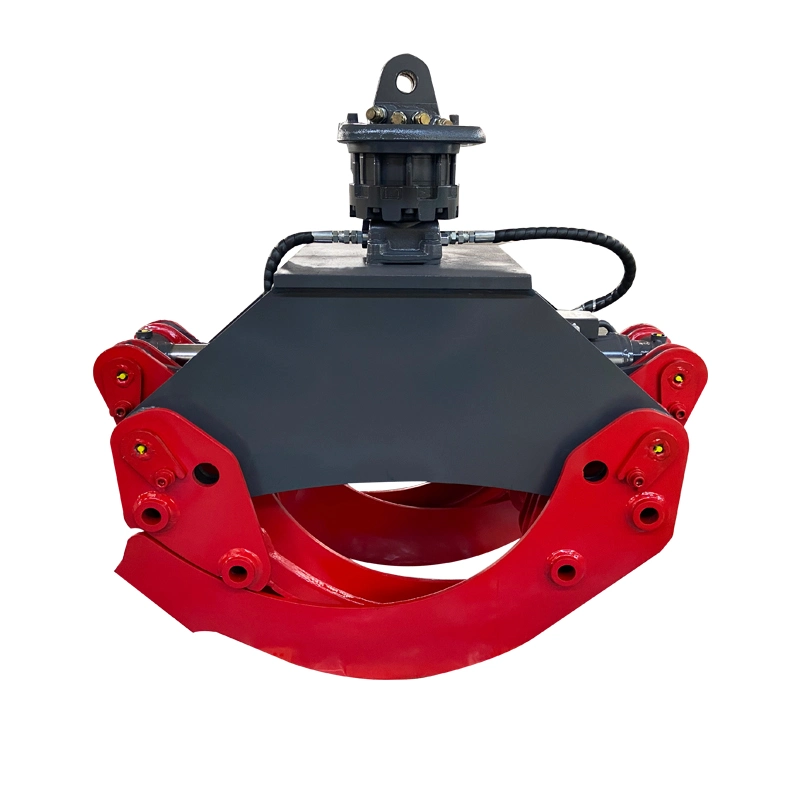
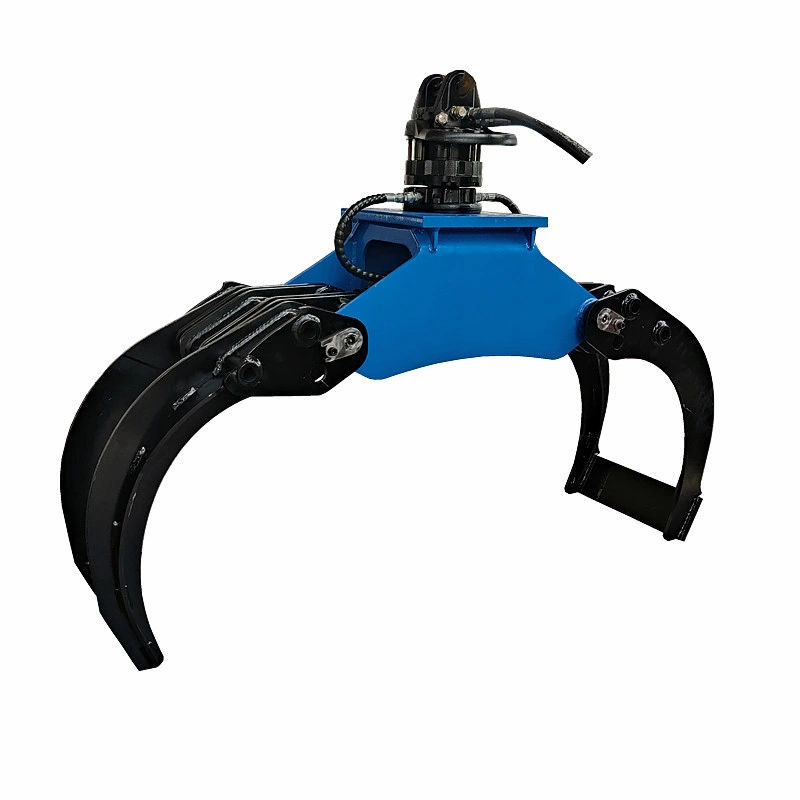
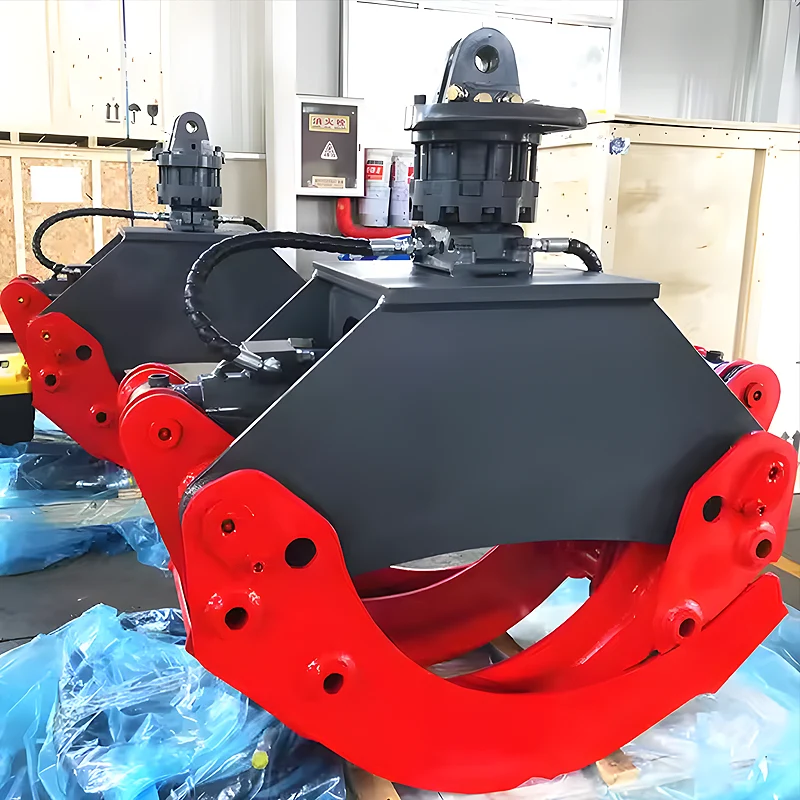
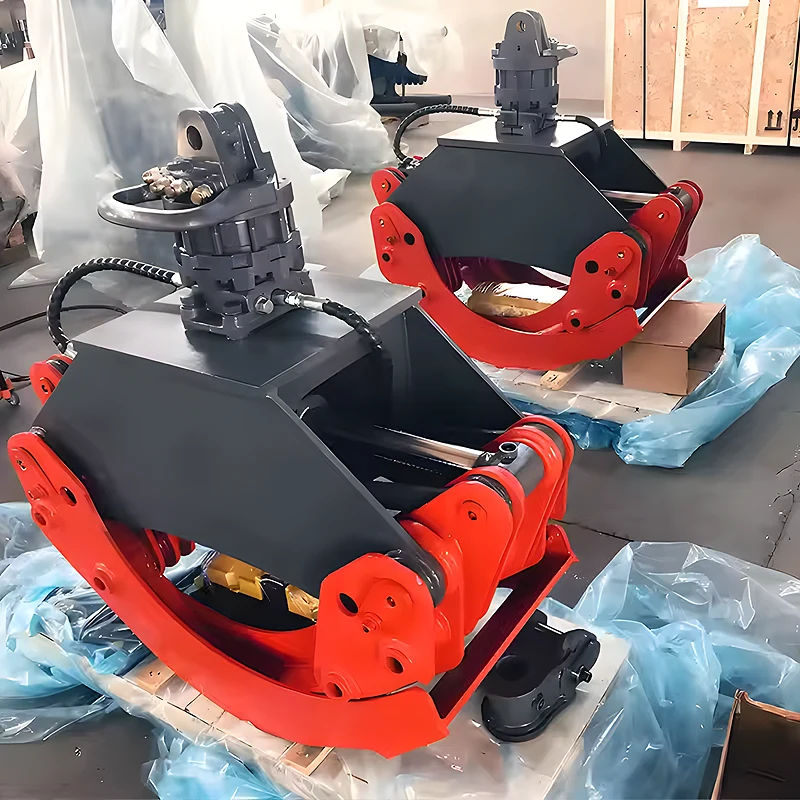
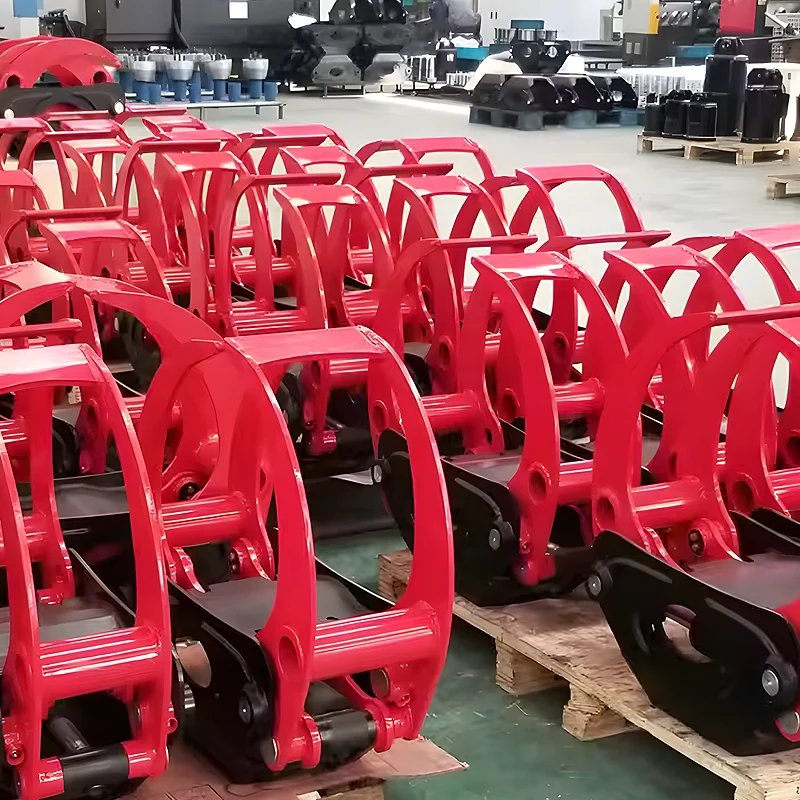
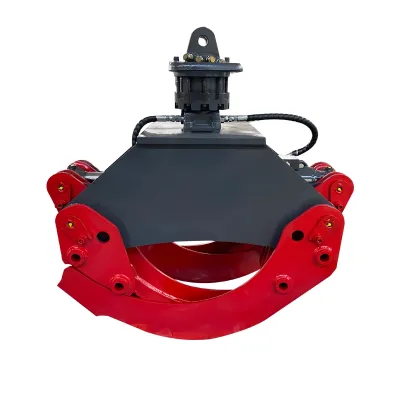
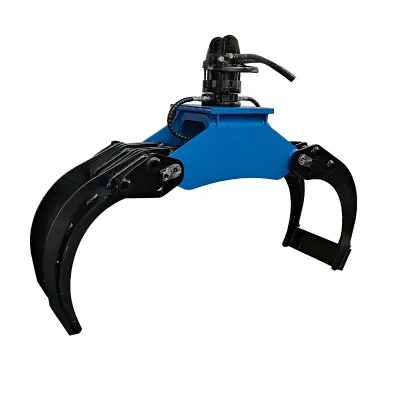
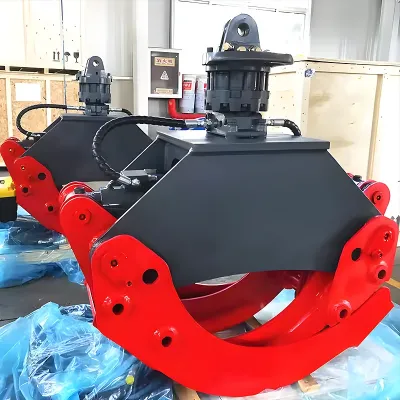
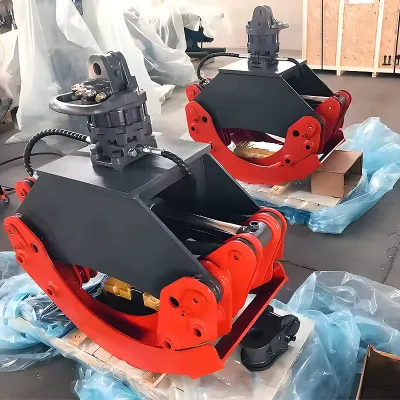
The TGEC rotary log grapple pairs an integrated hydraulic rotator with curved tines that cradle round logs securely. Offered in six rotator frame sizes—TG-LG30F through TG-LG160F—it covers small to large excavators. For applications requiring a dual-cylinder configuration, see the dual-cylinder rotary grapple; if rotation isn't needed, the mechanical grapple is a solid alternative.

Understanding the Rotator Specification
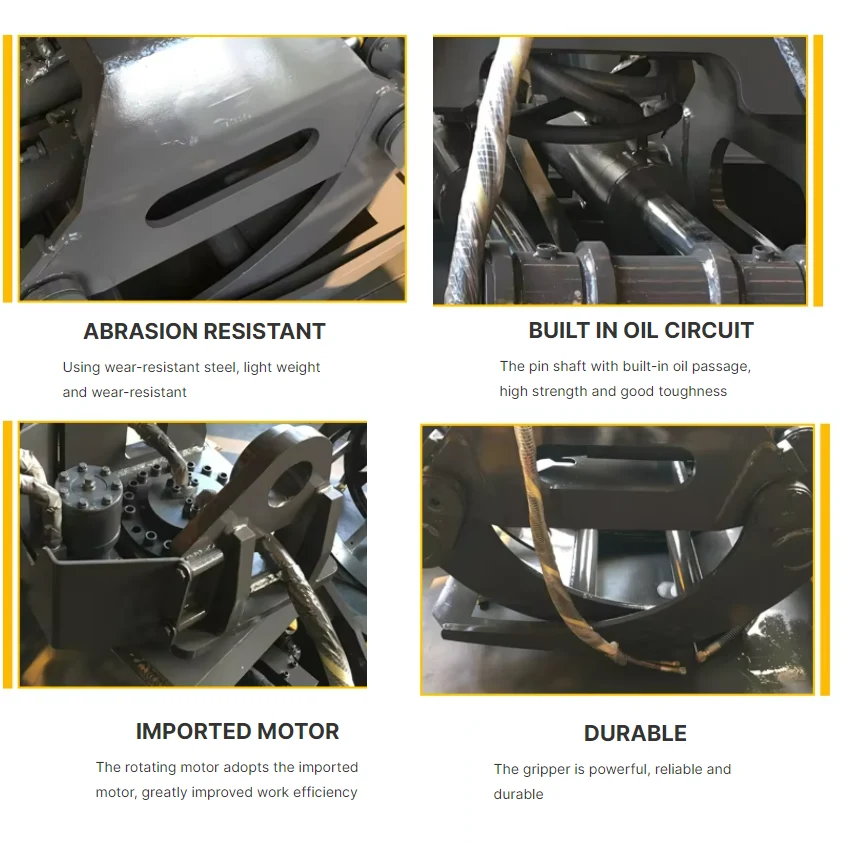
The spec table focuses on rotator parameters rather than complete jaw dimensions because the rotary grapple is a modular system—rotator unit paired with a jaw assembly chosen for your application. The rotator is a key factor in torque, axial load capacity, hydraulic requirements, and attachment weight. Jaw configuration (tine count, opening, profile) is matched separately. Displacement determines speed vs. torque—higher displacement = more torque, slower rotation at a given flow. Static and dynamic axial load ratings indicate the loads the rotator is designed to accommodate under the stated conditions; they should not be treated as the excavator's lifting capacity. Rotation and working pressures set hydraulic requirements. Contact TianGe for a full configuration recommendation.
Models & Specifications
All six rotator models share 250 bar rotation pressure and 300 bar working pressure. Displacement, axial load, and weight scale across the range.
| Parameter | TG-LG30F | TG-LG50F | TG-LG60F | TG-LG100F | TG-LG120F | TG-LG160F |
|---|---|---|---|---|---|---|
| Rotation Angle | Unlimited | Unlimited | Unlimited | Unlimited | Unlimited | Unlimited |
| Max Rotation Pressure | 250 bar (3625 psi) | 250 bar (3625 psi) | 250 bar (3625 psi) | 250 bar (3625 psi) | 250 bar (3625 psi) | 250 bar (3625 psi) |
| Max Working Pressure (Closed) | 300 bar (4350 psi) | 300 bar (4350 psi) | 300 bar (4350 psi) | 300 bar (4350 psi) | 300 bar (4350 psi) | 300 bar (4350 psi) |
| Displacement | 330 cm³ (20.1 in³) | 465 cm³ (28.4 in³) | 670 cm³ (40.9 in³) | 871 cm³ (53.1 in³) | 949 cm³ (57.9 in³) | 1000 cm³ (61.0 in³) |
| Connections | G3/8" | G3/8" | G1/2" | G1/2" | G1/2" | G1/2" |
| Max Axial Load (Static) | 30 kN (6744 lbf) | 55 kN (12365 lbf) | 60 kN (13488 lbf) | 100 kN (22481 lbf) | 120 kN (26977 lbf) | 160 kN (35970 lbf) |
| Max Axial Load (Dynamic) | 15 kN (3372 lbf) | 25 kN (5620 lbf) | 30 kN (6744 lbf) | 50 kN (11240 lbf) | 60 kN (13488 lbf) | 60 kN (13488 lbf) |
| Attachment Weight | 23 kg (51 lb) | 35 kg (77 lb) | 52 kg (115 lb) | 64 kg (141 lb) | 76 kg (168 lb) | 82 kg (181 lb) |
Table data is for reference only. Actual specifications may vary based on final configuration. Axial load ratings are rotator specifications and do not replace the excavator manufacturer's rated lifting capacity. Contact the TianGe technical team for details.
Where Rotary Log Grapples Perform
Timber Yards & Sawmill Infeed
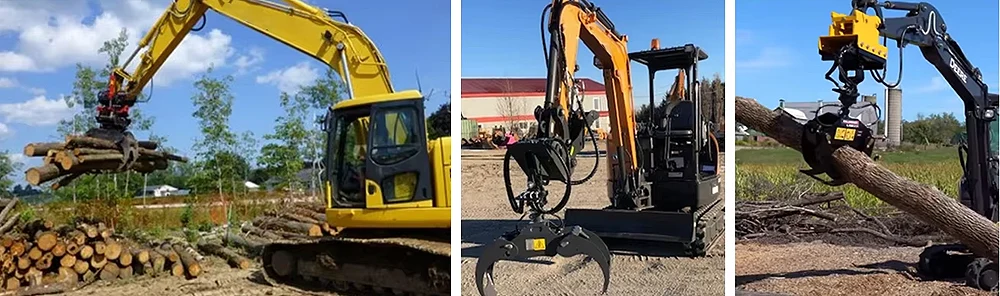
In timber yards and sawmills, the rotary grapple can orient logs for conveyor or infeed placement without requiring the excavator to reposition for every adjustment. Curved tines support round logs during handling, while hydraulic rotation allows the operator to change log orientation during placement. For repetitive timber handling, reduced carrier repositioning can help improve workflow efficiency.
Truck Loading & Log Transport
For truck loading, hydraulic rotation allows logs to be oriented parallel to the truck bed without repositioning the excavator for every adjustment. The operator can rotate a suspended log before placement and make orientation changes during handling. This can reduce carrier repositioning and simplify repetitive loading work.
Tree Service & Land Clearing
For tree service and land clearing, the rotary grapple can handle logs, branches and brush where the selected jaw configuration is suitable. Rotation helps orient material for stacking, loading or transfer in areas where frequent carrier repositioning is undesirable.
Hydraulic Requirements
The rotary log grapple uses separate hydraulic functions for jaw open/close and rotator rotation. The grapple cylinder is rated to 300 bar maximum working pressure, while the rotator is rated to 250 bar maximum rotation pressure. Displacement ranges from 330 to 1000 cm³, and required flow depends on the selected rotator and desired rotation speed. Connections are G3/8" for TG-LG30F and TG-LG50F and G1/2" for the four larger models. Verify the hydraulic circuit and case-drain requirements for the selected rotator configuration with the TianGe technical team before ordering.
Rotator Maintenance
The rotator requires regular inspection and lubrication according to the manufacturer's service recommendations. Check the hydraulic motor and connections for leaks, and inspect the case-drain circuit where applicable. Check rotator gear-reduction oil according to the recommended service procedure. Inspect cylinder rods, jaw hinge pins and mounting hardware regularly for wear, damage or looseness.
Request a Quote — Rotary Log Grapple
Provide your excavator make/model, operating weight, auxiliary circuit config (dual circuit with case drain), mounting/coupler type, preferred rotator model (TG-LG30F through TG-LG160F), typical log diameter, primary application, and quantity. Our team will verify compatibility, recommend the right jaw configuration, confirm hydraulic requirements, and provide a quote. Dealers and OEMs welcome for volume supply, custom jaws, and private-label options.