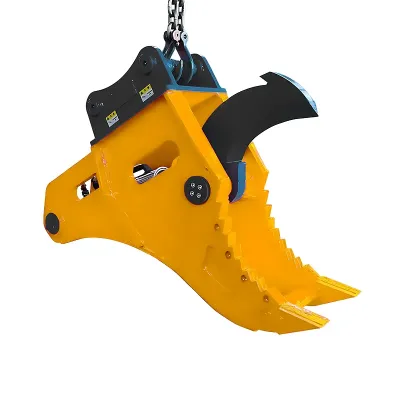
At its core, an excavator grapple does one simple thing: grab something and move it somewhere else. But the machinery behind that simple action involves a whole chain of force transmission, geometric leverage, and hydraulic control that determines how securely the attachment holds material, how quickly the jaws cycle, and how much the grapple can handle. Whether it's hydraulic or mechanical, rotary or fixed, the basic principles are the same—a force gets applied to a linkage, that motion turns into jaw movement, and the geometry of the jaws determines how that force gets spread across whatever you're picking up. Getting a feel for these principles helps operators get the most out of the attachment and helps buyers pick the right setup for their material.
The Basic Grasping Mechanism
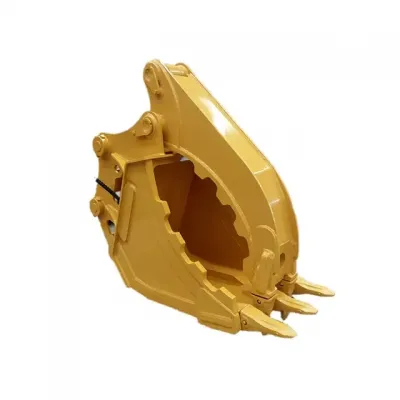
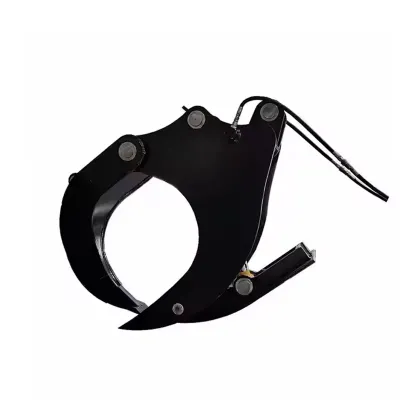
In its simplest form, an excavator grapple is just a pair of jaws hinged at a common pivot, with some mechanism that drives them open and closed around the load. The jaws swing around the hinge point—when the drive mechanism pulls the upper ends of the jaws together, the lower ends (the tines or plates) close in on the material. Push the upper ends apart, and the lower ends open up to release. That's a class-one lever system: the hinge is the fulcrum, the drive mechanism applies force at one end of the lever, and the material feels the resulting force at the other end. The mechanical advantage of that lever—the ratio of the distance from the fulcrum to the drive point versus the distance from the fulcrum to the jaw tip—determines how much the driving force gets multiplied at the business end.
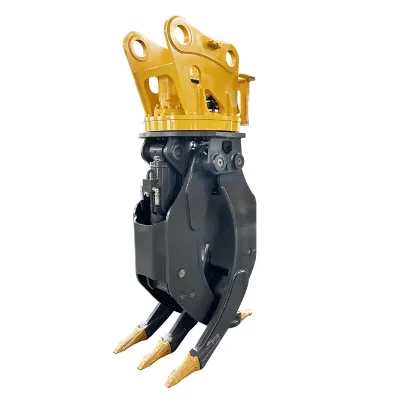
Jaw geometry also shapes how that grasping force gets applied. A straight inner surface puts force on discrete contact points, which works fine for flat or angular stuff like concrete chunks and structural steel. Curved tines wrap around round material like logs, creating a cradle that holds the load geometrically instead of just relying on friction. Multiple independent tines conform to irregular shapes like bundled rebar and mixed scrap, because each tine can move on its own to find a solid contact point. Jaw design is the single biggest factor in what kind of material a grapple handles best—more important than the force rating or the hydraulic system.
Hydraulic Grapple: Cylinders and Linkage
In a hydraulic grapple, the driving force comes from one or more hydraulic cylinders mounted to the frame. A cylinder is basically a piston inside a barrel—pressurized oil on one side pushes the rod out, oil on the other side pulls it back. The rod connects to the jaw linkage at a pivot point; when the rod extends, it pushes the linkage, which swings the jaws closed; when it retracts, it pulls the linkage, swinging the jaws open. The cylinder gets its oil from the excavator's auxiliary circuit, delivered through hoses connected to the cylinder ports. The operator controls it with an auxiliary lever or foot pedal in the cab—push one way to close, the other way to open.
Hydraulic grapples can use one cylinder or two. A single-cylinder design uses one central cylinder connected to both jaws through a synchronized linkage—the cylinder extends or retracts, and the linkage makes sure both jaws move together. Single-cylinder setups are simpler, lighter, and cheaper, but the sync linkage adds mechanical complexity and wear points. A dual-cylinder grapple uses two cylinders, one per jaw, which operate independently or in parallel. Dual-cylinder designs give you more direct force transfer (each cylinder drives its own jaw without a sync linkage), higher total clamping force, and better handling of uneven loads because each jaw can apply force independently. The single-cylinder rotary scrap grapple uses the simpler single-cylinder design for light material sorting, while the dual-cylinder log grapple delivers higher force for heavy timber.
Mechanical Grapple: Bucket Curl Translation
A mechanical grapple has no hydraulic cylinders at all. Instead, it ties into the excavator's existing bucket curl linkage—the same setup that normally opens and closes the bucket. When the operator curls the bucket using the standard bucket control, the bucket curl cylinder extends or retracts, driving the bucket linkage. The grapple mounts to that linkage at the same point where the bucket would normally attach, so the curl motion gets translated directly into jaw motion. The grapple's internal linkage then converts that curl motion into jaw opening and closing through the same class-one lever principle described earlier—the bucket linkage pulls or pushes the upper ends of the jaws, and the lower ends swing around the hinge pivot to close or open.
The big upside here is that you don't need any extra hydraulic circuits—the grapple runs off the existing bucket curl system that every excavator already has. The operator uses the same bucket lever they've always used, with nothing new to learn. The downside is that clamping force is limited by the bucket curl cylinder, which was designed for digging and curling, not for squeezing material. The grapple linkage multiplies that curl force through a lever ratio, but mechanical losses at the pivot points cut into the effective force. There's also no independent speed control—jaw speed is tied to bucket curl speed, which isn't as precise as a dedicated auxiliary circuit. For general rock, timber, and brush handling, those limitations are acceptable, and the simplicity and low cost of the mechanical design make it the go-to choice for a lot of operators.
Rotary System: Adding a Third Axis of Motion
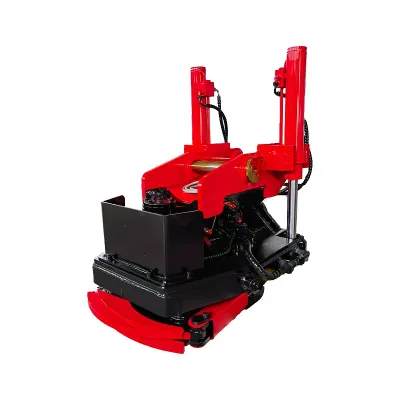
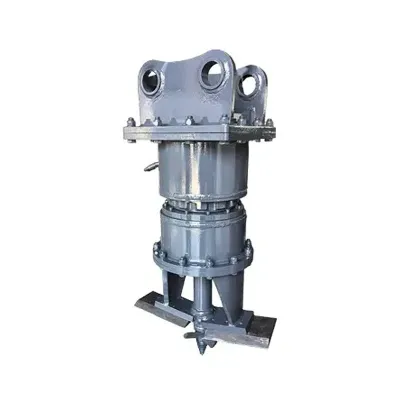
A rotary grapple adds a hydraulic rotator between the mounting bracket and the grapple body, giving you a third axis of motion—360-degree rotation around the vertical axis. The rotator uses a hydraulic motor driving a gear reduction, which turns the grapple body relative to the bracket. The motor runs off a separate hydraulic circuit from the grapple cylinders—the operator controls rotation with a separate lever or a proportional joystick. The rotator lets you orient the load independently of the excavator boom. Instead of repositioning the whole machine to line up with a truck bed or sorting bin, you just spin the grapple. That cuts cycle time, reduces undercarriage wear from constant repositioning, and makes precise placement in tight spaces a lot easier.
The rotator also adds complexity and upkeep. The hydraulic motor needs a case drain line to handle internal leakage—without it, pressure builds up inside the motor housing and can blow out the shaft seal. The gear reduction has bearings and gears that need periodic lubrication and inspection. The rotator adds weight to the attachment (typically 50 to 200 kg depending on size), which cuts into your effective payload. And it's one more component that can fail—a seized bearing or damaged gear can put the grapple out of commission until it's fixed. For high-volume work where precise orientation is essential, the productivity boost from rotation makes the extra cost, weight, and maintenance worthwhile. For general pick-and-drop work where orientation doesn't matter, a fixed grapple gives you adequate performance at a lower cost.
Force Multiplication and Jaw Geometry
The clamping force at the jaw tips comes from three things: the driving force (cylinder force for hydraulic grapples, bucket curl force for mechanical ones), the mechanical advantage of the jaw lever system, and any intermediate linkage advantage. The jaw lever's mechanical advantage is the ratio of two distances: from the hinge pivot to where the driving force is applied (the effort arm), and from the hinge pivot to the jaw tip (the load arm). If the effort arm is shorter than the load arm, force goes down—the jaws move faster but with less squeeze. If the effort arm is longer, force goes up—the jaws move slower but with more squeeze. Grapple designers balance these factors to get the right combination of speed and force for the target job.
Jaw geometry also affects how that clamping force gets distributed. A wide contact surface spreads force over a large area, reducing pressure at any single point—good for fragile material that could be damaged by concentrated force. Narrow tines or serrated edges concentrate force at specific points, improving bite into slippery or dense material—good for scrap and demolition where secure grip matters more than protecting the material. The jaw opening angle also affects force—the mechanical advantage changes as the jaws open and close because the linkage geometry shifts. Maximum clamping force usually happens at a mid-range opening angle, with force dropping off at both fully open and fully closed positions. Operators should keep that in mind when handling material at the extremes of the jaw range.
The Control Loop: From Operator to Jaw
Every grapple operation follows a control loop that starts with the operator and ends with the jaw position. The operator looks at the material and the grapple, decides whether to open or close, and moves the lever. On a hydraulic grapple, that lever sends a signal to a control valve, which directs pressurized oil to the right cylinder port. The oil flows through hoses to the cylinder, the piston moves, the rod extends or retracts, the linkage translates that into jaw rotation, and the jaws close or open around the load. The operator watches what happens—whether the jaws have gotten a good grip—and adjusts as needed. On a mechanical grapple, the loop is simpler: the operator moves the bucket lever, the curl cylinder drives the bucket linkage, the grapple linkage translates that into jaw motion, and the jaws move. The whole thing happens in real time, with the operator constantly adjusting based on what they see. Understanding that loop helps operators develop a feel for the grapple—learning how much lever movement produces how much jaw motion, how long to hold the lever to get full clamping force, and how to feather the lever for delicate handling. The full TGEC excavator grapple range covers both hydraulic and mechanical systems, and our grapple types article explains the different jaw configurations. For more on rotary systems specifically, see our rotating grapple guide.