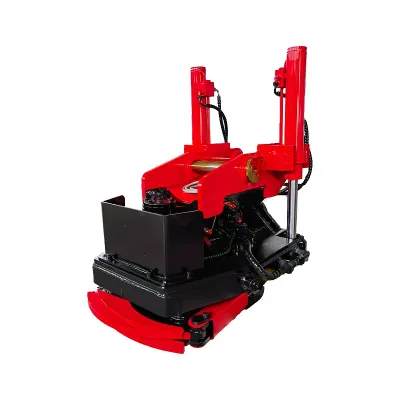
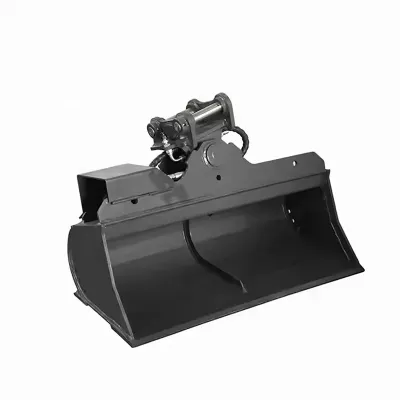
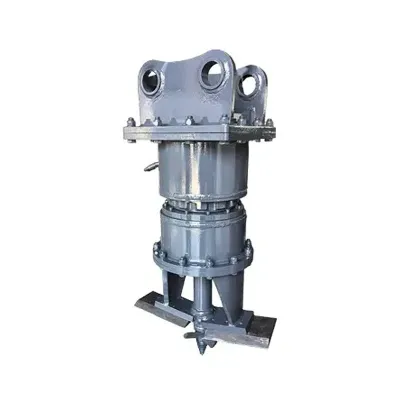
An excavator tiltrotator is one of the most effective productivity attachments available. It changes how the machine interacts with the work. Instead of constantly repositioning the excavator to reach the correct angle, the tiltrotator lets the tool tilt ±45° and rotate 360° in place. This single capability — angling and orienting the tool without moving the machine — delivers benefits across productivity, precision, fuel efficiency, operator fatigue, and jobsite access. Knowing where these benefits are greatest helps contractors decide if a tiltrotator is worth the investment and which applications deliver the fastest payback.
Fewer Machine Movements, More Production
The most immediate benefit is the dramatic reduction in repositioning. On grading, ditch cleaning, and backfilling, a standard excavator must constantly track, swing, and reposition to hit the right angle for each pass. Every reposition takes time, wears undercarriage components, and interrupts the work cycle. A tiltrotator eliminates most of these moves — the operator tilts and rotates the bucket to match the work angle while the machine stays put. On a typical grading job, this can cut machine movements by 50% or more, directly boosting productive cycles per hour.
Productivity gains also come from continuous work cycles. With a standard bucket, the operator stops, repositions, and restarts for each angle change — breaking rhythm. With a tiltrotator, the operator maintains a smooth flow — grading, shaping, and finishing without stopping to reposition. This is especially valuable on long grading runs, ditch cleaning, and slope work where the angle changes gradually and the tiltrotator follows the contour without interruption. Operators experienced with tiltrotators often report finishing jobs in half the time or less on precision tasks.
Better Grading Accuracy and Finish Quality
A tiltrotator significantly improves grading accuracy by giving the operator precise control over bucket angle and orientation. With a standard bucket, the operator must approximate the grade by adjusting machine position and arm angle — imprecise and often requiring multiple passes. With a tiltrotator, the operator fine-tunes the angle in real time using the tilt function, and rotates the bucket to match the grade direction without swinging the machine. Results are smoother, more consistent grades with fewer passes and less rework.
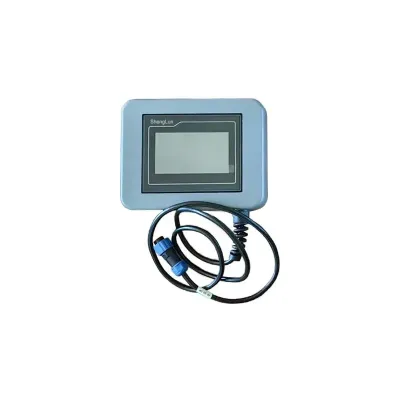
The optional control system kit amplifies precision. The proportional joystick provides finer, more intuitive control, and the digital display shows exact tilt angle (±45°) and rotation position (0–360°) in real time. This lets the operator match specified grades or slopes precisely, without guessing or visual estimation. On jobs with tight tolerances — road subgrade, drainage ditches, building pads — the angle display can mean passing inspection on the first pass rather than reworking. Even without the display, experienced operators achieve better grades because continuous angle control eliminates the approximation inherent in standard bucket grading. Less rework, faster inspection sign-off, and a higher-quality finish are the result.
Reduced Fuel Consumption and Machine Wear
Fewer machine movements directly reduce fuel burn and component wear. Every track, swing, and reposition burns fuel and wears undercarriage parts — tracks, rollers, idlers, sprockets, and swing bearings. A tiltrotator eliminates most of these, keeping the machine stationary while the tool does the work. On long grading runs, ditch cleaning, and slope work, fuel savings can be substantial — often 20–40% less fuel per job compared to standard bucket work.
Wear reduction is equally significant. Undercarriage components are among the most expensive maintenance items; reducing track movement extends their service life. Swing bearing wear drops too, since the operator no longer swings the machine to orient the bucket. Hydraulic system wear also decreases — the tiltrotator uses a dedicated auxiliary circuit rather than cycling the main boom and arm cylinders for angle changes. Over the machine's life, these reductions can save thousands in maintenance and repair costs, extending productive life. For contractors tracking cost per hour and total cost of ownership, fuel and wear savings alone can justify the tiltrotator investment, even before counting productivity gains.
Improved Access Around Obstacles and in Confined Spaces
A tiltrotator dramatically improves the excavator's ability to work around obstacles and in tight spaces where repositioning is difficult or impossible. On urban sites, utility work, and landscaping projects, the machine often must work around existing structures, trees, utilities, and other limits. With a standard bucket, the operator must find a position that allows the bucket to reach the work angle — which may be impossible in tight spots. With a tiltrotator, the operator positions the machine once and uses tilt and rotation to reach the work angle from that position, even when the machine can't be moved closer or reoriented.
This is especially valuable in three scenarios: (1) around existing structures — foundations, walls, curbs, buildings — where the tiltrotator reaches angles along the structure without the machine tracking alongside; (2) in trenches and excavations — where it shapes trench walls, cleans ditch bottoms, and backfills in confined spaces where movement is restricted; and (3) on slopes and uneven terrain — where it maintains the correct bucket angle while the machine sits on uneven ground. In all three, the tiltrotator allows work to proceed that would otherwise require hand labor, smaller equipment, or time-consuming repositioning. For contractors who frequently work in confined or obstacle-rich environments, the tiltrotator can turn previously difficult or unprofitable jobs into efficient, productive work.
Reduced Operator Fatigue and Faster Learning
Operating an excavator with a tiltrotator is less physically and mentally fatiguing than standard operation. The operator no longer constantly coordinates tracking, swinging, and arm positioning to achieve the work angle. With a tiltrotator, the operator focuses on the tool — tilting and rotating — while the machine stays in place. This reduces the number of simultaneous control inputs, especially on complex grading and shaping tasks that otherwise require constant coordination of boom, arm, bucket, swing, and travel controls.
The fatigue reduction is cognitive as well as physical. With a standard bucket, the operator constantly calculates and recalculates machine position needed for the correct angle — a tiring mental process. With a tiltrotator, angle is controlled directly through tilt and rotation, so the operator focuses on work quality rather than machine geometry. The optional control system kit further reduces fatigue — the proportional joystick is intuitive, and the digital angle display eliminates visual estimation of tilt and rotation. For new operators, the tiltrotator with a control system shortens the learning curve significantly — direct angle control and digital feedback make consistent grades achievable without years of developing the "feel" for standard bucket grading. For experienced operators, reduced fatigue means higher productivity late in the shift and less physical strain over the long term. A tiltrotator selection guide provides more detail on matching the right model and control system to your operation.