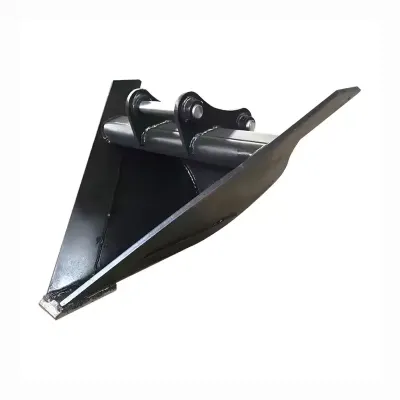
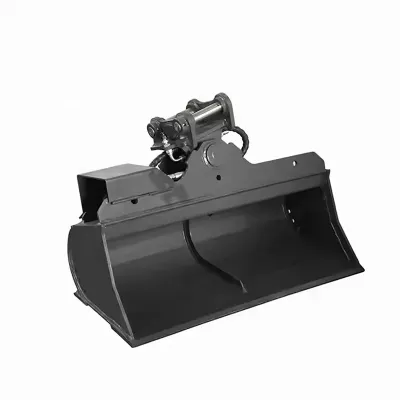
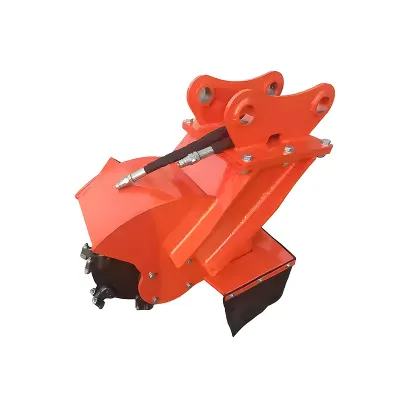
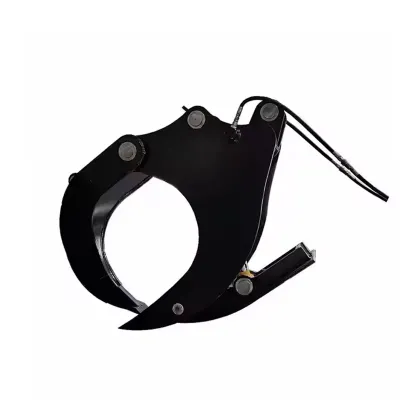
When you're setting up an excavator for forestry, land clearing, or vegetation management, the question of whether to go with a tree shear or a grapple comes up a lot. Both attach to the boom and both handle woody material—but they do it in completely different ways. A tree shear cuts through trunks and branches with a hydraulic blade, while a grapple just grabs and moves stuff. Knowing the difference is the first step toward picking the right tool for the job and not trying to make one attachment do what it wasn't built to do.
Core Function: Cutting Versus Gripping
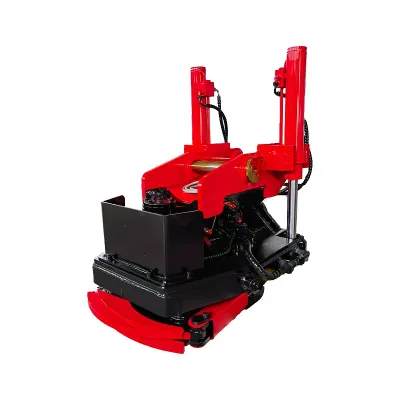
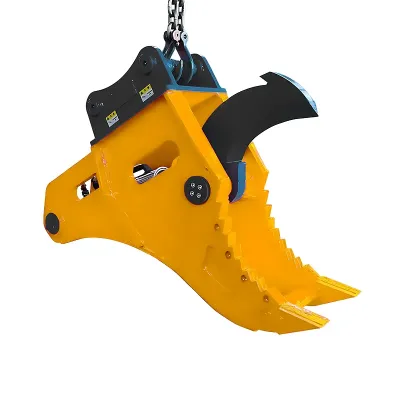
At the most basic level, the difference is simple: a tree shear cuts, and a grapple grips. A tree shear is a cutting tool. It uses a hydraulic cylinder to push a movable jaw—fitted with a hardened blade—against a fixed jaw, slicing through wood in one clean closing motion. The blade is shaped to concentrate force right at the cutting edge, letting the shear handle green wood, seasoned timber, and brush up to its rated diameter. Once the cut is done, the material drops free unless the shear is equipped with an optional grapple jaw.
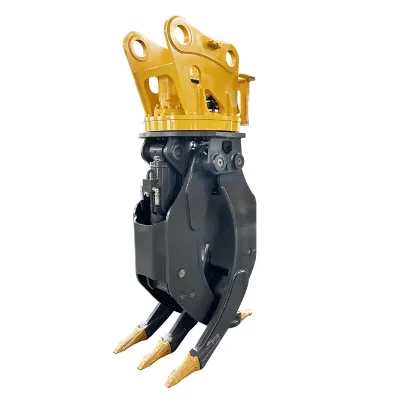
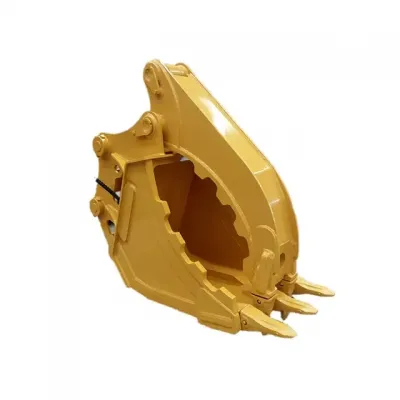
A grapple, on the other hand, is strictly a material handling tool. It uses one or more hydraulic cylinders to open and close tines or jaws that clamp around material, holding it securely for lifting, moving, or loading. A grapple does not cut—it just clamps. Grapples come in a bunch of configurations: root grapples, rock grapples, demolition grapples, log grapples, you name it, each tailored to specific material types. A log grapple can hold and move trees and logs just fine, but it can't sever them from the stump or cut them to length.
When to Use a Tree Shear
A tree shear is the tool you want when your main task is cutting standing trees, fallen timber, or woody vegetation. In land clearing, the shear makes quick work of removing trees and brush by cutting them at the base, letting you cover a lot of ground efficiently. In selective logging, it can drop individual trees without damaging the surrounding stand, and the optional grapple jaw helps you control which way the tree falls. For right-of-way maintenance, the shear cuts vegetation along utility lines, roads, and pipelines where speed and precision both matter.
Tree shears also shine in tree service and municipal maintenance—taking out hazard trees, trimming overhanging branches, or cleaning up storm debris. Cutting from the cab means you don't need a ground guy with a chainsaw, which is a big win for both safety and productivity. If your operation needs both cutting and handling, a tree shear with a grapple jaw gives you the best of both worlds: cut the tree, then move or load it without swapping attachments.
When to Use a Grapple
A grapple is the right call when your primary job is moving, sorting, or loading material that's already been cut or is sitting loose. In logging, a log grapple loads cut timber onto trucks, sorts logs by size or species, and stacks material in the yard. In land clearing, a root grapple or rock grapple moves stumps, rocks, and debris after the trees have been felled, while a demolition grapple handles mixed construction and demolition waste. In scrap and recycling, grapples sort and move metal, wood, and other materials.
Grapples are also great for irregularly shaped or mixed-size material, because the tines can wrap around different shapes to get a good grip. Unlike a tree shear, which is limited by its maximum cutting diameter, a grapple can handle material bigger than its jaw opening by gripping around the outside. That versatility makes grapples a solid choice for general material handling, but it also means they can't cut anything. For forestry work that involves both felling and loading, a lot of operators go with a tree shear with a grapple jaw rather than switching back and forth between two separate attachments.
Hydraulic and Mounting Considerations
Both tree shears and grapples need auxiliary hydraulic circuits to run, but the specific requirements aren't the same. A standard tree shear typically needs one auxiliary circuit for the cutting cylinder, with additional circuits if you add rotation or a grapple option. The flow and pressure requirements are matched to the cutting force needed for the rated diameter. A grapple may need one or two circuits depending on whether it has a single or dual cylinders, and some grapples also offer rotation. Flow requirements for grapples are generally lower than for tree shears of similar size, since grapples don't need to generate the high cutting forces that shears do.
Mounting is pretty similar for both—a custom bracket that matches your excavator's pin dimensions or quick coupler interface. But the weight distribution is different: a tree shear concentrates weight at the cutting head, while a grapple spreads it across the tines and frame. That can affect excavator stability, especially when you're extended to full reach with a load. Always check the lift capacity chart for your specific excavator and attachment combo, and never push beyond the rated capacity.
Cost and Ownership Comparison
Tree shears generally cost more than comparable grapples, mainly because of the precision-machined cutting blade, hardened jaw surfaces, and the higher hydraulic force requirements. The blade is a wear item that needs periodic replacement, which adds to the ongoing cost of ownership. Grapples have fewer precision parts and typically lower maintenance costs, though the tines, pins, and bushings do wear out over time and may need replacing or repair.
If your operation is mostly about cutting, the higher cost of a tree shear pays off in productivity gains and the safety of cutting from the cab. If you're mostly handling material, a grapple gives you better value for your money. If you need to do both, a tree shear with a grapple jaw can be more cost-effective than buying two separate attachments, though the combined unit is heavier and more complex than either one alone. The right choice comes down to the specific mix of work you do and your equipment budget.
Making the Right Choice
At the end of the day, the decision between a tree shear and a grapple comes down to whether your primary task is cutting or material handling. If you need to fell trees, cut logs to length, or process woody vegetation, a tree shear is the tool. If you need to move, sort, or load material that's already been cut, a grapple is the better fit. If you do both, consider a tree shear with the optional grapple jaw, which combines cutting and handling in one attachment.
You might also run across the term "grapple shear" in the market—that usually refers to a hybrid attachment that combines cutting and gripping functions. The TGEC tree shear with grapple jaw fits that description, offering both cutting and material handling capability. If you're looking at a grapple shear, make sure the cutting diameter, grapple opening, and hydraulic requirements match your excavator and your application. For more on the TGEC tree shear lineup and the grapple option, head over to the excavator tree shear product page or reach out to the TGEC technical team for a configuration recommendation.