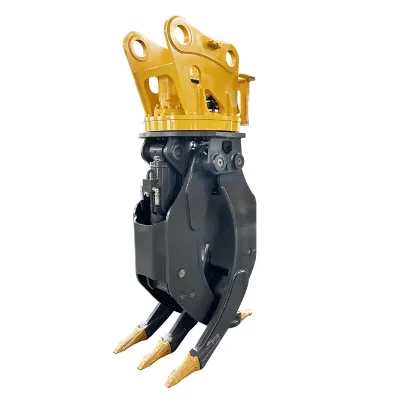
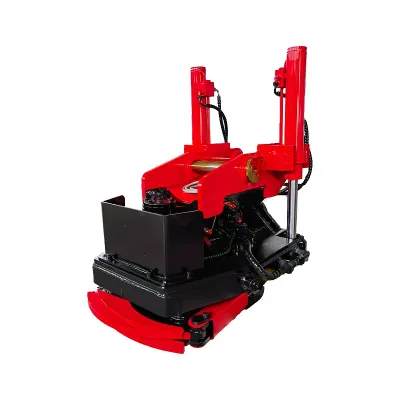
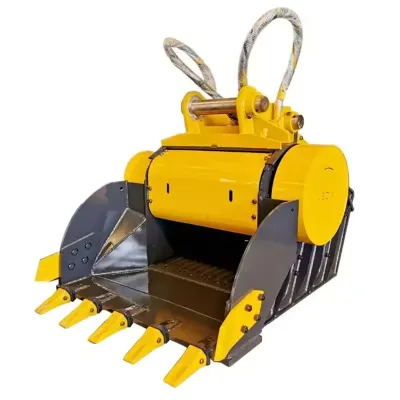
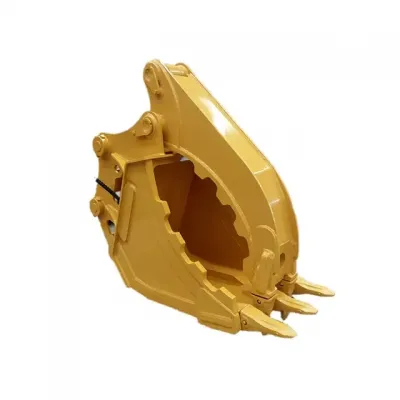
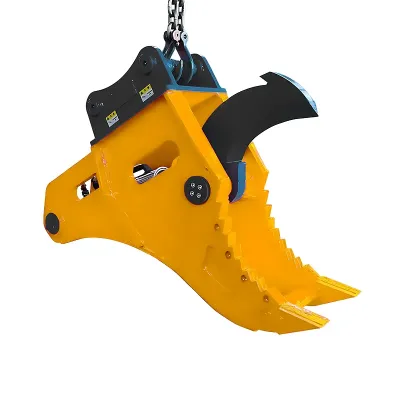
An excavator pulverizer is a hydraulic demolition attachment that mounts to the excavator arm and uses powerful jaws to crush concrete, cut through embedded rebar, and reduce debris to transportable sizes. Unlike a hydraulic breaker that pounds and fractures material with impact force, a pulverizer applies steady, high-pressure compression through replaceable teeth and cutting blades. It crushes the concrete while simultaneously shearing through steel reinforcement—a combined action that makes it invaluable for recycling operations and scrap recovery.
Pulverizers come in two main configurations. Rotary models offer 360-degree hydraulic rotation for precision work in tight or awkward spots. Fixed models skip the rotation feature and are built for high-volume secondary reduction and continuous recycling. Both share the same jaw-crushing principle, but the rotary version lets the jaw assembly spin independently of the carrier arm. Understanding how the tool works, what it can process, and where it fits into a demolition sequence helps contractors pick the right attachment for each project.
How a Concrete Pulverizer Works on an Excavator
Depending on the configuration, a pulverizer operates on one or two hydraulic circuits. The jaw cylinder—common to both rotary and fixed designs—opens and closes the jaws, generating immense crushing force at the tooth tips. When the jaws clamp onto a concrete element, the teeth shatter the concrete cover and aggregate, while the cutting blades along the jaw edges slice through any rebar that becomes exposed during crushing. That combined crush-and-cut action is what sets a pulverizer apart from a breaker—the breaker impacts and fractures but cannot sever steel.
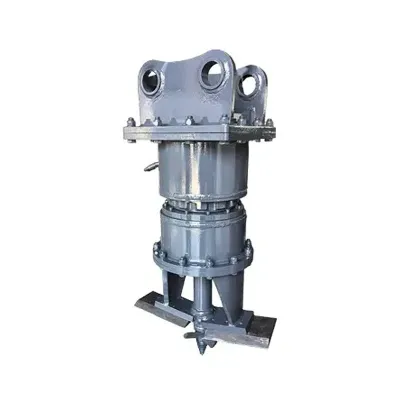
Rotary pulverizers add a dedicated rotation circuit that drives a rotation motor, turning the entire jaw assembly a full 360 degrees. That lets the operator angle the jaws overhead, sideways, or even inverted without swinging the excavator's upper structure. Fixed pulverizers keep the jaws aligned with the arm at all times. The fixed version is simpler, lighter, and has fewer wear parts, which makes it the go-to choice for high-volume yard work where material is fed directly to the machine.
Materials an Excavator Pulverizer Can Process
Pulverizers handle a broad mix of concrete and masonry materials found on demolition sites and in recycling yards. Standard structural concrete—columns, beams, floor slabs, and foundations—is the most common feed. Reinforced concrete with rebar is processed efficiently because the cutting blades shear the steel as the jaws crush the matrix. For heavily reinforced sections, such as bridge girders and high-rise structural members, jaws with an enhanced cutting profile are recommended to cope with denser rebar patterns.
Other materials include precast panels, concrete block and masonry, curbs, sidewalks, and concrete with embedded conduit or light piping. Pulverizers can also reduce asphalt chunks and soft demolition masonry, though they are not intended for hard rock or highly abrasive materials that would accelerate tooth wear. High-strength concrete or material with large aggregate may require a larger pulverizer with greater crushing force. The jaw opening should be sized to the largest piece you plan to process.
Rebar Separation and Concrete Recycling
One of the pulverizer's most valuable capabilities is rebar separation. As the jaws crush the concrete, the cutting blades slice through the embedded rebar, so the steel comes away clean from the crushed rubble in a single step. That rebar can be gathered, baled, and sold to scrap dealers, while the concrete is screened and recycled into aggregate for road base, fill, or fresh concrete production. That dual revenue stream—aggregate plus scrap steel—is what makes pulverizer-based recycling economically attractive on demolition sites and at recycling facilities.
Compared with a hydraulic breaker, which fractures concrete but leaves rebar bent, tangled, and still embedded, a pulverizer produces clean, manageable rebar that is far easier to handle and recycle. The crushed concrete from a pulverizer also tends to be more uniform in size, reducing the need for additional screening or secondary processing. For contractors who sell recycled aggregate and scrap steel, the pulverizer's ability to recover both materials in a single pass directly improves the bottom line.
Where Pulverizers Fit in the Demolition Workflow
Pulverizers play both primary and secondary roles in demolition projects. In primary demolition, rotary pulverizers are used for selective structural cutting—taking out specific columns, beams, or slabs without harming nearby structures. That is common in interior demolition, bridge work, and urban projects where precision is paramount. In secondary demolition, both rotary and fixed pulverizers reduce oversized concrete chunks left after primary breaking with a hammer or crusher, bringing material to a loadable size while recovering rebar.
At recycling yards and transfer stations, fixed pulverizers run in continuous duty, processing incoming concrete debris into recycled aggregate and scrap steel. The choice between rotary and fixed comes down to the workflow: rotary for selective and angular work, fixed for high-volume processing. Many contractors carry both configurations, using the rotary for on-site demolition and the fixed for yard processing, or picking the right model based on the specific demands of each job.