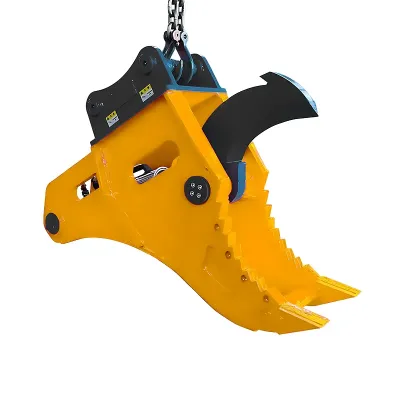
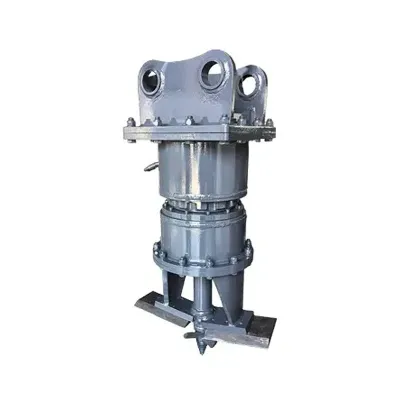
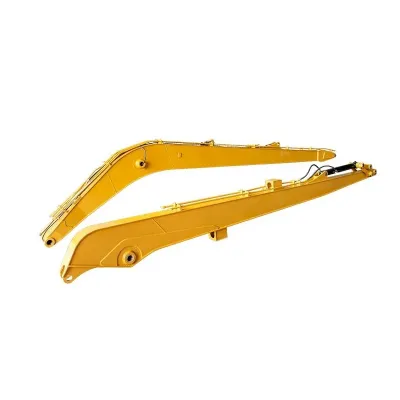
Match your concrete pulverizer to the excavator and you get productive crushing, safe operation, and a longer service life from both the attachment and the carrier. Oversize it and you lose lift capacity, slow down your cycles, and load the arm, pins, and hydraulics beyond what they were designed for. Undersize it and the jaws simply cannot generate enough force to crush the material in front of them.
Operating weight is the starting point, but it is not the whole story. Auxiliary hydraulic flow and pressure, arm mounting dimensions, and lift capacity at the working radius all determine whether a pulverizer will actually perform on your machine. This guide covers the essentials of pulverizer sizing, with a focus on the popular 7–10 ton and 15–18 ton excavator classes, and explains why tonnage alone can lead you astray.
How Pulverizer Model Ranges Map to Excavator Weight Classes
Pulverizers are built in model ranges that line up with excavator weight classes. A typical lineup covers everything from 7-ton mini excavators up to 25-ton and larger machines, with models grouped into ranges such as 7–10 tons, 10–15 tons, 15–20 tons, and 20–25 tons. Your excavator's operating weight should fall squarely within the range for the model you are considering.
Those weight bands exist because the pulverizer's crushing force, jaw opening, and overall weight are scaled to match the carrier's hydraulic output and arm strength. A pulverizer built for a 20-ton machine delivers more crushing power and weighs more than one designed for a 10-ton excavator. Bolt an oversized pulverizer onto a smaller carrier and you risk tipping, reduced lift capacity, and overloaded hydraulics. Go undersized on a large excavator and you are leaving performance on the table—slower crushing cycles and wasted machine capability.
Key Factors Beyond Excavator Weight
Operating weight gets you in the ballpark, but four other factors determine whether a pulverizer will actually perform on your machine. First, auxiliary hydraulic flow and pressure need to match the pulverizer's requirements. The jaw cylinder needs a specific flow range to cycle at the right speed, and rotary models require a dedicated rotation circuit for the rotation motor. Too little flow and the jaws move sluggishly; too much and you risk damaging seals and hoses.
Second, mounting dimensions—arm pin diameter, pin spacing, and arm width—must align with the pulverizer's bracket. These measurements vary between excavator brands and models, even within the same weight class. A pulverizer that fits one 15-ton excavator might not fit another without a custom bracket. Third, verify lift capacity with the added pulverizer weight at your working radius, especially when reaching out at full extension. Fourth, if you are using a quick coupler, confirm compatibility—the combined weight of coupler plus pulverizer affects lift capacity, and the coupler interface must match the pulverizer bracket.
Pulverizer Sizing for 7–10 Ton Excavators
The 7–10 ton class is a sweet spot for small-scale demolition, interior work, and utility projects. Pulverizers in this range are compact, with unit weights typically between 280 and 350 kg (617 to 772 lb), jaw openings of 320 to 340 mm (12.6 to 13.4 in), and crushing forces from 450 to 520 kN (101,000 to 117,000 lbf). They handle standard and lightly reinforced concrete like floor slabs, small columns, and curbs, but they will struggle with heavily reinforced structural concrete or large bridge girders.
For a 7–10 ton machine, make sure your auxiliary hydraulic system delivers 40–60 L/min (10.6–15.9 gpm) at the required pressure. Some mini excavators in this class have limited auxiliary flow, so check the machine's hydraulic spec before ordering. The pulverizer weight—280 to 350 kg—will eat into your lift capacity, so verify safe operation at your working radius, particularly when reaching out. Rotary models for this class require a rotation circuit in addition to the jaw circuit; confirm your excavator has one or can be fitted with one. Fixed pulverizers need only one circuit and weigh less, making them a practical choice for 7–10 ton machines with limited hydraulic capacity.
Pulverizer Sizing for 15–18 Ton Excavators
The 15–18 ton class sits right between mid-size and large demolition machines, and it is one of the most common carrier sizes for pulverizer work. Pulverizers for this class fall into two model ranges—the 10–15 ton models and the 15–20 ton models. Choosing between them comes down to your typical application, not just where your machine sits on the weight boundary. For general secondary reduction and standard concrete, the 10–15 ton model (unit weight ~430–520 kg, jaw opening 400–420 mm, crushing force 680–760 kN) may be all you need. For heavily reinforced concrete, structural demolition, or high-volume recycling, step up to the 15–20 ton model (unit weight ~650–780 kg, jaw opening 480–500 mm, crushing force 950–1050 kN) for the extra capacity.
For 15–18 ton machines, auxiliary hydraulic flow typically runs from 50 to 110 L/min (13.2–29.1 gpm), which covers both the 10–15 ton and 15–20 ton pulverizer models. Double-check the exact flow and pressure from your excavator's spec sheet—some 15-ton machines have lower auxiliary flow than their 18-ton siblings. The added pulverizer weight—430 to 780 kg—will significantly affect lift capacity, so verify safe operation at the working radius, especially when fully extended. If your 15–18 ton excavator regularly handles heavily reinforced concrete or large structural elements, the 15–20 ton pulverizer is the smarter pick, even if your machine sits at the lower end of the weight range.
Why Excavator Size Alone Is Not Enough
Excavator operating weight is a useful starting point, but it does not guarantee a good match. Two excavators with the same nominal tonnage can have different auxiliary hydraulic flow, arm mounting dimensions, and lift capacities. A 15-ton excavator from one manufacturer might deliver 80 L/min of auxiliary flow, while another 15-ton model only pushes 55 L/min—and that difference affects whether your pulverizer will cycle at its designed speed. Arm pin dimensions also vary between brands, so a bracket that fits one 15-ton machine may need modification for another.
Lift capacity is another area where weight alone does not tell the whole story. A pulverizer adds several hundred kilograms to the end of the arm, reducing the machine's ability to lift at extended reach. An excavator with a long arm or boom extension will have lower lift capacity than a standard-configuration machine of the same tonnage. Quick couplers add even more weight and may require adapter brackets. The right approach is to start with the excavator weight class to narrow your pulverizer options, then verify hydraulic flow, mounting dimensions, and lift capacity before making a final decision. Your pulverizer supplier can confirm compatibility based on the excavator model, serial number, and intended application.