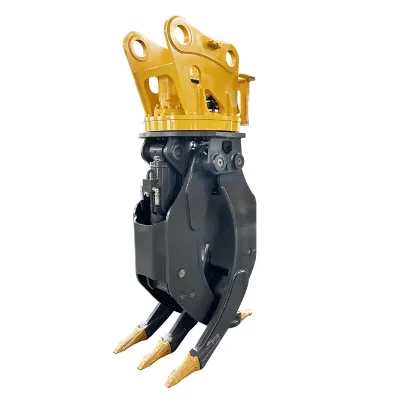
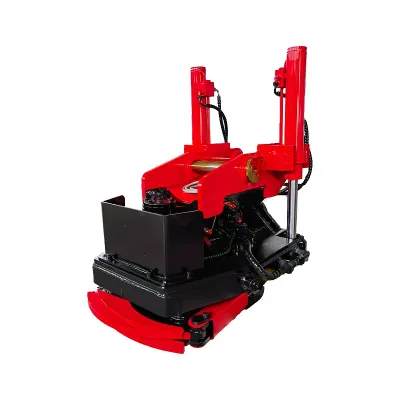
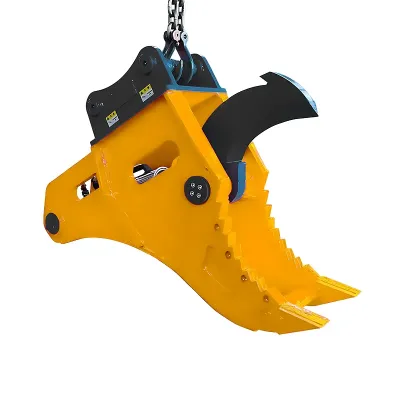
Picking the right excavator tree shear is all about matching the attachment to your machine, the size of the timber you're dealing with, and the type of work you do most. A shear that's undersized will choke on larger trunks and force you to take extra passes, while an oversized one can make a mini excavator feel tipsy and hard to control. This guide walks you through the essential specs and configuration options that determine whether a tree shear will be a star performer on your job sites.
Start With the Maximum Cutting Diameter
The very first number you need to look at is the rated maximum cutting diameter—that's the thickest trunk or branch the shear can slice through in one clean bite. TGEC tree shears start at 150 mm (5.9 in) on the compact TG-TS03 and go all the way up to 520 mm (20.5 in) on the heavy-duty TG-TS30. When you're comparing diameters, think about the average size of trees you cut, and don't forget the occasional big one that shows up now and then. If you're mostly clearing brush and small saplings, a 150 to 180 mm model should do you fine. But if you're in mixed forestry and run into larger timber now and then, stepping up to a 300 mm or 420 mm unit gives you some breathing room and lowers the chance of bogging down on an oversized trunk.
Keep in mind that the rated diameter assumes green wood with adequate hydraulic flow. Dense hardwoods, frozen timber, or wood with grit embedded in the bark may call for a model with a larger rating. Also, cutting right at the maximum diameter puts extra strain on the blade, pivot pins, and cylinder, which can speed up wear over time.
Match the Shear to Your Excavator Size
Every tree shear model is sized for a specific excavator weight class. The TG-TS03 is built for 3 to 5 ton mini excavators, the TG-TS05 suits 5 to 12 ton machines, the TG-TS10 covers 10 to 18 ton carriers, the TG-TS20 fits 18 to 30 ton excavators, and the TG-TS30 is meant for 30 to 50 ton units. These aren't arbitrary numbers—they reflect the shear's weight, the force the boom can safely apply, and the lift capacity you have at working reach.
If you put a shear that's too heavy on a small machine, you'll run into problems: instability when the boom is extended (especially with a log in the grapple), extra stress on the boom and stick, and insufficient hydraulic flow to run the shear properly. On the flip side, a shear that's too small for a big excavator is just a waste of the machine's potential—you're leaving power on the table. The sweet spot is a shear that falls comfortably in the middle of the recommended weight range for your excavator.
Verify Hydraulic Flow and Pressure
Tree shears are hydraulic tools, so matching your excavator's auxiliary circuit to the shear's requirements is non-negotiable. Each model has a defined flow range and working pressure. The TG-TS03 wants 40 to 95 L/min at 60 to 210 bar, while the TG-TS30 requires 120 to 220 L/min at 250 to 350 bar. If your excavator's flow is below the minimum, the jaws will move slowly and may stall on larger wood. If it's above the max, the shear could close too fast and hammer the blade and pivots.
Pressure matters just as much. Most excavators have adjustable auxiliary relief valves, and you need to set the pressure within the shear's specified range. Too low, and you lose cutting force; too high, and you risk damaging seals and hoses. For rotating and grapple models, you'll need extra auxiliary circuits—one for the cutting cylinder, another for the rotator, and a third for the grapple clamp if you have one. Before you buy, make sure your excavator has enough circuits and that each one can deliver the flow and pressure you need.
Choose Between Fixed and Rotating Mounting
Fixed tree shears bolt rigidly to the boom and don't rotate independently. They're simpler, lighter, and cheaper than rotating units, with fewer parts to worry about. A fixed shear works fine when you can move the excavator around to approach trees at the right angle—think open land clearing or wide right-of-way work where repositioning is easy.
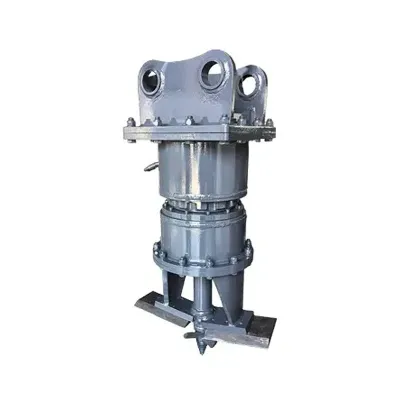
Rotating tree shears have a hydraulic rotator that spins the shear 360 degrees, so you can face any tree without moving the machine. That's a huge advantage in tight spots, along fence lines, near utility corridors, or when you need to fell trees in a specific direction. Rotation also makes loading timber easier because you can orient logs to fit the truck or pile. The downsides are extra weight, more complexity, higher cost, and the need for another auxiliary circuit to run the rotator.
Decide Whether You Need a Grapple Jaw
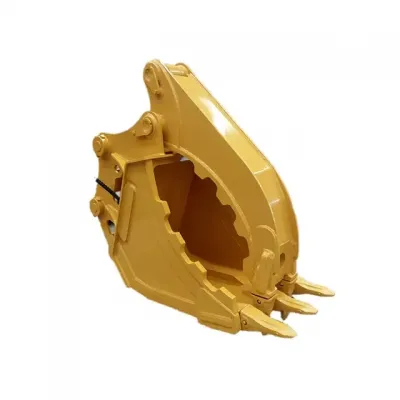
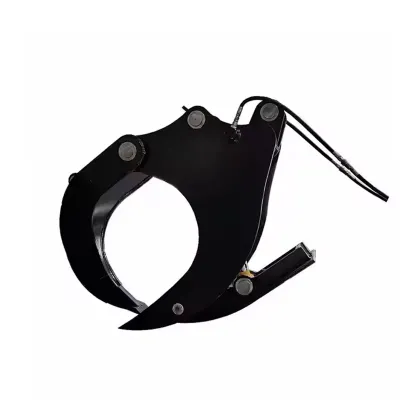
A standard tree shear cuts the trunk and lets the tree fall naturally. A grapple jaw shear adds a secondary clamping arm that holds the cut tree or log after shearing, giving you control over where it lands. That's critical when you're working near buildings, power lines, or other obstacles where an uncontrolled fall could cause damage. The grapple also lets you pick up and move fallen logs, cut them to length, and load them onto trucks—all with one attachment.
The grapple option is available on the TG-TS05 through TG-TS30 models. The compact TG-TS03 is only offered in standard fixed configuration, which makes sense for its primary role in light brush and small-tree work where grapple control isn't as important. If your work involves controlled felling, log handling, or loading, the grapple jaw is well worth the extra investment. For pure land clearing where trees can fall anywhere, a standard shear might be all you need.
Final Selection Checklist
Before you pull the trigger, run through this checklist to make sure the shear you're considering is a good fit for your operation:
-
Maximum cutting diameter covers your typical tree size with some margin for the occasional bigger one.
-
Excavator operating weight falls within the shear's recommended carrier range—ideally right in the middle.
-
Auxiliary hydraulic flow and pressure match the shear specs, with the relief valve set properly.
-
You have enough auxiliary circuits for rotation and/or grapple if you're going that route.
-
Shear weight plus a loaded log stays within your excavator's lift capacity at working reach.
-
A mounting bracket is available for your excavator make, model, and pin dimensions—or for your quick coupler.
-
Blades and wear parts are readily available from the manufacturer or your dealer.
For a side-by-side look at the full TGEC tree shear lineup, head over to the excavator tree shear product page for complete specs, or reach out to the TGEC technical team with your excavator details and application needs for a personalized recommendation.