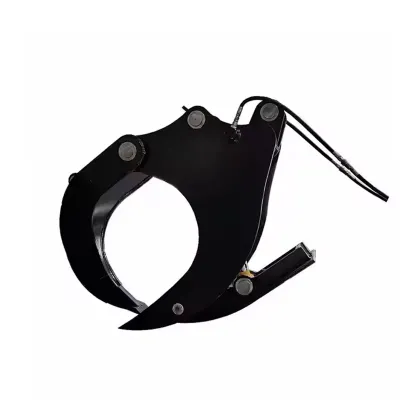
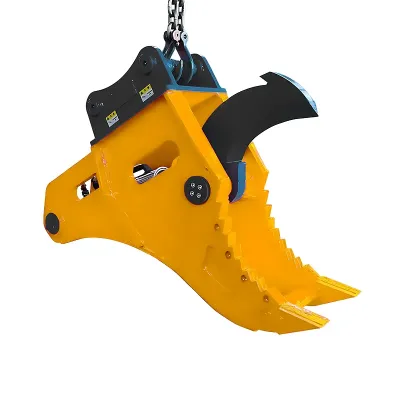
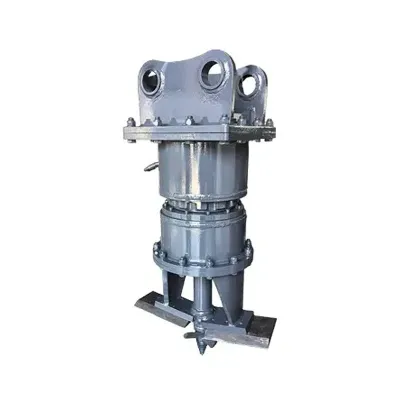
Scrap grapples are purpose-built for the kind of nasty, abrasive, sharp-edged material you find in scrap yards, recycling facilities, and demolition sites. Unlike log grapples with curved tines made for round timber, scrap grapples use designs that actually conform to unpredictable shapes—multi-finger orange-peel setups with independent tines, rotary scrap grapples for 360-degree orientation, and single-cylinder hydraulic models for lighter sorting duty. Each design makes its own trade-off between conforming grip, clamping force, rotation capability, and how much maintenance you're signing up for. This article breaks down the major scrap grapple types and points you to the applications where each one delivers the best return.
Scrap grapples make up a big chunk of the excavator grapple attachments market, and manufacturers offer several configurations to cover different scrap-handling scenarios.
Multi-Finger Orange Peel Grapples: The Conforming Grip Standard
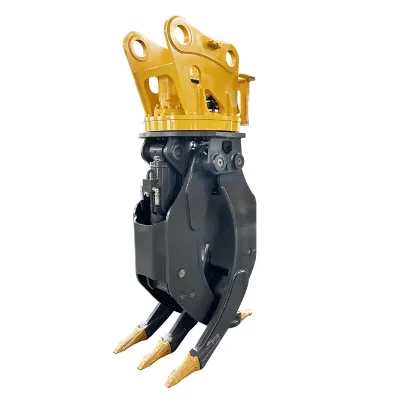
The orange peel grapple—also called a polyp or multi-finger grapple—uses four or more independent tines radiating from a central hub, each with its own hydraulic cylinder. The name comes from how the closed tines resemble the peeled segments of an orange. The big advantage here is that every tine moves on its own, so the grapple can wrap itself around irregular scrap shapes that would just slip out of a two-jaw bucket. A bundle of mixed metal, a car body frame, or a pile of assorted recyclables all get a secure grip because each tine finds its own contact point.
That independent tine action comes at a price. More cylinders mean more hydraulic connections, more seal points, and more routine maintenance. Each cylinder needs its own hydraulic feed, and the central hub has to distribute oil to all of them at once. Orange peel grapples also tend to be heavier than two-jaw designs with a similar opening, which can eat into your lift capacity on smaller excavators. In scrap yards and recycling facilities where irregular shapes are the norm, the conforming grip is worth the added complexity and upkeep. The multi-finger hydraulic scrap grapple from TGEC comes in four sizes for 4 to 35 ton excavators.
Rotary Scrap Grapples: Orientation for Sorting
Rotary scrap grapples add a hydraulic rotator to a two-jaw or multi-finger grapple body, giving you continuous 360-degree rotation for precise material orientation. In scrap sorting operations, rotation lets the operator position the load over the right pile or container and drop it exactly where it needs to go without swinging the boom across multiple bins. That's especially valuable in materials recovery facilities where you're separating ferrous and non-ferrous metals into designated areas, and in scrap yards where different metal grades are stockpiled separately.
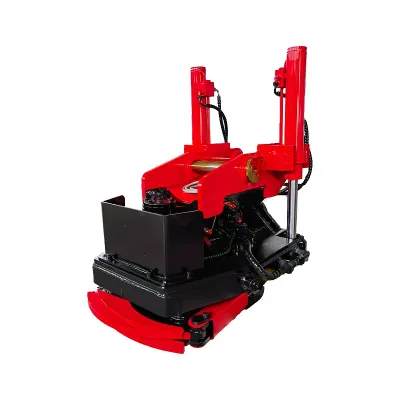
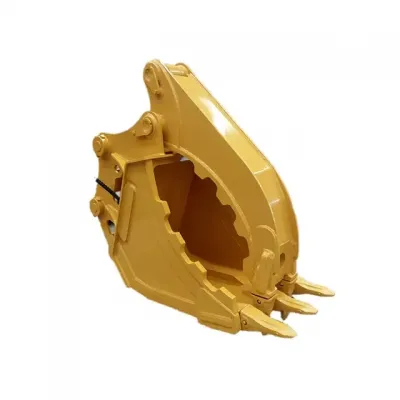
The single-cylinder rotary scrap grapple from TGEC uses one hydraulic cylinder to drive two opposing jaws through a linkage system, with an integrated rotator for rotation. This setup is lighter and simpler than a multi-finger rotary design, with fewer cylinders to maintain, while still giving you the rotational precision you need for sorting. It's a good fit for light to medium scrap handling and sorting operations where the material is relatively regular in shape and you don't need extreme conforming grip.
For operators dealing with highly irregular scrap where multi-finger conforming grip is a must, a rotary orange-peel grapple combines both capabilities. These are the most complex and expensive scrap grapple configurations, requiring dual auxiliary circuits for grapple and rotator plus multiple cylinder feeds, but they give you the highest level of control for demanding scrap sorting operations.
Hydraulic vs Mechanical in Scrap Applications
Virtually all scrap grapples are hydraulic because the grasping force you need to secure heavy, sharp, irregular scrap is more than a mechanical bucket curl linkage can reliably deliver. Hydraulic cylinders give you independent, controlled clamping force that the operator can modulate, and the pressure can be tuned to match the material. Mechanical grapples, which run off the bucket curl function, are better suited for rock handling, land clearing, and general debris where the material is less abrasive and you don't need as much clamping force.
That said, some light scrap and recycling operations with smaller excavators do use mechanical grapples for basic material movement. If your scrap consists of relatively light, bulky items like cardboard, plastic, and aluminum cans, a mechanical grapple might give you enough grip. For ferrous metal, heavy appliances, car bodies, and dense industrial scrap, hydraulic clamping force is essential to keep the load from slipping during lifting and transport.
Scrap Yard vs Recycling Facility vs Demolition
The best scrap grapple design depends on your work environment. In a scrap yard, you're typically dealing with dense ferrous and non-ferrous metal in irregular shapes, and your main tasks are loading and unloading trucks, feeding processing equipment, and stockpiling by metal grade. A multi-finger orange peel grapple is the go-to here because the conforming grip handles unpredictable scrap shapes securely. Rotation is useful but not always essential if your yard layout lets the excavator position itself for each drop.
In a materials recovery facility, the focus shifts to sorting. The operator is separating different material fractions into designated bins or conveyors, and precise orientation and placement matter more than raw grasping force. A rotary scrap grapple with two jaws or a rotary orange-peel design is a good fit because rotation enables accurate drops into the right bin. The single-cylinder rotary scrap grapple is a popular choice in MRFs because it gives you rotation at lower cost and with less maintenance than a multi-finger rotary design.
On demolition sites, scrap is mixed with concrete, wood, and other debris, and the grapple may need to handle both metal and non-metal material. A demolition grapple with wide solid jaws can crush and sort mixed debris, while a scrap-specific grapple might be used for metal separation after the demolition grapple has processed the bulk material. For demolition contractors who handle significant scrap metal, a dedicated scrap grapple can be a worthwhile addition alongside the demolition grapple.
Durability and Wear Considerations
Scrap grapples work in one of the most abrasive environments you'll find for any excavator attachment. Sharp metal edges, rust, slag, and abrasive dust all accelerate wear on tines, pivot points, and hydraulic cylinders. When you're evaluating a scrap grapple, look for reinforced tine tips made from wear-resistant steel, replaceable wear parts at high-wear points, and hydraulic hoses routed away from the grasping area where sharp scrap could cut them. Cylinder rods should be hardened and polished to resist scoring from abrasive dust.
Maintenance frequency is higher for scrap grapples than for grapples used in less abrasive environments. Daily greasing of all pivot points is essential, and you should inspect hydraulic hoses daily for cuts, abrasion, and leaks. Cylinder seals should be checked periodically, and any sign of rod scoring or seal leakage should be addressed right away to keep contamination out of the hydraulic system. The central hub on multi-finger grapples is a critical wear point and should be inspected for play and lubricated according to the manufacturer's schedule.
For a closer look at how rotation affects maintenance and productivity across grapple types, the article on rotating excavator grapples covers rotator maintenance and carrier requirements in detail.
Scrap Grapple Selection Priorities
Start by identifying your primary work environment. In a scrap yard handling dense, irregular metal, a multi-finger orange peel grapple gives you the conforming grip you need for secure grasping. In a recycling or MRF setting where sorting and precise placement drive the work, a rotary scrap grapple—either single-cylinder two-jaw or multi-finger—delivers the orientation control that speeds up sorting cycles. For demolition sites with mixed debris, evaluate whether a dedicated scrap grapple is worth it alongside a demolition grapple, or whether a single demolition grapple with sorting capability is enough. From there, confirm your excavator class, auxiliary hydraulic circuits and flow, and prioritize wear-resistant construction and protected hydraulics for the abrasive scrap environment.
Scrap Handling Questions
Questions commonly asked by scrap yard and recycling operators.