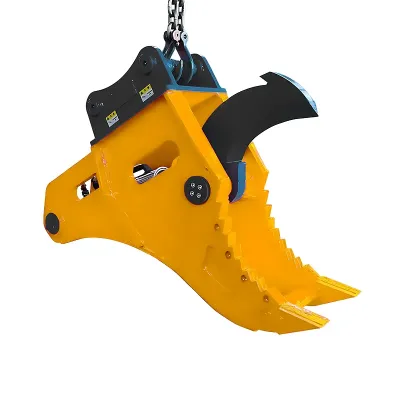
Picking the right excavator log splitter comes down to a handful of key factors: what machine you're running, its hydraulic output, the size and type of wood you're splitting, what you're doing with the finished product, and whether a wedge splitter or a cone splitter makes more sense for your workflow. This guide walks you through each one so you can make a smart, informed decision.
Start with Your Excavator
Your excavator is the starting point—and the most important one. Every log splitter model is designed for a specific excavator tonnage range, but tonnage alone doesn't tell the whole story. You also need to check your machine's auxiliary hydraulic flow rate, working pressure, lift capacity at working reach, and mounting interface. A splitter that needs 75 L/min of flow will struggle on an excavator that only puts out 30 L/min, even if the tonnage numbers line up. Same goes for weight: a 270 kg attachment might be too much for a small mini excavator when you're reaching out with a big log on the end of the boom.
Before you even look at models, gather your excavator's specs: make and model, operating weight, auxiliary flow in L/min, max pressure in bar or PSI, pin-to-pin spacing, pin diameter, coupler type, and lift capacity at the reach you'll actually be working at. This info is what makes sure the splitter you pick actually fits your machine's hydraulics and mounting, and that your excavator can safely handle the attachment plus the logs you're planning to split.
Match Splitting Capacity to Log Size
Splitting capacity is what tells you the biggest log diameter a splitter can handle. Conventional wedge splitters are rated by split capacity in millimeters, while cone splitters are rated by maximum log diameter. Pick a model whose capacity is bigger than the largest log you expect to process—leave yourself 10–20% margin for oversized or odd-shaped logs. If you're mostly splitting small firewood logs (up to 400 mm), a compact model like the SL-WS 470 or TGEC-WS12 will do the job. For medium to large logs (500–800 mm), step up to the SL-WS 610 or TGEC-WS40. For really big stuff (800–1000 mm), the TGEC-WS80 or TGEC-WS120 cone splitters are the way to go—their rotating cones deliver the high torque you need for large-diameter hardwoods.
Log length matters too. Most excavator log splitters handle logs up to 1–2 meters, depending on the model. Longer logs might need extra support or a log cradle to keep them from shifting during splitting, and you'll need enough excavator reach to position everything safely. If you're regularly processing logs longer than the attachment's rated max, consider going up a size or looking at a different splitting approach.
Consider Wood Type and Conditions
What you're splitting makes a big difference in the force you need and whether a wedge or cone splitter is the better fit. Softwoods like pine, poplar, and spruce split relatively easy—either mechanism works fine. Hardwoods like oak, maple, ash, and beech need a lot more force, and logs with knots, twisted grain, or funky shapes can make a wedge bind or stall. For hardwoods and tricky grain, a cone splitter is often the better choice because the rotating cone powers through with torque rather than just linear force.
Moisture content also plays a role. Green or freshly cut wood is generally easier to split than seasoned or dried wood—the extra moisture keeps the fibers more flexible. If you're mostly splitting seasoned hardwood, you'll want a higher-capacity model or a cone splitter to keep things moving. And think about volume: occasional or low-volume work can get by with a compact model, but commercial firewood production or heavy land clearing calls for a bigger machine with faster cycle times and higher capacity to keep productivity up and operator fatigue down.
Choose the Right Splitting Mechanism
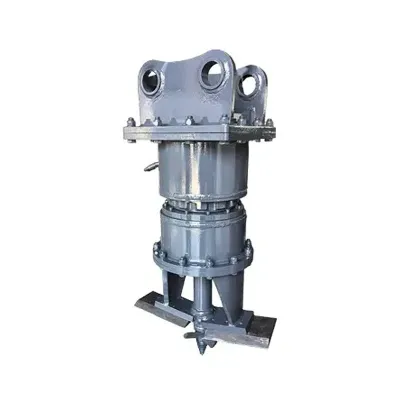
Deciding between a conventional hydraulic log splitter and a cone splitter comes down to what you're doing and what matters most to you. Conventional log splitters use a hydraulic ram to push a Hardox wedge into the end of a log, giving you clean, uniform splits that are ideal for firewood. They've got fewer moving parts, simpler maintenance, and are generally easier on the wallet. Cone splitters use a rotating conical screw that bores into the log and splits it with high torque—better for large-diameter logs, hardwoods, and tricky grain. They're a bit more complex (hydraulic motor, case drain), but they give you faster cycle times and less downward force required for big logs.
For a side-by-side breakdown of both mechanisms—strengths, weaknesses, and where each one shines—check out the Excavator Log Splitter vs Cone Splitter guide. And for the nitty-gritty on hydraulic flow, pressure, and machine sizing, see the Excavator Log Splitter Hydraulic Requirements guide.
Evaluate Mounting and Compatibility
Once you've zeroed in on a model based on capacity, wood type, and mechanism, it's time to make sure it'll actually bolt up to your machine. The attachment's mounting bracket has to match your excavator's pin-to-pin spacing, pin diameter, and coupler type. Most manufacturers—including TianGe—can supply custom brackets for specific excavator models, whether you're using direct pin-on or a quick coupler. If you're running a quick coupler, give the supplier the coupler brand and model number so they get the interface right. Also check that the hydraulic hose lengths and connector types play nice with your auxiliary circuit, and that you've got a case drain line if the attachment's hydraulic motor needs one. Getting the mounting and hydraulics right is non-negotiable for safe, reliable operation, so confirm all of this before you pull the trigger.
Summary: Key Selection Factors
-
Excavator size: Match the attachment's tonnage range to your excavator's operating weight.
-
Hydraulic capacity: Verify auxiliary flow and pressure meet or exceed the attachment's requirements.
-
Log diameter: Choose a split capacity that exceeds your largest expected log diameter by 10–20%.
-
Wood type: Hardwoods and difficult grain favor a cone splitter; softwoods and uniform splits favor a wedge splitter.
-
Application: Firewood production favors clean wedge splits; large-diameter and high-volume processing favor cone splitters.
-
Mounting: Confirm pin-to-pin spacing, pin diameter, coupler type and hydraulic hose compatibility.
-
Lift capacity: Verify the excavator can safely handle the attachment weight plus logs at working reach.
Ready to find the right splitter for your operation? Explore the Excavator Log Splitter and Excavator Cone Splitter product pages for detailed specifications, or return to the Excavator Log Splitters hub for the full product range.