Deciding between an excavator flail mower and a brush hog comes down to how they cut, what kind of vegetation you're dealing with, how they handle debris, the terrain, the finish you want, and the specific work you're doing. Both are used for mowing, but they work differently and give you different results. This guide lays out the key differences, helps you figure out which one fits your conditions, and walks through the factors that should drive your choice.
Understanding the Two Mowing Systems
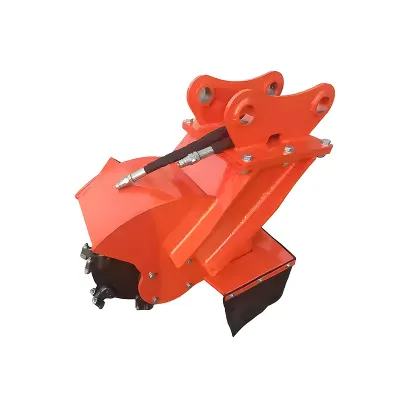
An excavator flail mower uses a horizontal rotor with a bunch of hardened steel flail hammers that pivot on the rotor. When the rotor spins up to speed, centrifugal force throws the hammers outward, and they hit vegetation with a fast, repeated cutting and shredding action. Those many small hammers turn grass, brush, and light woody stuff into fine mulch that drops out the back or bottom in a controlled spread. Because the hammers pivot, they can swing back when they hit rocks or debris, which protects the rotor and drive—making flail mowers a good fit for rough ground with hidden surprises. They come in compact sizes for mini excavators and are known for leaving a clean, uniform finish.
A brush hog—also called a rotary cutter or rotary mower—uses one or two heavy-duty rotary blades that spin horizontally under a deck housing. The blade cuts vegetation with a single, powerful chop as the mower moves forward. Brush hogs are built to cut through tall grass, dense weeds, and thick brush quickly. They're common in agriculture, land maintenance, and property management, and they come in configurations for tractors, skid steers, and excavators. If you're looking at an excavator flail mower, it helps to know how it stacks up against a brush hog before you buy. For a broader look at the mower category, check out the excavator mower range.
Cutting Mechanism: Flail vs Rotary
The biggest difference between a flail mower and a brush hog is how they cut. A flail mower uses lots of small, pivoting hammers spread across a horizontal rotor. Those hammers hit vegetation with a rapid, repeated impact, and because there are so many of them, the cutting is continuous and even across the whole width. The pivoting design lets the hammers deflect when they hit hard stuff, which protects the rotor and drive train. The flail mower's action shreds vegetation into fine pieces, giving you a mulch-like finish instead of leaving long cut stems behind.
A brush hog uses one or two big, rigid rotary blades mounted on a vertical spindle under a deck. The blade spins at high speed and chops vegetation with a single, powerful hit as the mower passes over it. Since there are only one or two blades, the cutting is intermittent—the blade strikes the material once per revolution, and taller or thicker stems can get bent rather than cut clean if you're moving too fast. The rigid blades aren't as forgiving of hard objects, and hitting a rock, stump, or metal can damage the blade, stress the spindle, or even create dangerous projectiles. The brush hog's action usually leaves cut material in longer pieces instead of fine mulch. Which one you pick depends on the finish you need, the vegetation, and the working conditions.
Vegetation Type and Density
What you're cutting and how thick it is makes a big difference in whether a flail mower or brush hog is the right call. Flail mowers are great for grass, weeds, herbaceous stuff, bramble, and light to medium brush. The many small hammers give you continuous cutting across the full width, and the high rotor speed leaves a clean, fine mulch. Flail mowers really shine on grassy areas, roadside work, slopes, and orchards where the material is mostly grass and light brush. They can handle small saplings and woody stems within their rated capacity, but that kind of work wears hammers faster and may mean slowing down.
Brush hogs are built for rougher, more overgrown vegetation. They excel at cutting tall grass, dense weeds, thick brush, and overgrown stuff that hasn't been touched in a while. The heavy rotary blade has the muscle to chop through dense stands quickly, and the wide deck covers a lot of ground per pass. Brush hogs are the go-to for field mowing, property upkeep, right-of-way clearing, and agricultural land management where speed matters more than a fine finish. But brush hogs can struggle with very short, fine grass—the blade tends to ride over low-growing stuff without cutting it cleanly. They also leave cut stems in longer pieces, which isn't ideal for landscaped areas. If your work is a mix of maintained grass and occasional overgrown brush, a flail mower is more versatile. If it's mostly dense, tall, overgrown stuff in open areas, a brush hog will be more productive. For material beyond either mower's capability, a dedicated excavator brush cutter is what you need.
Debris Behavior and Safety
How debris behaves is a big consideration when choosing between a flail mower and a brush hog, especially if you're working near roads, buildings, people, or other sensitive spots. Flail mowers are known for keeping debris under control. The housing around the rotor contains the cut material and directs it out a controlled opening, usually at the back or bottom. The fine mulch from the flail hammers has less mass and velocity than the coarser stuff a brush hog throws out, so the risk of projectiles is lower. The pivoting hammers also tend to deflect rather than launch rocks and hard objects, which further cuts debris risk. That makes flail mowers a good fit for roadside work, urban areas, parks, and anywhere people, vehicles, or property are nearby.
Brush hogs are known for more aggressive debris discharge. The high-speed rotary blade can throw cut material, rocks, and other debris with serious force out the side or rear opening. That creates a projectile hazard, especially near roads, buildings, or people. Most brush hogs have chain guards or discharge deflectors to help contain debris, but they don't eliminate the risk entirely. The rigid rotary blade can also launch rocks and hard objects when it hits them, which is a safety concern for the operator and anyone nearby. If you're working in open, unpopulated areas like farm fields, large properties, or remote right-of-way, the debris risk from a brush hog is manageable. But near roads, buildings, or people, a flail mower's controlled debris behavior is a real safety advantage. Either way, operators should follow safety guidelines, wear proper gear, and keep bystanders clear of the work area.
Slope and Rough Terrain Performance
How well each mower handles slopes and rough ground is a key difference. Flail mowers are generally better on slopes. The horizontal rotor and many small pivoting hammers give you consistent cutting across the full width even when the mower is tilted on a slope. The controlled discharge keeps cut material from sliding downhill and piling up at the bottom—important for levee, dam, and embankment work. The compact housing and the excavator's precise boom controls let the operator maintain a consistent cutting height on uneven ground. The pivoting hammers also help the mower handle rough spots without scalping or digging in, since they deflect when they hit high points.
Brush hogs can work on slopes, but they have some drawbacks. The deck is usually wider and flatter than a flail mower housing, which makes it harder to keep a consistent cutting height on steep or uneven ground. The rotary blade can scalp high spots or leave low spots uncut when the deck is angled. The side or rear discharge can throw material downhill on slopes, creating piles at the bottom or debris hazards for anything below. The wider deck can also catch on obstacles or uneven ground more easily. That said, brush hogs are used successfully on moderate slopes in farm and property maintenance settings, especially when speed matters more than a precise finish. For steep slopes, embankments, levees, and areas where a clean, controlled cut is important, a flail mower is the better choice. For moderate slopes in open fields and large parcels, a brush hog can get the job done. For a detailed comparison of flail mowers with mulching attachments for woody vegetation, see our article on excavator flail mower vs mulcher.
Mowing Finish and Aesthetic Quality
The finish and look of the mowed area are pretty different between flail mowers and brush hogs, and that's often a deciding factor for certain jobs. Flail mowers leave a fine, uniform mulch that gives the area a clean, well-kept look. The many small hammers shred vegetation into even pieces, and the controlled discharge spreads the mulch evenly across the cut area. That fine mulch breaks down fast, putting organic matter back into the soil without leaving clumps or long stems visible. That's why flail mowers are the go-to for municipal roadside work, parks, golf course roughs, commercial landscaping, residential properties, and orchard or vineyard floor management—anywhere appearance matters.
Brush hogs leave a coarser cut with longer stems and more variable piece sizes. The rotary blade chops rather than shreds, and the cut material often ends up in windrows or clumps instead of spreading evenly. The coarser material takes longer to break down and can be visible for a while after mowing, which isn't as attractive in maintained areas. But in places where the goal is just vegetation reduction—like farm fields, large properties, remote right-of-way, and land prep—the coarser finish is fine and expected. Brush hogs also handle very tall, dense vegetation that would wrap around or clog a flail mower, and the fast cutting speed can be more important than the finish. If you need a clean, professional look in maintained areas, a flail mower is the clear winner. If speed and productivity in rough, overgrown areas matter more than looks, a brush hog is the practical choice.
Excavator Compatibility and Hydraulic Requirements
How well each mower fits your excavator and its hydraulic system is a practical consideration. Flail mowers come in compact sizes for mini and compact excavators from 1.5 to 6 tons, so they work with a wide range of machines. Their hydraulic needs are moderate, and many models run on a standard auxiliary circuit without needing a high-flow upgrade. Their lighter weight also makes them a good match for the limited lift capacity of mini excavators, especially when working at full reach on slopes.
Brush hogs for excavators are typically larger and heavier than compact flail mowers, and they often need a bigger excavator with enough lift capacity and hydraulic flow. The heavy rotary blade and deck need more power to spin, and the wider deck puts more load on the boom and arm. Some brush hog setups require a high-flow auxiliary circuit to get adequate blade speed, especially on larger models. The wider deck can also be harder to maneuver in tight spaces, and the extra weight can limit the safe working range on slopes and at full reach. If you have a mini or compact excavator and do mostly vegetation maintenance in a variety of settings, a flail mower is the more versatile, practical choice. If you have a larger excavator and do mostly field mowing and land clearing in open areas, a brush hog could be a good fit. Always check the exact flow, pressure, lift capacity, and mounting compatibility of any attachment against your specific machine before you buy. For help matching a flail mower to a mini excavator, see our flail mower selection guide for mini excavators.
Application Suitability Summary
Ultimately, the choice between a flail mower and a brush hog comes down to your primary work and conditions. Flail mowers are the better choice for roadside and highway maintenance, where the clean finish and controlled debris are key for safety and appearance. They excel on slopes and embankments—levees, dam faces, retaining walls—where consistent cutting and controlled discharge keep material from piling up. They're ideal for ditch and waterway work, landscaping, grounds maintenance, orchard and vineyard floor management, and any job where a clean, professional finish matters. Flail mowers are also a good fit for work near roads, buildings, and people where debris control is important.
Brush hogs are the better choice for farm field mowing, large property upkeep, remote right-of-way clearing, and land prep where the main goal is rapid vegetation reduction in open, unpopulated areas. They excel at cutting tall, dense, overgrown stuff that hasn't been touched in a while, and their wide deck covers a lot of ground fast. Farmers, ranchers, land managers, and contractors who need to keep large parcels clear of overgrowth use brush hogs regularly. But they're not ideal for maintained areas where a clean finish matters, for work near people or property where debris control is critical, for steep slopes where controlled discharge is needed, or for tight spaces where maneuverability is limited. For a lot of contractors, the choice depends on the balance between finish quality, debris control, productivity, and the typical work environment. Some contractors find that having both attachments lets them handle the full range of mowing conditions—the flail mower for maintained and sensitive areas, and the brush hog for rough, open fields.
Key Takeaways
-
Flail mowers use many pivoting hammers on a horizontal rotor for continuous, fine shredding; brush hogs use one or two rigid rotary blades for powerful chopping.
-
Flail mowers produce a fine, uniform mulch with a clean finish; brush hogs leave coarser, longer cut material with a less uniform appearance.
-
Flail mowers have controlled discharge and reduced projectile risk, making them safer near roads, buildings and people; brush hogs discharge material more forcefully and have greater debris hazard.
-
Flail mowers are well suited for slopes, embankments and uneven terrain with consistent cutting and controlled discharge; brush hogs are more effective on moderate slopes in open fields.
-
Flail mowers are available in compact sizes for mini excavators with moderate hydraulic requirements; brush hogs are typically larger and heavier, requiring larger excavator carriers.
-
Flail mowers excel at roadside maintenance, landscaping, orchards, ditches and areas where finish quality and debris control matter; brush hogs excel at field mowing, large property maintenance and rapid vegetation reduction in open areas.
-
The pivoting hammers on a flail mower are more forgiving of hidden obstacles; brush hog blades are more rigid and can be damaged by or launch hard objects.
-
For contractors working primarily in maintained and sensitive areas, a flail mower is the versatile, safe choice; for specialists in rough, open-field mowing, a brush hog may be more productive.