Picking the right flail mower for a mini excavator takes more than just matching a model to a machine's tonnage. The best choice depends on your excavator's hydraulic output, lift capacity, mounting setup, the vegetation you're dealing with, the terrain, and what you're actually trying to accomplish. This guide walks through the key decision points so you can steer clear of common pitfalls and end up with an attachment that actually works well and holds up over time.
Understanding Mini Excavator Flail Mowers
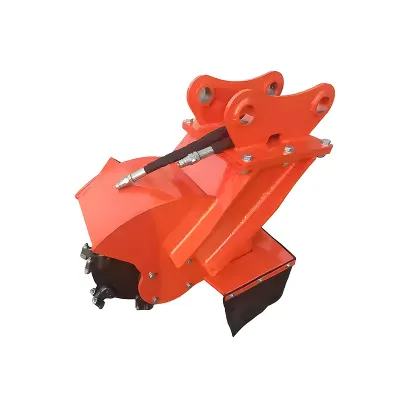
A mini excavator flail mower is a compact hydraulic attachment built for small excavators in the 1.5 to 6 ton range. It uses a horizontal rotor with hardened flail hammers that spin at high speed to cut and shred vegetation into fine mulch. That mulch drops out through the rear or bottom of the housing and spreads across the ground, where it breaks down quickly. Unlike rotary mowers that rely on a single spinning blade, flail mowers use multiple small hammers that pivot on the rotor—so if you hit a rock or hidden debris, the hammers can swing back and absorb the impact without wrecking the drive system. That makes them a solid choice for rough terrain and areas where you're not sure what's hiding in the grass.
Mini excavator flail mowers handle all sorts of vegetation work—roadside trimming, slope mowing, brush clearing, ditch maintenance, landscaping, and orchard floor management. The excavator's boom and arm give you reach and precision that no ride-on mower can match, so you can get into steep slopes, deep ditches, and around obstacles with ease. If you're looking at an excavator flail mower, it pays to understand what makes one setup work better than another for your specific machine and job. For a broader look at the whole mower category, check out the excavator mower range.
Hydraulic Flow: The Power Behind the Cut
The hydraulic system is what makes a flail mower actually work, so matching the attachment to your excavator's hydraulic capacity is non-negotiable if you want rated performance. The mower's hydraulic motor converts auxiliary flow into rotational energy to spin the rotor. That rotor speed drives cutting quality and mulching efficiency, and it's directly tied to the flow rate going to the motor. If flow is too low, the rotor turns slower, the hammers don't hit with enough force, cuts get ragged, mulching suffers, and you'll stall out in thick or woody stuff. Too much flow over-speeds the rotor, which beats up the bearings, shakes the mower apart faster, and can damage the motor.
Hydraulic pressure gives you torque at the rotor—the muscle you need to keep the rotor spinning when you're chewing through thick brush and woody stems. Good pressure but low flow gives you torque but slow rotor speed. Good flow but low pressure gives you speed but no guts, so you stall out under load. You need both in the motor's rated range for best results. Mini excavators often have limited hydraulic capacity compared to bigger iron, and some machines have variable-flow systems that change output with engine rpm. Get the exact auxiliary flow and pressure specs from your excavator manual or dealer—both peak and typical numbers—instead of guessing. If your machine's hydraulic output is borderline for a particular mower, a smaller model with lower demands will probably outperform a bigger one that's starved for oil.
Attachment Weight and Machine Stability
Attachment weight is one of those things that gets overlooked until you're on site and the machine feels tippy. Mini excavators don't have a lot of extra lift capacity compared to larger machines, and the mower's weight directly affects stability and how far out you can safely work. The spec sheet dry weight is one thing, but the effective weight during operation includes the dynamic loads from the spinning rotor—which can be significant lateral and vertical forces. If you're using a quick coupler, add that weight in too. When you extend the mower to full reach—especially on slopes or over ditches—the effective load on the boom and undercarriage goes up, and stability goes down.
An overweight mower can tip the excavator forward or sideways, especially on slopes or if the mower catches on something and jerks. It also wears out boom pins, bushings, and cylinders faster, and can void your excavator warranty if you exceed the machine's rated capacity. Always check the excavator's load chart to make sure the mower—plus any quick coupler—can be safely lifted and operated at the maximum reach you'll need. If lift capacity is marginal, go with a lighter mower or restrict your working range to shorter reaches. Also think about weight distribution: a mower with the motor and rotor centered on the housing will balance better than one with components offset to one side.
Working Width: Productivity vs Maneuverability
Cutting width is one of the most obvious differences between models, and picking the right one means balancing productivity against maneuverability and machine capacity. Wider mowers cover more ground per pass, so you finish faster on open areas like road shoulders, big slopes, field edges, and parks where there's room to work. But they need a bigger excavator with more lift and hydraulic flow, and they're harder to maneuver in tight spots—around obstacles, in narrow ditches, or between tree rows. They also have a larger turning radius and can leave uncut patches in corners or around structures.
Narrower mowers give you better access and handling in confined spaces—ditch bottoms, drainage channels, fence lines, utility corridors, and orchard or vineyard rows. They need less hydraulic power and lift, so they work with the smallest mini excavators. But they cover less ground per pass, so you'll make more passes and spend more time on the same area. The right width depends on where you work most. If it's mostly open areas with few obstacles, go wide. If it's tight spaces, ditches, and around obstacles, go narrow. If you do a mix, a mid-range width gives you a decent balance. And remember, the overall housing width is usually wider than the cutting width, and that has to fit in your work space.
Vegetation Type and Density
What you're cutting is a primary factor in which mower you should pick, because different vegetation needs different cutting force, rotor speed, and hammer configuration. Grass and light weeds are easy—they don't need much power and light hammers work fine. Any properly matched mower will handle them, so the main concern is productivity. Thick brush, bramble, and overgrown stuff is tougher—stems are thicker and denser, so you need enough hydraulic flow to keep rotor speed up under load, and heavier hammers that can punch through without bouncing off or stalling.
Small saplings and woody stems are at the top end of what a flail mower can handle. Maximum stem diameter depends on the hammer type, rotor speed, hydraulic power, and the specific mower model. Light-duty mowers built for grass might not cut it with woody material, while heavier-duty models with robust hammers and more hydraulic muscle can handle saplings up to a certain size. If your work includes a lot of woody stuff, look for a mower with heavier hammers, a beefy rotor, and enough hydraulic torque. But even the heaviest flail mower isn't a replacement for a dedicated excavator brush cutter when you're dealing with thick brush and small trees beyond the flail mower's limits. And for formal hedges and shrubs that need a clean, precise cut, an excavator hedge trimmer is the better tool.
Operating Environment and Access Constraints
The site conditions you're working in should heavily influence your mower choice. Slope steepness matters—mowing on steep slopes reduces excavator stability, increases the effective load on the boom, and may force you to work at shorter reaches to stay safe. On really steep ground, a lighter, narrower mower might be necessary even if a wider one would be faster on flat terrain. Access constraints like narrow gates, tight work areas, overhead power lines, and proximity to structures or roads can limit the size of machine and mower you can use. In urban or residential settings, noise might be a concern—some mowers are quieter than others depending on rotor design and housing construction.
Ground conditions also play a role. Soft or muddy ground may keep the excavator from getting close to the work, so you need more reach and potentially a lighter mower to stay stable. Rocky ground means the hammers are going to hit rocks sooner or later, which can damage hammers, throw the rotor out of balance, and create projectile hazards. In rocky areas, go with a mower that has a robust housing and heavy-duty hammers, and keep ground speed and cutting height conservative to minimize rock strikes. Wet conditions—mowing in or near water, ditches, or irrigation channels—call for a mower with good sealing and corrosion protection on bearings and hydraulic components. And don't forget environmental constraints like wildlife protection windows, noise ordinances, and dust control, which can affect when and how you operate.
Mounting and Quick Coupler Compatibility
The mounting interface between the mower and the excavator is an essential compatibility check that often gets left until the gear shows up on site. The mower usually mounts to the excavator boom and arm with a pin-on bracket or a quick coupler adapter. The bracket has to match your machine's pin-to-pin spacing, pin diameter, and mounting geometry. Mini excavators from different brands—and even different models from the same brand—can have different dimensions, so always verify the exact numbers for your specific machine rather than assuming compatibility based on tonnage. If the standard bracket doesn't fit, you'll need a custom one, which adds cost and lead time.
Quick couplers are popular if you swap attachments often, since they let you switch between the mower and buckets, breakers, or augers without messing with pins. But there are extra considerations. The coupler has to work with both the excavator's mounting geometry and the mower's bracket. Its weight adds to the total attachment weight for lift capacity and stability. It can also change the effective pin-to-pin distance, which affects mower positioning and boom/arm geometry. Some couplers need an adapter plate or modified bracket to fit the mower. And hydraulic hose routing may need to change, since the coupler can shift port positions and require longer or differently routed hoses. If you're planning to use a quick coupler, tell the mower supplier when you order so they can provide the right bracket and hose setup.
Maintenance, Wear Parts and Total Cost of Ownership
When you're comparing mowers, don't just look at the sticker price—think about the total cost of ownership over the life of the attachment. Flail mowers take a beating from vegetation, dirt, rocks, and debris, and wear part costs can add up fast. The flail hammers are the main wear item—they strike vegetation and take abrasion and impact damage. How often you replace them depends on what you're cutting and the operating conditions. Hardened steel hammers are standard, but some suppliers offer upgraded materials or designs that last longer in abrasive conditions. Other wear parts include hammer pins and bushings, bearings, skid shoes or rollers, hydraulic hoses, seals, and the cutting edge on the housing.
Check the availability and cost of replacement parts before you buy. Mowers from suppliers with readily available, reasonably priced parts will cost less to run over time than ones where parts are expensive or hard to get. Ease of maintenance matters too—mowers with accessible grease points, easy hammer replacement, and straightforward hose routing mean less downtime for routine upkeep. Build quality—housing steel thickness, bearing type, hydraulic component sealing—affects service life and maintenance needs. Also look at technical support and warranty coverage; a responsive supplier can get you back up and running faster if something breaks. When comparing options, estimate annual wear part cost, maintenance time, and expected service life to get a real picture of total cost of ownership. A mower that costs a bit more upfront but has lower wear costs and lasts longer will usually be the better deal over time.
Related Comparisons
Before you settle on a flail mower, it's worth asking whether a different type of vegetation attachment might actually be a better fit for your work. Two common comparisons are especially relevant for mini excavator users.
Flail mower vs mulcher: If you're dealing with a lot of woody vegetation, thick brush, or small trees beyond what a flail mower can handle, a heavier forestry mulcher might be the better bet. Mulchers use a different cutting mechanism—carbide-tipped teeth or hammers—and are built for heavy-duty woody material processing. But they're heavier, need more hydraulic power, and cost more than flail mowers. For a side-by-side look, see our article on excavator flail mower vs mulcher.
Flail mower vs brush hog: If your main work is mowing rough vegetation, dense brush, and tall grass in open areas, a rotary-style brush hog might offer a different set of advantages in terms of cutting mechanism, debris handling, and terrain suitability. Brush hogs use a single or dual rotary blade instead of flail hammers, and they handle material differently. For a detailed comparison of cutting action, finish quality, and where each excels, see our article on excavator flail mower vs brush hog.
Making the Right Selection
Picking the best flail mower for a mini excavator starts with a solid assessment of your machine's specs, the vegetation you'll be cutting, the work environment, and your application needs. First, gather your excavator's exact specs—operating weight, auxiliary flow and pressure, lift capacity at working reach, pin spacing, pin diameter, and coupler type. That baseline tells you which mowers are mechanically possible. Then evaluate your primary vegetation type and density, the terrain including slope steepness and access constraints, and the cutting width that balances productivity and maneuverability for your typical work.
Narrow down your options to models that fit your excavator's hydraulic and lift limits, then compare cutting width, attachment weight, hammer configuration, build quality, and wear part availability. Factor in total cost of ownership—wear part costs and maintenance time—not just the purchase price. If you can, see a demo or talk to a contractor who runs a similar mower on comparable vegetation and terrain. Finally, confirm the supplier can provide the right mounting bracket, hose configuration, and support for your specific excavator model. Work through these steps systematically and you'll end up with a flail mower that delivers solid performance, dependable operation, and good long-term value for your mini excavator vegetation work. For detailed product specs and model info, visit the excavator flail mower product page.
Key Takeaways
-
Hydraulic flow drives rotor speed and cut quality—get exact auxiliary flow and pressure for your specific excavator.
-
Attachment weight affects mini excavator stability, especially on slopes and at full reach—always check against the load chart.
-
Working width is a trade-off between productivity (wider) and maneuverability (narrower)—choose based on your primary work area.
-
Vegetation type and density determine hammer weight, rotor speed, and hydraulic power needs—match to the toughest material you'll cut.
-
Operating environment factors like slope, access, ground conditions, and regulations affect mower size and configuration.
-
Mounting and coupler compatibility must be verified for your specific excavator—custom brackets or adapters may be needed.
-
Think about total cost of ownership—wear parts, maintenance, and service life—not just the upfront price.
-
Compare flail mowers against mulchers and brush hogs to confirm a flail mower is the right attachment type for your work.