If you're shopping for an excavator attachment to handle vegetation work, you've probably come across both flail mowers and brush hogs (also called rotary cutters or brush cutters). They both run off your machine's hydraulic system and they both cut stuff, but they work in completely different ways and each one has its own sweet spot. Understanding what sets them apart is the only way to make sure you're bringing the right tool to the job instead of wrestling with one that's just not cut out for what you're doing.
Cutting Mechanism
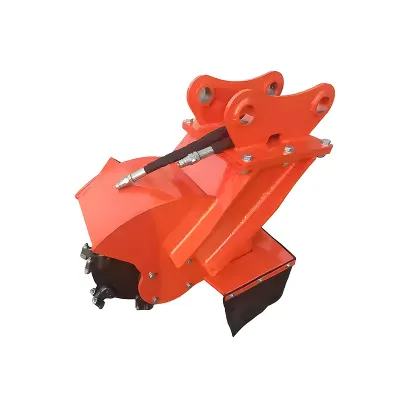
This is where the two attachments really part ways. A brush hog uses a heavy-duty rotary blade setup—two or more large blades that spin horizontally inside a reinforced deck. Those blades hit vegetation with a lot of force, chopping and mulching brush, saplings, and small trees as they go. A flail mower, on the other hand, runs a horizontal drum packed with lots of small flail blades (sometimes called hammers or knives) that are attached with chains or bolts. When the drum spins, the flails swing outward and cut against a fixed counter-blade with a shearing action, leaving a much finer, more even mulch behind.
Vegetation Type and Cutting Capacity
Brush hogs are built for the heavy stuff—brush, saplings, and small trees up to 6 inches in diameter. That high-impact rotary setup delivers serious torque and makes short work of woody material. Flail mowers are better suited to grass, weeds, light brush, and finer vegetation, typically topping out at 2 to 3 inches depending on the model. Even the beefier flail mowers don't really match a brush hog's ability to chew through thick woody growth. If your days are mostly about clearing heavy brush and small trees, the brush hog is the clear winner.
Finish Quality and Mulching
Flail mowers give you a much cleaner, more uniform finish than brush hogs. All those little flail blades cut material into small pieces and spread them evenly across the cutting width, leaving behind a neat, professional-looking result. That's why flail mowers are the go-to for lawn maintenance, park grounds, orchards, and anywhere appearance actually matters. Brush hogs leave a coarser cut with bigger woody chunks, which is perfectly fine for land clearing, right-of-way work, and forestry jobs where nobody's judging the finish. In fact, that coarser mulch breaks down slower, which can actually be a plus for erosion control on cleared slopes.
Hydraulic Requirements and Maintenance
Both attachments need auxiliary hydraulic flow from your excavator, but the specifics vary by model and size. Brush hogs generally need more hydraulic flow to spin that large rotary blade assembly, especially in high-flow variants meant for heavy cutting. Flail mowers might need similar or slightly less flow depending on the drum size and how many flails they're turning. Maintenance is a different story too: brush hogs have fewer, larger blades that need periodic sharpening or replacement, and the deck can take a beating if you're hitting rocks. Flail mowers have lots of small blades that wear out individually and might need more frequent replacement, but the drum and housing usually take less impact damage overall. For details on the TGEC hydraulic brush cutter, check out the product page. And if you're still figuring out which way to go, see How to Choose an Excavator Brush Cutter.